Jordan
August 2022
A Road Trip through Jordan
All photos are my own. Shot on Fujifilm XT30.
The idea of a road-trip through Jordan began with a wedding in Amman.
It was my very first Arabic wedding, and what an unforgettable experience it turned out to be. Beyond the dazzling dresses and the delicious food (so many salads!), what truly impressed me was the dancing — non-stop from the minute the newly weds appeared to well past two in the morning.
The dance floor is the receiving line. To congratulate the bride and groom you dance your way to them.
The following morning, we set out from Amman heading southwest toward the Dead Sea. I was relieved not to be the one behind the wheel as I quickly learned that stop signs tend to be more suggestive than mandatory - safer to keep rolling than being the only ones to stop.
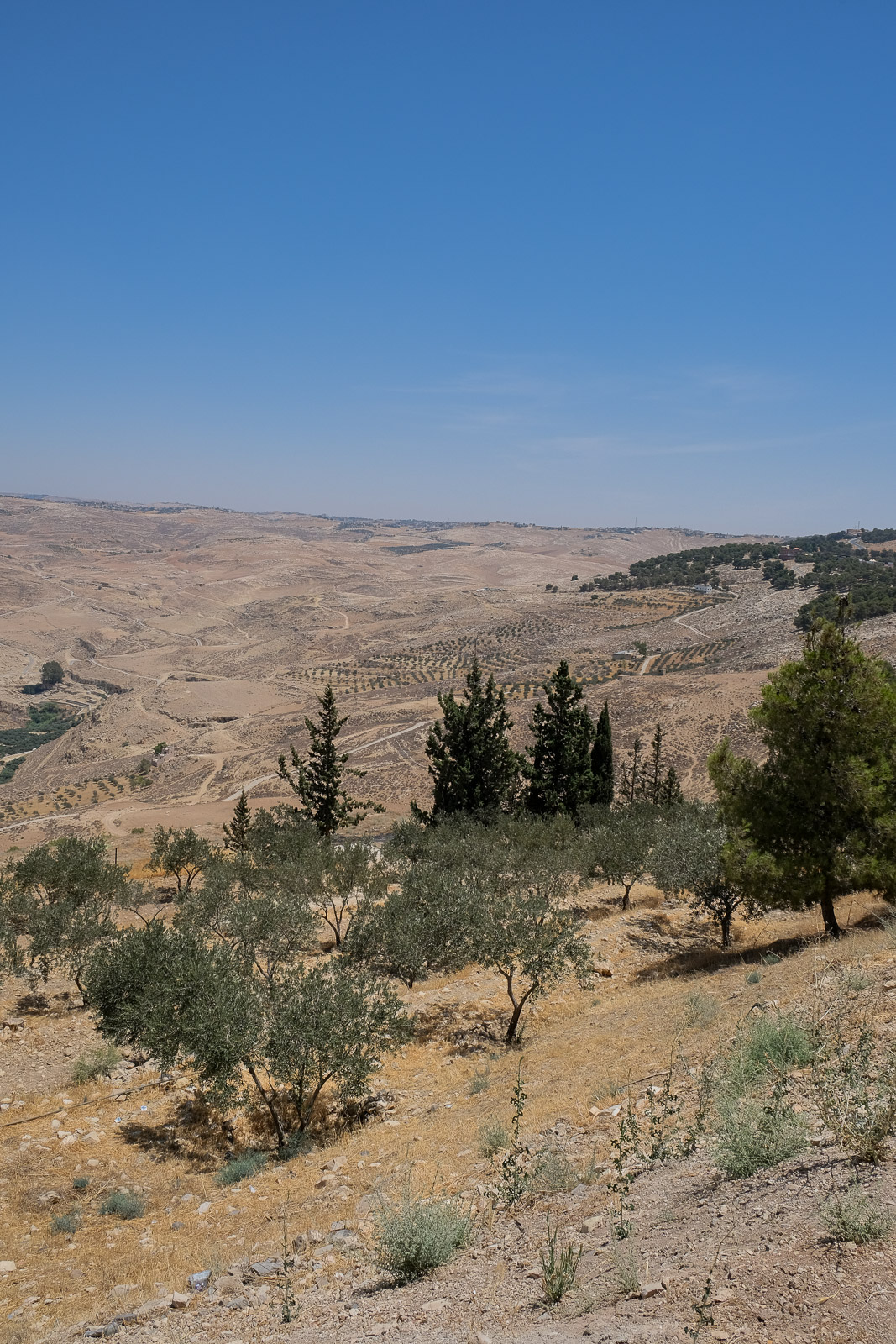
Our first stop was Mount Nebo, the highest peak in the Abarim mountain range and a site of spiritual significance. According to tradition, this is where Moses, after leading the Israelites through the desert for over forty years, caught his first glimpse of the Promised Land before his death. While the exact location of his burial remains unknown, the mountaintop is now home to a 6th-century basilica-turned-memorial church, housing beautifully preserved Byzantine mosaics. Just outside, a serpentine cross sculpture stands silhouetted against the horizon.
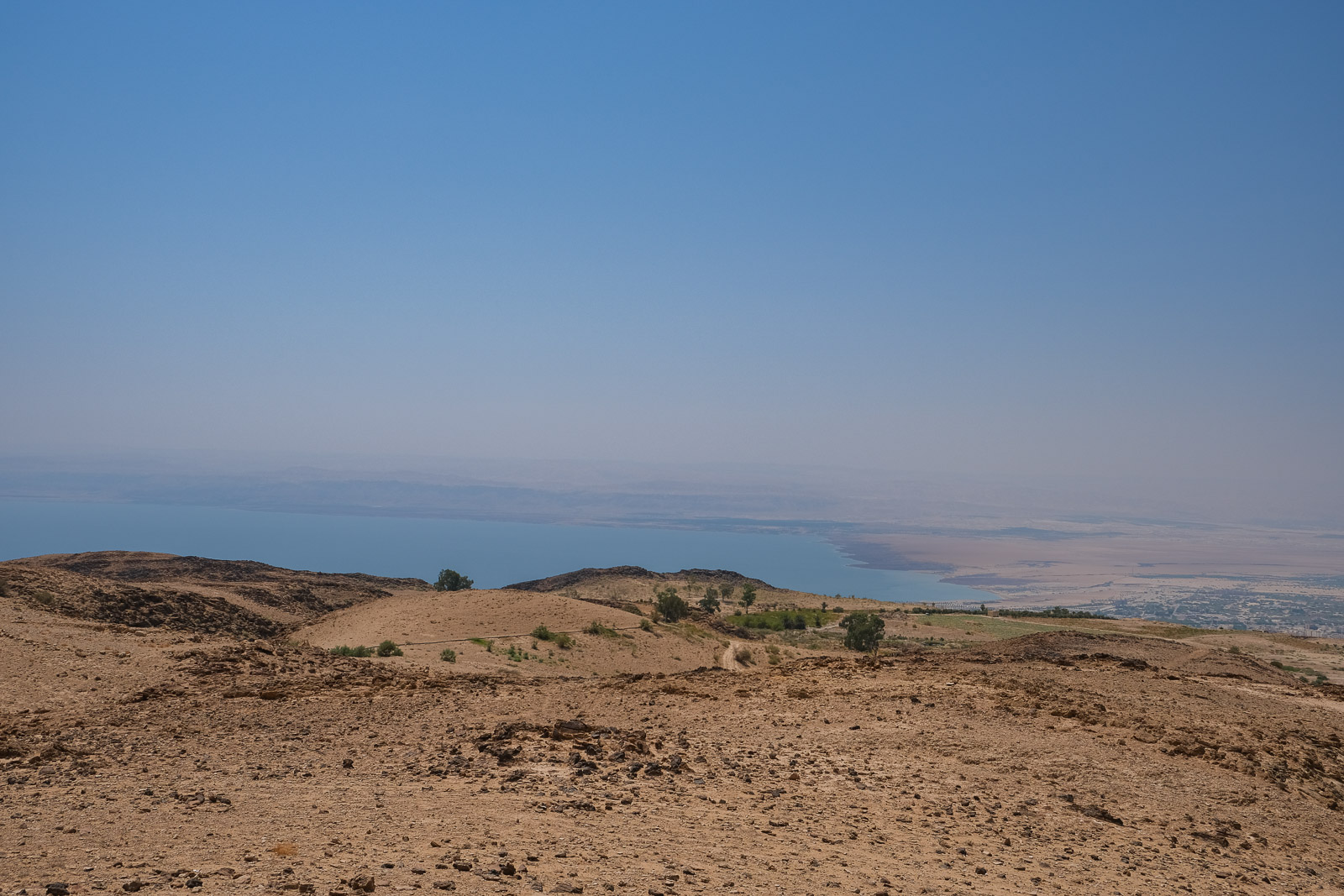
For me, the true highlight was the panoramic view: the Jordan River Valley and the Dead Sea (my first glimpse of it), with the distant hills of Jerusalem stretching out in soft, hazy layers.
The Dead Sea
Our drive continued along the eastern shoreline of the Dead Sea, and it was stunning.
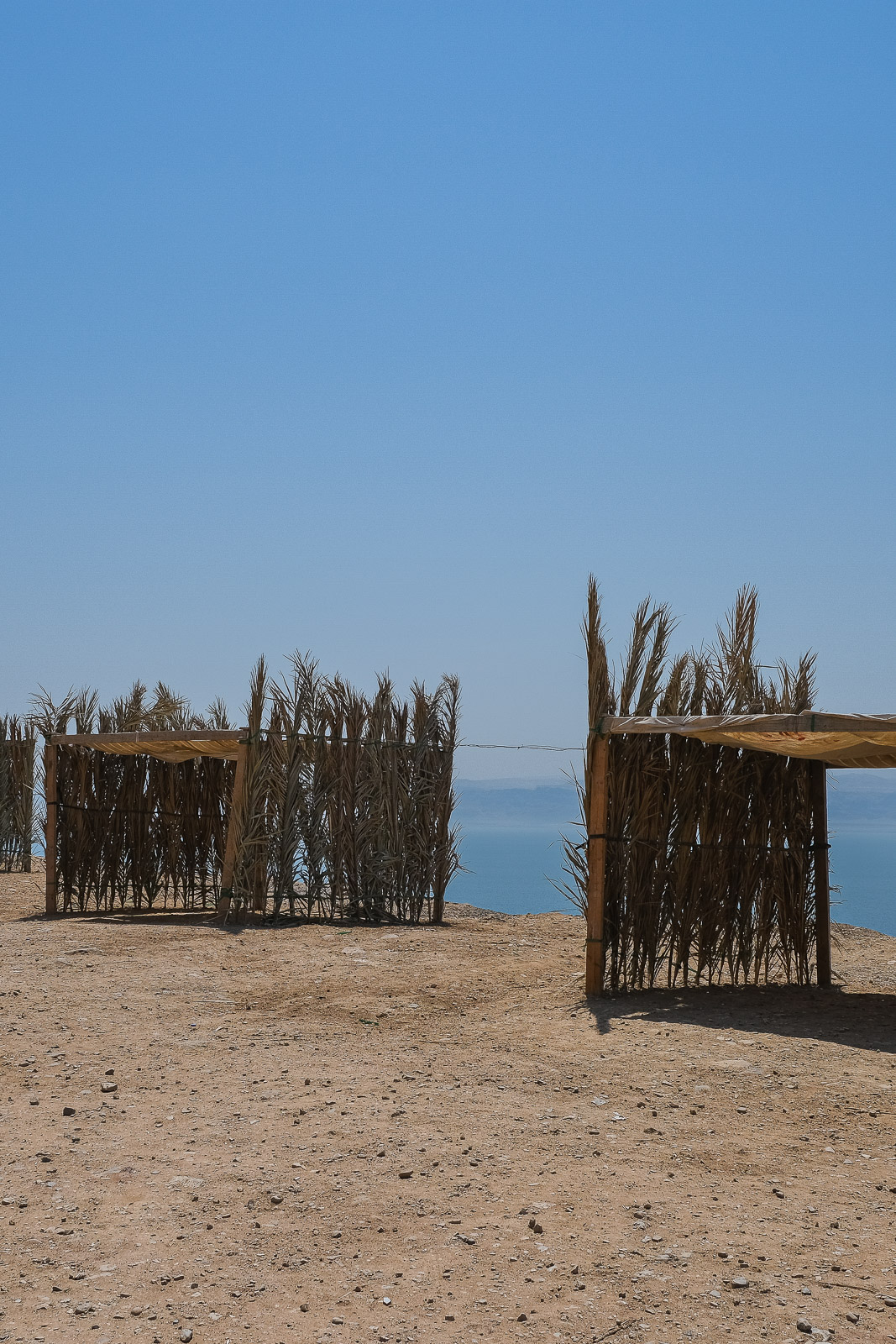
We passed a handful of deserted roadside stalls — likely bustling during the cooler spring and autumn months - offering a place to pause and take in the view of the salt lake. I especially loved the way salt crusted on the rocks, the bright white contrasting against the earthy tones.
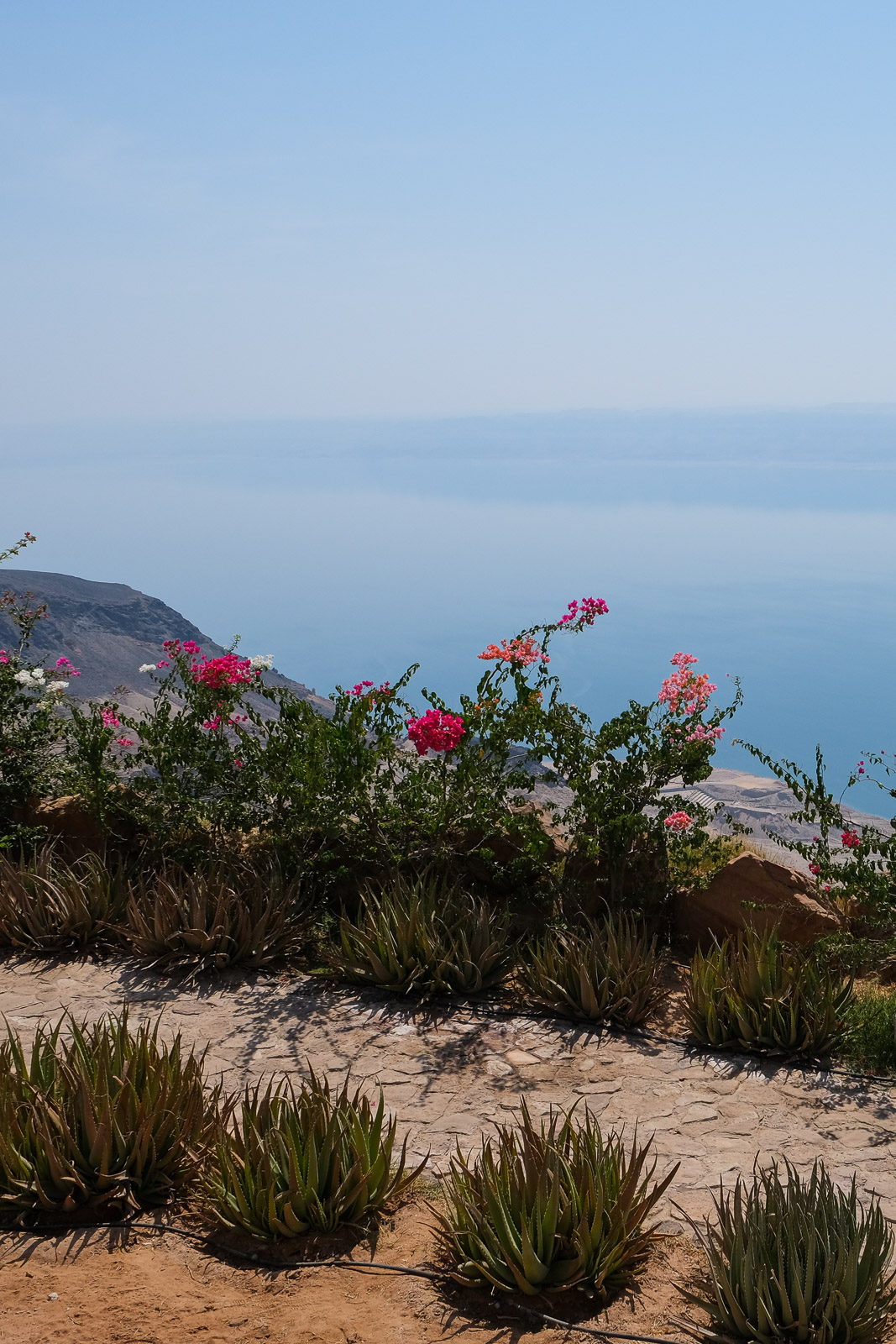
Hoping to find a vantage point overlooking the sea, we turned to Google Maps and chose to make our way to the Dead Sea Museum. We didn’t actually visit the museum — it was closed — but instead walked along the footpaths lined with bright pink flowers, admiring the view.
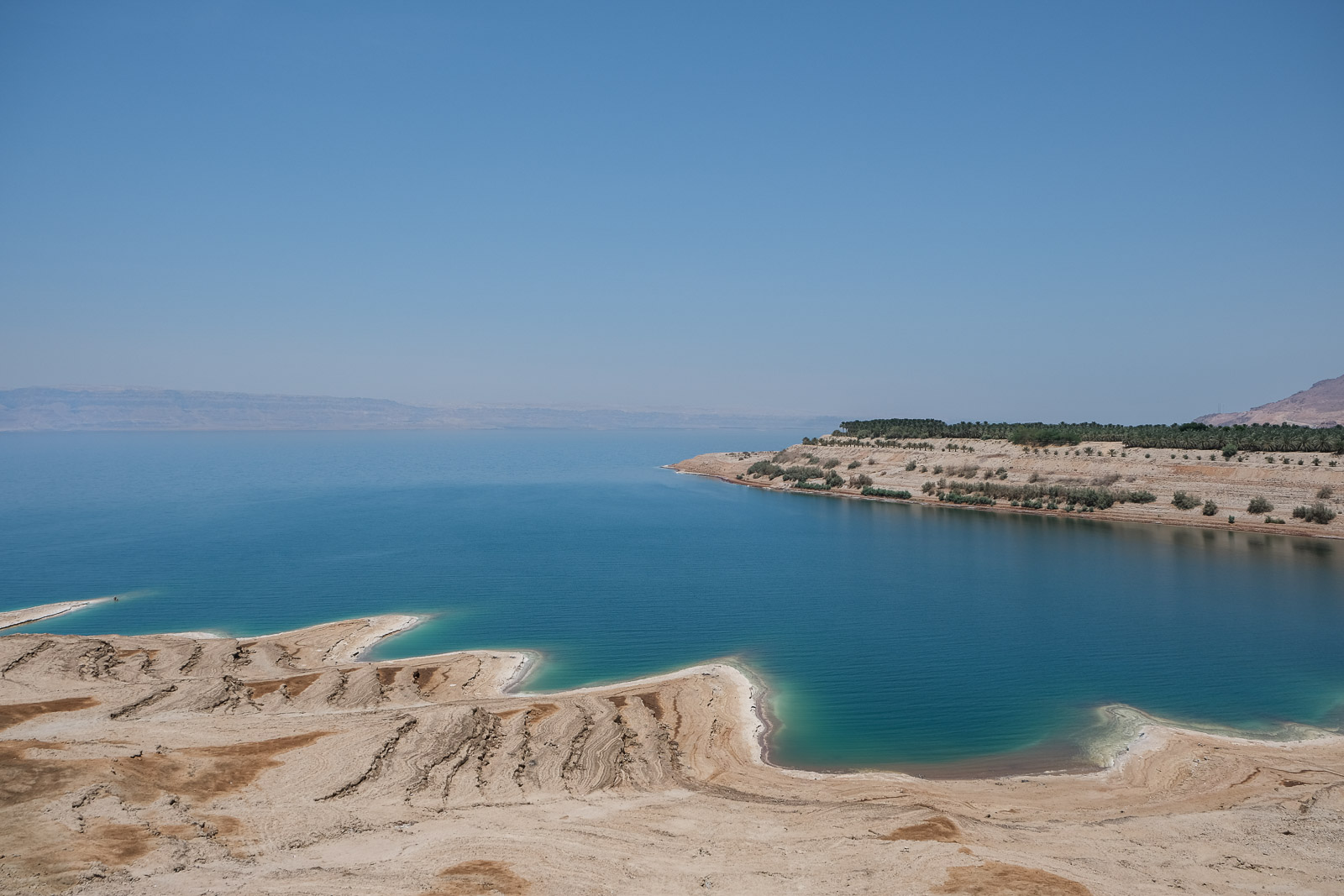
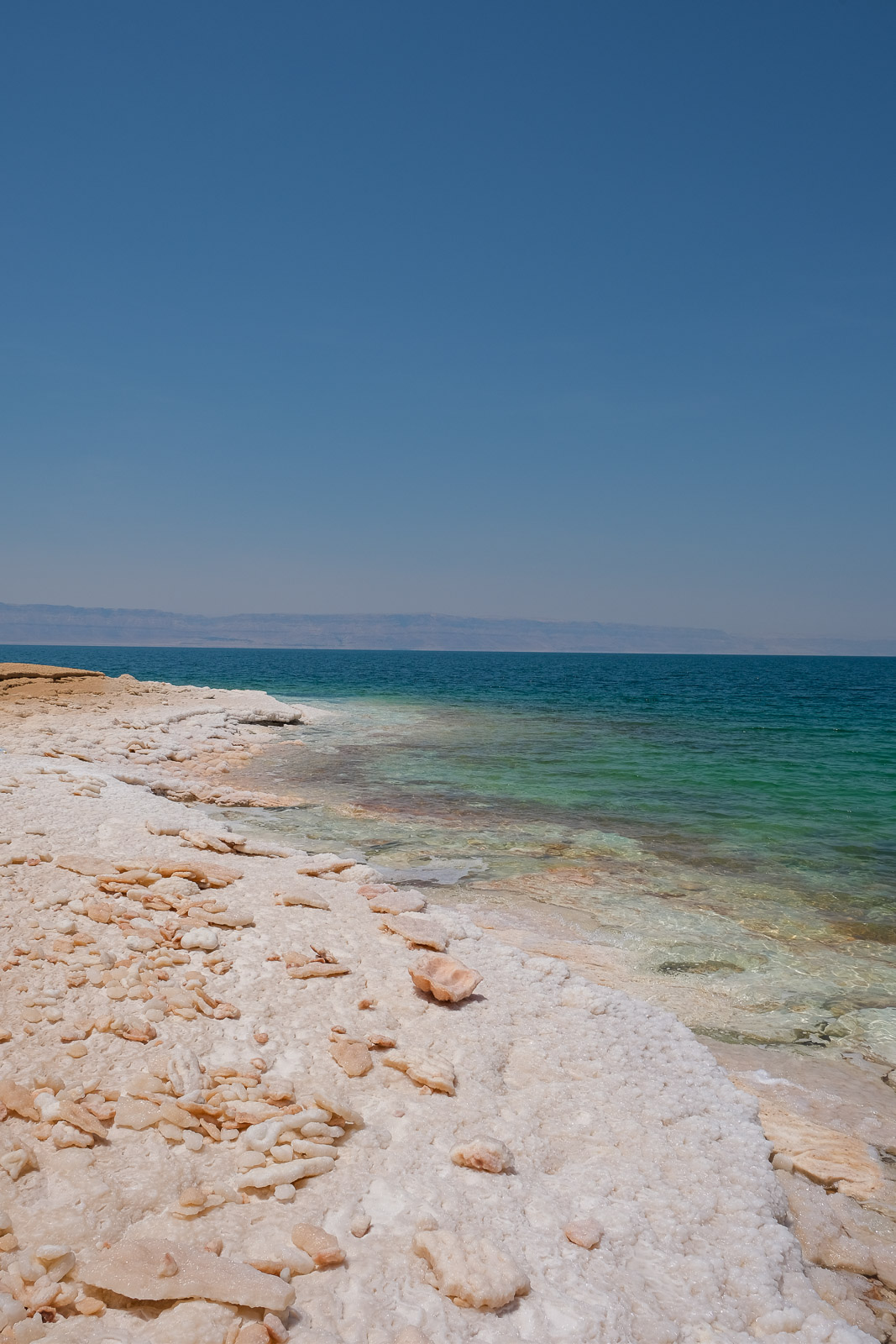
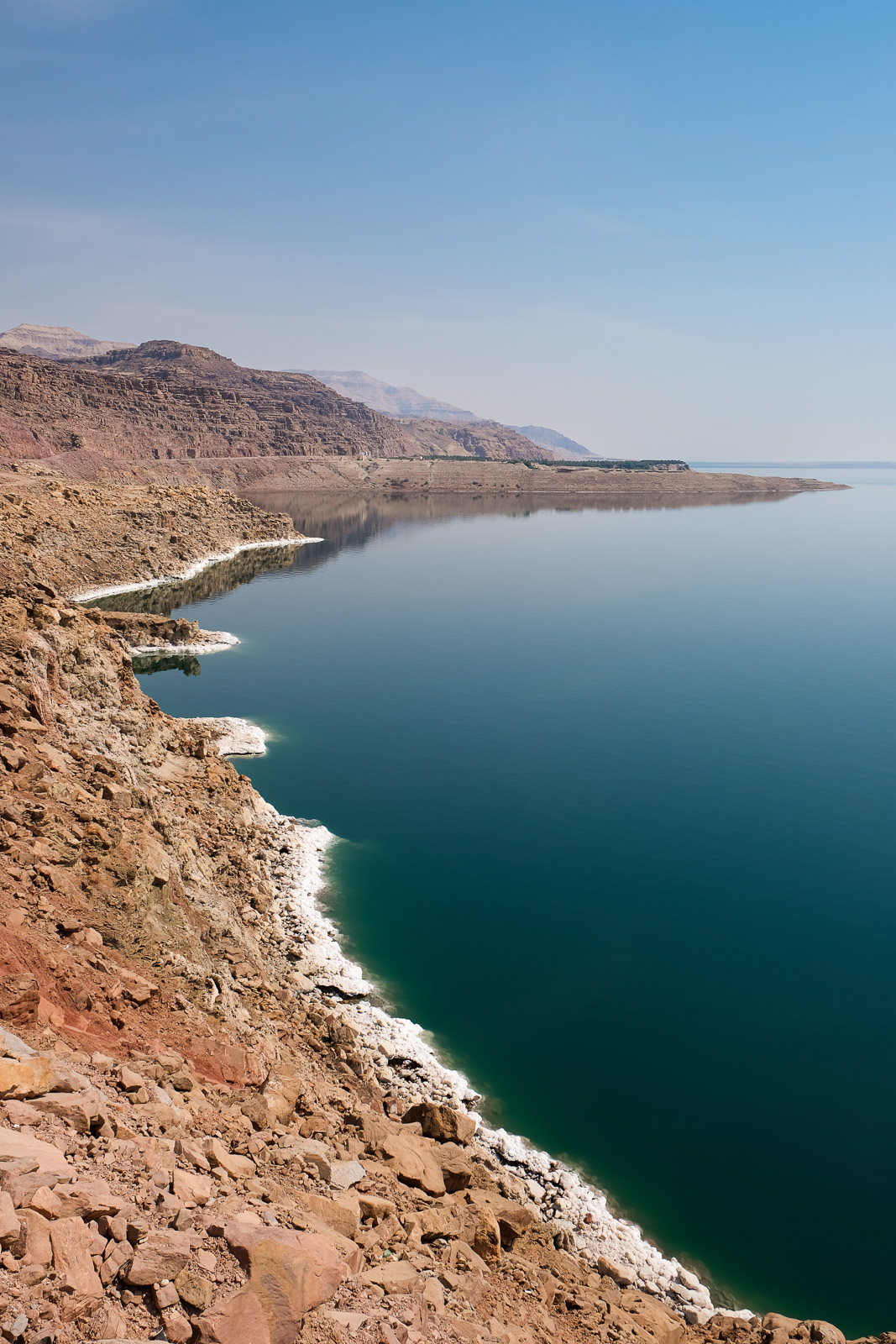
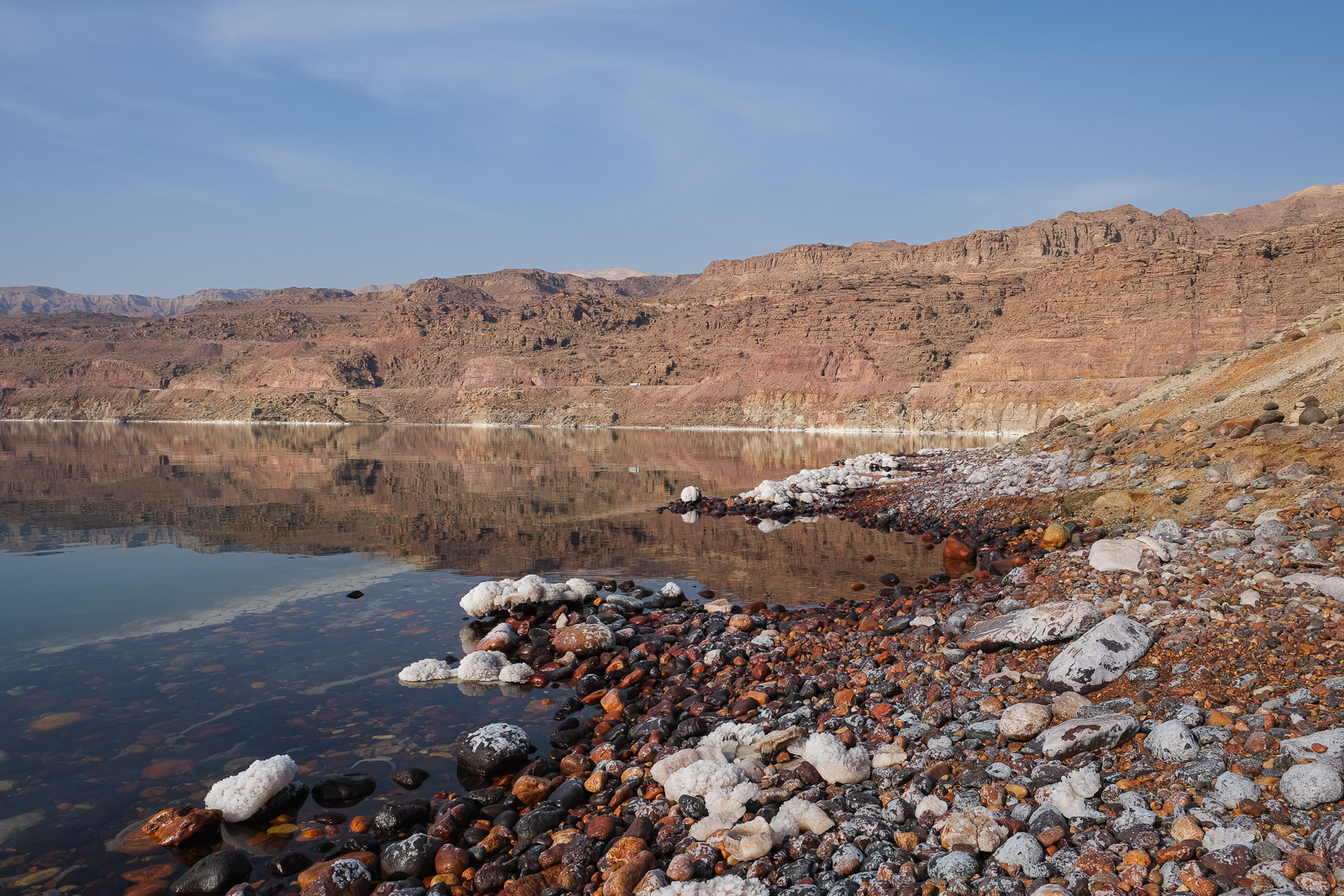
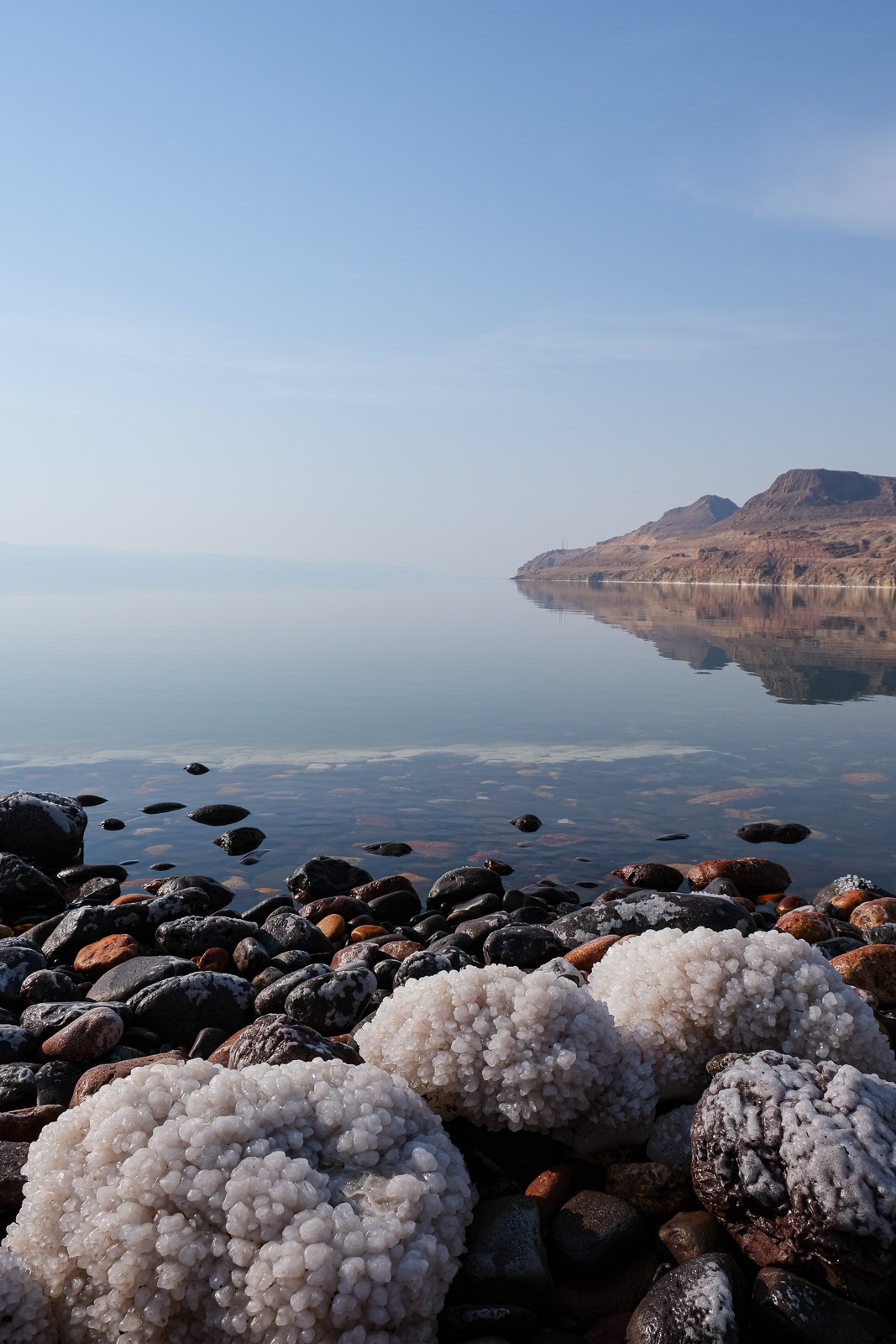
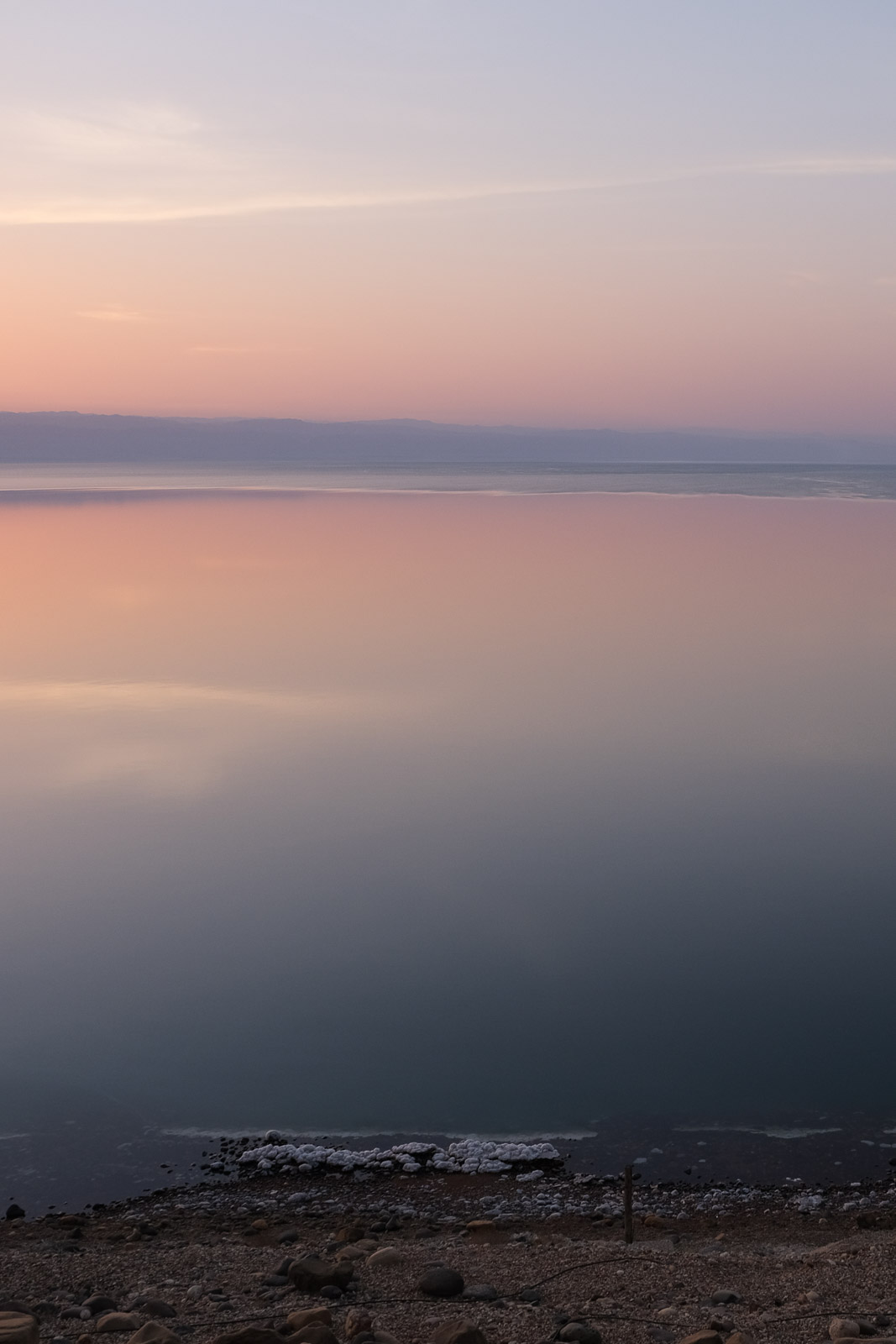
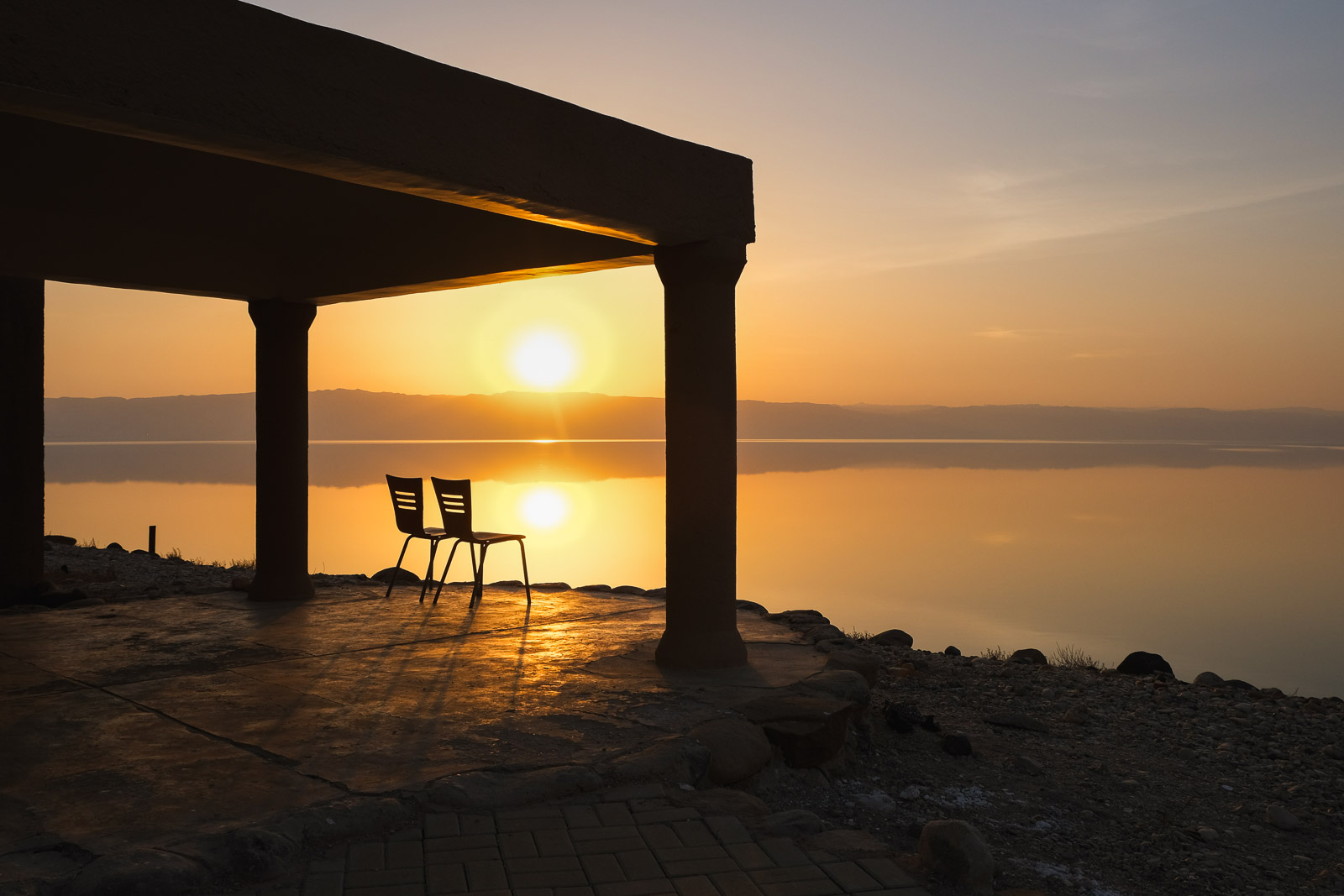
Our destination for the evening was the Mujib Chalets — a row of simple cottages perched just above the shores of the Dead Sea. The setting was hard to beat: no crowds, no noise, just the stillness of the water, and later the glow of a pink sunset. We could walk straight down to the water, where clusters of salt crystals, white and textured like coral or frost, lay among smoother rocks in shades of black, rust, and grey, polished by time and water. I couldn’t get over the combination of colours.
We coated our skin in mineral-rich clay and floated around for quite a while. Naturally, I learned the hard way to never let the water get anywhere near your eyes. One careless splash had me scrambling up the slippery (and then scorching) rocks in desperate search of fresh water. Still, the experience of floating effortlessly in one of the Earth’s saltiest bodies of water remains unforgettable.
Wadi Mujib
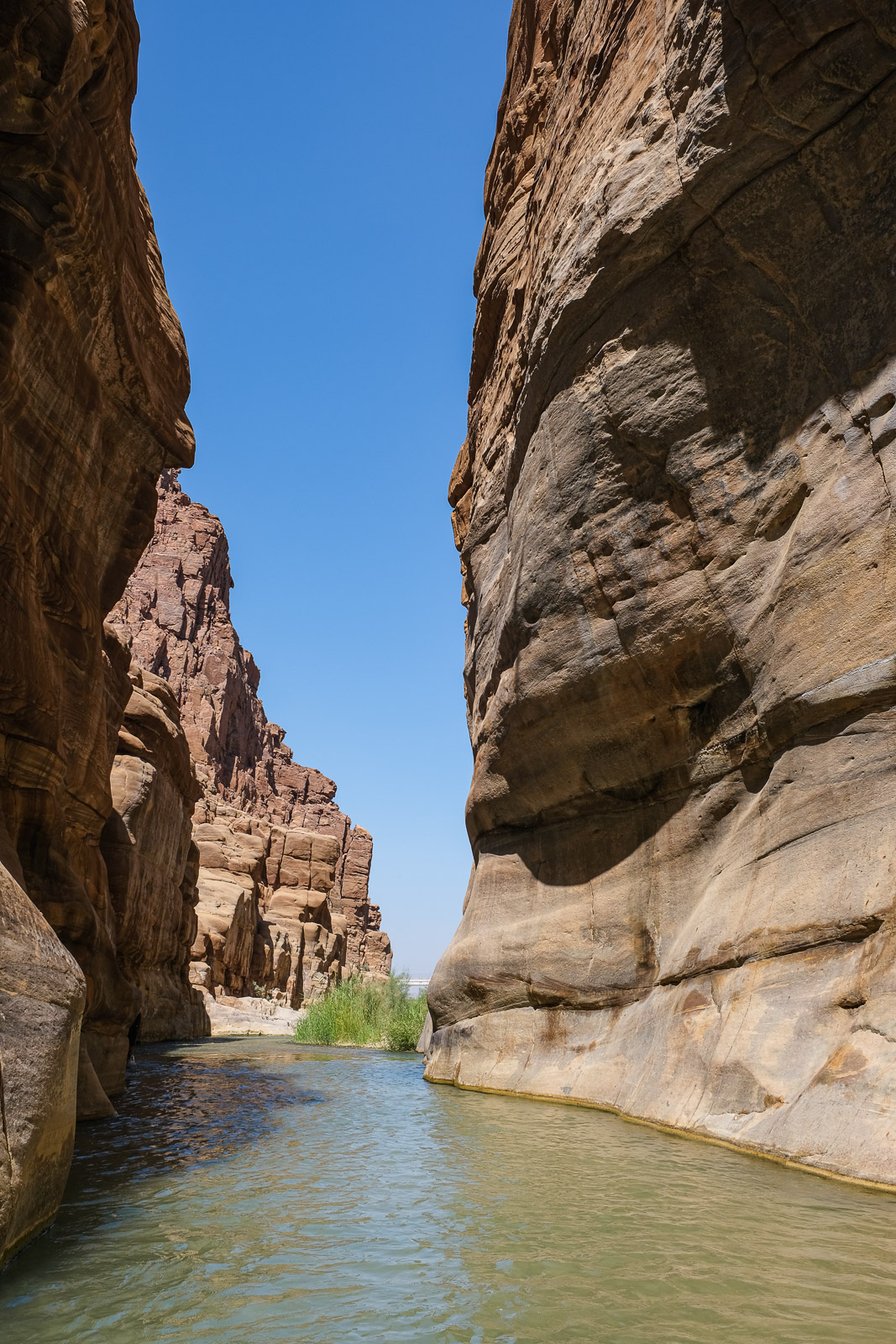
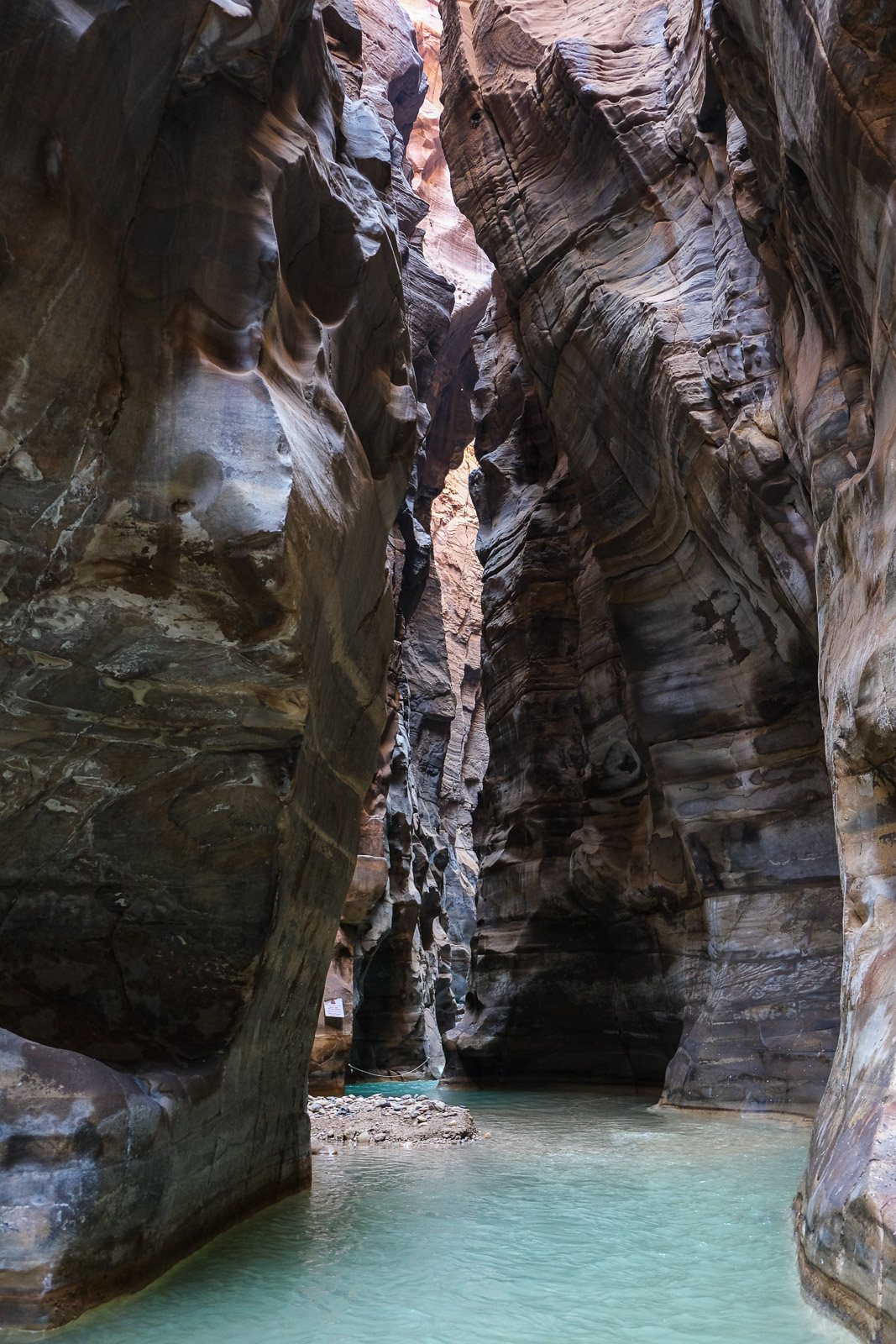
One of the perks of staying at the Mujib Chalets was its close proximity - just a few minutes’ walk - to Wadi Mujib, a deep sandstone gorge carved through the mountains. When water levels permit, you can follow a trail through the gorge to a waterfall, a route that usually involves a mix of wading, climbing, and swimming.
Arriving early in the morning meant we were able to explore and swim through the canyon almost entirely on our own. On the way out, however, we found ourselves caught in the incoming flow of visitors, at times having to wait quite a while for our turn to navigate the small waterfalls that required climbing-or sliding-down.
Dana
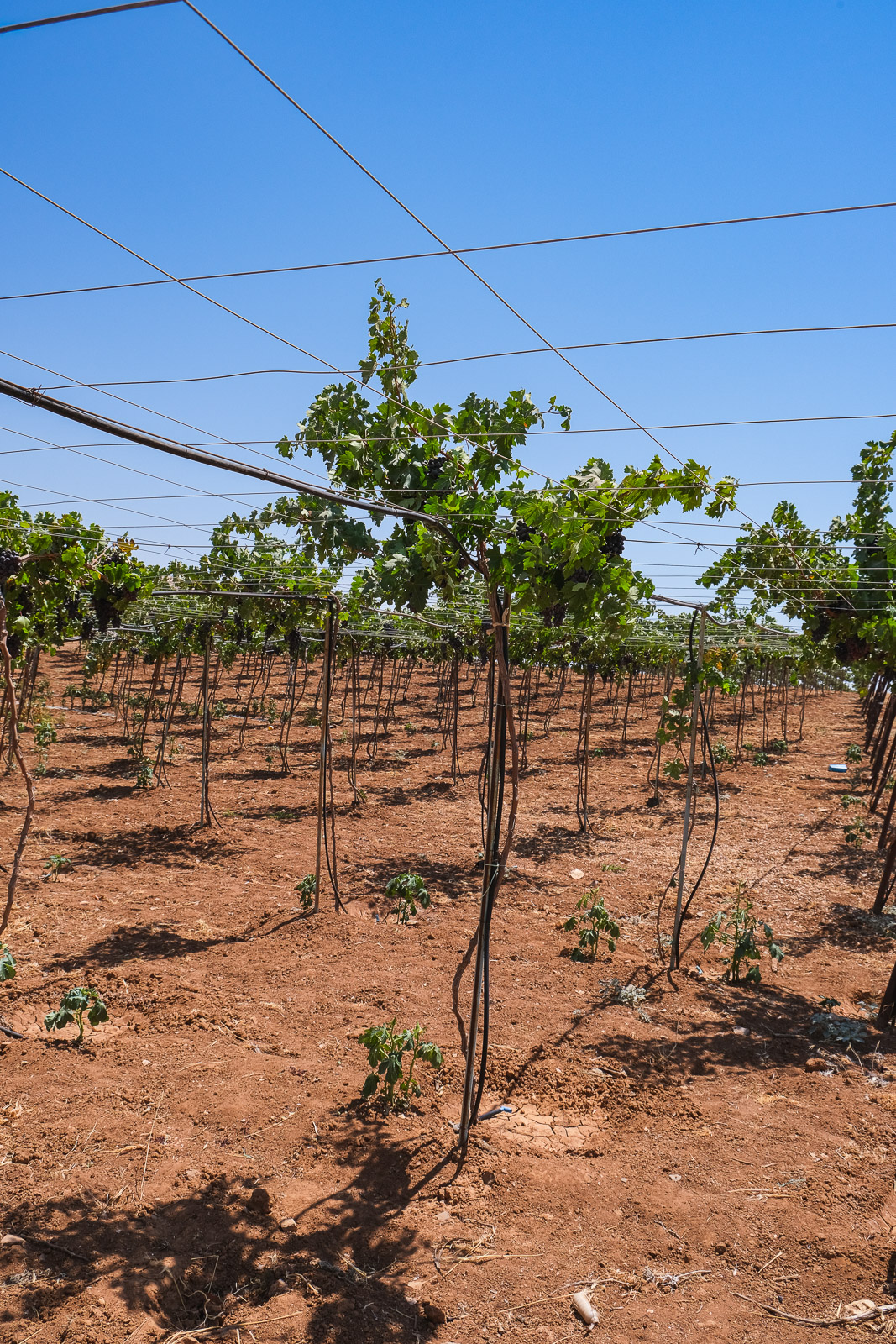
Our drive continued south before turning into the mountains toward Dana. I had pinned a location on Google Maps where I hoped to find a tomato field (30°54’13.4″N 35°28’53.4″E), but unfortunately we couldn’t spot even a single vegetable — unsurprising given the August heat and dryness. Nonetheless, it was a beautiful valley drive.
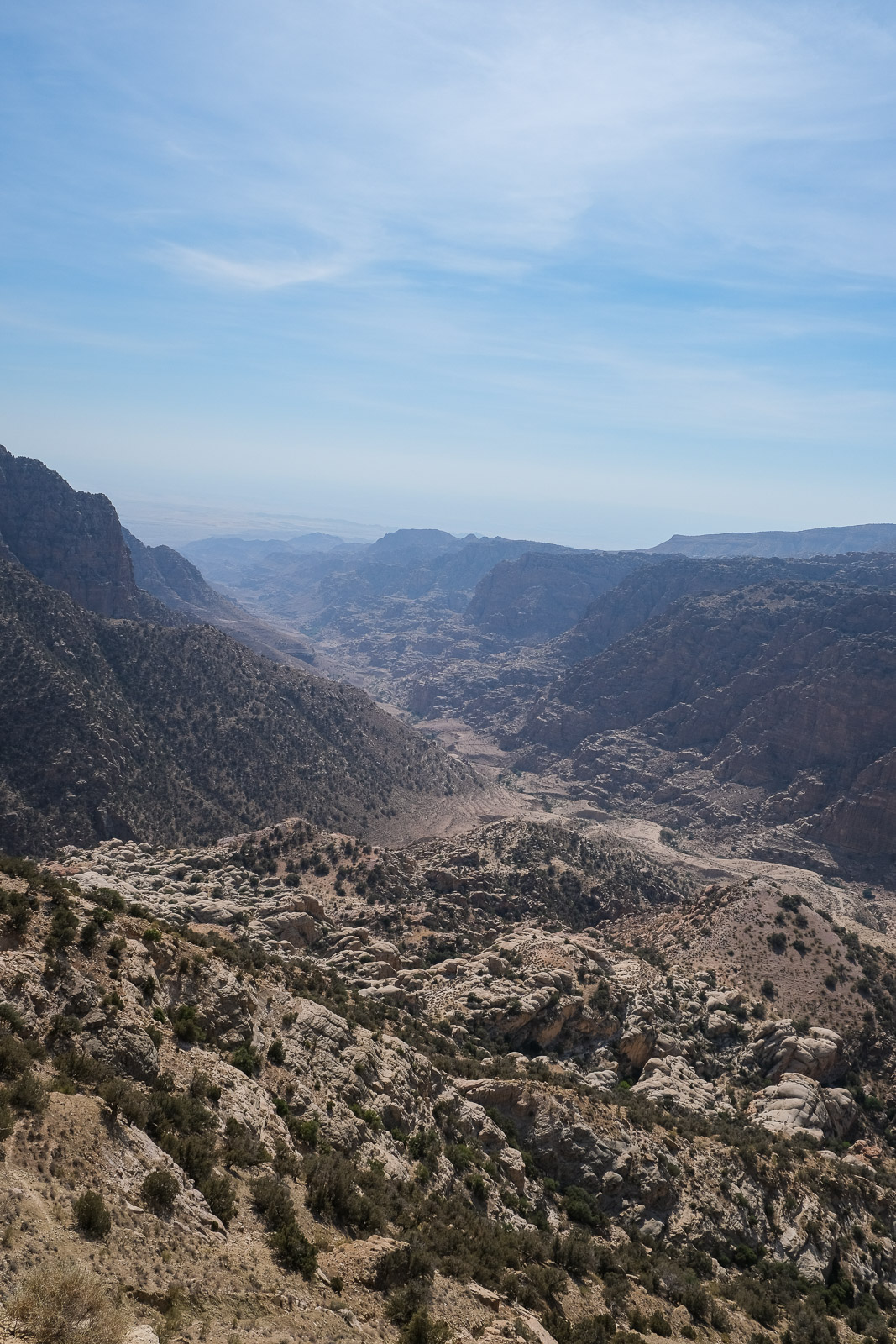
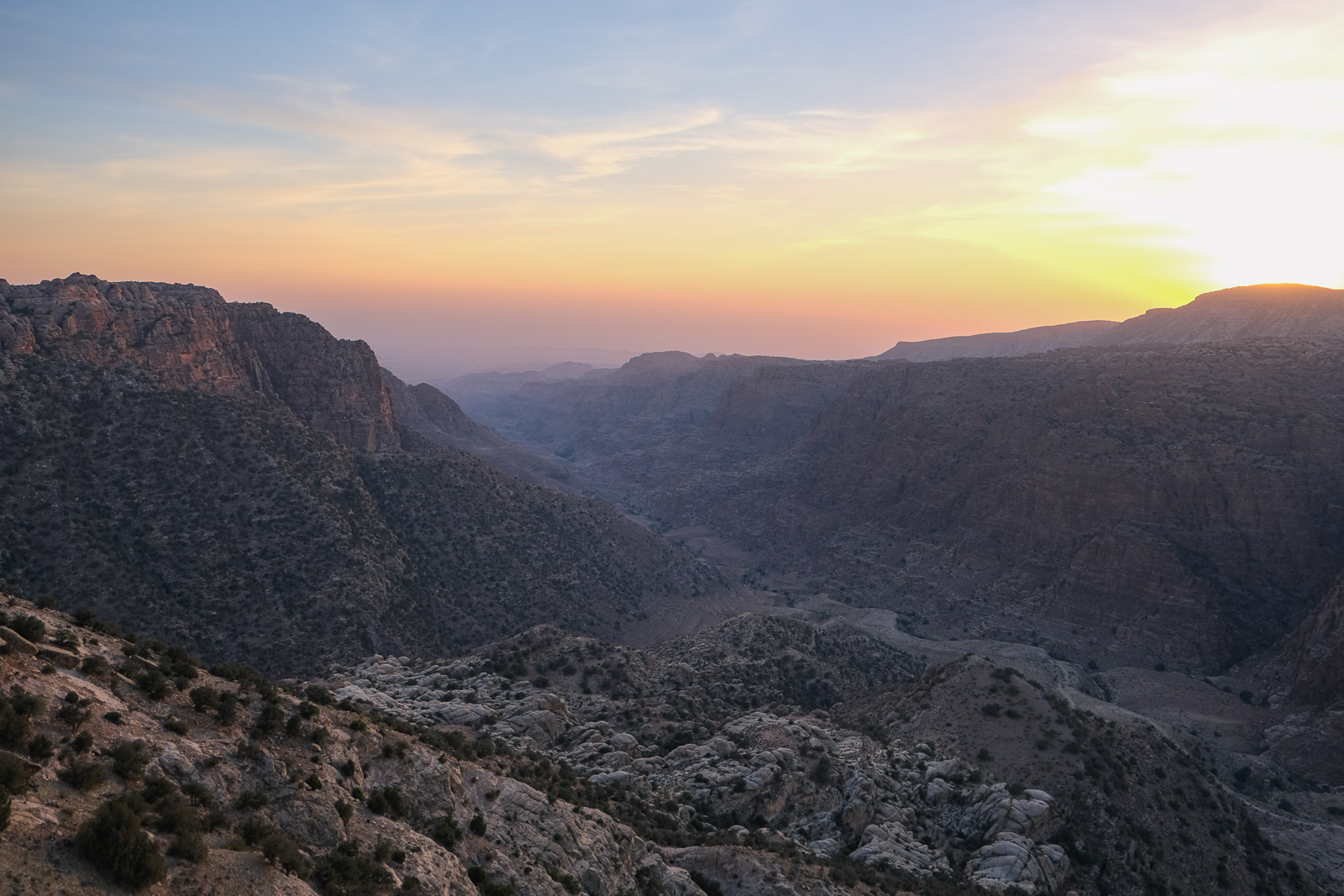
The stone village of Dana is perched on the edge of a vast valley, overlooking the Dana Biosphere Reserve, where rugged mountains give way to deep wadis. Perhaps because we weren’t visiting during the high season, the village felt extremely quiet, free of tourists. We stayed at the Dana Guesthouse, though I imagine any accommodation in the village would be just as enjoyable. The guesthouse is especially known for its sunset views overlooking Wadi Dana, and a section of the terrace is open to non-guests who wish to enjoy the sunset as well.
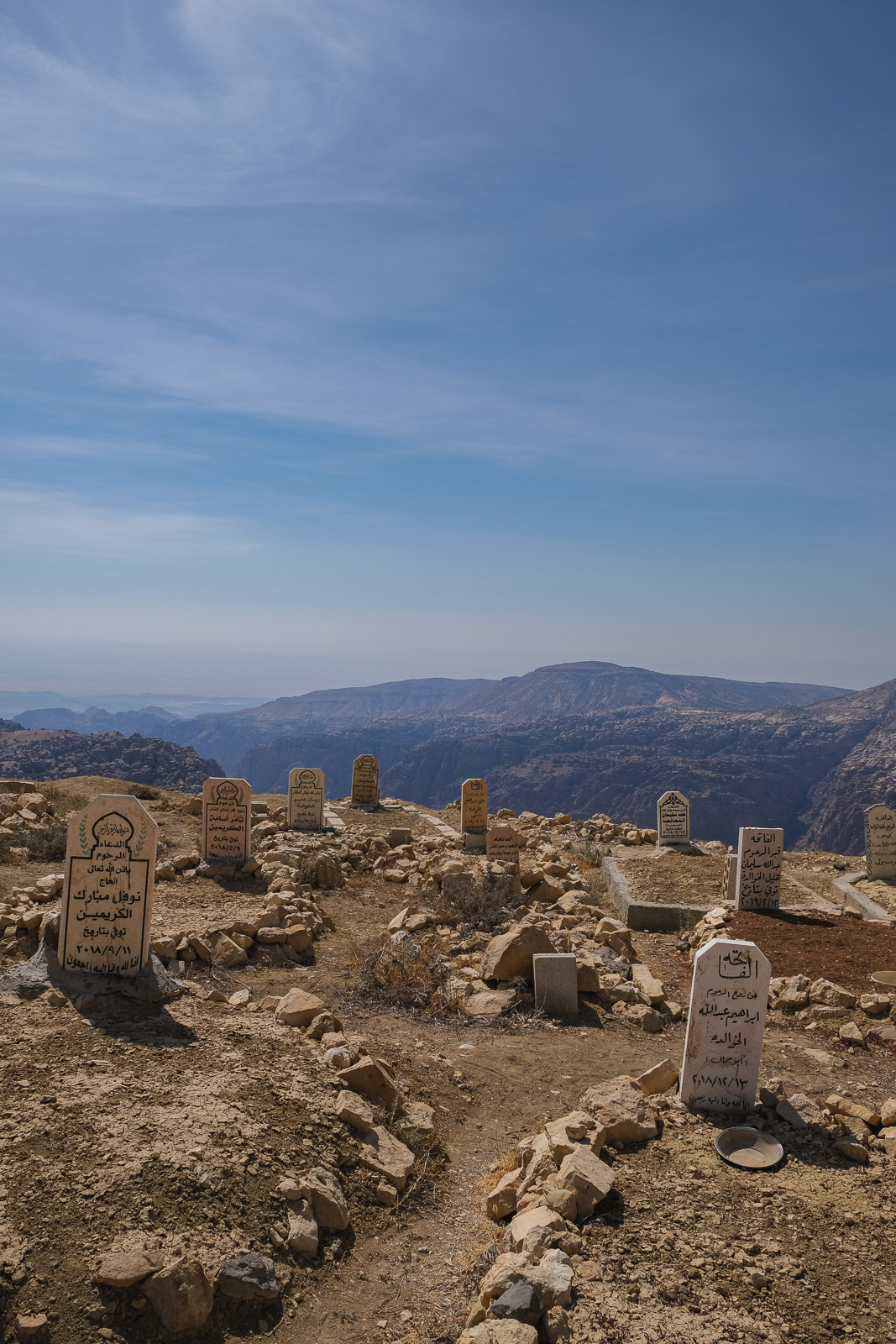
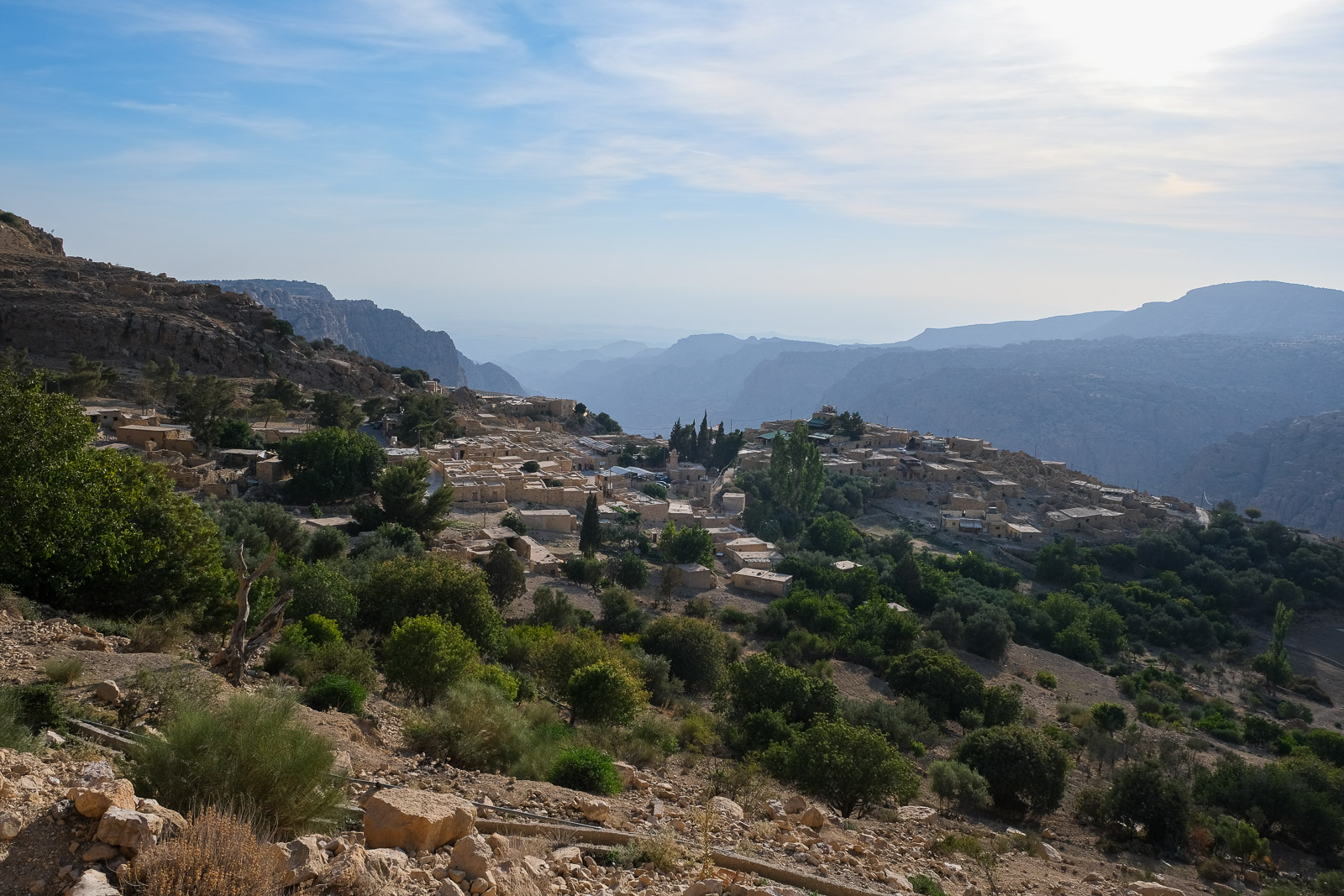
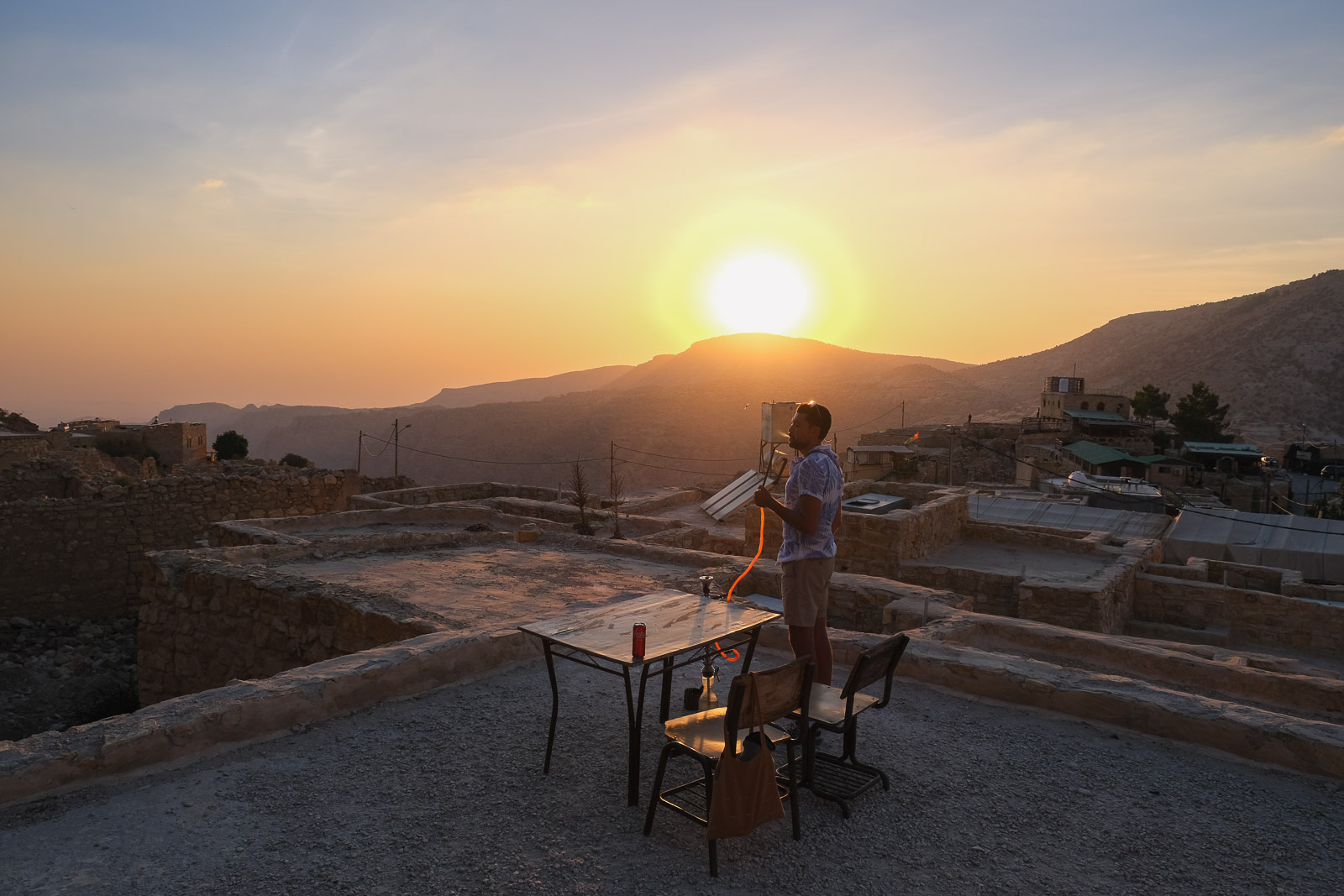
An absolute gem of a moment was stumbling upon a quiet restaurant (Fienanas) which had a couple tables and chairs — reminiscent of primary school — set atop a roof overlooking the village. We spent a long while chatting with the owner on a large outdoor couch, smoking argileh (shisha), before moving to the rooftop tables for the meal. There wasn’t a menu per say, so we simply put our faith in whatever was being prepared, and we were not disappointed: spiced ground beef, cooked tomatoes, onions, and potatoes (madde bel senie, as Syrians would call it).
Wadi Dana
Our plan in Dana was mostly oriented toward hiking. There are a number of small hikes, especially around Rummana campsite, however we had our sights set on Wadi Dana and Wadi Ghuweir.
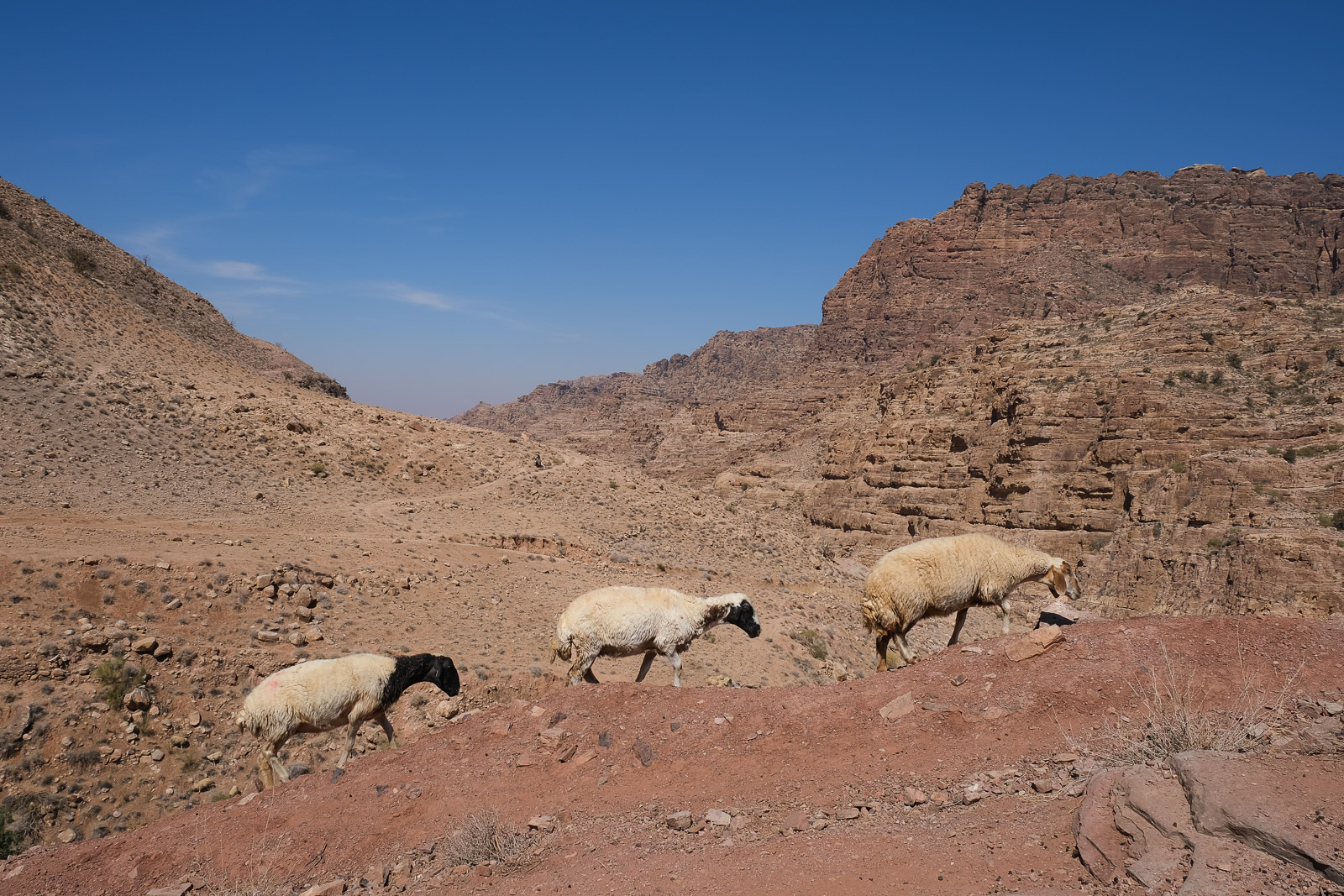
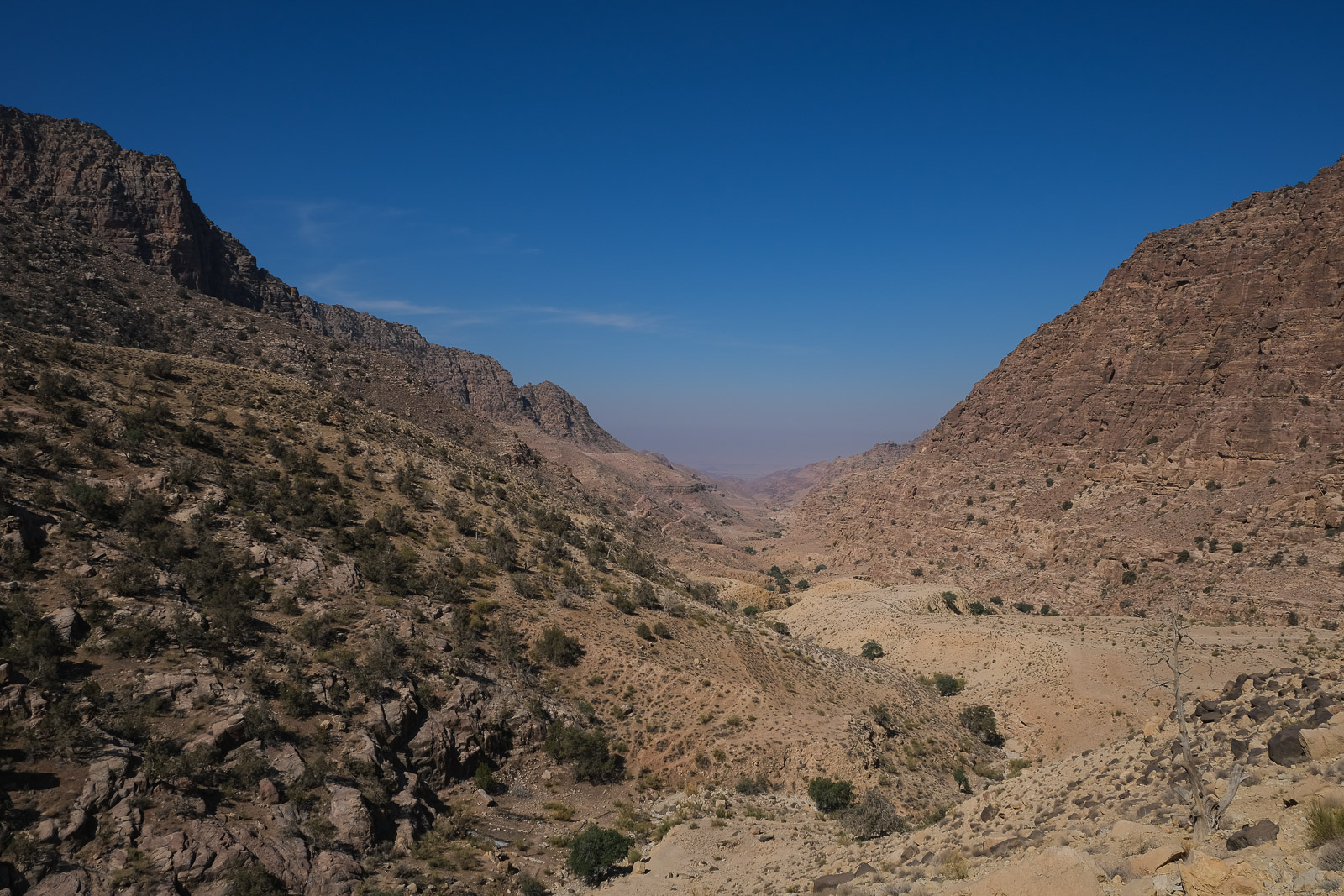
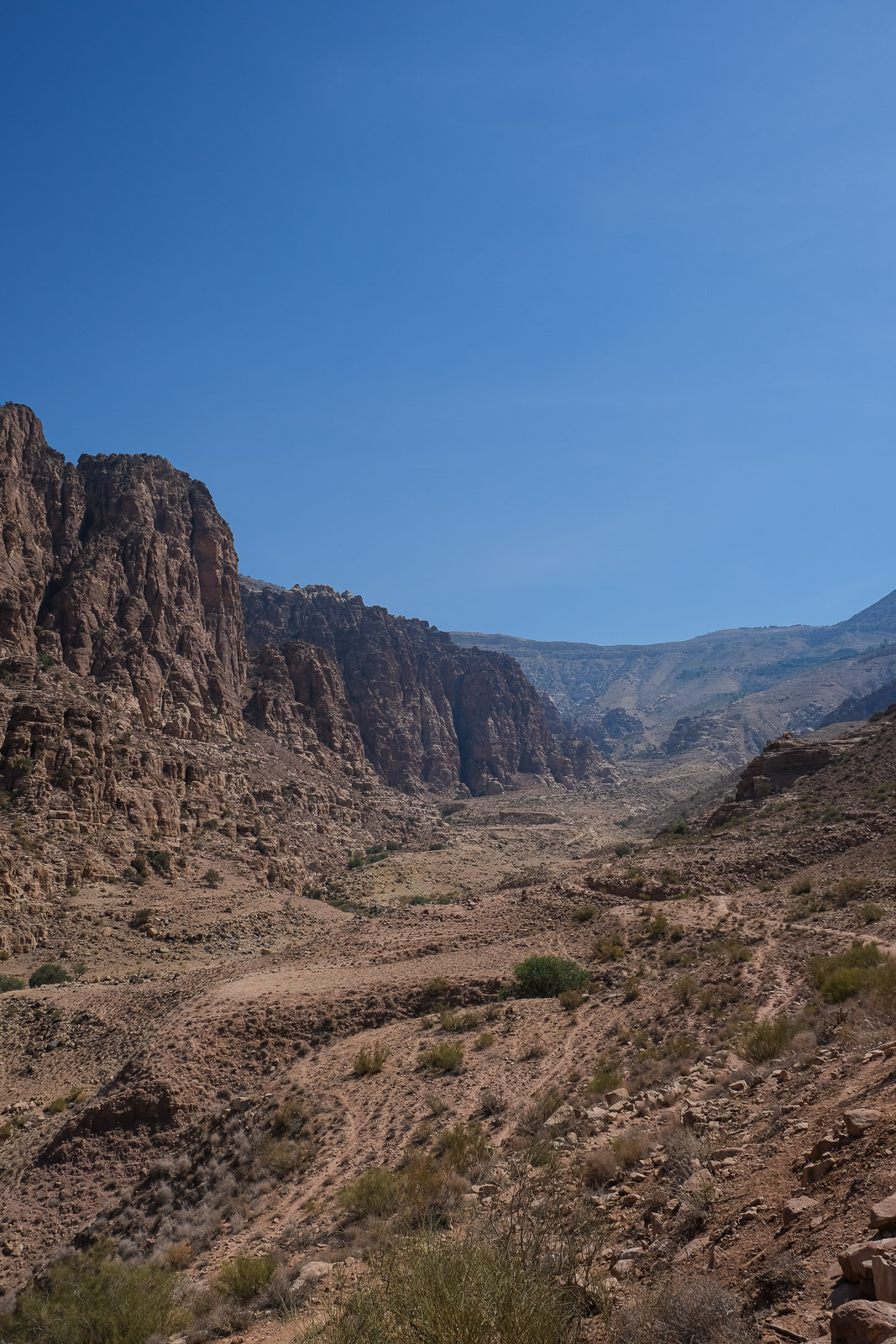
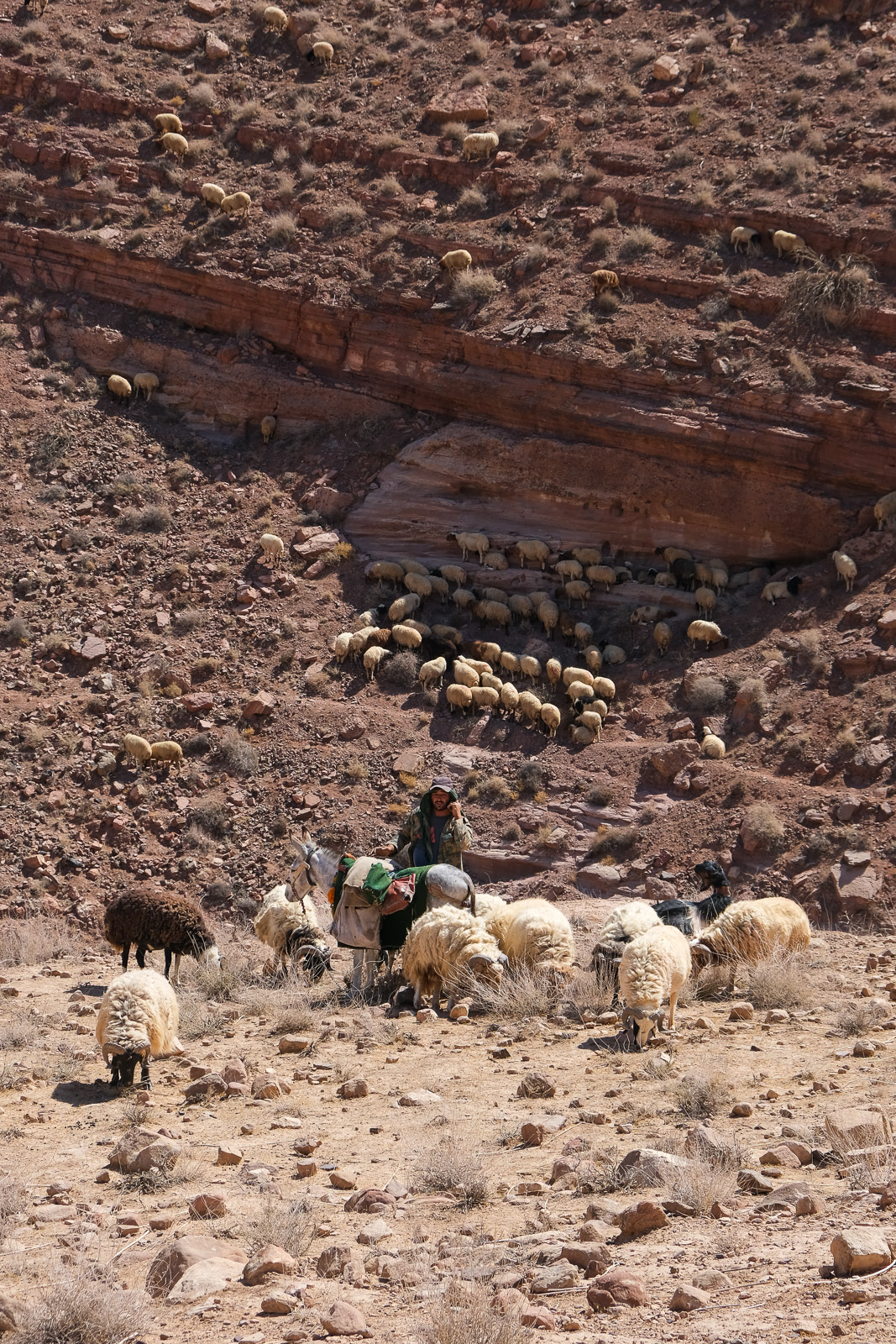
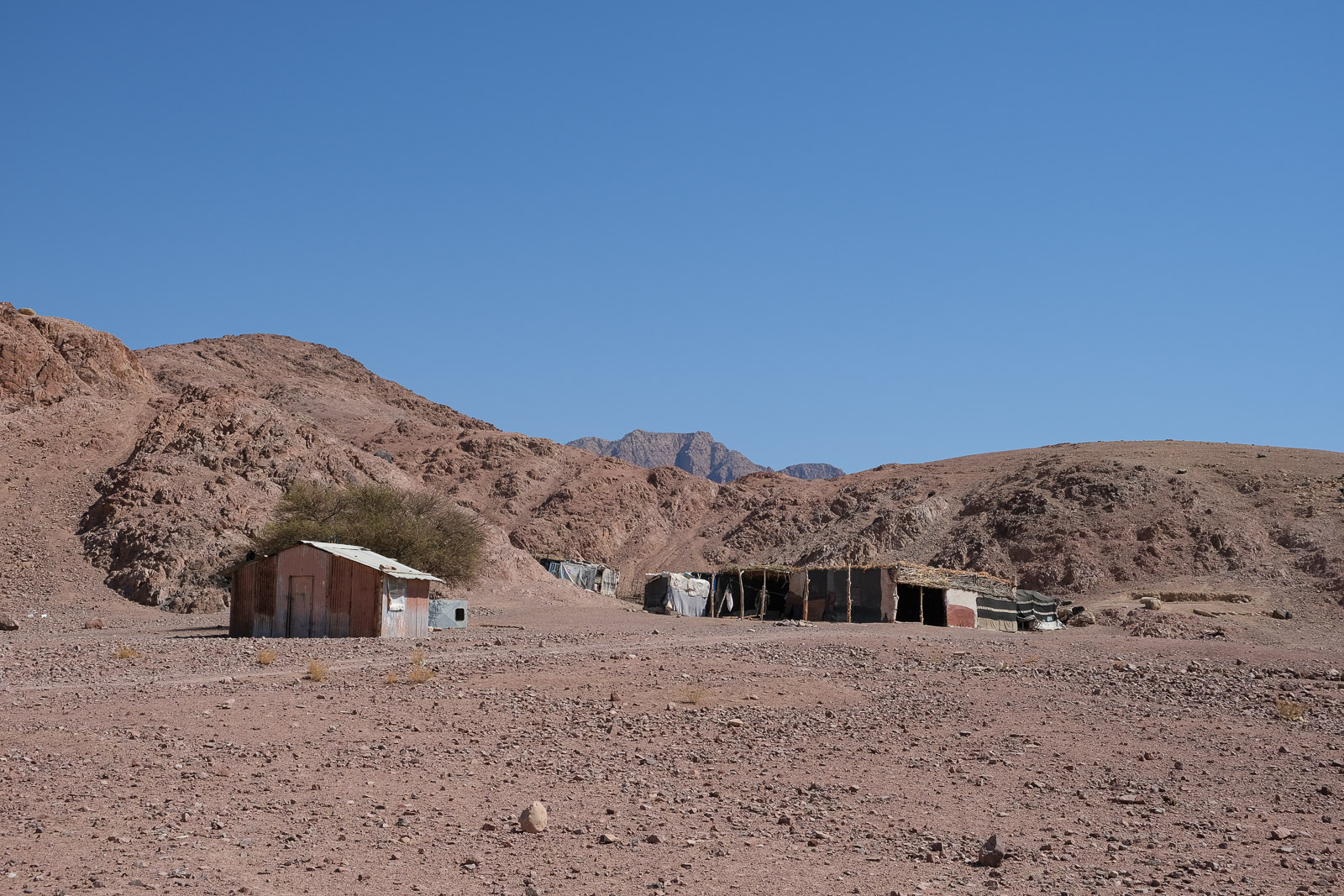
The Wadi Dana Trail begins directly in the village, descending into the valley, and ends at Feynan Ecolodge. The hike is roughly 15 km long and takes about 5 hours at a slow pace (one way). As you descend deeper into the valley, you pass Bedouin settlements and encounter shepherds herding their sheep or goats. I would definitely recommend starting in Dana rather than from the ecolodge so as to avoid climbing in the demanding heat.
Wadi Ghuweir
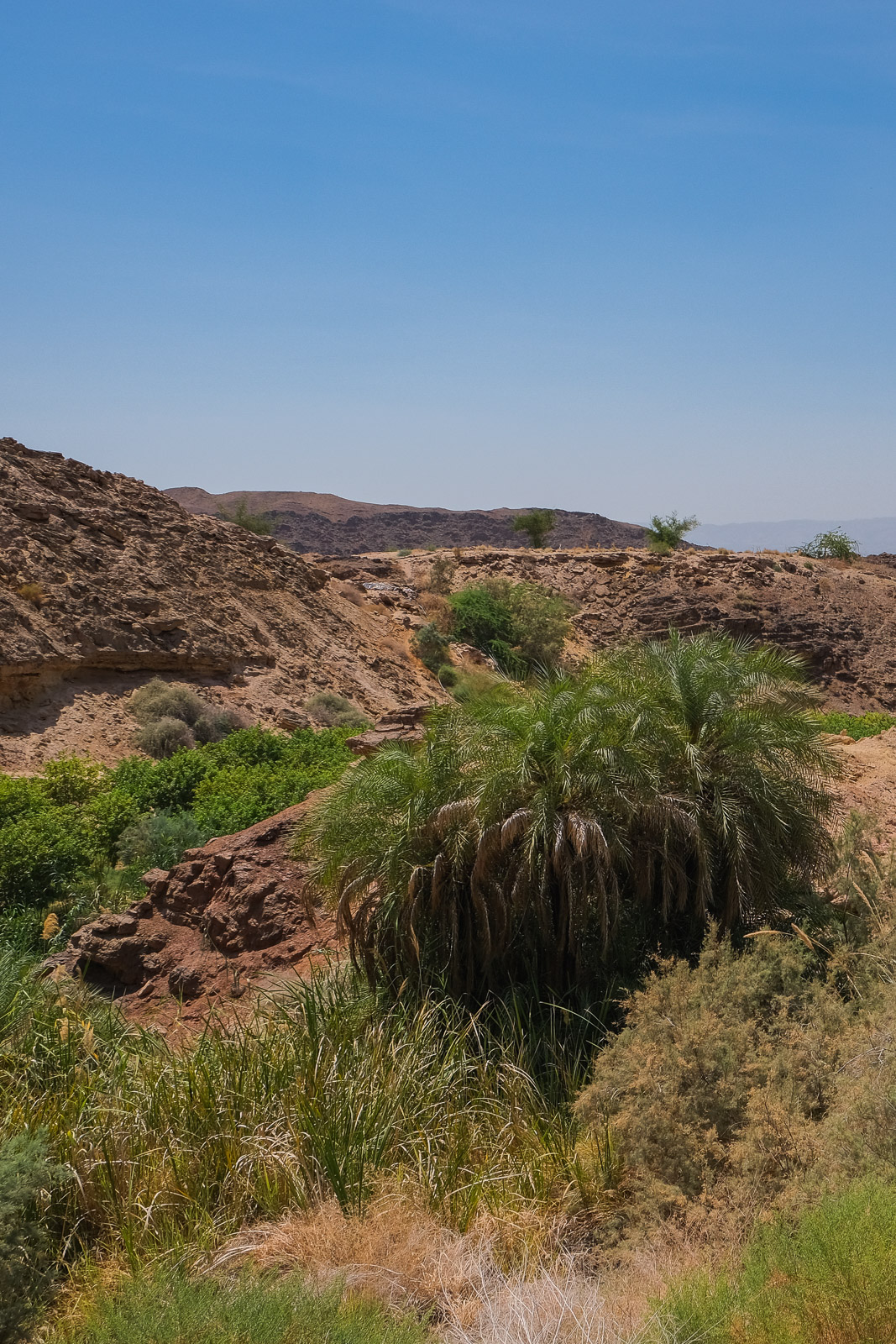
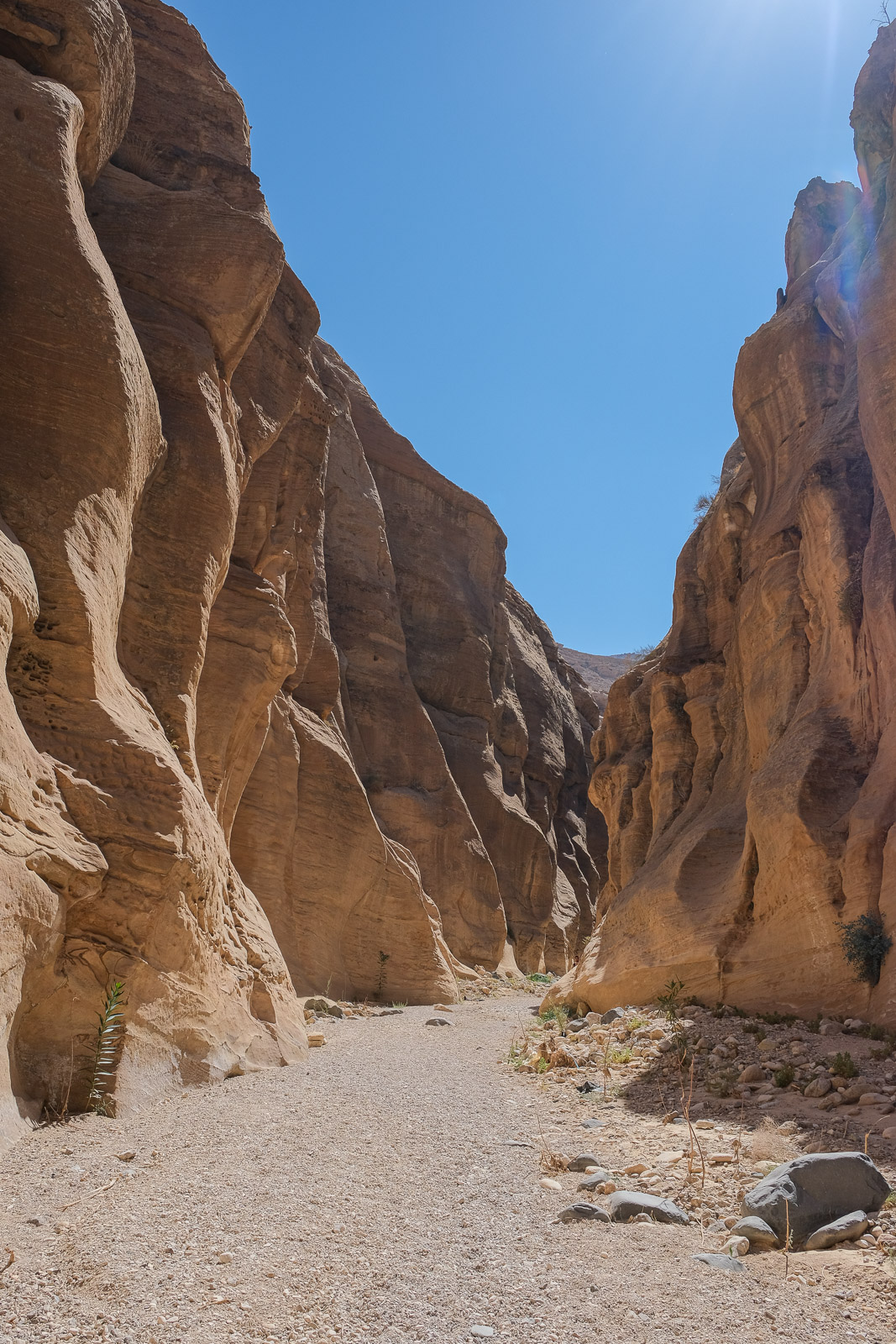
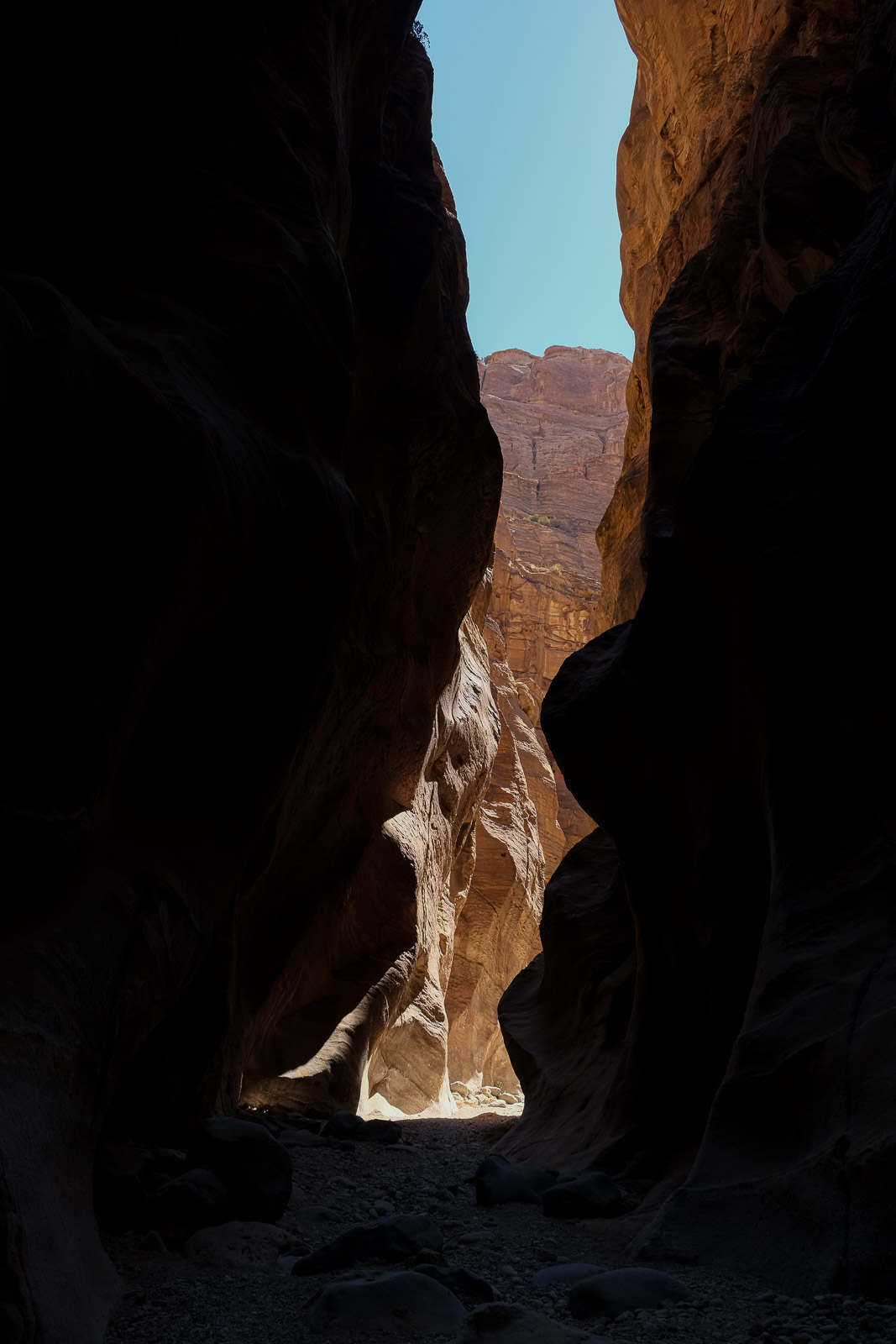
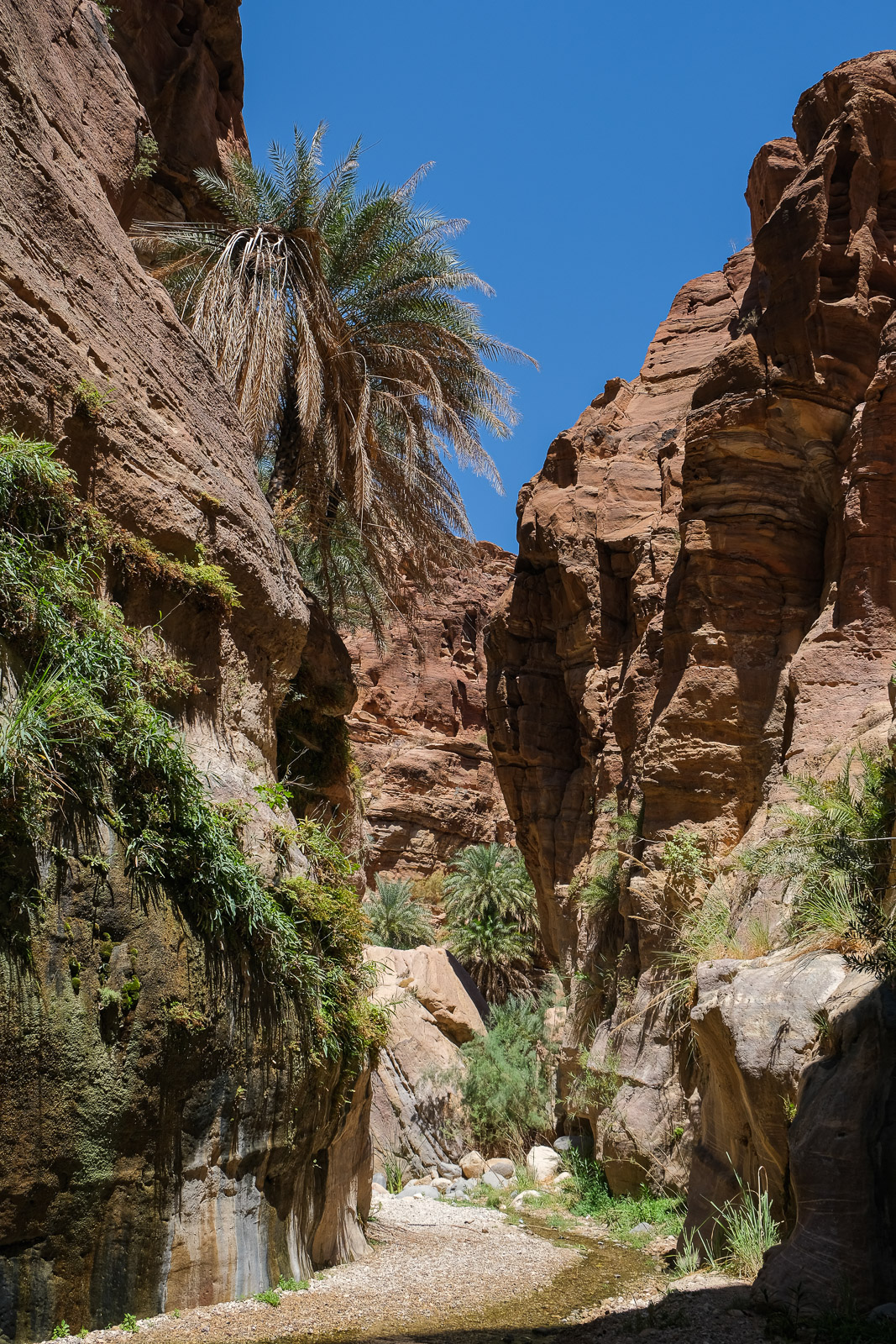
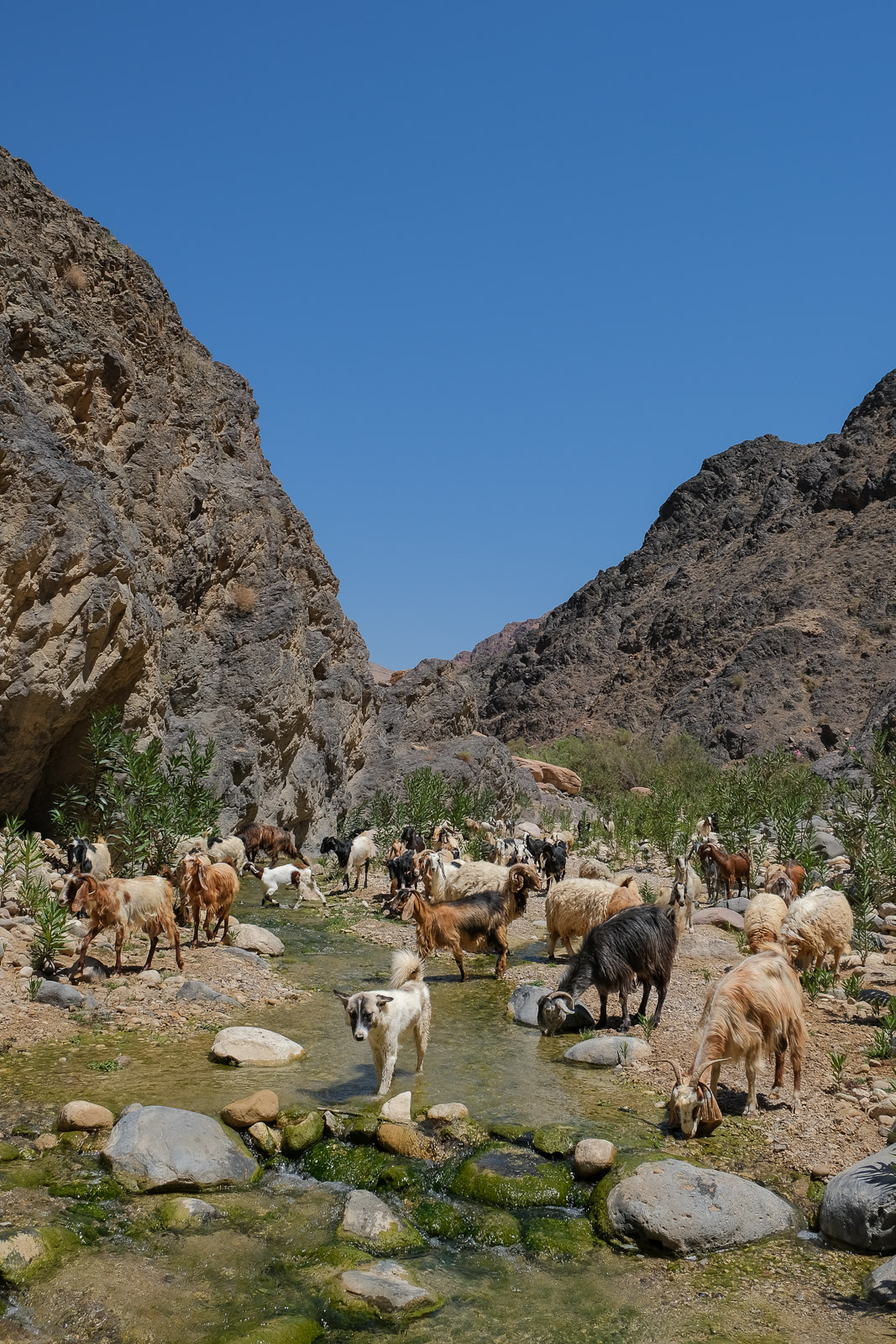
The Wadi Ghuweir Trail was by far our favourite. The trail begins near Al-Mansoura (not within walking distance of Dana Village), winding through a dramatic sandstone canyon that starts out dry and narrow before gradually giving way to flowing water, greenery, and, most impressively, palm trees arching from one canyon wall to the other. If you’re lucky, you might even encounter herds of goats stopping for a drink along the way. About halfway through, a clear pool offers a great spot to rest or swim (and perhaps even enjoy a cup or two of what I like to call Bedouin tea - black tea with a lot of sugar). Although we had a guide with us, in retrospect it wasn’t necessary, as there are very few places where you could actually lose your way.
Similarly to the Wadi Dana Trail, Wadi Ghuweir ended walking distance from Feynan Ecolodge, which is where we would be spending the night. I would recommend hiking Wadi Dana down to the ecolodge, spending the night, and hiking back out the next day via Wadi Ghuweir.
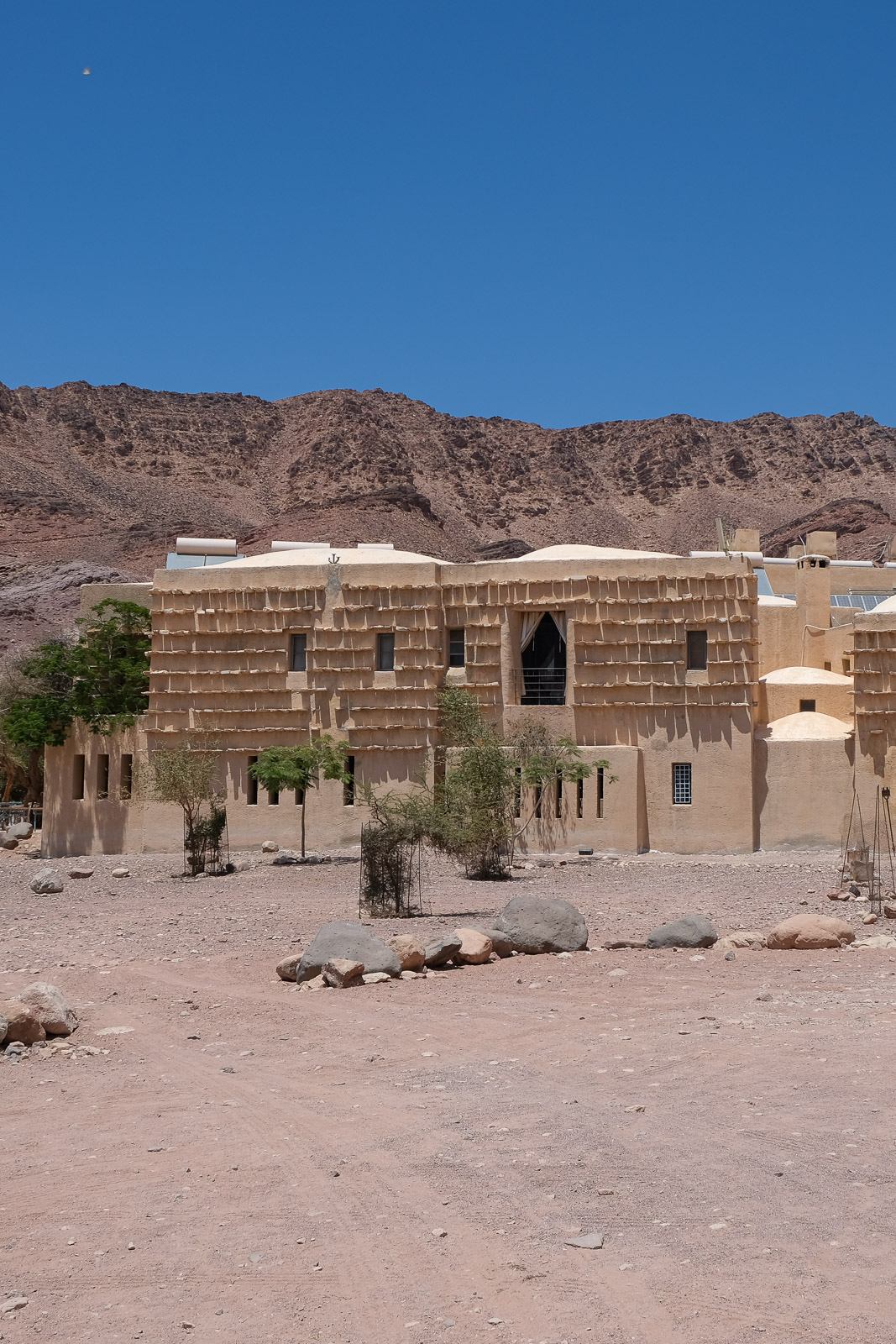
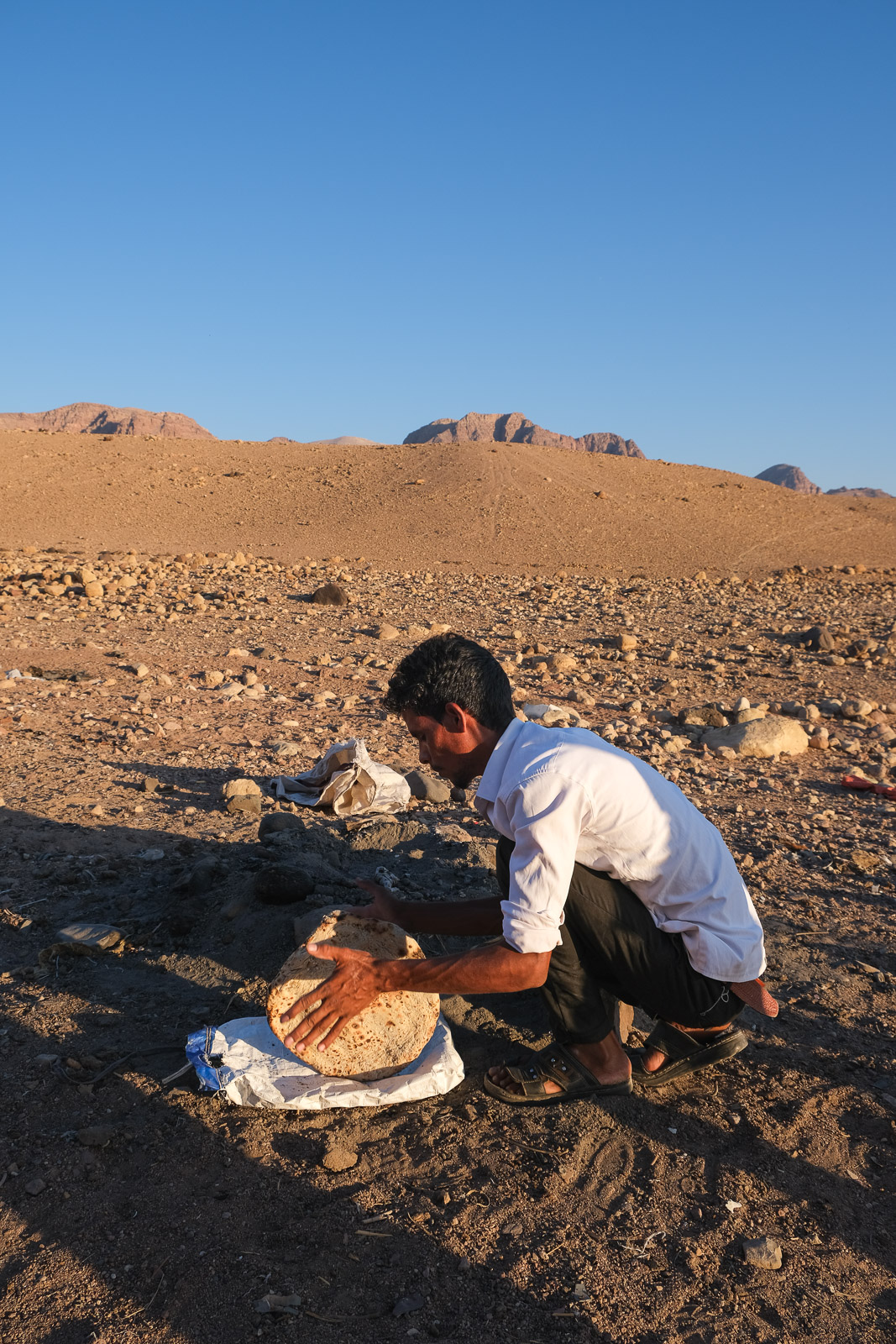
Tucked deep in the desert valley, built from local stone and lit almost entirely by candles, Feynan Ecolodge felt like a quiet sanctuary. The lodge has a number of different activities on offer, and we chose to visit a nearby Bedouin family where several women, and one of their sons, showed us how they bake “arbood” (traditional Bedouin bread) directly in ashes under the sand. It was warm and delicious.
After watching the desert sunset from a nearby spot, everyone gathered on the ecolodge’s roof for stargazing, including planet spotting through a telescope. With virtually no light pollution around, the night sky was hard to beat.
As there was no air conditioning in the ecolodge's rooms, anyone feeling too hot overnight could simply grab their pillow and blanket and claim one of the stargazing mats on the roof. A moment that will forever stay with me was when I woke up in the middle of the night to find myself alone in the room. Worried I might be missing out on an experience, I grabbed my pillow and rushed to the rooftop, only to find it covered with sleeping bodies. In the darkness, it took me a while to find the right mat— moving from one to the next, inspecting the shoes until I finally spotted the familiar pair I was looking for. Waking up to the colours of the sunrise, along with the animal sounds that accompany it, was unforgettable.
Wadi Rum
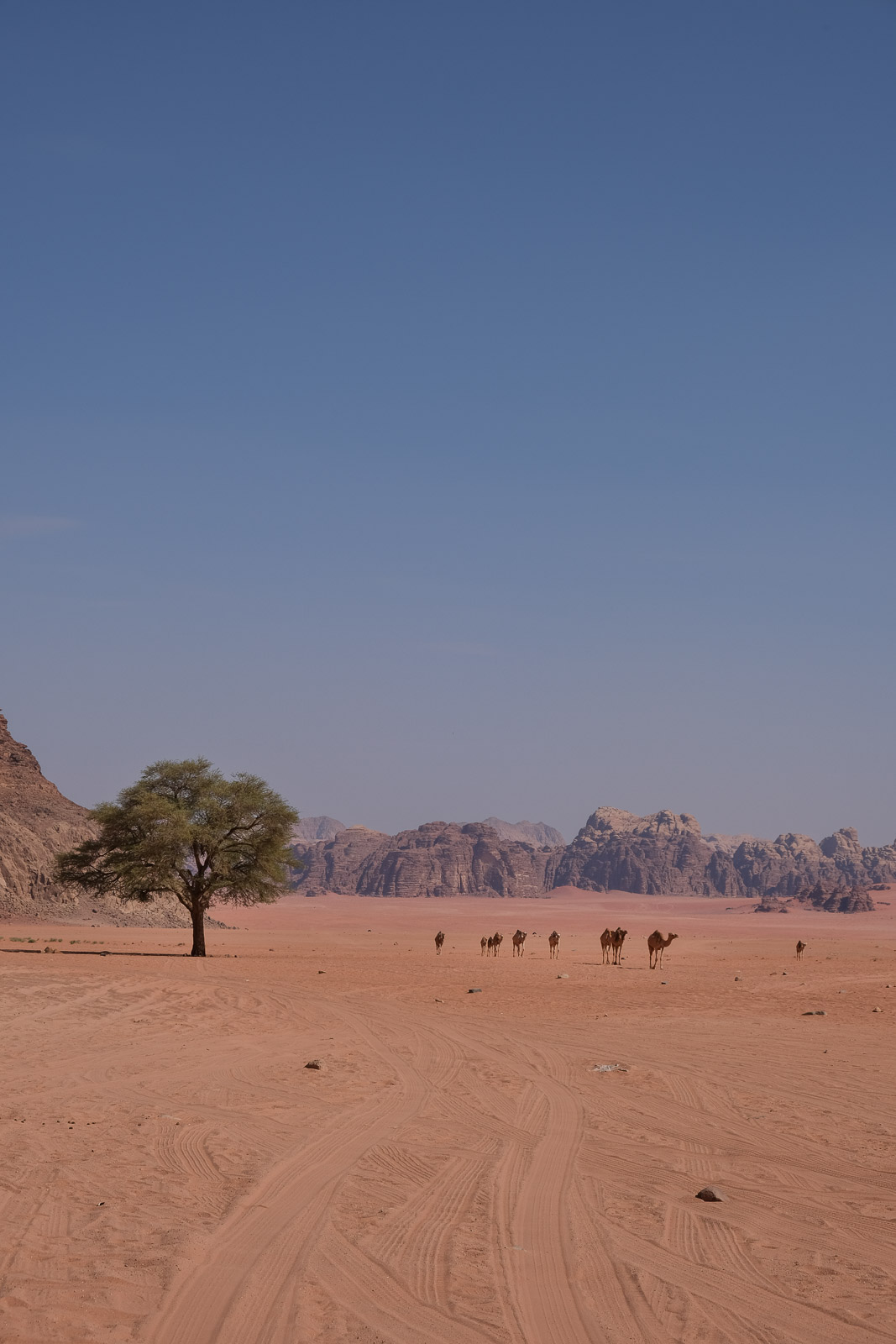
From Dana we headed to Wadi Rum, a vast desert of red sands and dramatic rock formations. Its unique landscape has made it a popular filming location for movies set on distant planets, including The Martian (2015), Star Wars (2019), and more recently Dune (2021). What not everyone knows is that at a certain point in the desert the landscape shifts from the deep red sands (rich in iron) to pale white sands (shaped from granite and sandstones). There’s actually a short hike you can do to a viewpoint from which you can clearly see where the two differently coloured sands meet.
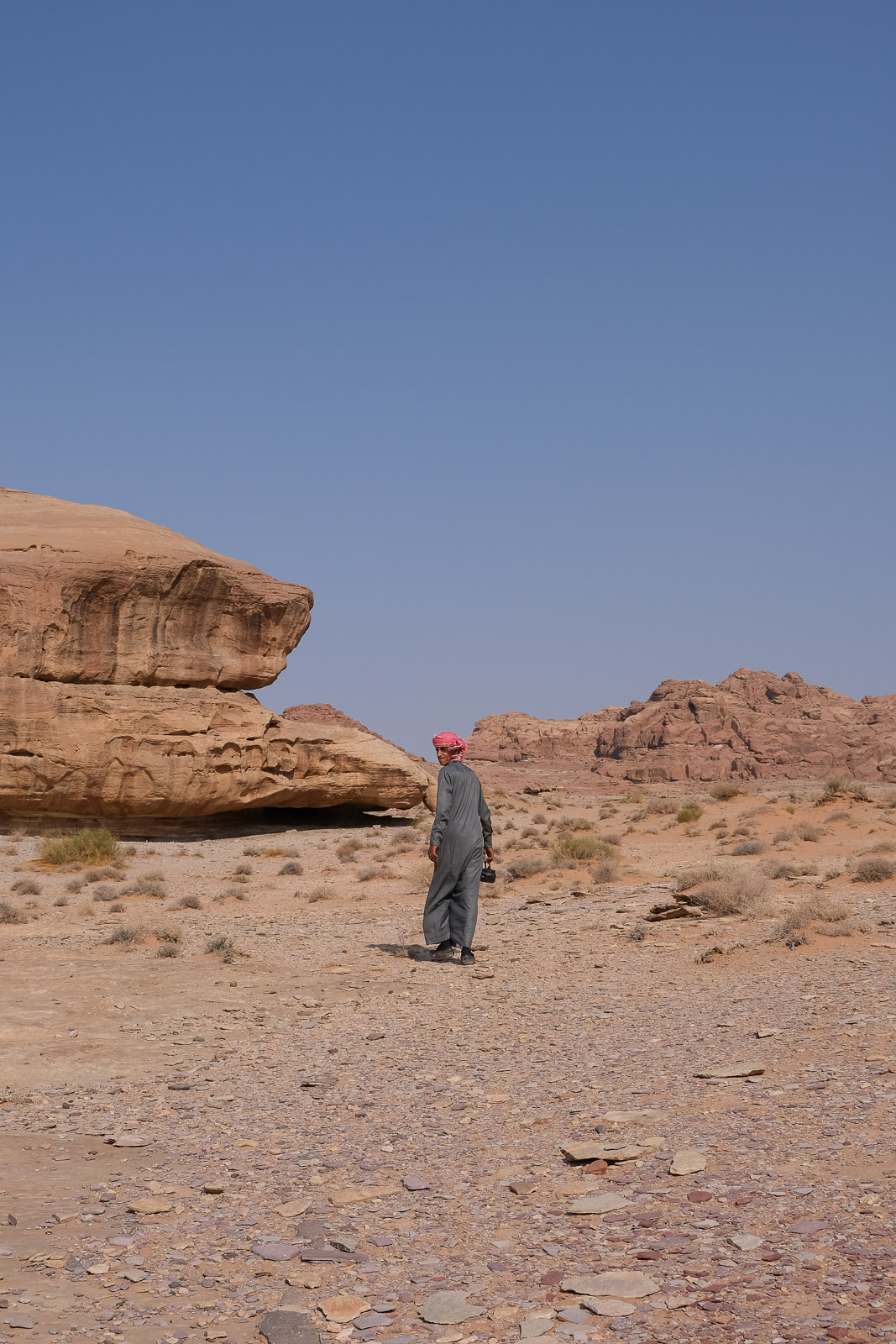
We chose to spend two nights in the desert, giving us time to explore both the more popular, busier red sands and the quieter white desert. Our first day was mostly spent visiting Wadi Rum’s more iconic sights and landmarks (unique rock formations, ancient petroglyphs, etc.).
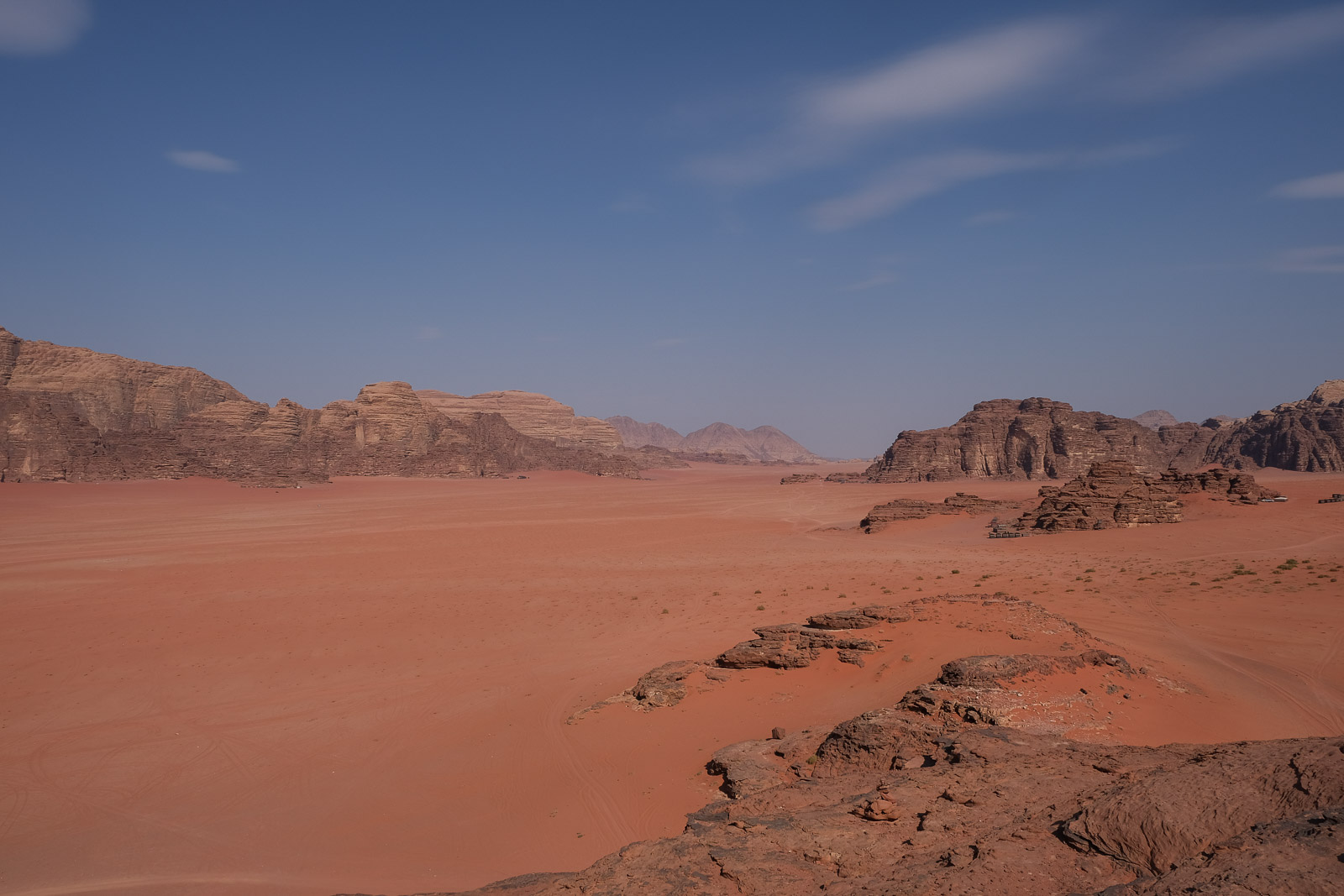
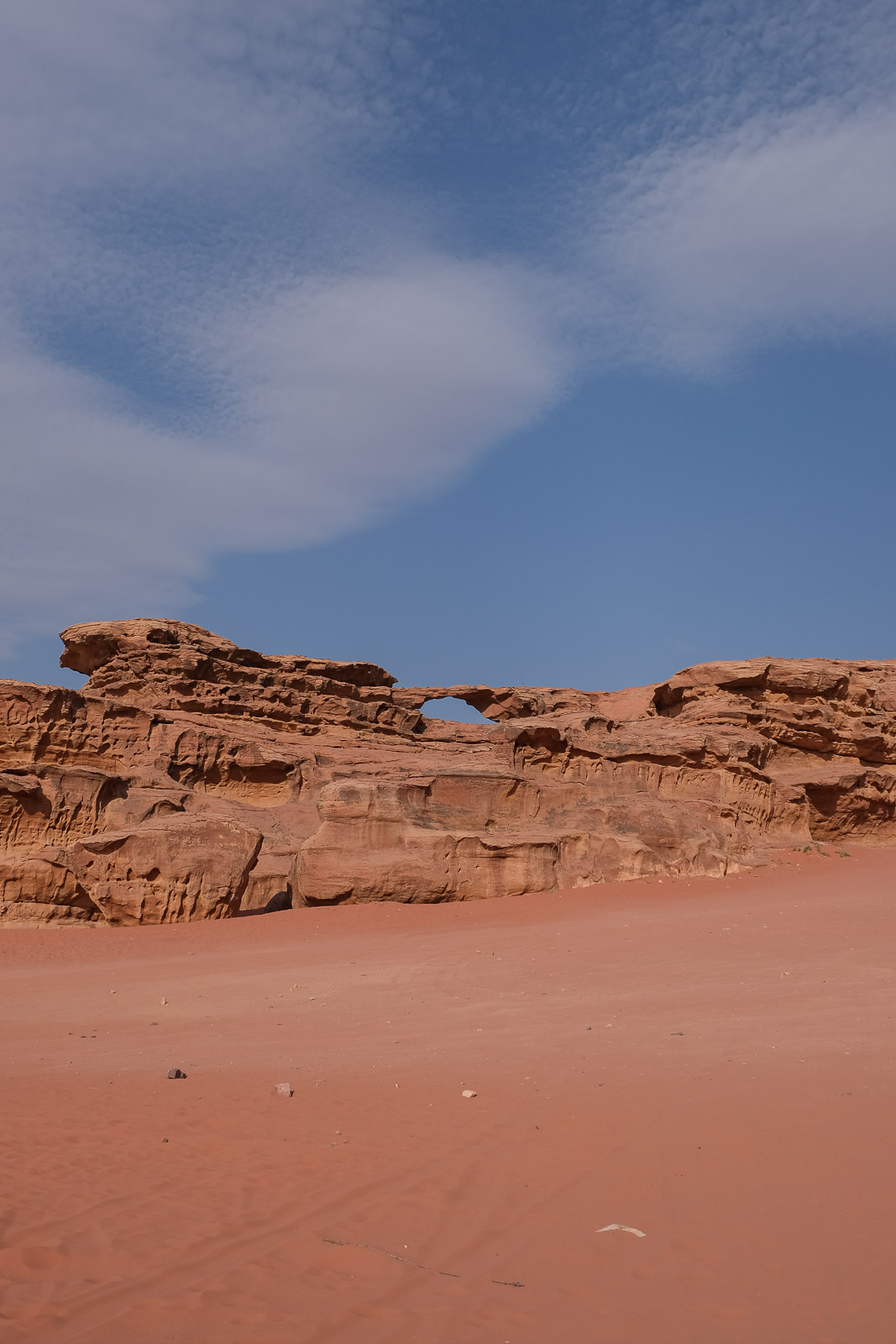
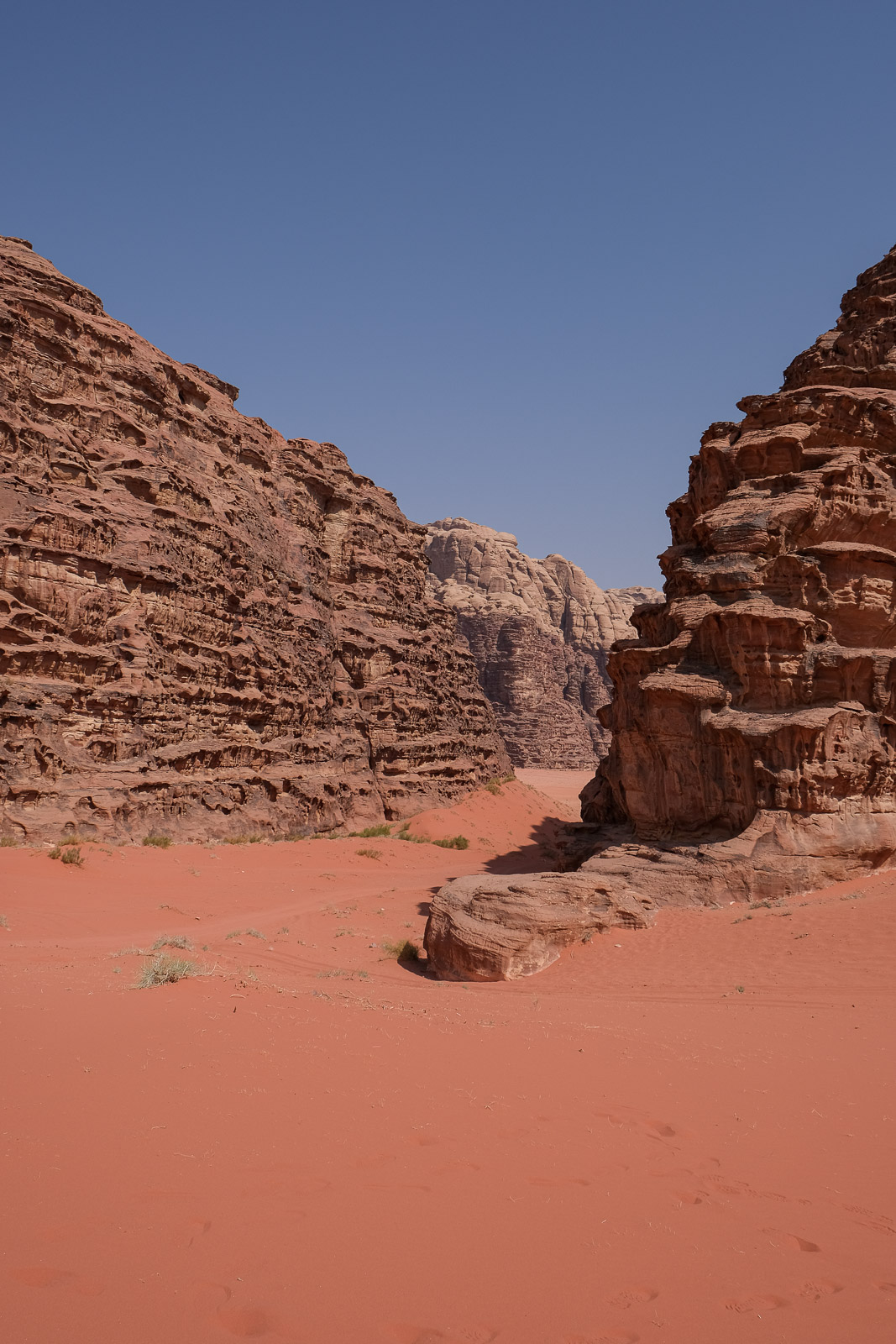
We ended the day in the white desert, where we set up camp and watched the sunset from nearby rocks. Surrounded by the vastness of the place, we felt completely alone.
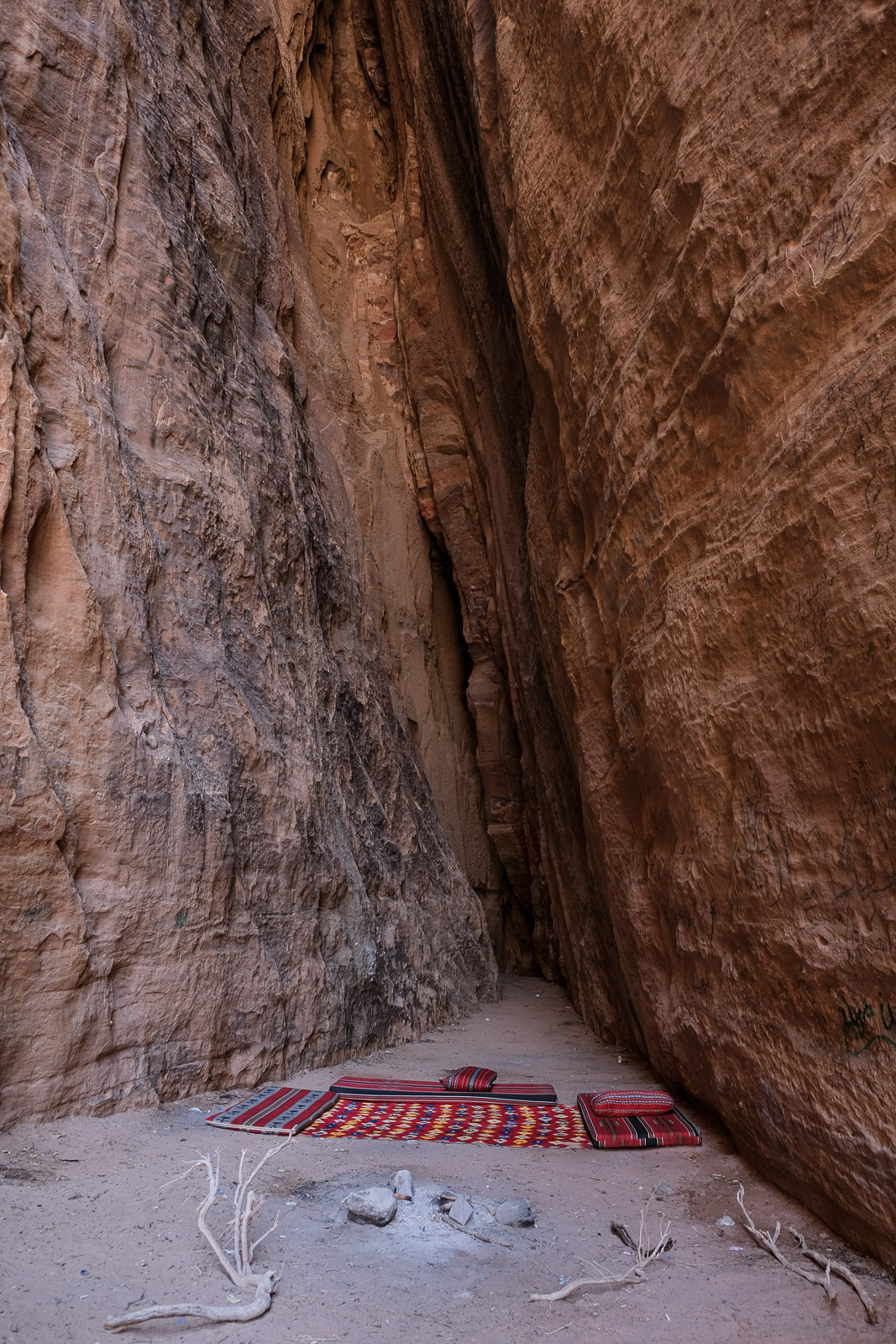
That night, we slept directly under the stars on mats in the sand, with our own small campfire. Our guide prepared an incredible meal right there in the middle of nowhere (fire roasted chicken, potatoes, and peppers on rice). Surreal and so flavourful. There was something so peaceful about ending the day with Bedouin tea brewed over the fire, with no other people or vehicles in sight.
After hiking up to a nearby viewpoint for sunrise, we spent our second day exploring the white desert, including an ascent up Jebel Al-Hash, where the path winds through a rocky area before climbing to a plateau that traces a ridge, with panoramic views stretching all the way to the Saudi border. Of course, we paused for a Bedouin tea break - both on the way up and again on the way down in a small cave to avoid the harsh sun.
I lost count of how many cups of Bedouin tea I drank out there, but it wouldn’t surprise me if it was more than ten a day.
As it was the beginning of August, temperatures in the desert could climb up to 40°C, so just before midday we sought refuge in a cave, had lunch, and napped while waiting for the heat to ease.
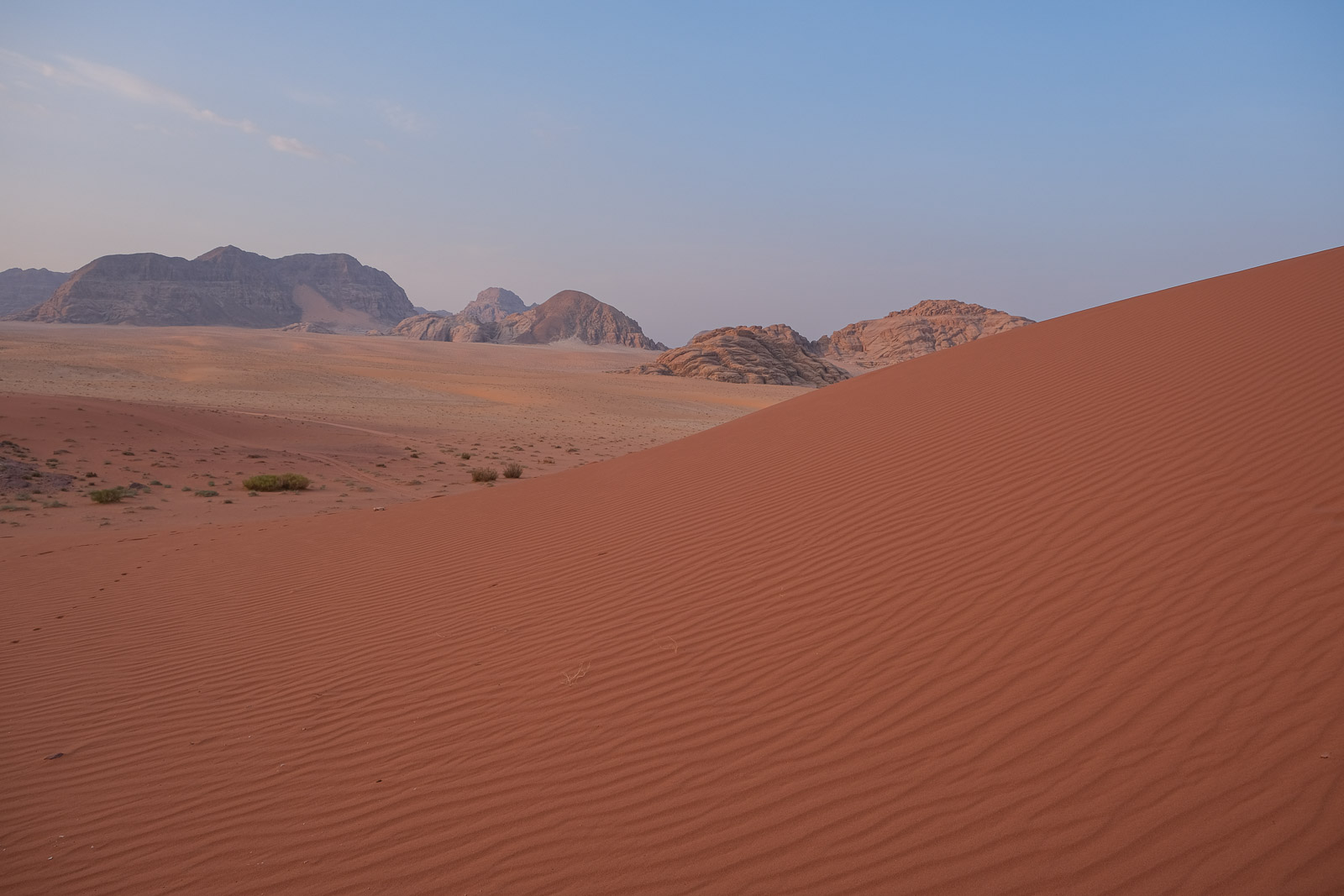
We spent our second night at one of the many tourist desert camps in the red sands. After a full day and night in complete remoteness, it felt a bit less special to be surrounded by other travellers and infrastructure. The highlight of the camp, however, was the large red dune just beside it, where we could sit directly in the soft sand and watch sunset.
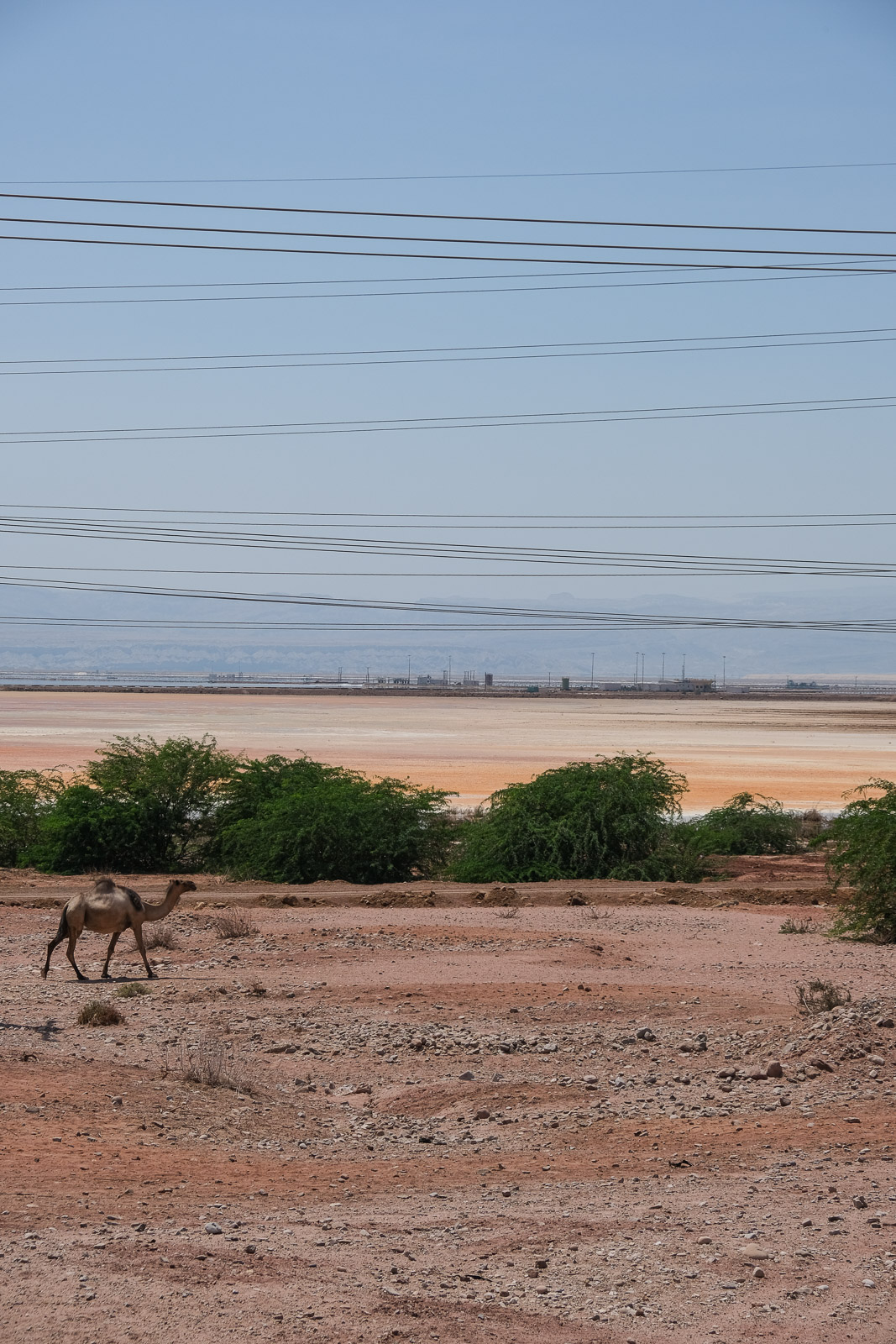
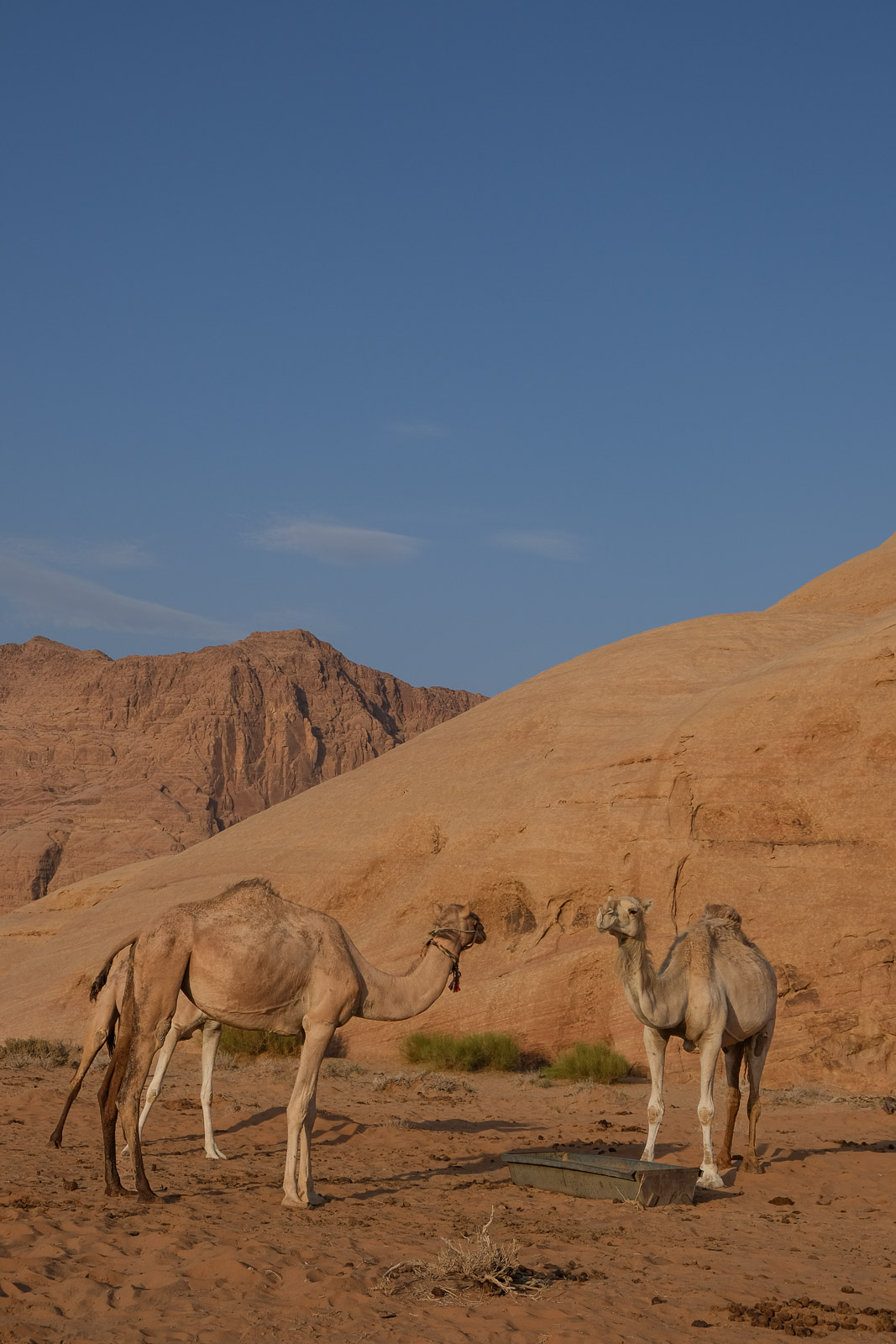
While Wadi Rum is a UNESCO World Heritage Site and a protected area, Bedouin communities continue to call it home. On our way out of the desert, we stopped by our guide’s family tent: we met his father, shared another round of tea, and tried fresh camel milk - which my sister, an exotic animal veterinarian, later described as a very stupid idea due to the risk of bacterial and viral diseases. The father explained that their camels might roam the desert for days at a time, but would inevitably return “home” for food. So although we had seen a few camels wandering on their own, there is no such thing as a "wild camel" in the Jordanian deserts.
Petra
And finally, the place that first put Jordan on the tourist map (and a perennial star of Lonely Planet covers): Petra. An ancient city carved directly into rose-red cliffs, hidden for centuries by desert canyons. The ancient Nabataean capital, and once a thriving hub of trade connecting Arabia, Egypt, and the Mediterranean, Petra is now one of the world’s most extraordinary archaeological sites.
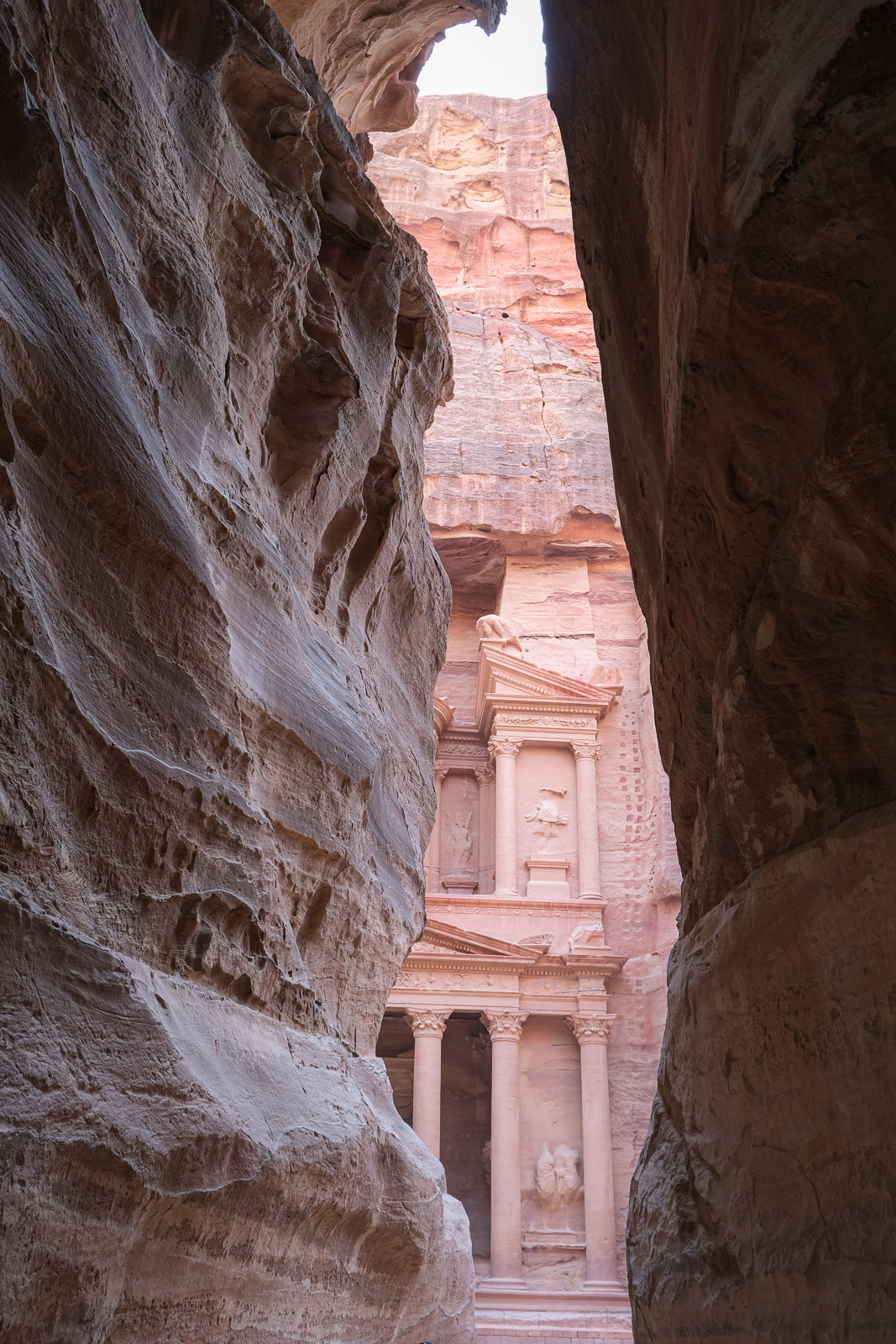
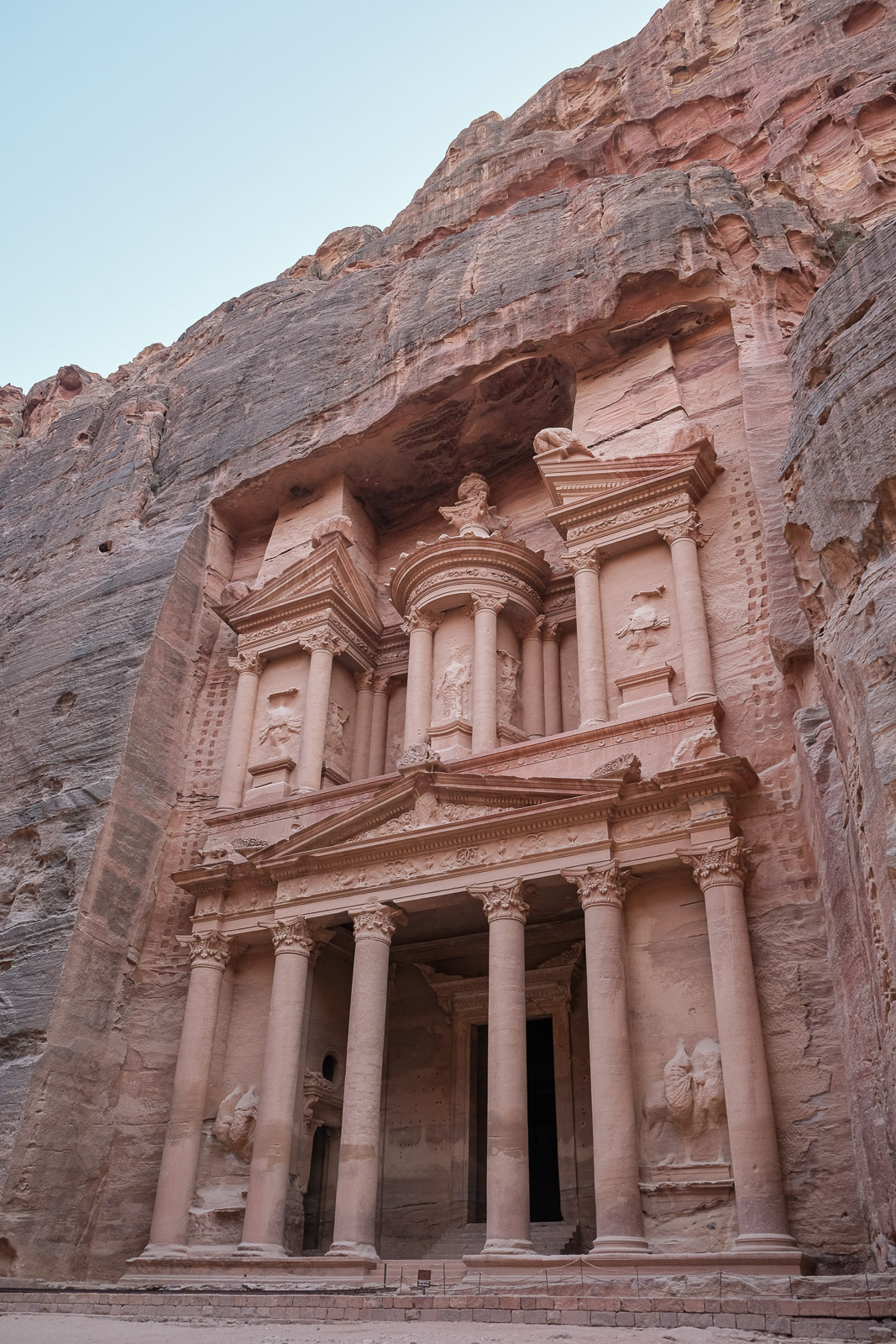
As always, I made sure we were among the first at the entrance in order to experience some of the sites mostly to ourselves. And, once again, the early wake-up proved completely worth it. Petra reveals itself slowly, unfolding through a narrow sandstone passage known as the Siq leading to the iconic Treasury. The Treasury emerges in a moment that genuinely takes your breath away. The photos don’t lie: it is every bit as impressive in person. This is also the spot where young children approach tourists offering guided climbs to nearby viewpoints overlooking the Treasury, for a fee of course. That being said, there is an alternative path you can take independently to reach one of these viewpoints if you prefer to explore on your own.
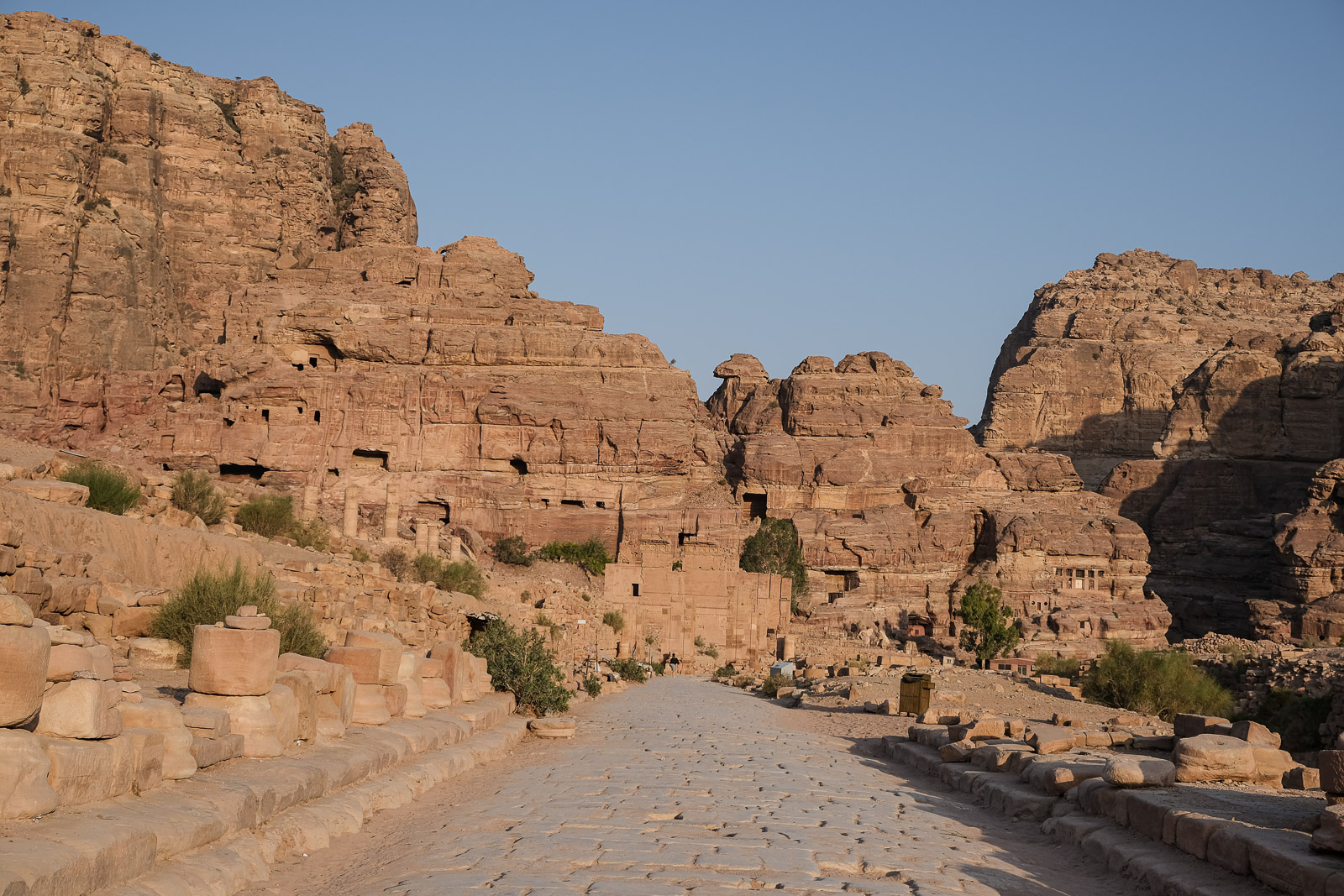
From the Treasury, the Siq begins to widen, leading to the Street of Facades and the Theatre, and from there a number of other temples and tombs. This is where the true scale of the ancient city starts to sink in. You could spend hours, maybe even days, exploring the different sites.
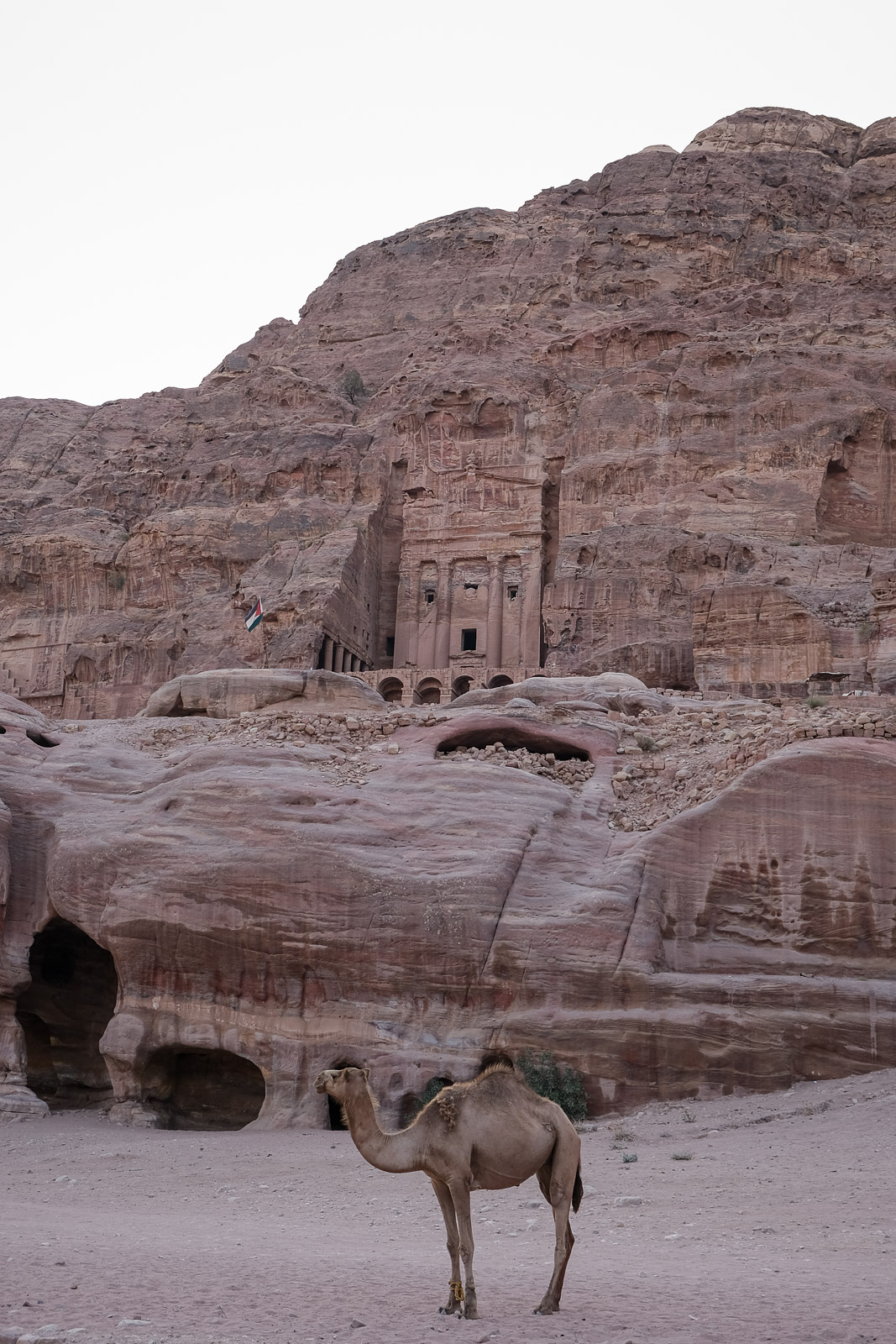
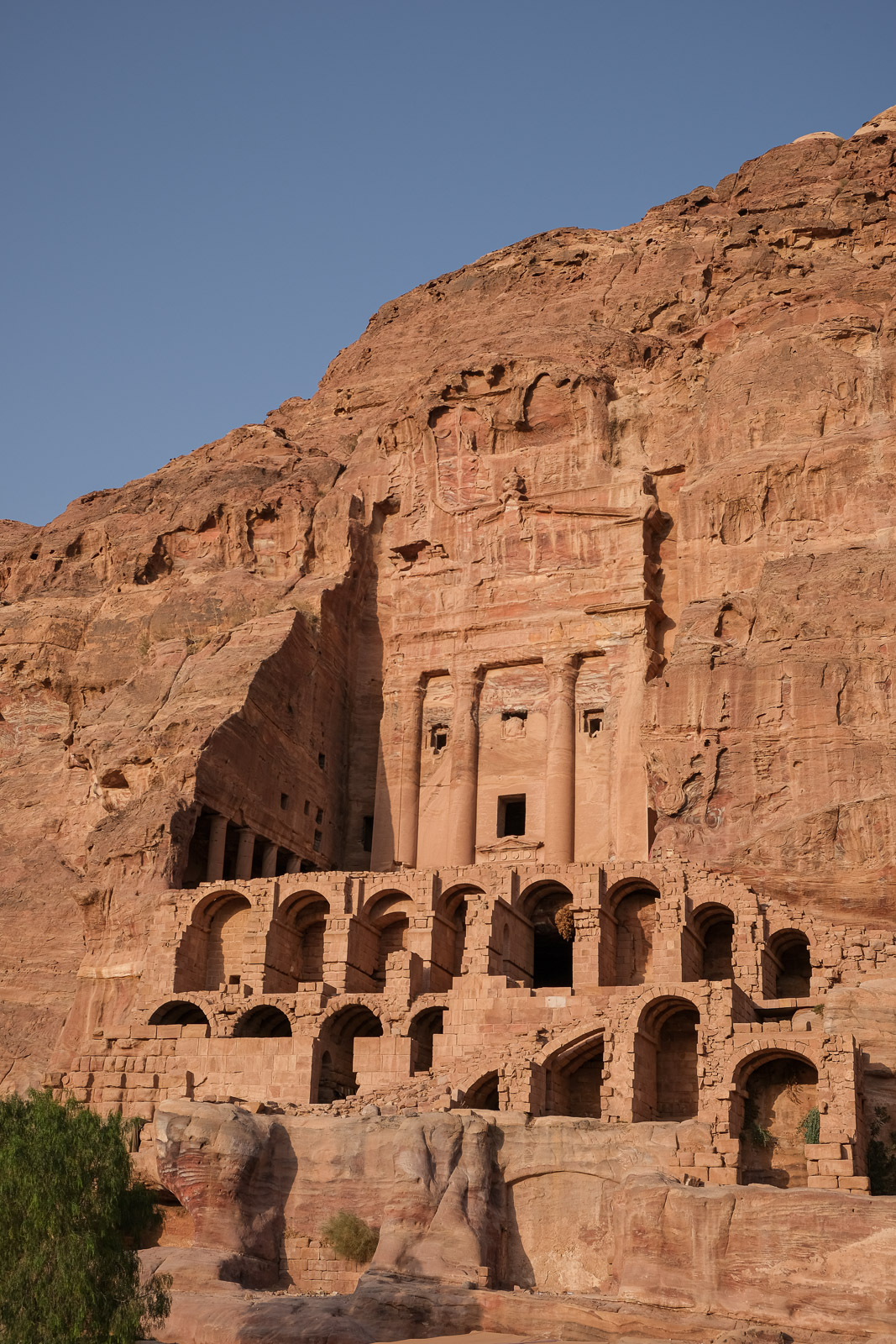
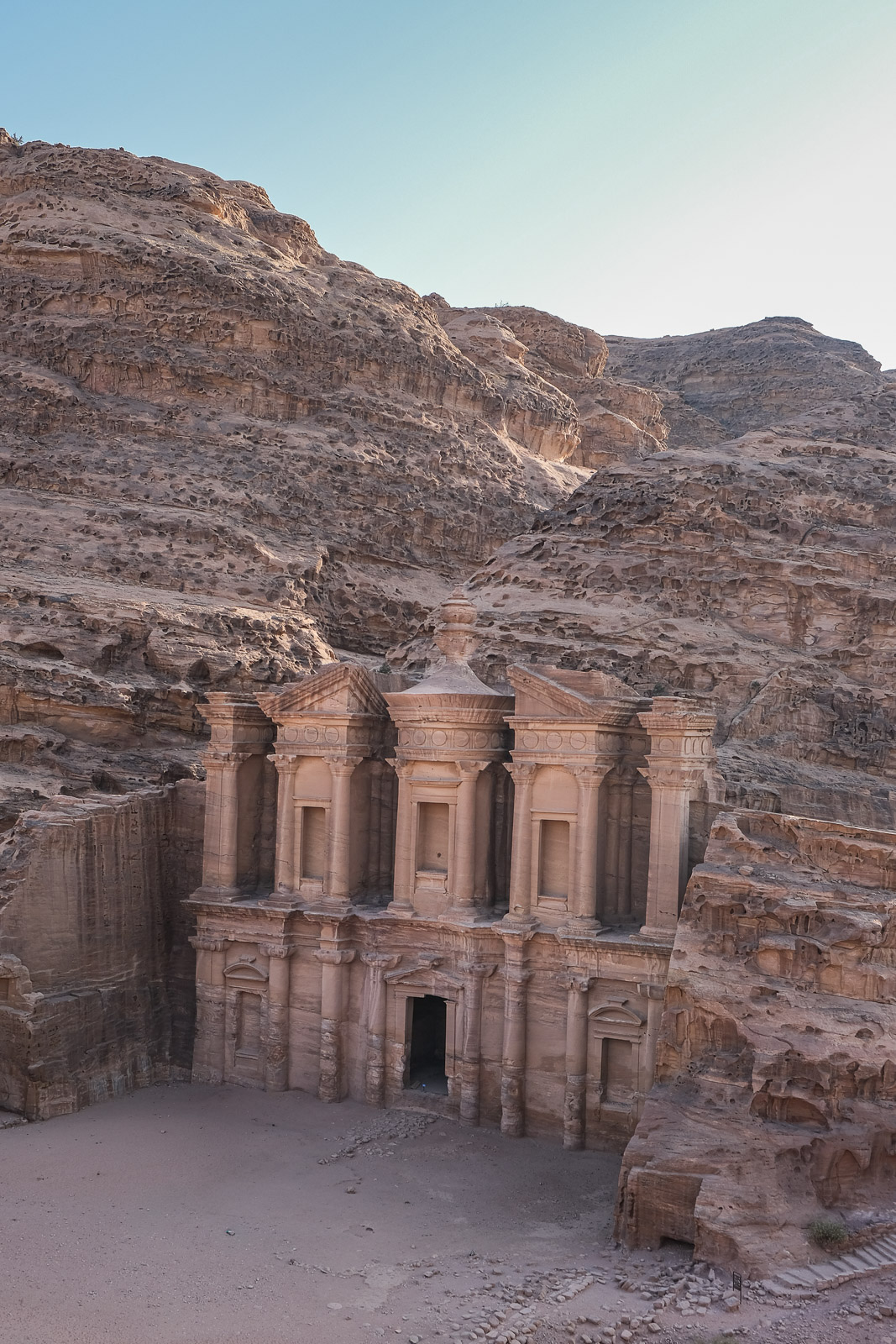
Nearing the end of the main valley, the Ad-Deir Monastery Trail — an ascent of approximately 900 steep stone steps — leads to another stunning carved façade: the Ad-Deir Monastery, which is a must-see.
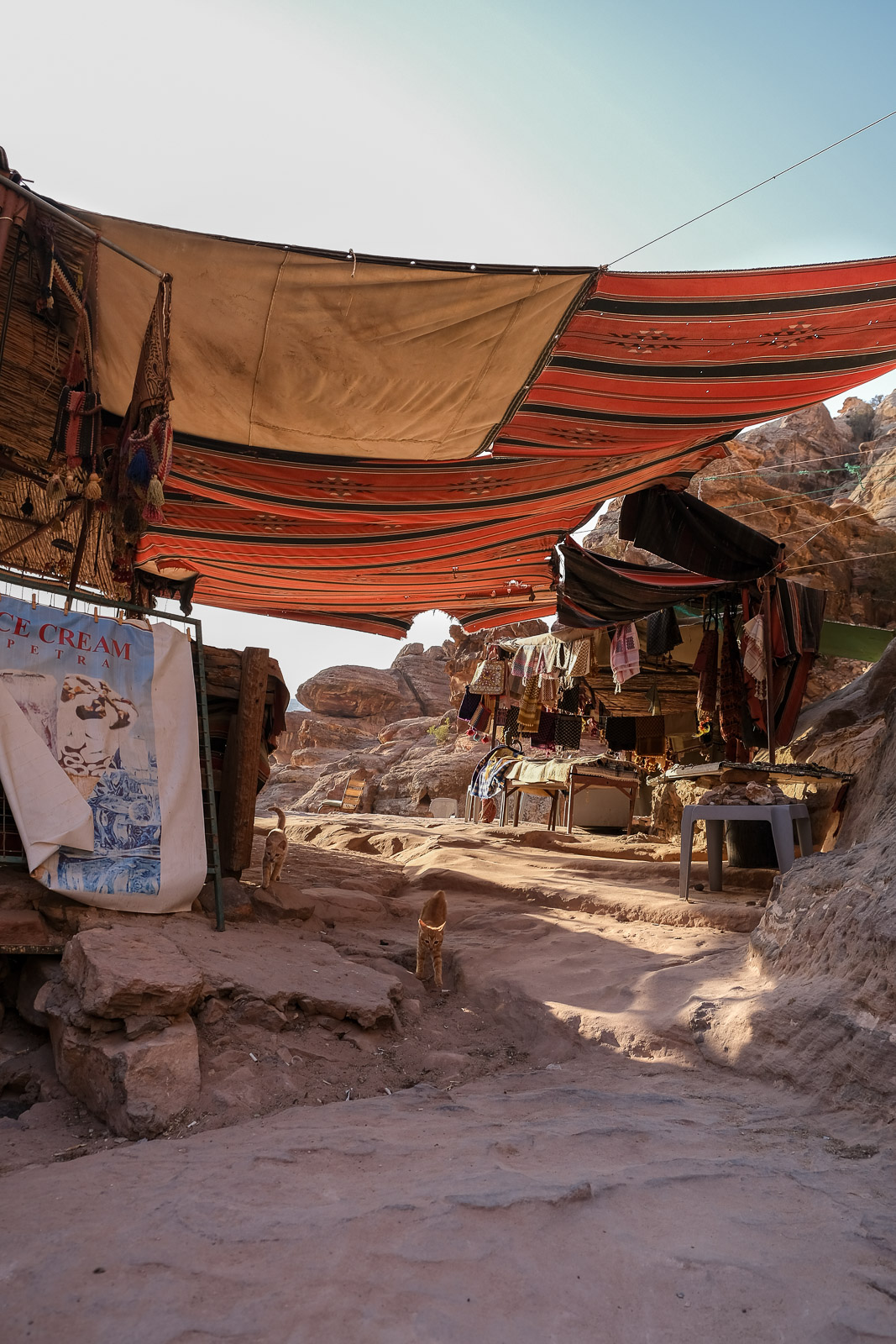
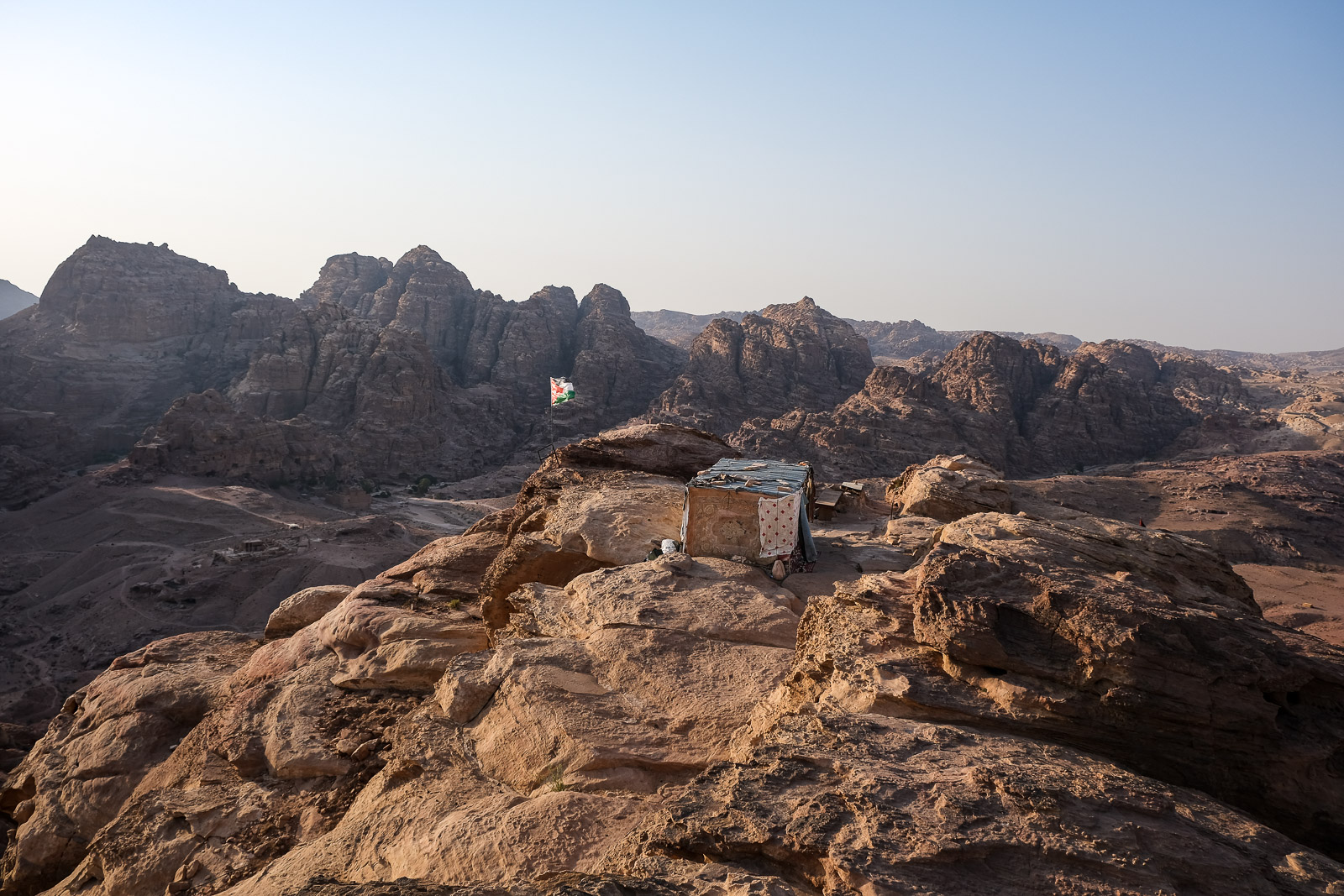
A trail I particularly enjoyed bypasses the Siq entirely, following the valley ridge line instead. Along the way, it offers views down into Petra and eventually leads to one of the viewpoints overlooking the Treasury.
We hadn’t planned on staying until sunset, but we stumbled upon a French couple sharing a fire-roasted chicken and vegetable dinner with some Bedouins by their tent. They invited us to join, and we watched the sun dip below the cliffs. It was one of those unplanned, quietly unforgettable moments.
As a side note, Petra town was also the first place where we found alcohol - not surprising, given how busy it is with tourists. We had been craving that ice-cold beer since landing in Jordan.
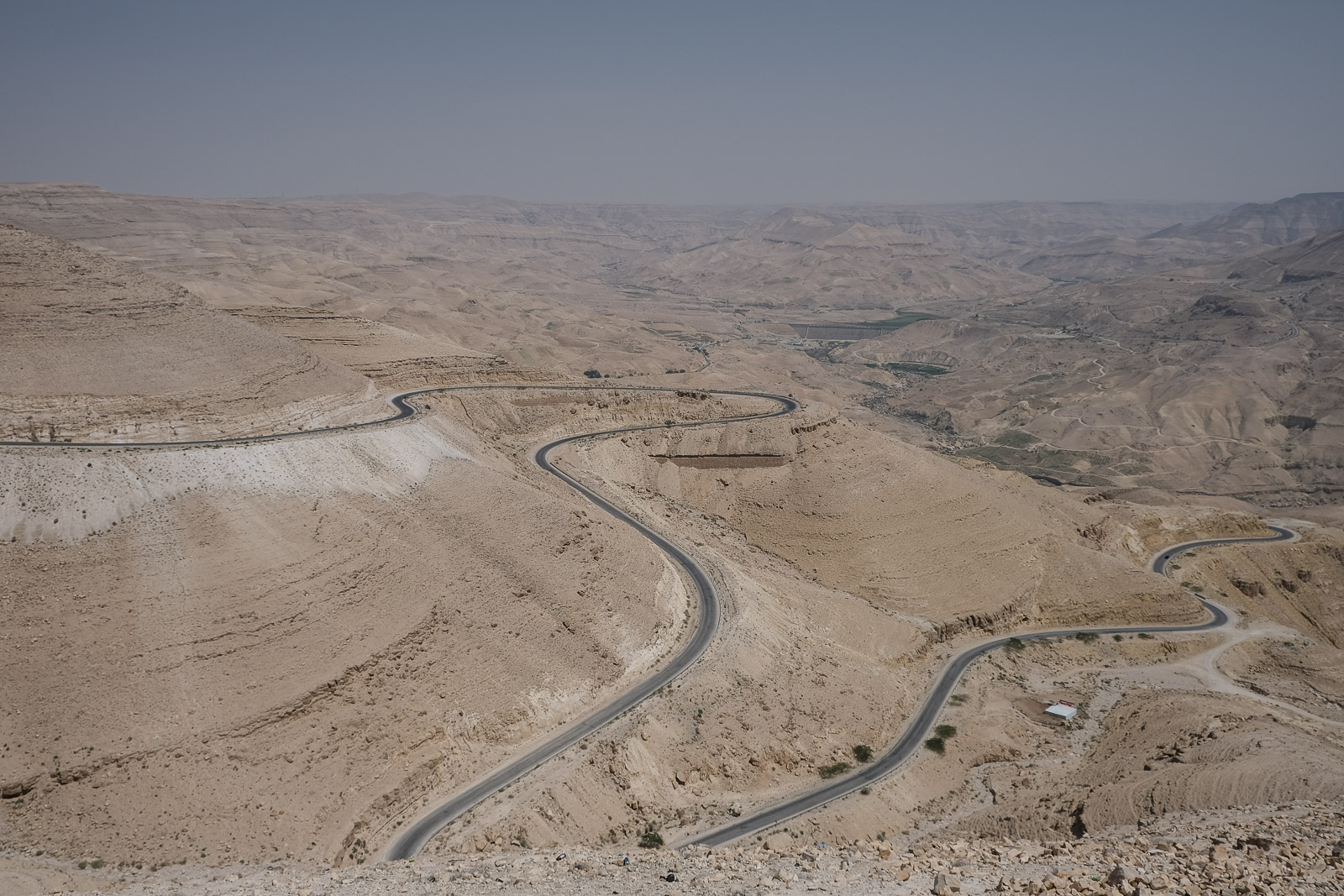
And already, we had to be making our way back to Amman. For the drive north we chose an alternative route that took us past the Wadi Al-Mujib Dam, where the landscape shifted back to rugged cliffs, with the occasional flash of blue water cutting through the otherwise very arid terrain.
Amman
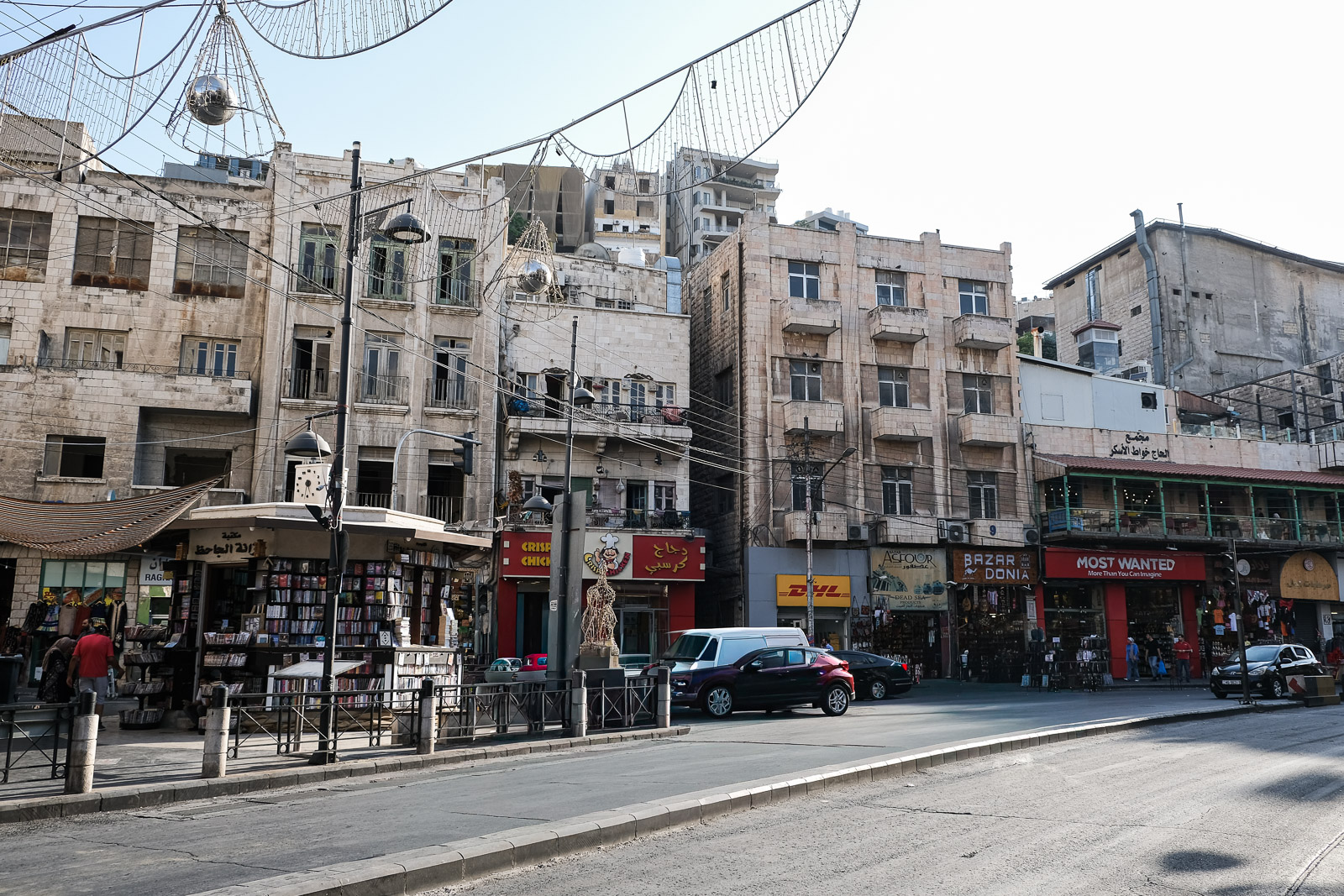
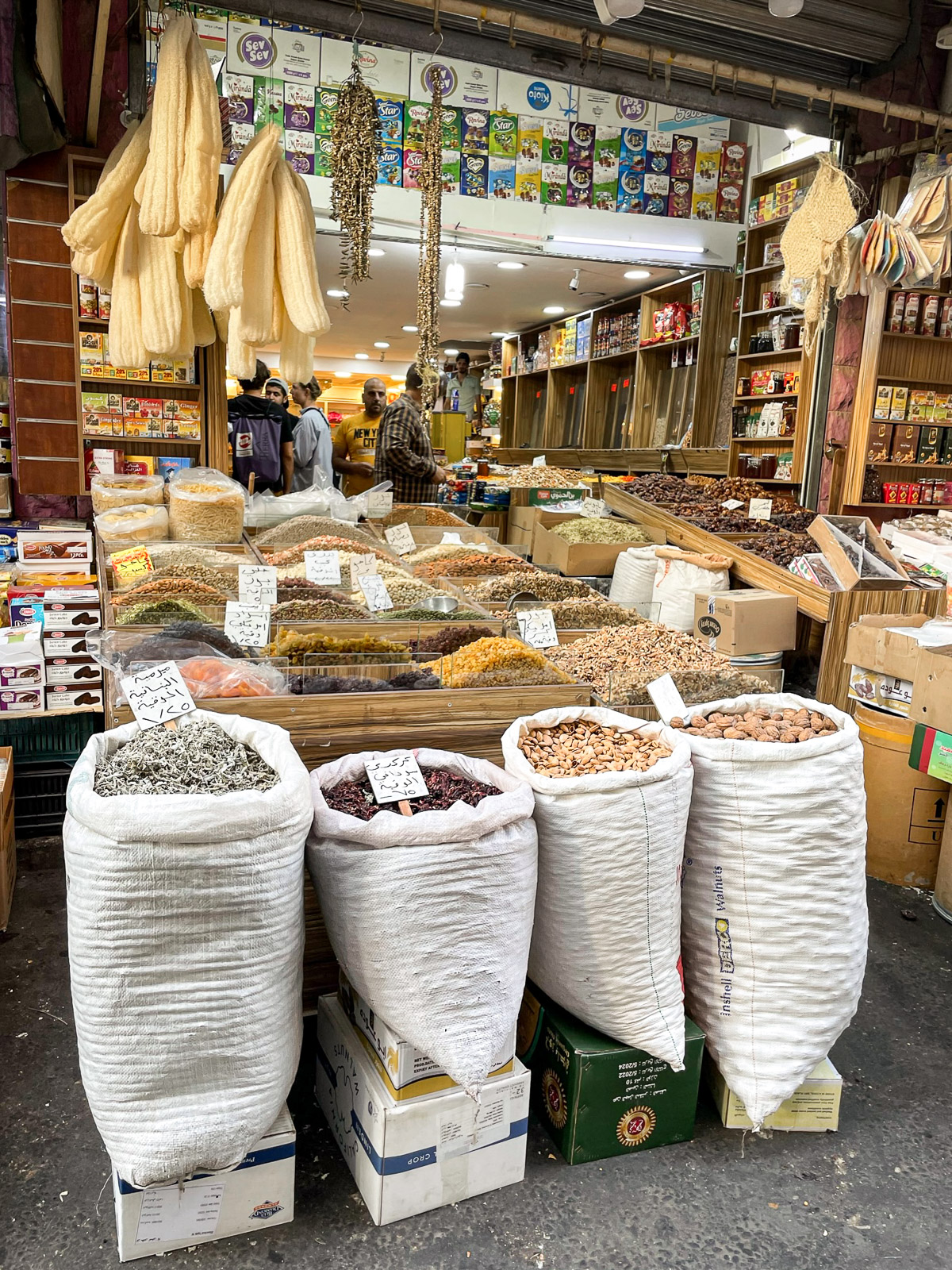
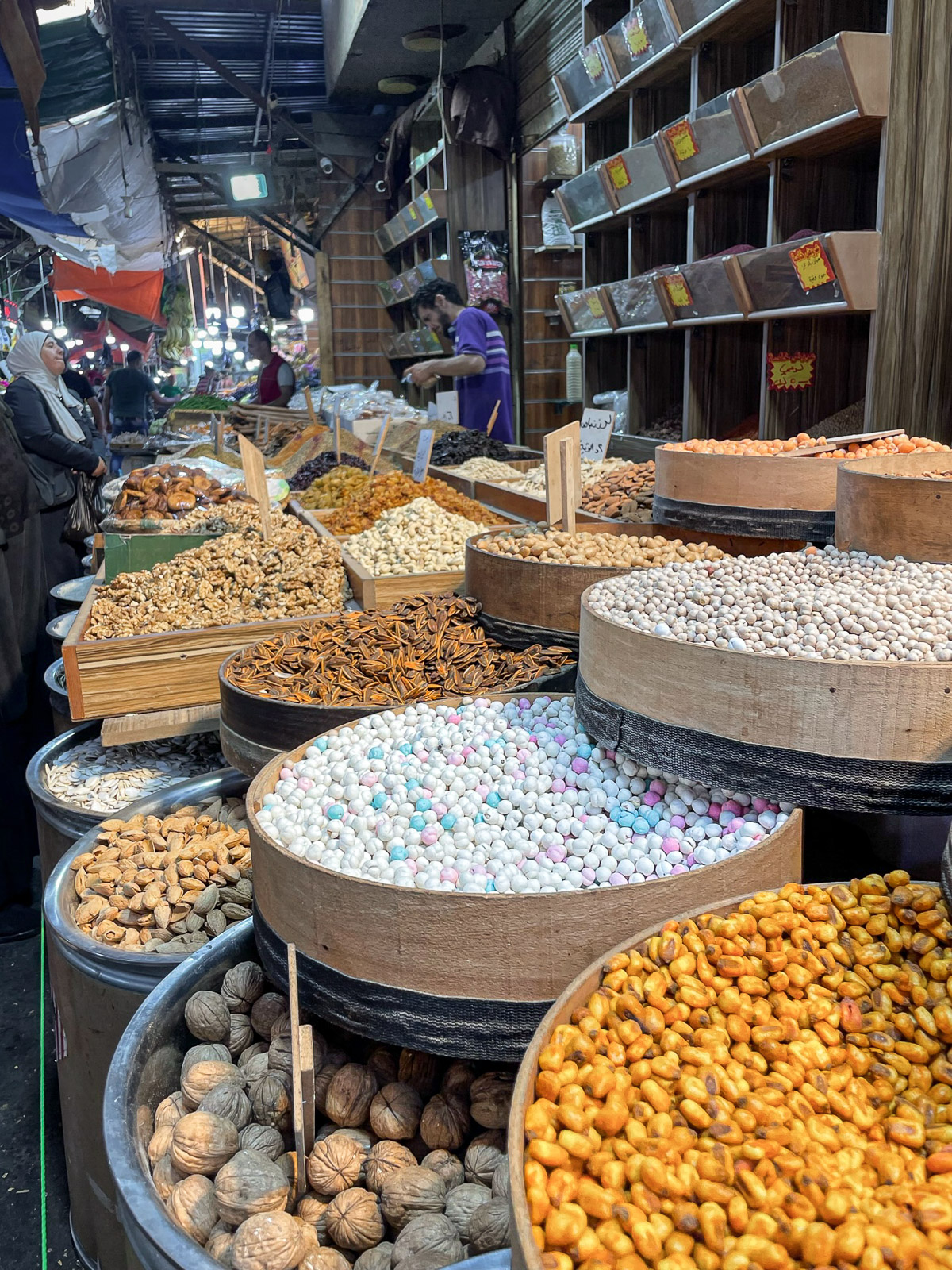
The capital city was a whirlwind of energy. We spent our final hours in the country enjoying a highly recommended falafel spot (Hashem Restaurant), before wandering deep into the city’s bustling outdoor market.
The market’s narrow lanes were lined with stalls overflowing with spices, fresh produce, sweets, and every day goods. Vendors called out, the scent of herbs was prominent, and the entire thing slightly chaotic in the best way. I also tried a frothed version of ayran – interesting, to say the least. We definitely stood out from the crowd in our “tourist outfits”, despite leaving my camera behind in an attempt to blend in a little more.
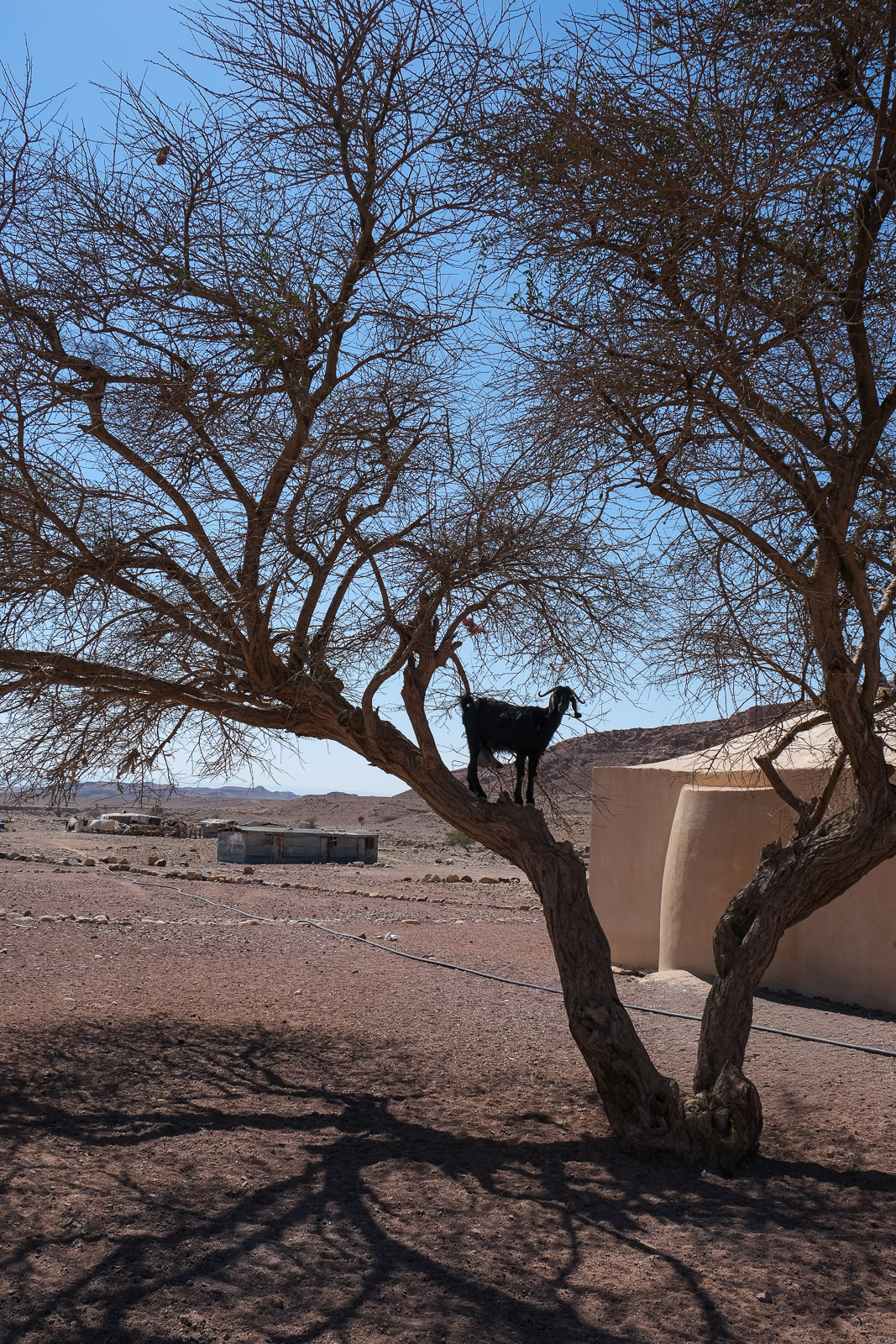
I’ll remember Jordan as a journey through striking landscapes and an unexpected sense of pause. We experienced floating in the Dead Sea, long walks through wadis, where the scenery shifted between narrow rock walls and open valleys, and frequent stops for tea that often led to small moments of connection with locals. In such a dry environment, the small pockets of greenery or water felt almost like hidden oases, offering brief moments of shade that were just as appreciated by the goats as by us.
Looking back, it’s these everyday rhythms, just as much as the major sites, that stand out: the balance between the harshness of the landscape and the quiet hospitality found throughout the journey.
نشوفك على خير
Leave a note
If something here resonated with you, I’d love to hear from you.