Turkey
April 2023
A Slow Loop Through Southwestern Turkey
All photos are my own; shot on Fujifilm XT30.
Our journey through Turkey traced a slow loop across the southwest, moving between coastlines, mountains, villages, and ancient paths. While the landscapes — from quiet peninsulas to Cappadocian cave churches — continually amazed us, what lingers most are the small, human moments found along the way.
The first stop after landing in Antalya was straight to the car rental counter – where we were quickly drawn into a familiar insurance pitch. This time, though, it came with a touch of theatre: the agent scrolled through a text exchange with a “client” whose windshield had supposedly just shattered, explaining that without a police report, even standard full coverage wouldn’t apply. According to him, it's “unfortunately” very difficult for tourists to get the police to file such a report - making a special add-on coverage that bypassed the requirement the best way to go.
So naturally, we were encouraged to upgrade. We declined – but I’ll admit, the thought lingered in the back of my mind for most of the trip.
From there, we made our way to our accommodation in Ölüdeniz, from where we would be starting our first day on the Lycian Way. Starving, we asked our hotel host for a nearby restaurant recommendation - he enthusiastically offered to take us to his favourite spot, which turned out be owned by his son (are we really surprised?). Still, it made for the perfect introduction to Turkey, complete with our very first Turkish beers: Efes.
The Lycian Way
The Lycian Way is a long-distance hiking trail stretching roughly 540 km along Turkey’s southwestern coastline, and is typically completed in about 25 to 30 days. The trail weaves its way from the turquoise waters of the Mediterranean to the rugged peaks of the Taurus Mountains, and as you hike you move through both landscape and history, past tombs carved into cliffs, forgotten amphitheaters, and ancient city ruins. And on top of all that, the trail wanders through small villages, where you come across roadside stalls selling fresh orange and pomegranate (nar) juice (suyu), creating spontaneous moments of local interactions and something fresh to look forward to as you’re hiking in the heat.
It’s no surprise that the moment I read about the trail, I knew I had to find a way to include at least a couple days of it into our itinerary. I spent quite a bit of time researching which sections were both accessible and especially scenic for a short 2-3 day stretch, and the route from Ölüdeniz to Bel quickly stood out. Our plan took shape: hike from Ölüdeniz to Kabak on day one, then continue from Kabak to the town of Gey on day two.
So the next morning, after grabbing coffees and a few local pastries, we set off on the trail.
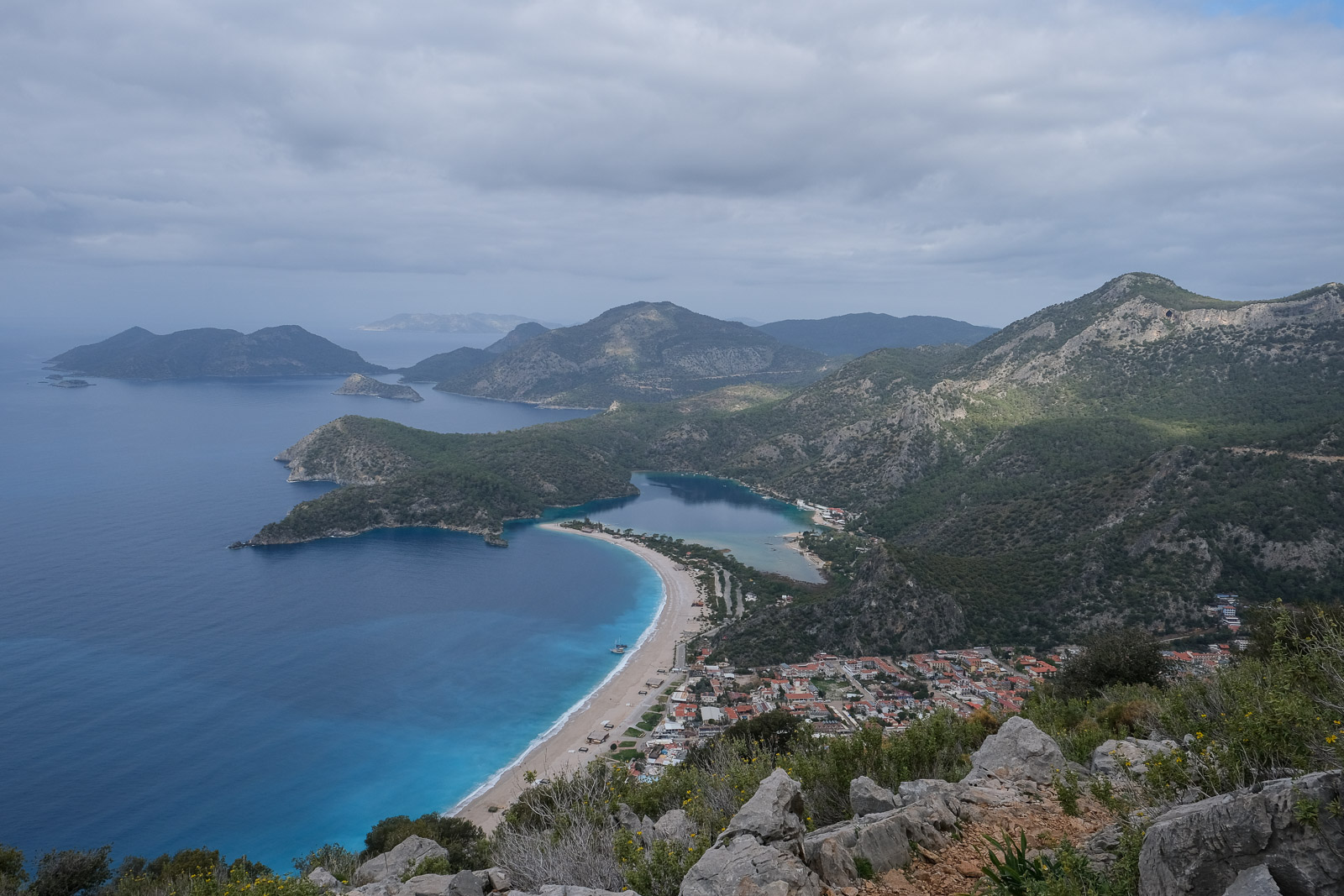
April, still considered low season, meant we encountered few other hikers, giving the experience an overall quiet feel. And although low clouds did roll in throughout the day, the views remained beautiful. The stretch from Ölüdeniz to Kabak starts with views of the beach and the iconic blue lagoon below – with paragliders drifting overhead.
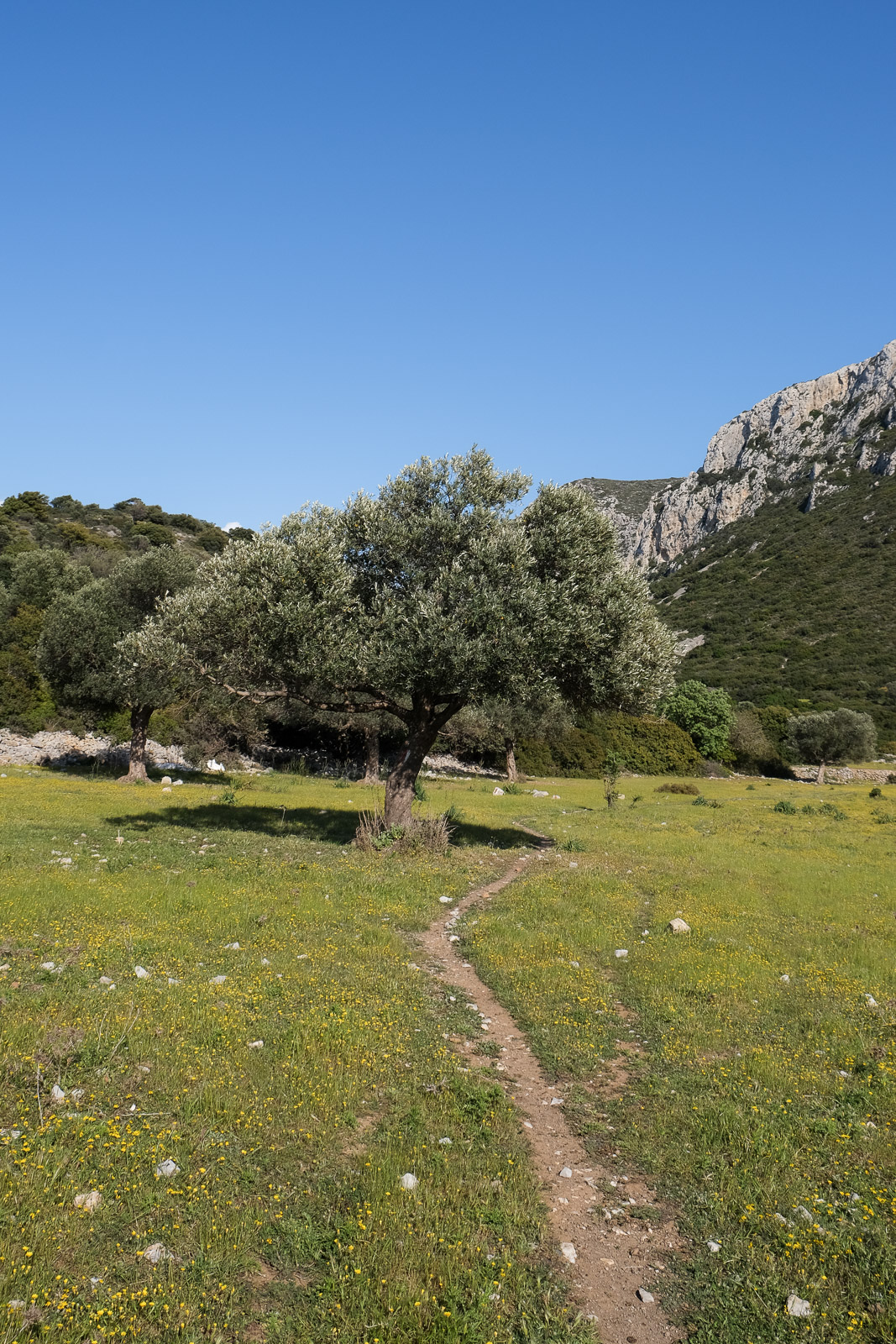
From there, the path heads above the coastline, contouring cliffs, and sometimes heading into forested stretches of pine and olive trees. One thing worth noting, however, is that we did pass through a few sections where villas were under construction. This was back in 2023, so the trail may have since been rerouted – but if not, some stretches could now be partially unaccessible (we did find ourselves wandering, and getting slightly lost, into a construction site or two…).
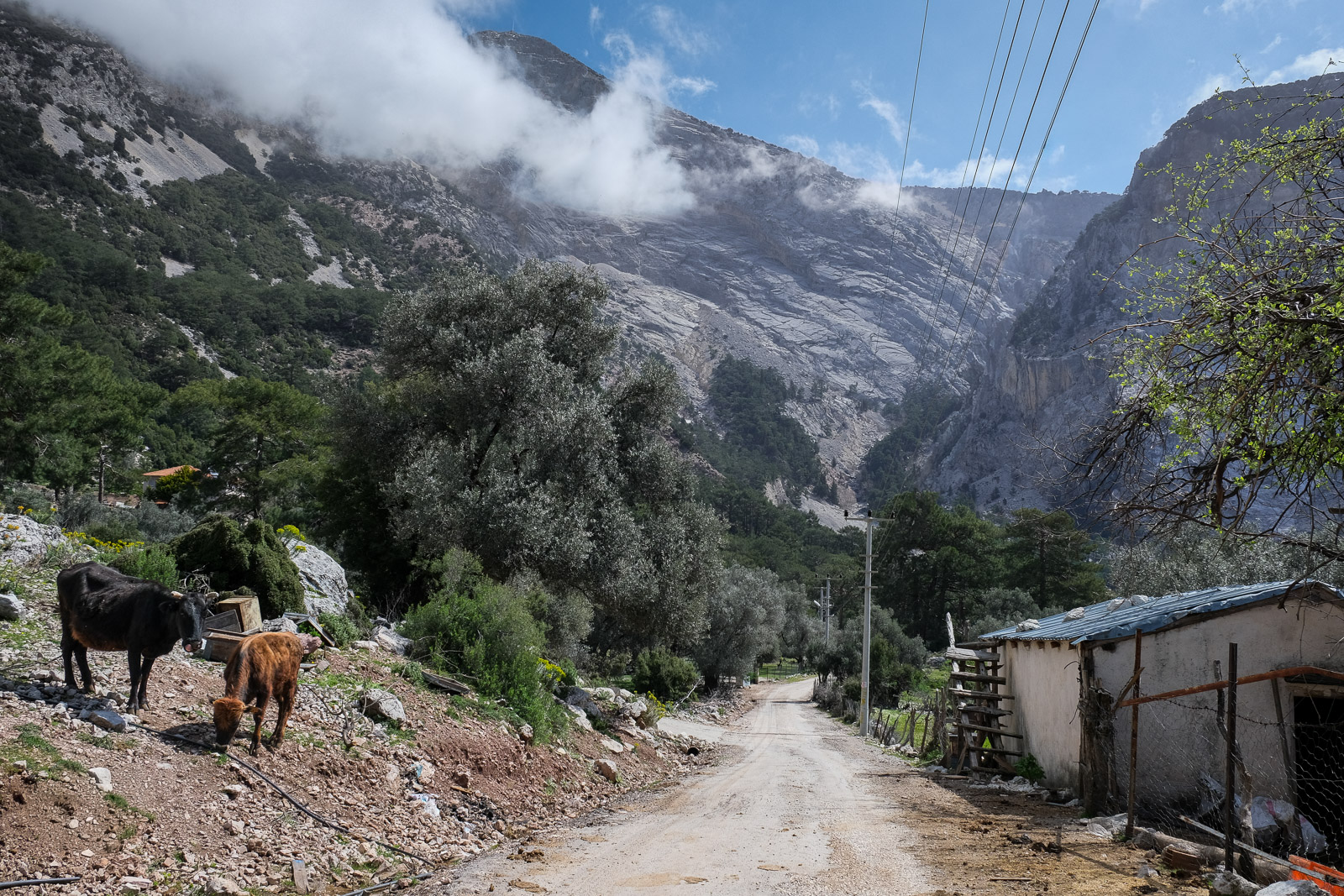
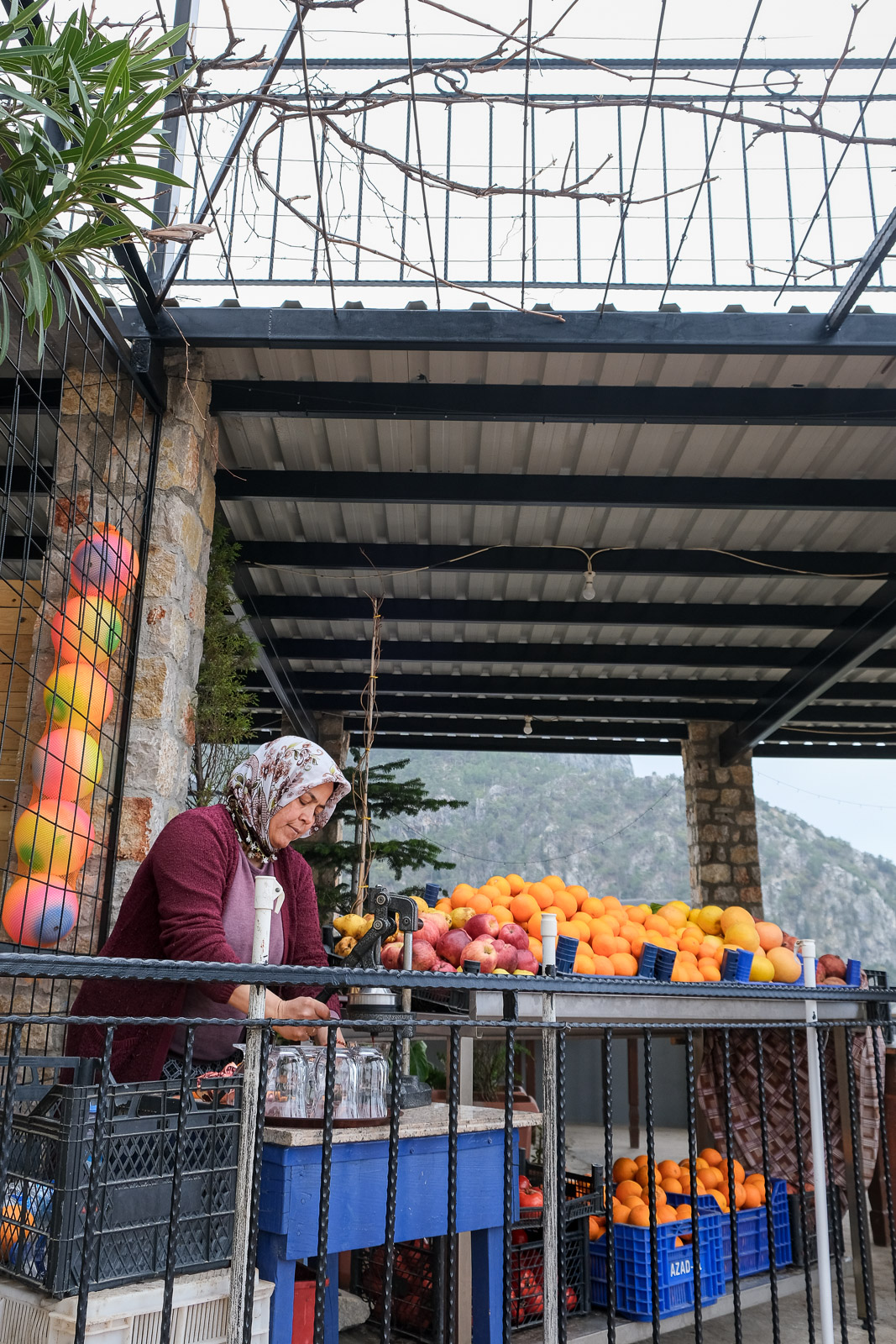
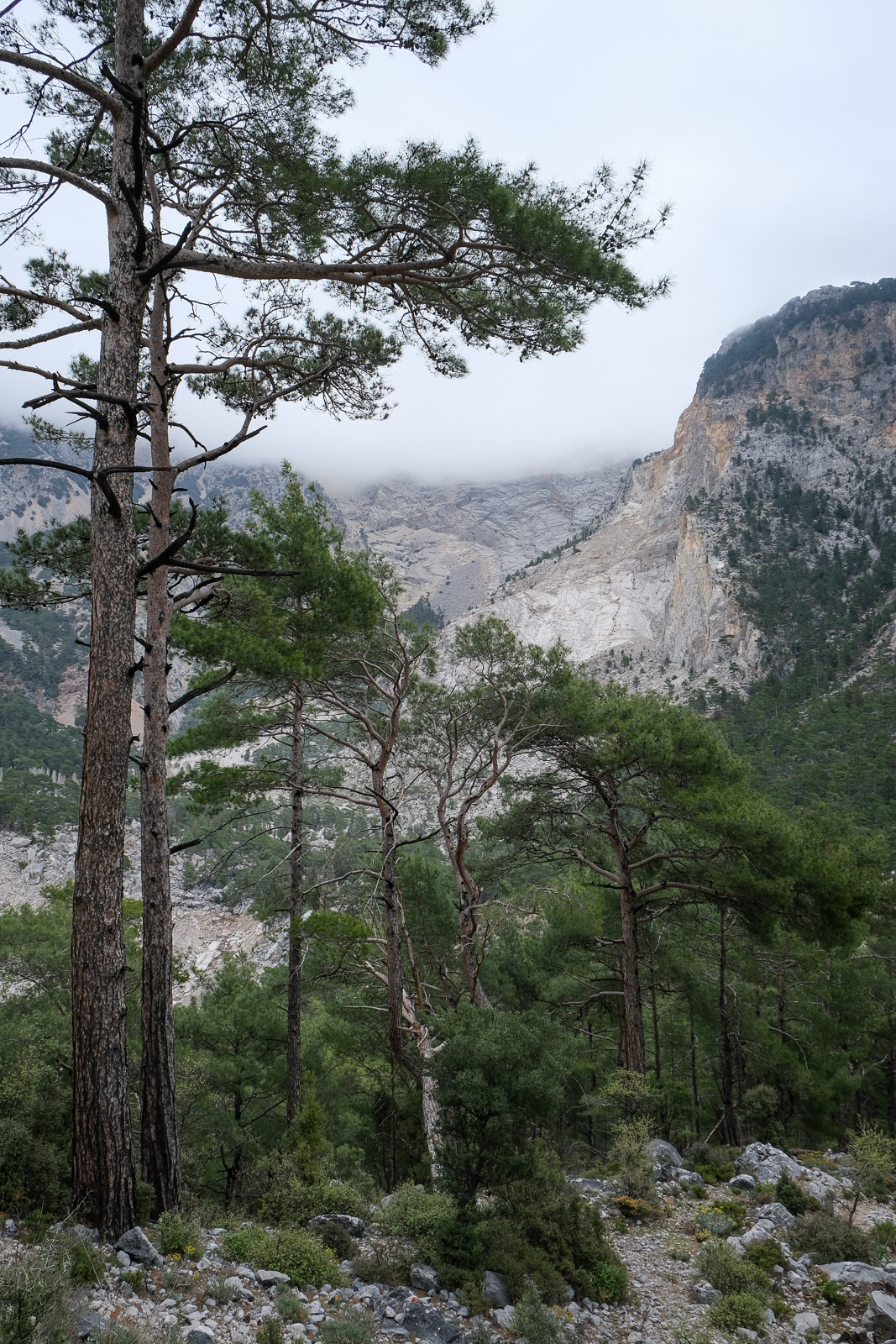
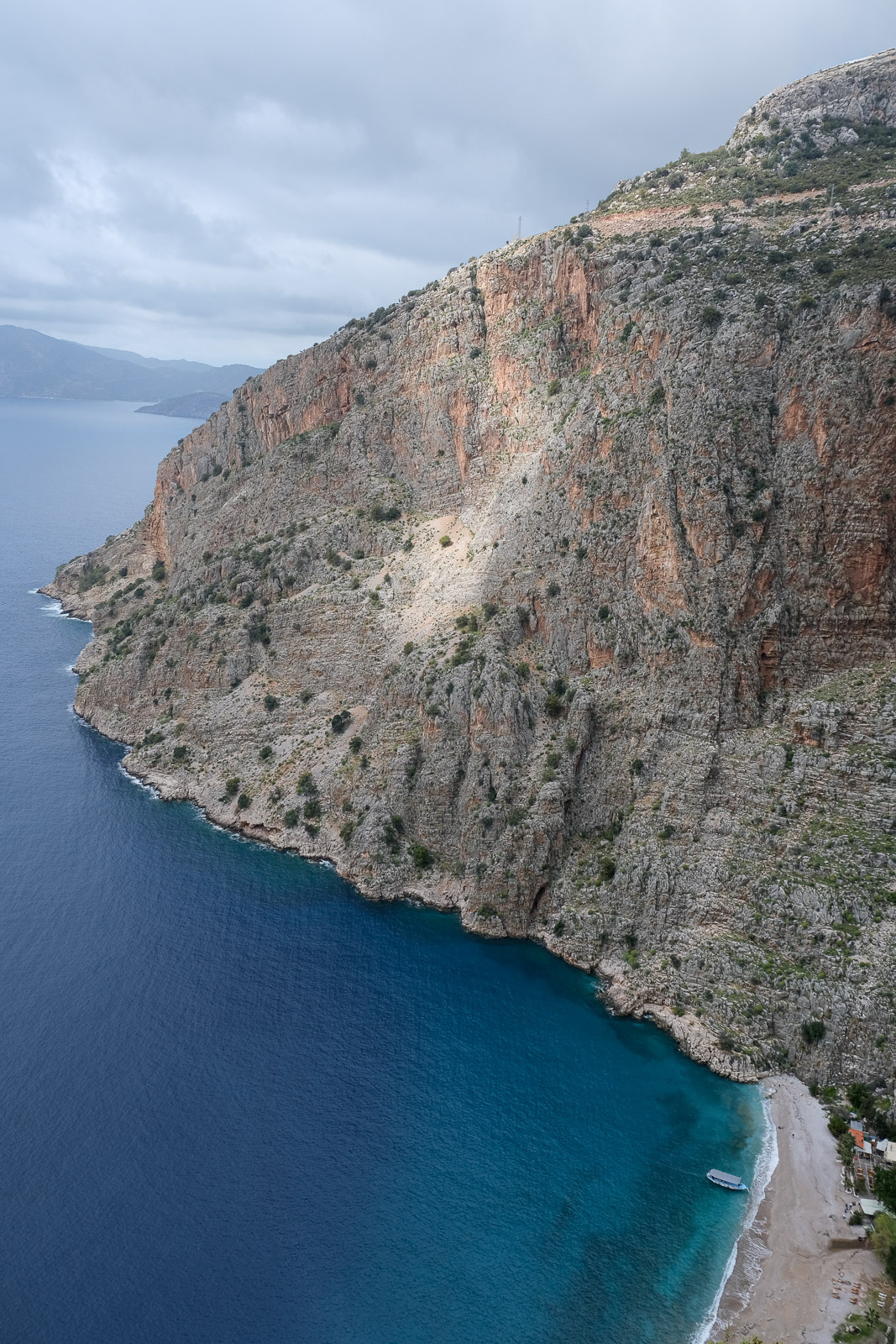
The village of Kabak sits high above the coastline, with a scattering of wooden bungalows cascading down toward Kabak Bay – a small beach framed by dramatic cliffs. There are a few short walks to other hidden bays that can be done directly from the beach.
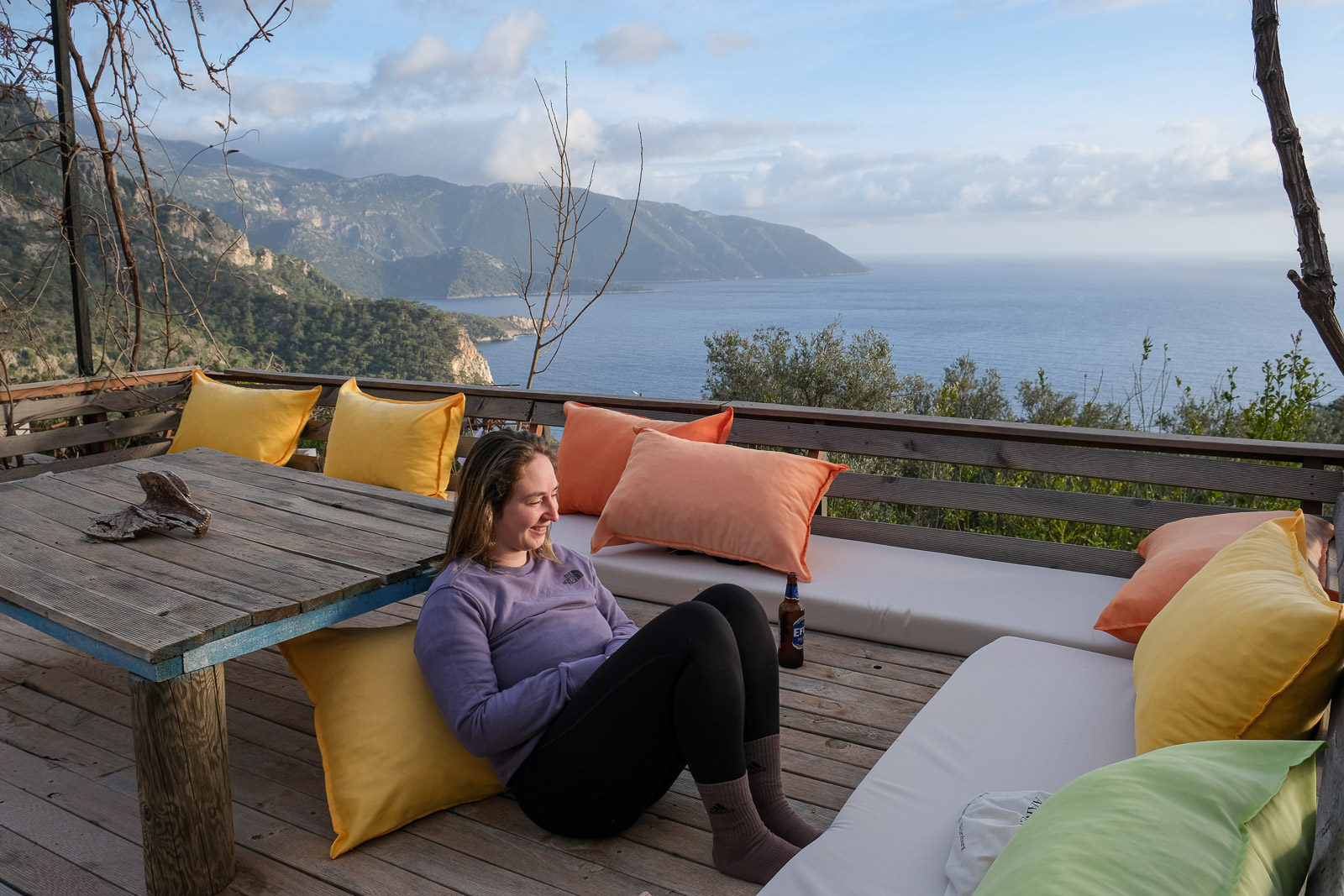
We chose to spend the night at Bağ Camp Kabak, in a tent (although with an actual mattress). We had read glowing reviews about the food and the views – and it more than lived up to the expectations.
As it turned out, we were the very first guests of the seaon, and the family prepared an entire dinner spread just for the two of us, featuring fresh, locally grown vegetables. The portions were generous – far more than we could possibly finish. Combined with the setting, it made for one of those memories that become unforgettable: from the seating area overlooking Kabak bay, we watched the sun dip below the horizon, sipping well deserved cold beers as our muscles finally began to relax.
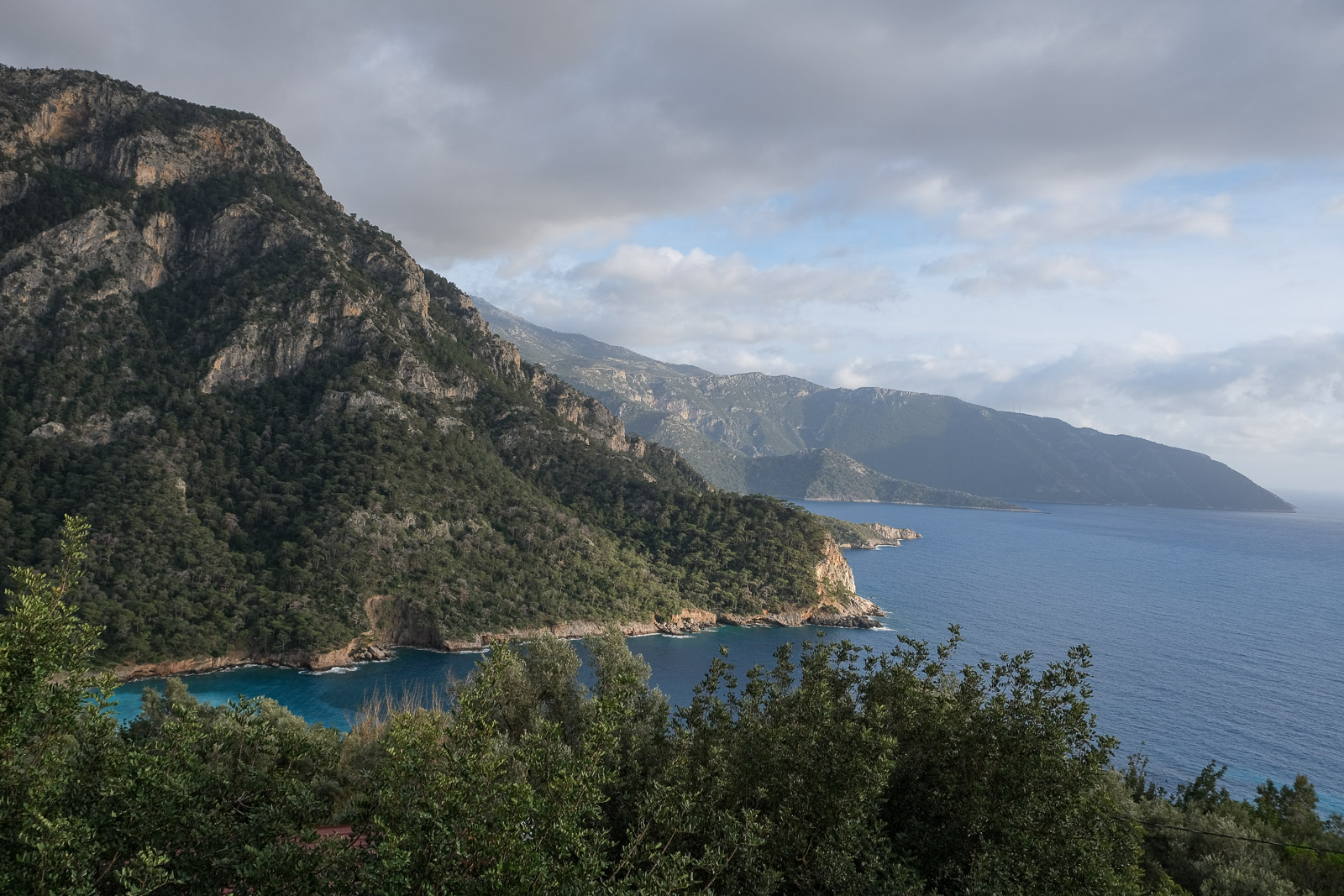
On day two, the plan was to continue along the Lycian Way to the village of Gey, where we had hoped to treat ourselves to a night at the Yediburunlar Lighthouse Boutique Hotel (it looked incredible). But plans shifted, and we ended up catching an early local bus out of Kabak, heading back to our car in Ölüdeniz . It was a bittersweet decision.
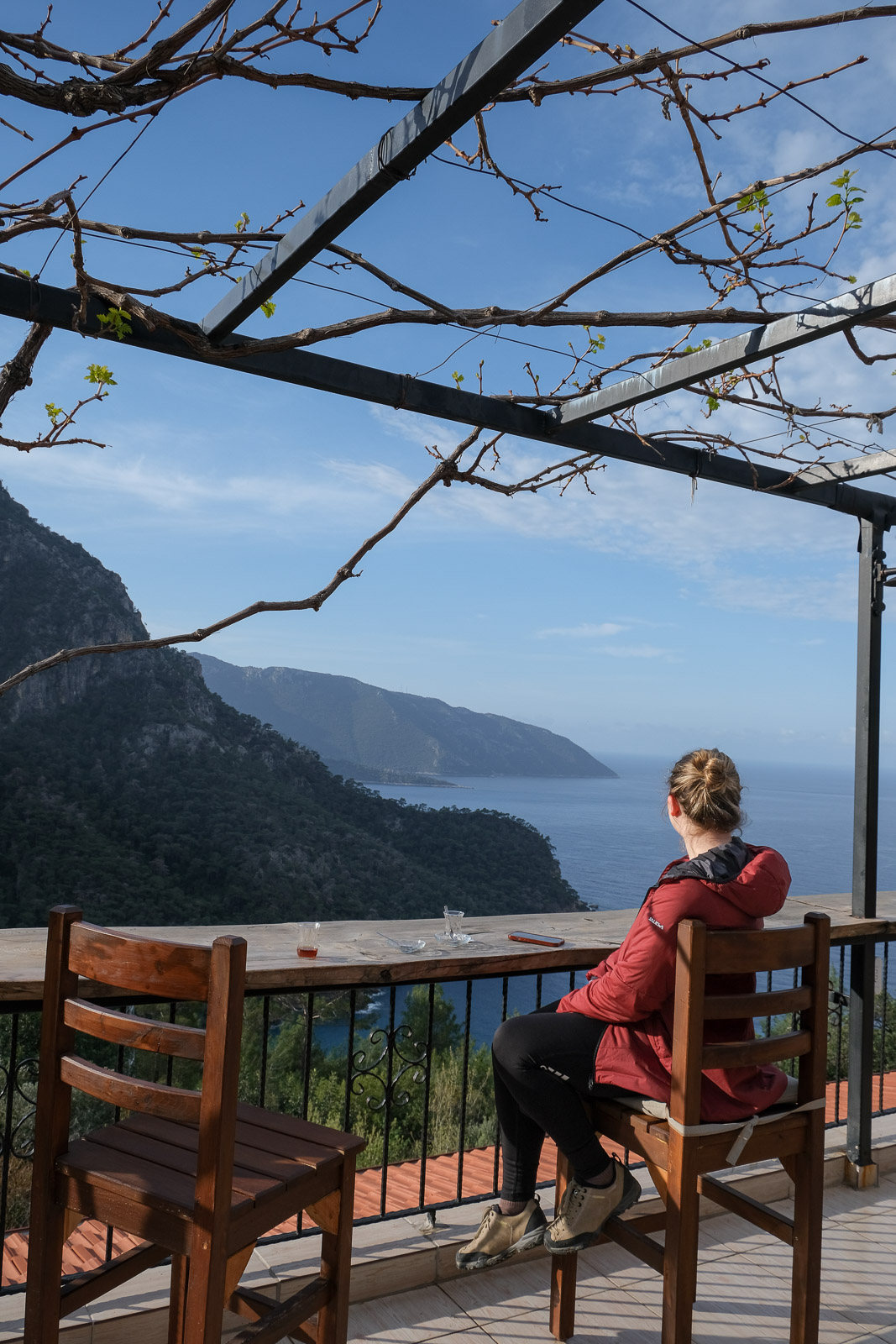
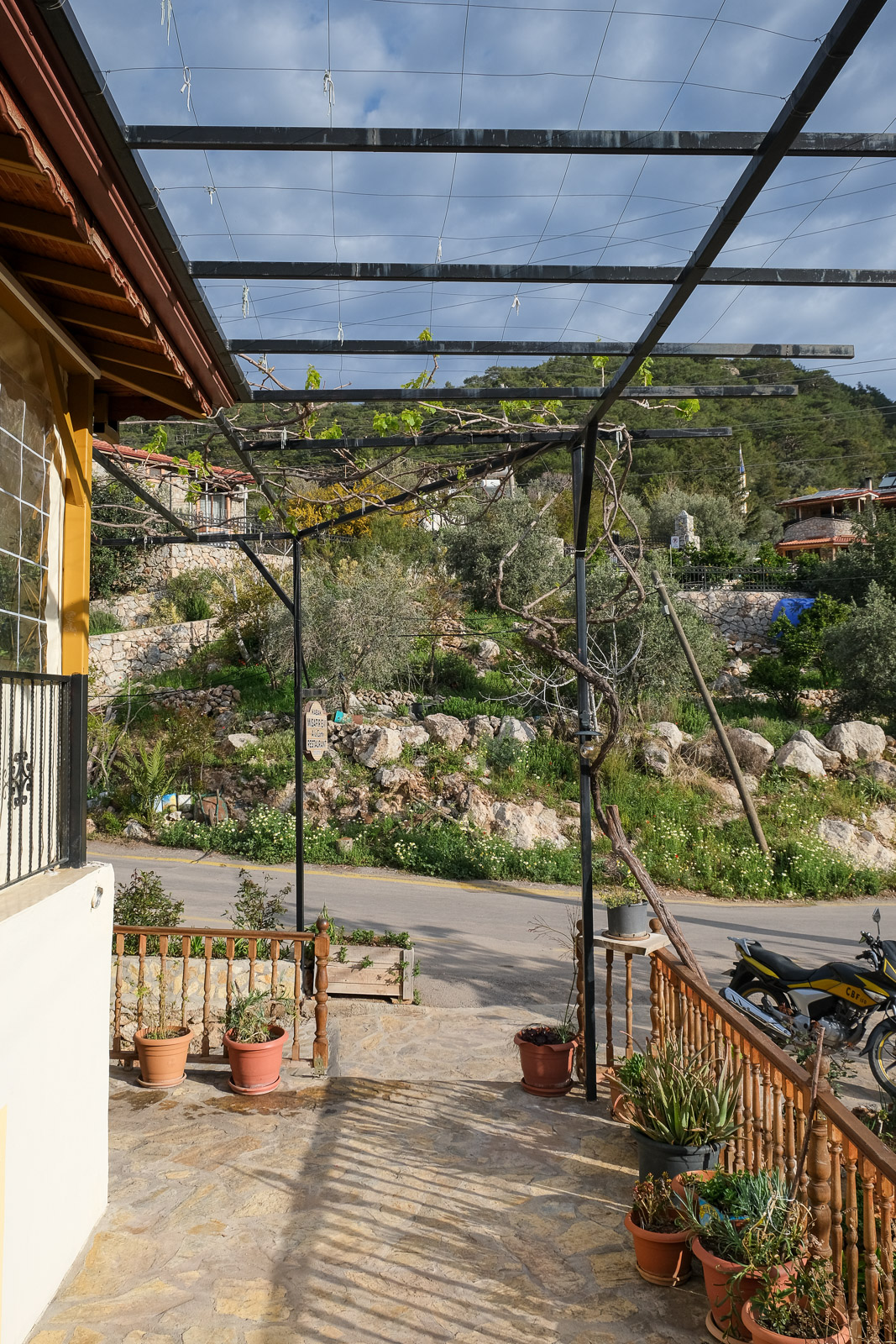
As we waited for the bus, we sat on the balcony of a small restaurant overlooking the bay, sipping oru morning Turkish tea as the rising sun slowly warmed the valley (and our faces). It’s those quiet, unhurried moment that tend to stay with me the most.
Kayaköy
The spontaneous addition to our road-trip became Kayaköy: an abandoned Greek village with rows of empty, roofless houses climbing the hillside. The village was deserted in the early 1920s following the Greco-Turkish War. At the time, Kayaköy – then known as Levissi – was home to a Greek Orthodox community. When the war ended, the Greeks living in Turkey were relocated to Greece, while Muslims from Greece were resettled in Turkey.
The Muslim families who later moved to the area chose not to inhabit the hillside homes, instead building along the flatter valley below. Practical considerations, like more suitable land, likely played a role, but local lore adds another layer: the old village was said to be haunted by the spirits of its former Greek residents, buried under the houses, and the newcomers reportedly refused to live “above the dead”.
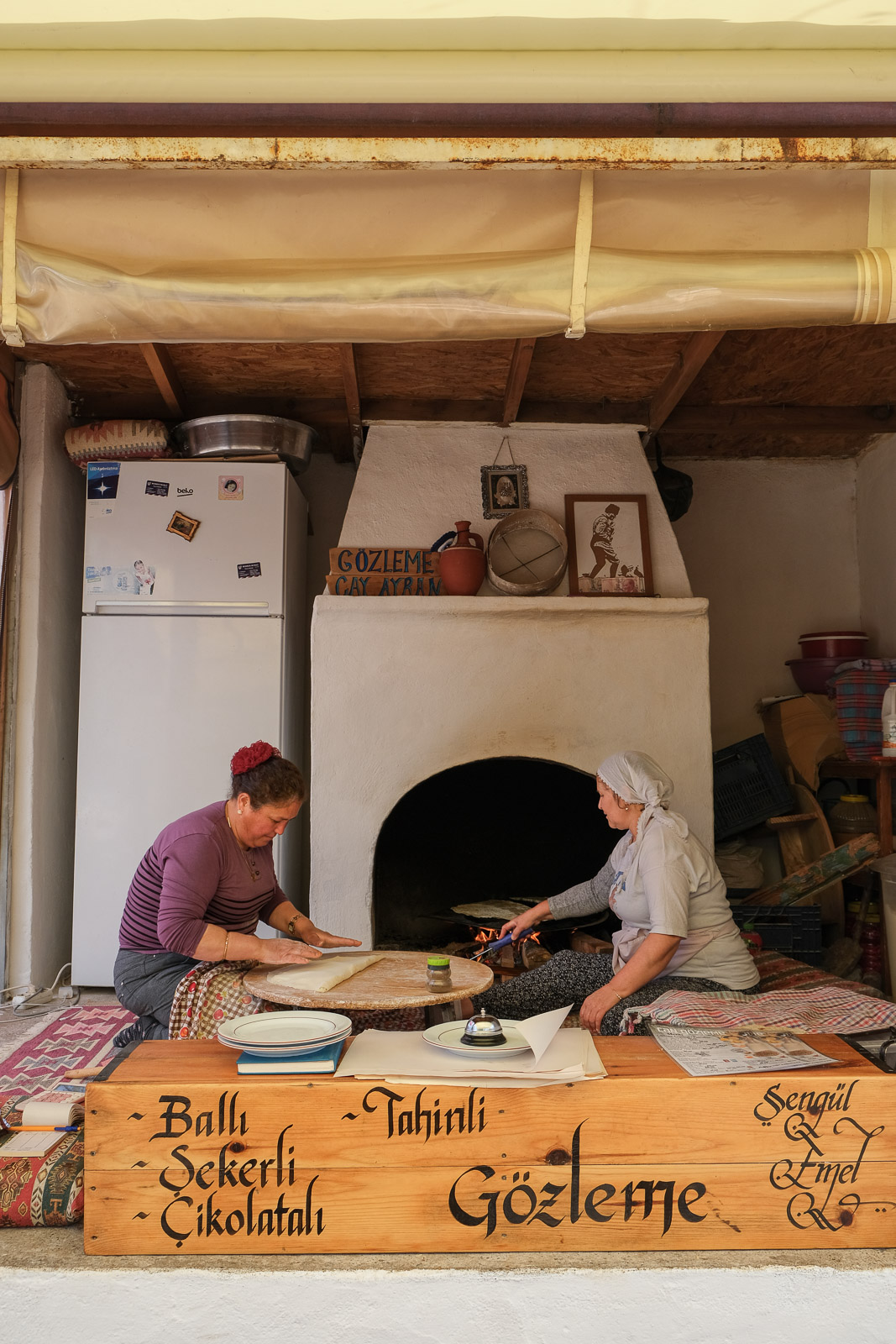
Before wandering into the the ghost village, we stopped for breakfast at one of the neaby cafés (İsmailin Yeri), where we had our first taste of what would quickly become my obsession for the rest of the trip: gözleme – traditional Turkish flatbread made from thinly rolled dough filled with ingredients like cheese, spinach or minced meat. And of course, Turkish mint tea to accompany it.
The photography potential of Kayaköy was excellent – especially when the sun came out and lit up the weathered stone façades. What stood out most to me were the lingering traces of paint, soft hues of pink and blue clinging to the grey walls.
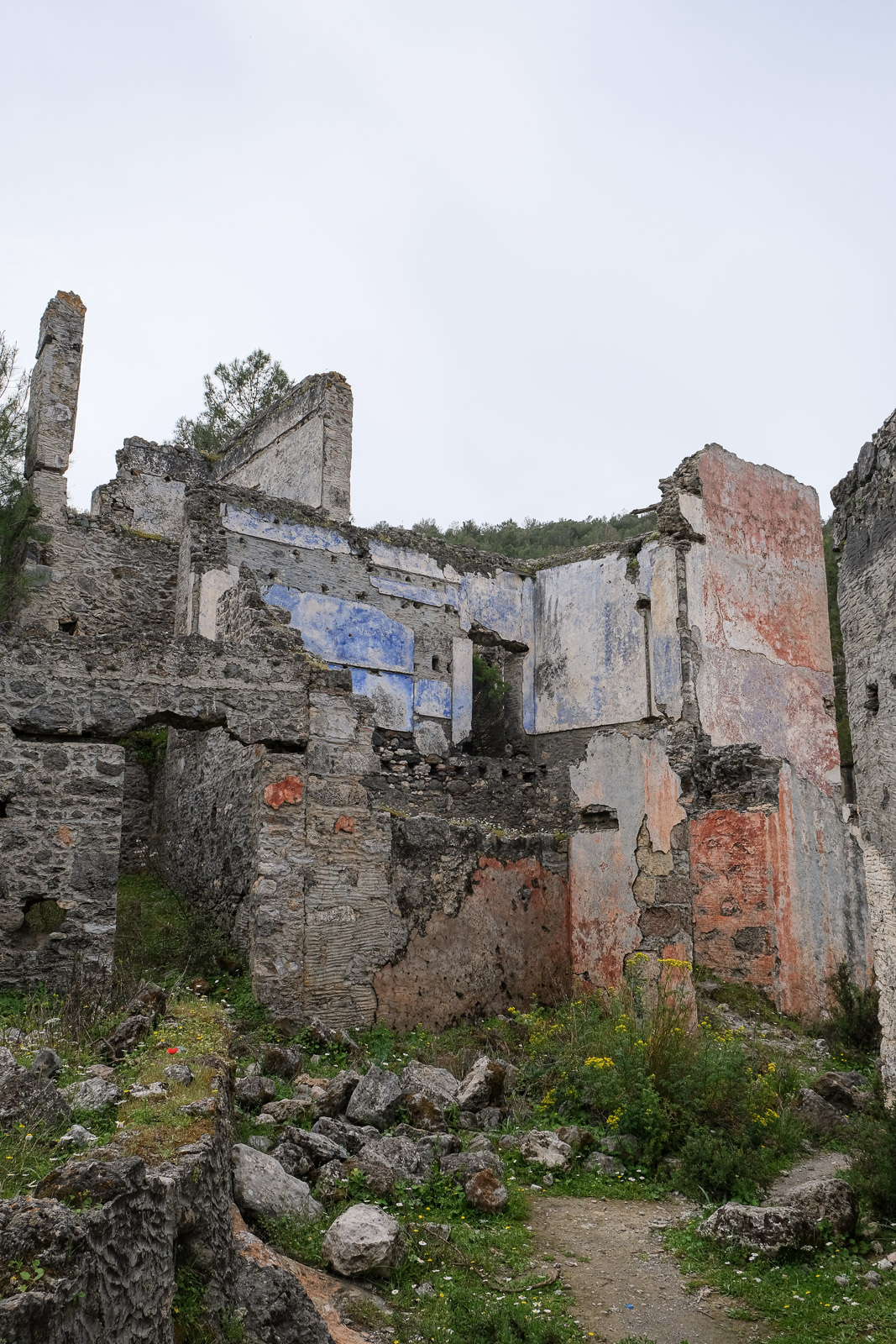
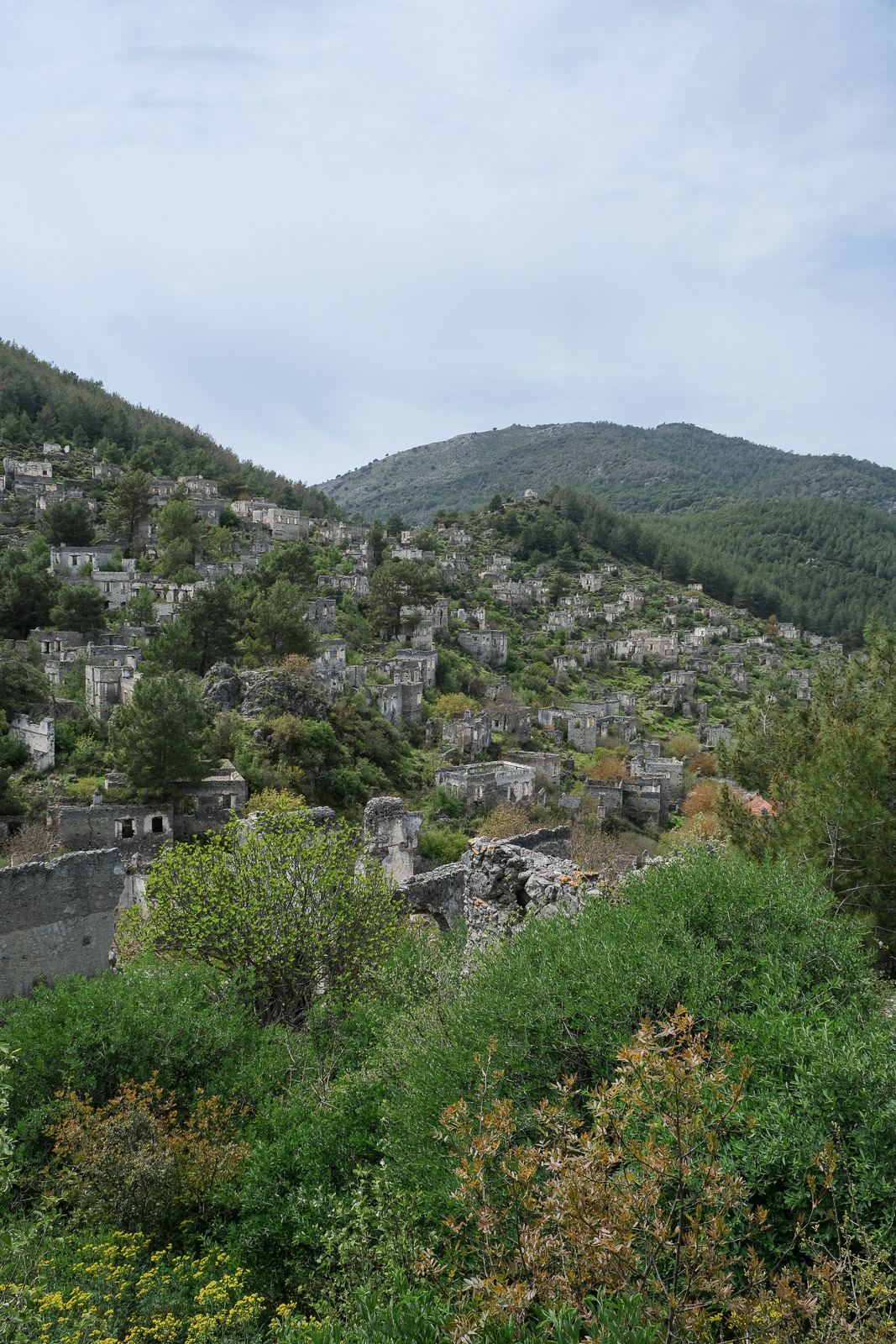
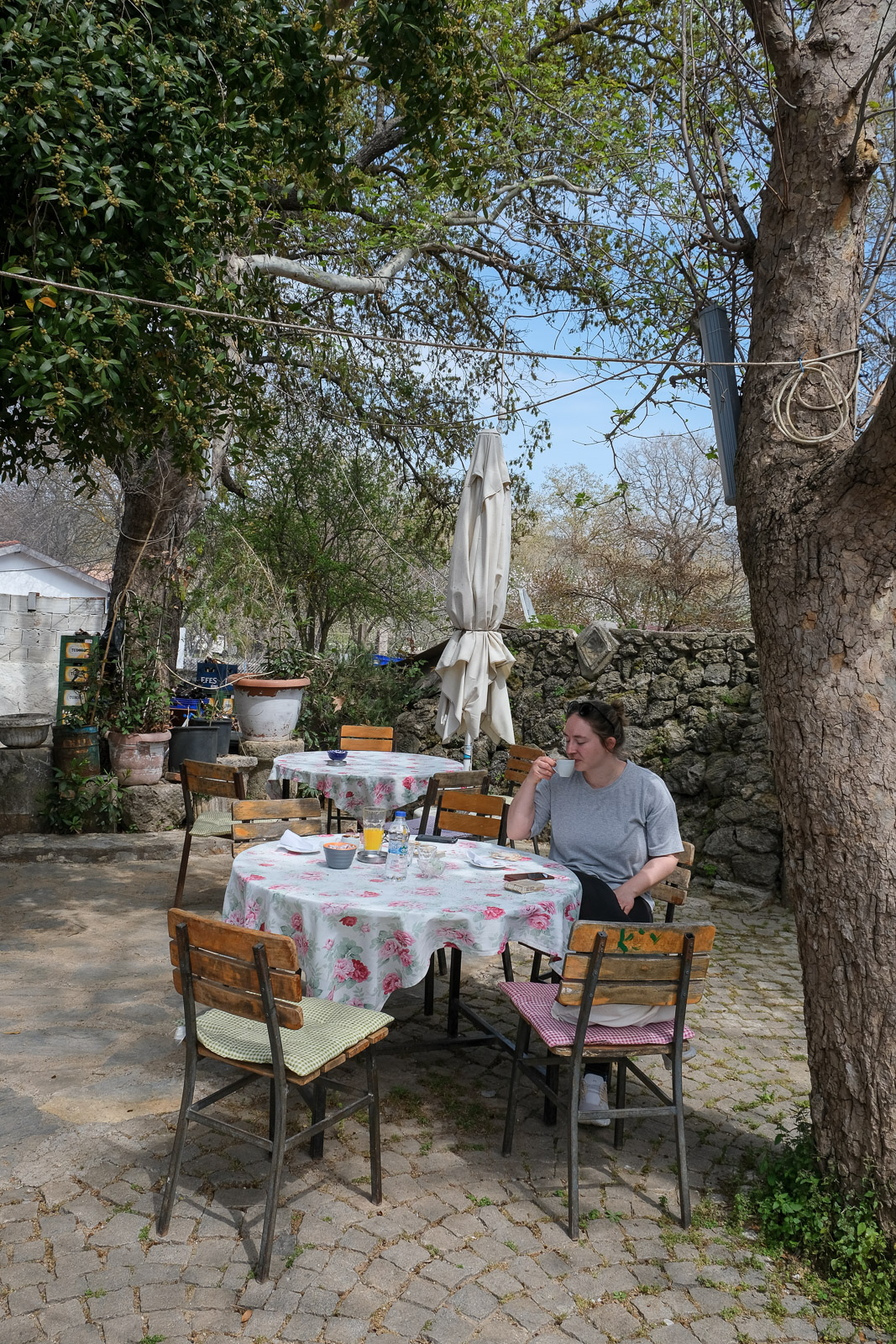
After spending almost four hours exploring every corner of the ghost town, we made our way down to the newer part of the village, where we stopped for Turkish coffee and freshly pressed orange juice in a little courtyard.
As we continued exploring, we stumbled upon a small outdoor oven beside a (tiny shop), where two women were busy preparing fresh gözleme. It seemed to be a popular stop for locals on their lunch break – so naturally, we had to try it. And wow, it did not disappoint. The dough was perfectly crisp on the outside, and soft and warm on the inside.
Dalaman (Dalyan, Çandir)
Our final destination for the day, and our base for exploring over the next three days: the Dalaman region.
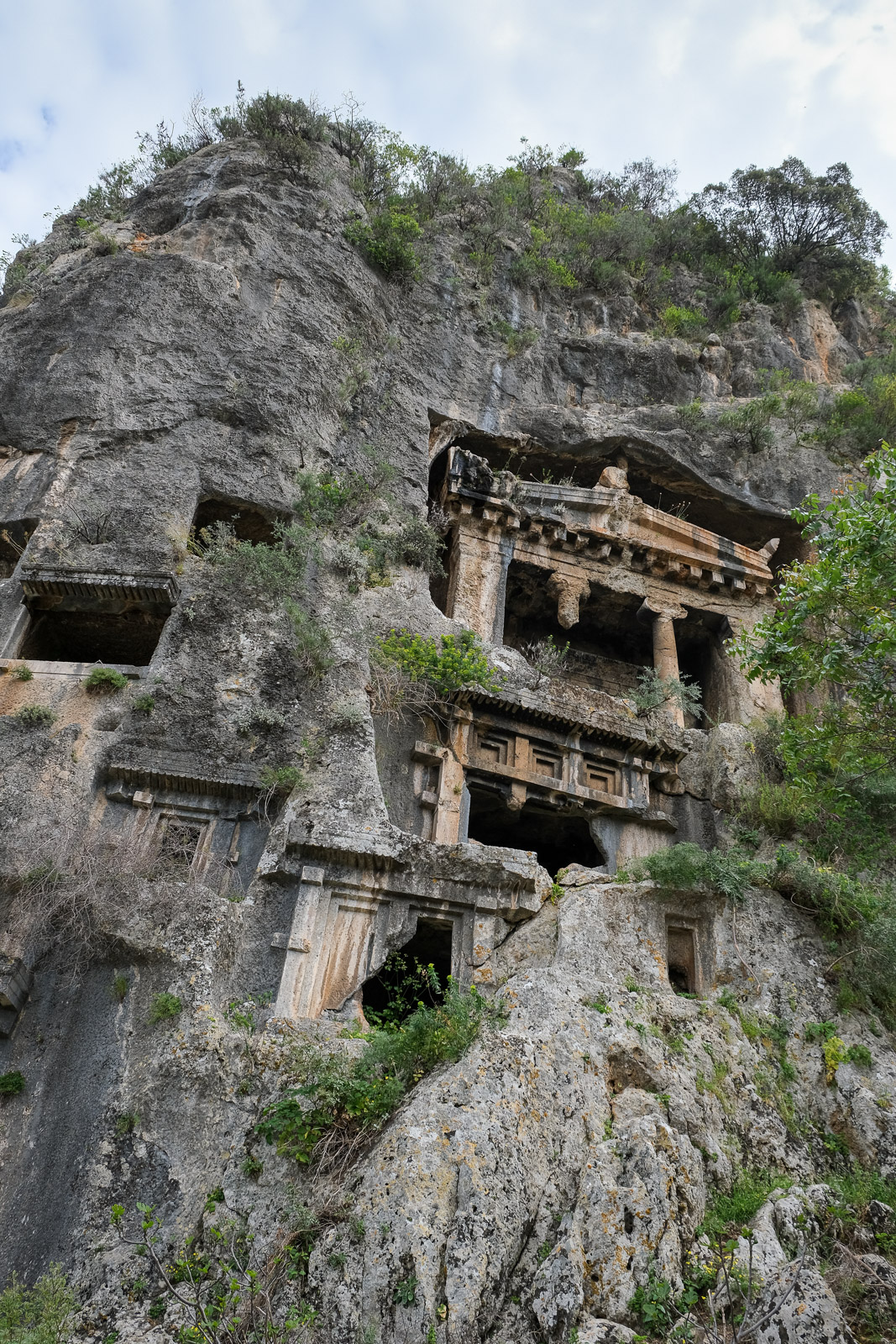
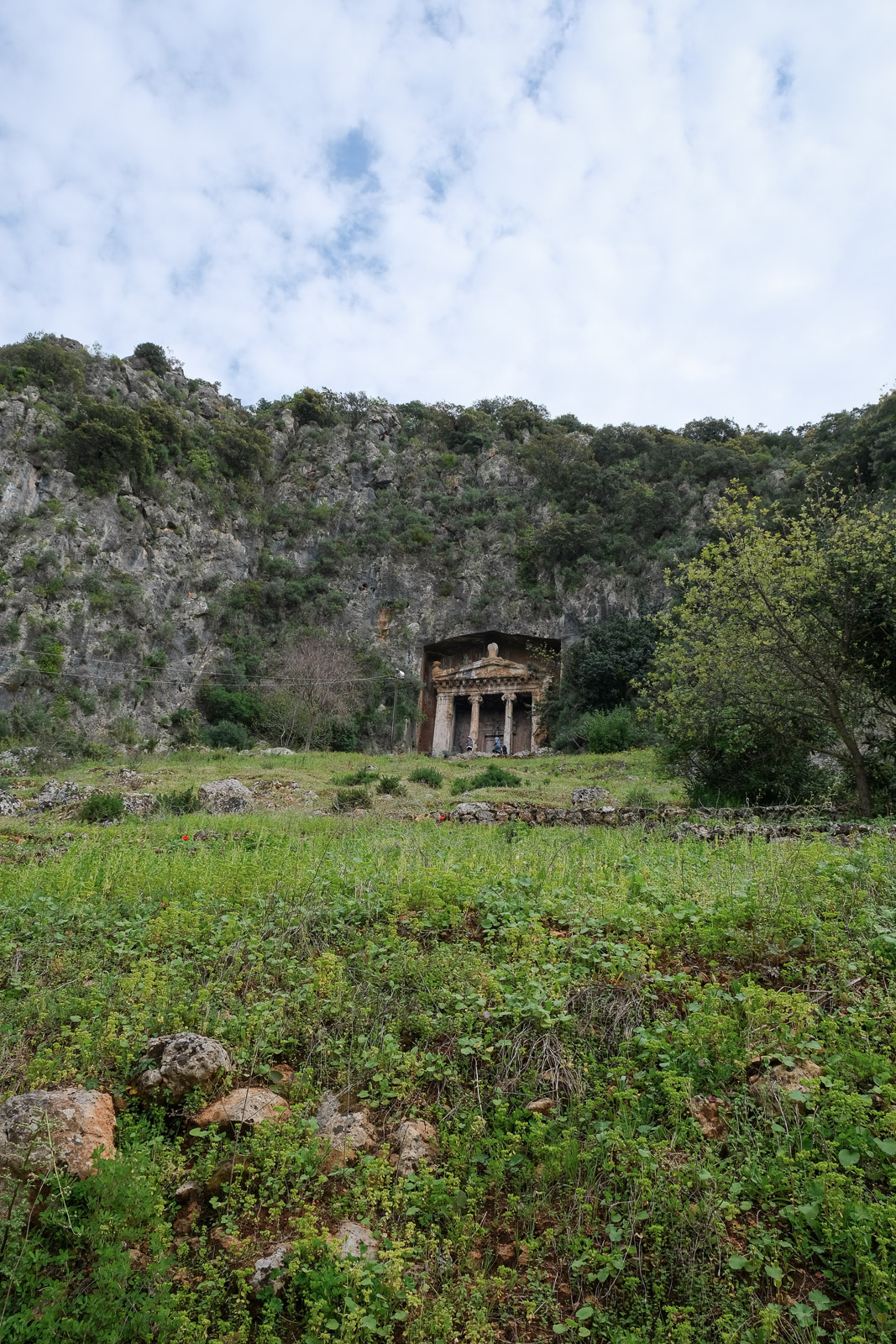
En route from Kayaköy, we made a brief stop at the Amyntas Rock Tombs – carved directly into the cliffside. We chose to admire them from a distance rather than pay for closer look. It’s a worthwhile stop if you’re passing by, though perhaps not something worth an actual detour for.
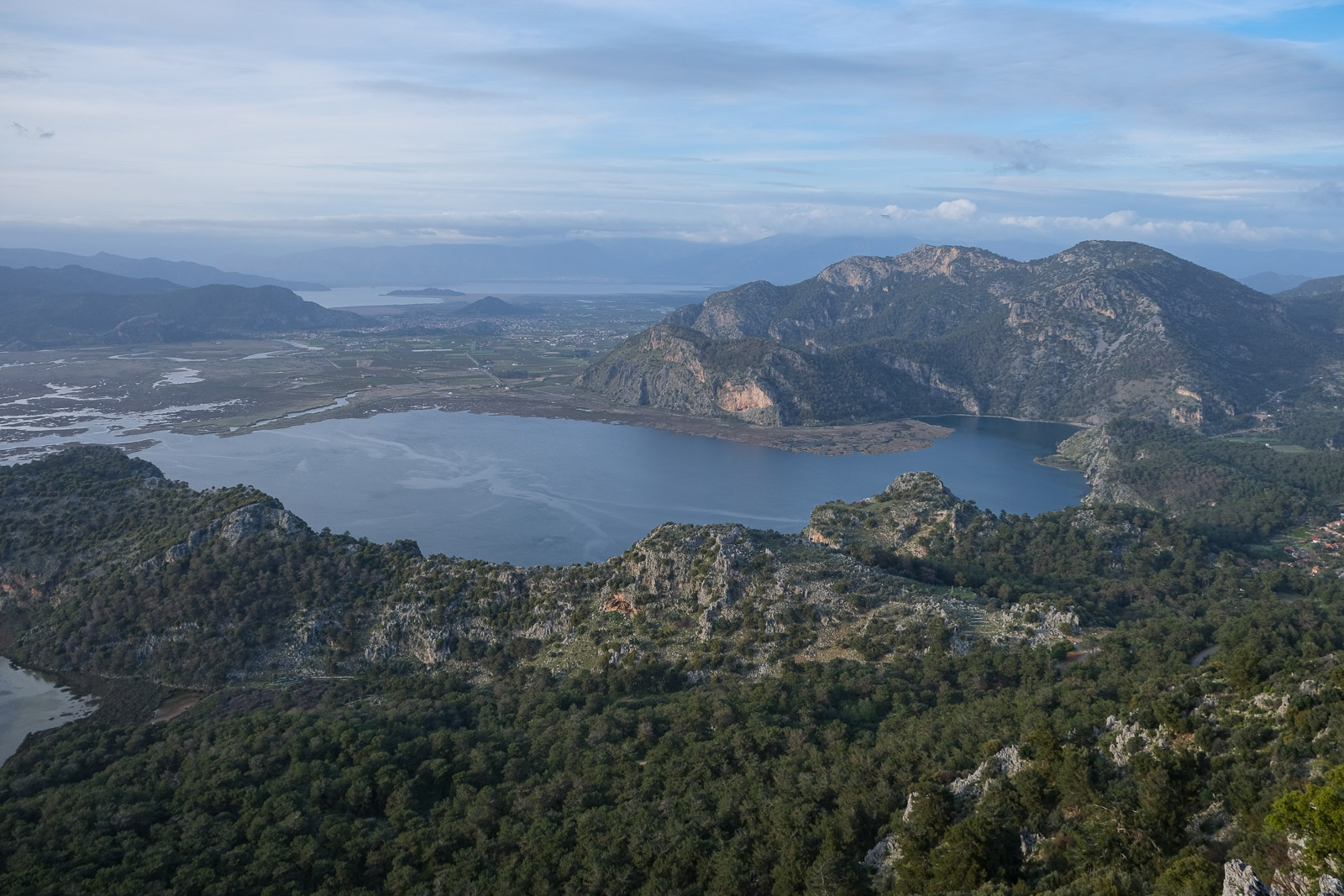
Since our Airbnb was located in Çandir rather than the more tourist side of Dalyan, our drive would include a short ferry ride across the Dalyan Strait. But before heading over we made one last stop: the Radar Mountain viewpoint for sunset. The road up is steep, rocky, and quite rough – we ended up pulling over at a slightly Lower viewpoint, unsure whether our small, low car would make it safely to the top. The view did not disappoint. The sky was slightly overcast, so we didn’t get the vibrant colours I had imagined, but the landscape was just as impressive. Absolutely worth the detour (or the hike up from the beach for some).
Taking the ferry across turned out to be a little stressfull experience. By the time we arrived, it was already dark, and there wasn’t a single person in sight. Three different phone numbers were written on a sign, which only added to the confusion – we weren’t quite sure who to call or whether anyone would actually come. Thankfully, after a long wait (and uncertainty), headlights finally appeared, and before long, we were making our way across to the other side.
The Airbnb was great. We were initially a bit surprised to see a second house on the property, but it was unoccupied, so in the end we had the entire place to ourselves. One of the highlights was the lemon and orange trees surrounding the house. I was also located right on the lake, which was a very peaceful setting to wake up to. We were also within walking distance of the ruins and the famous Caunos Tombs of the Kings, yet felt far removed from any hustle and bustle.
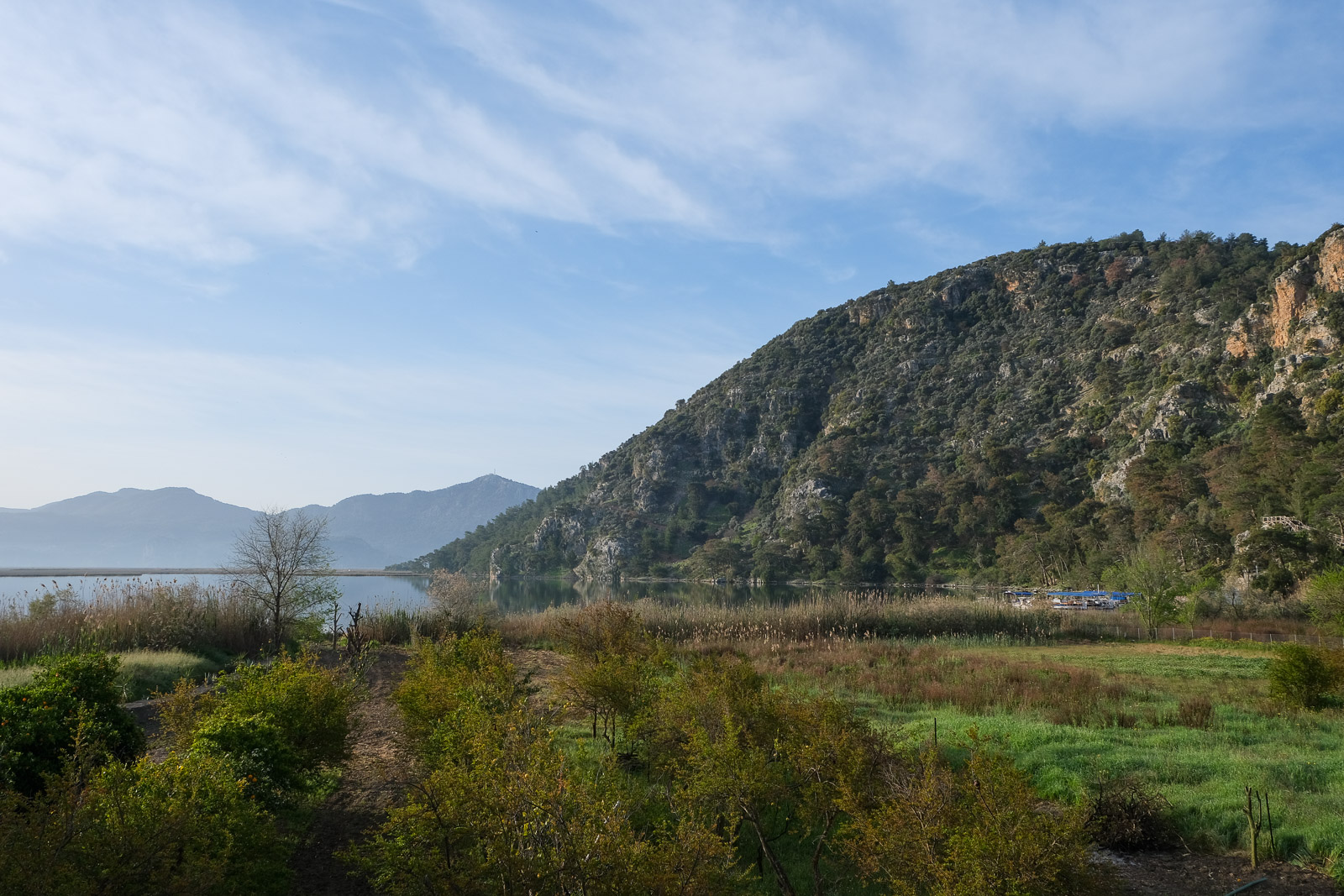
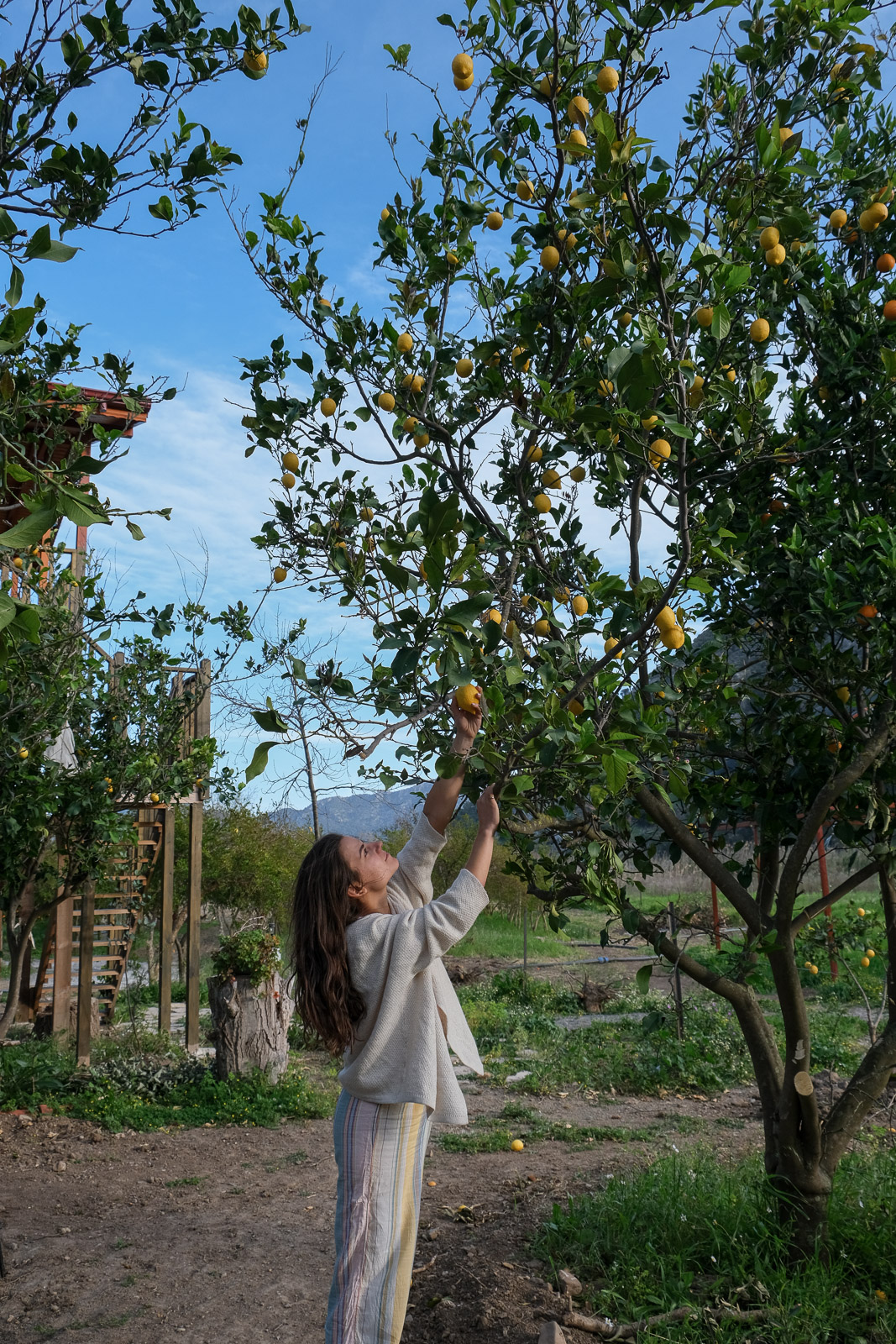
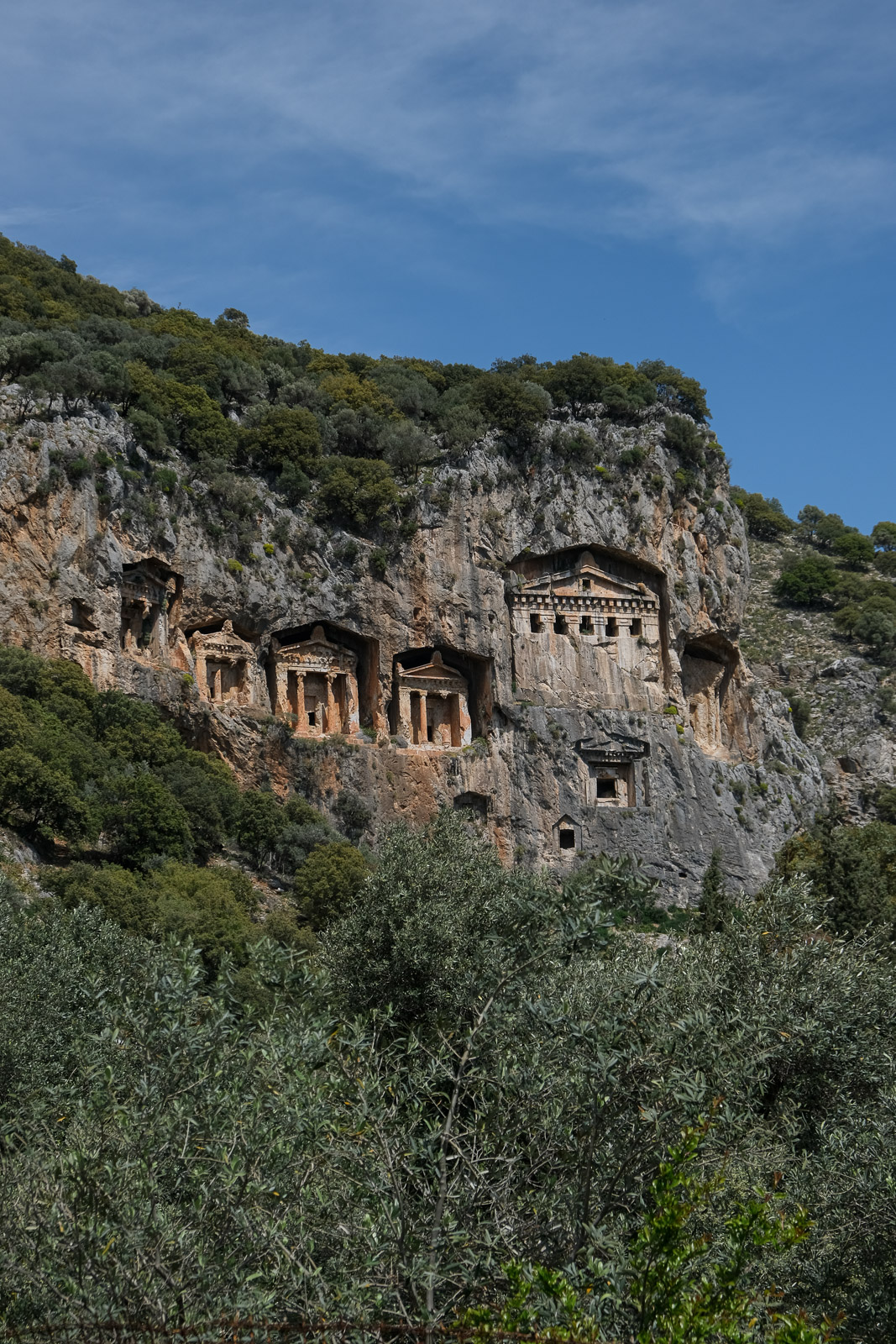
Wandering through the village, you really got a sense of the local life – tractors often passed by, women gathered in the streets, there were a couple small neighbourhood cafés – so different from the Dalyan side, which felt noticeably more geared toward tourists.
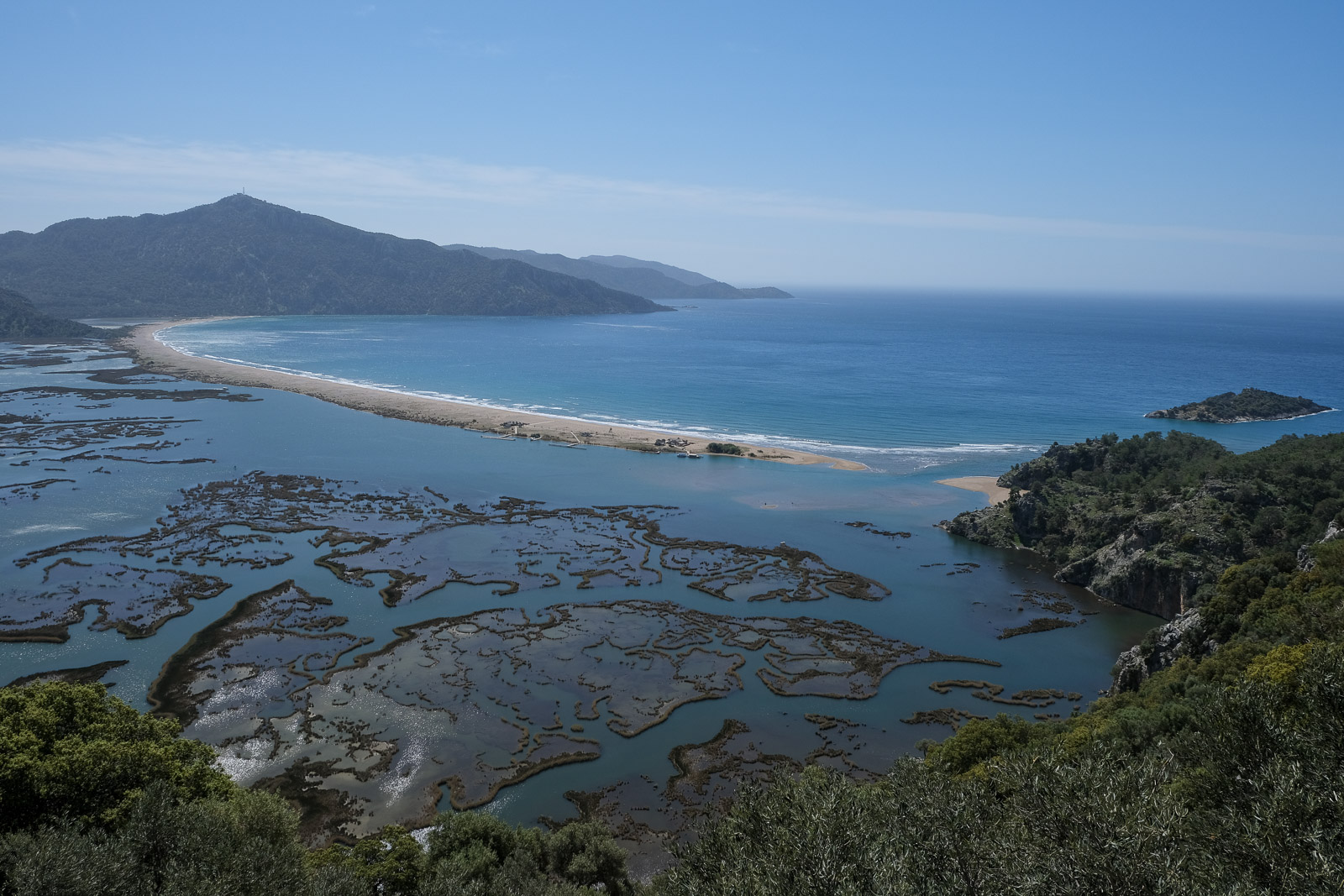
Also on the Çandir side, was a Viewpoint you could drive to – another rough, rocky ride. We had to be a little discreet to get there , as it looked like part of the acess was blocked by private property / ongoing construction. The view stretches out over İztuzu Beach with all the landscape surrounding it. The shallow, waterlogged terrain formed interesting patterns, which resembled coral reefs (at least to me!). It’s difficult to describe, but it was strangely beautiful.
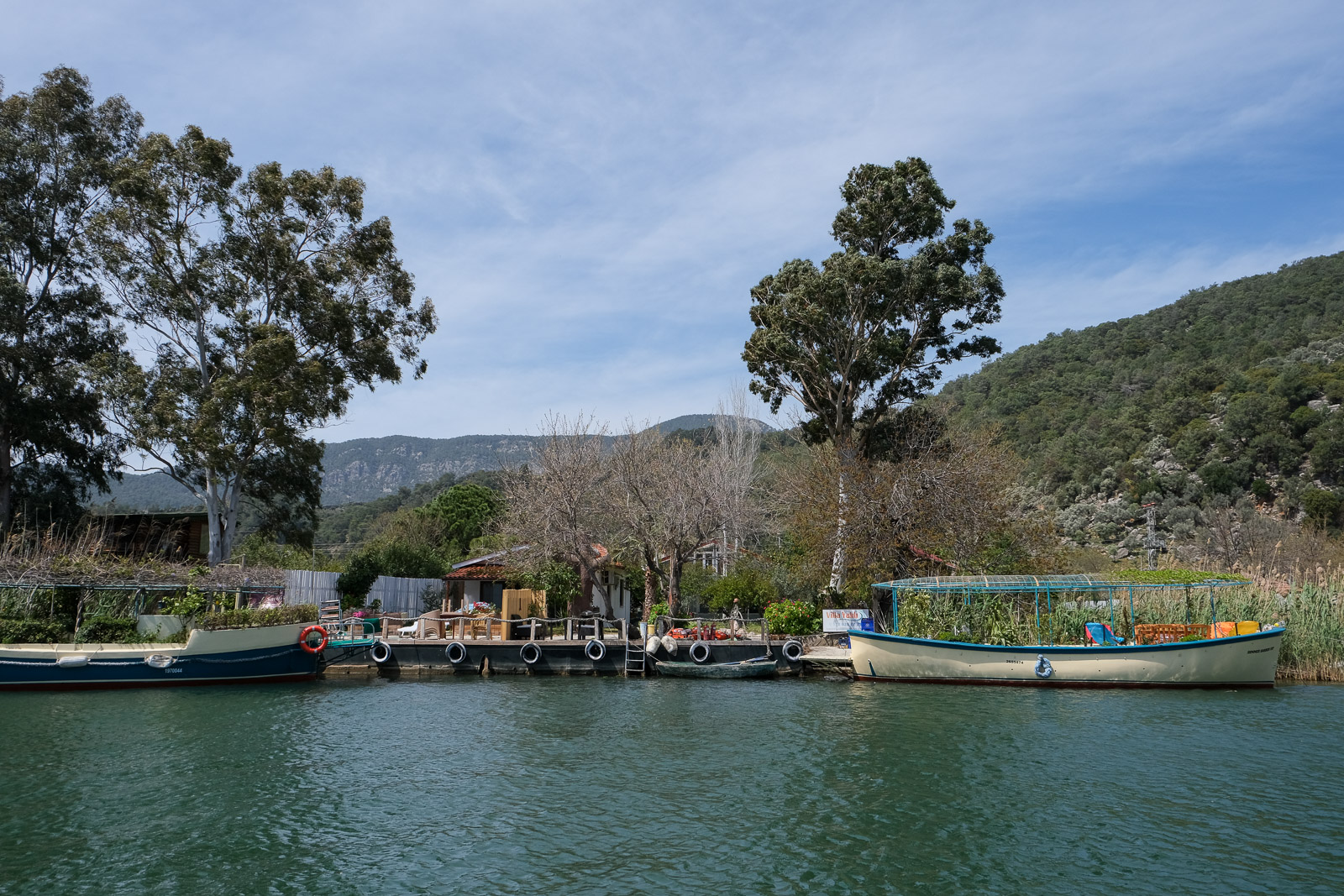
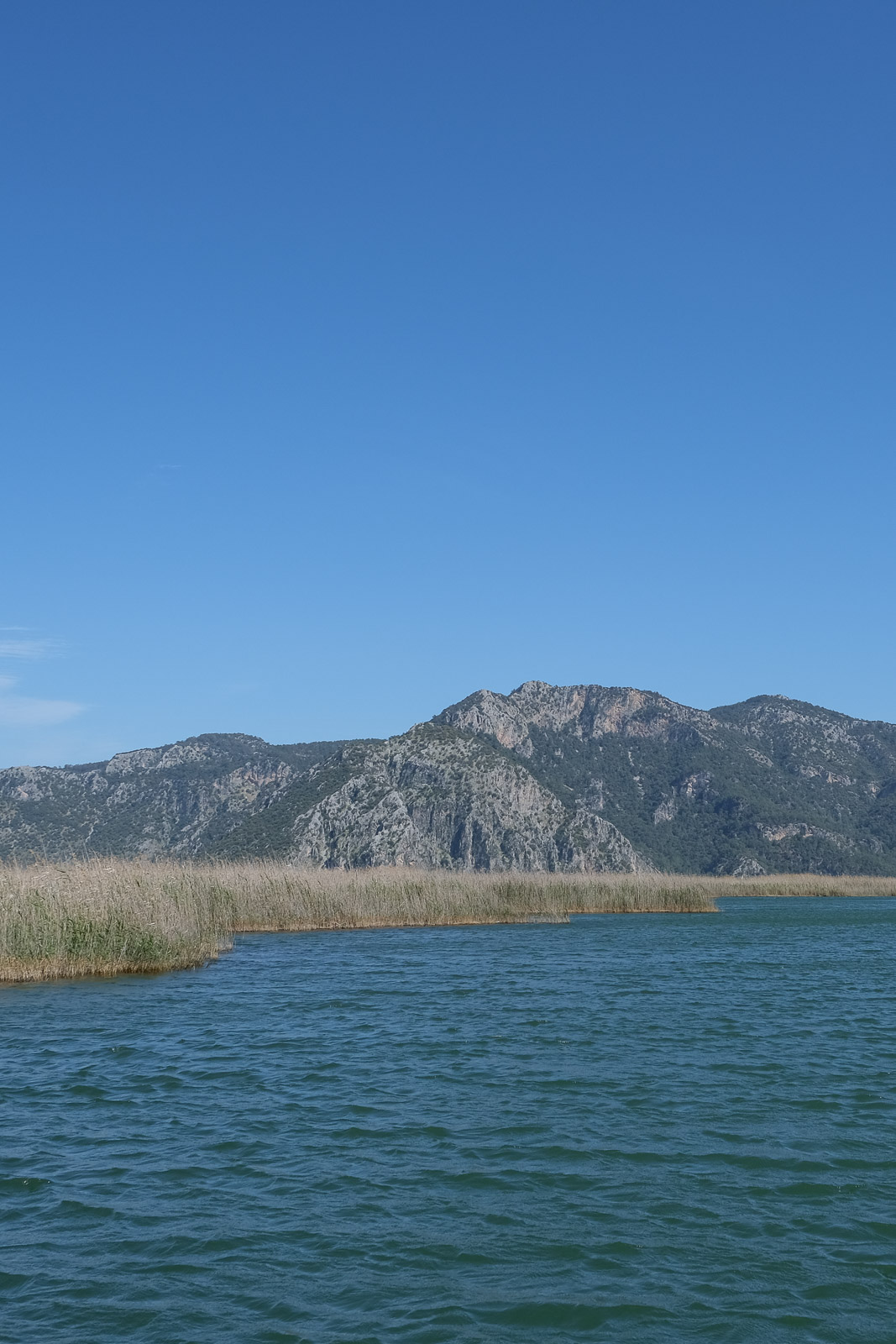
After seeing it from above, we decided to take the classic boat ride along the Dalyan Strait to İztuzu Beach itself. It made for a very nice ride, winding through the channels and offering a great vantage point of the Caunos Tombs of the Kings (definitely negotiate your price!).
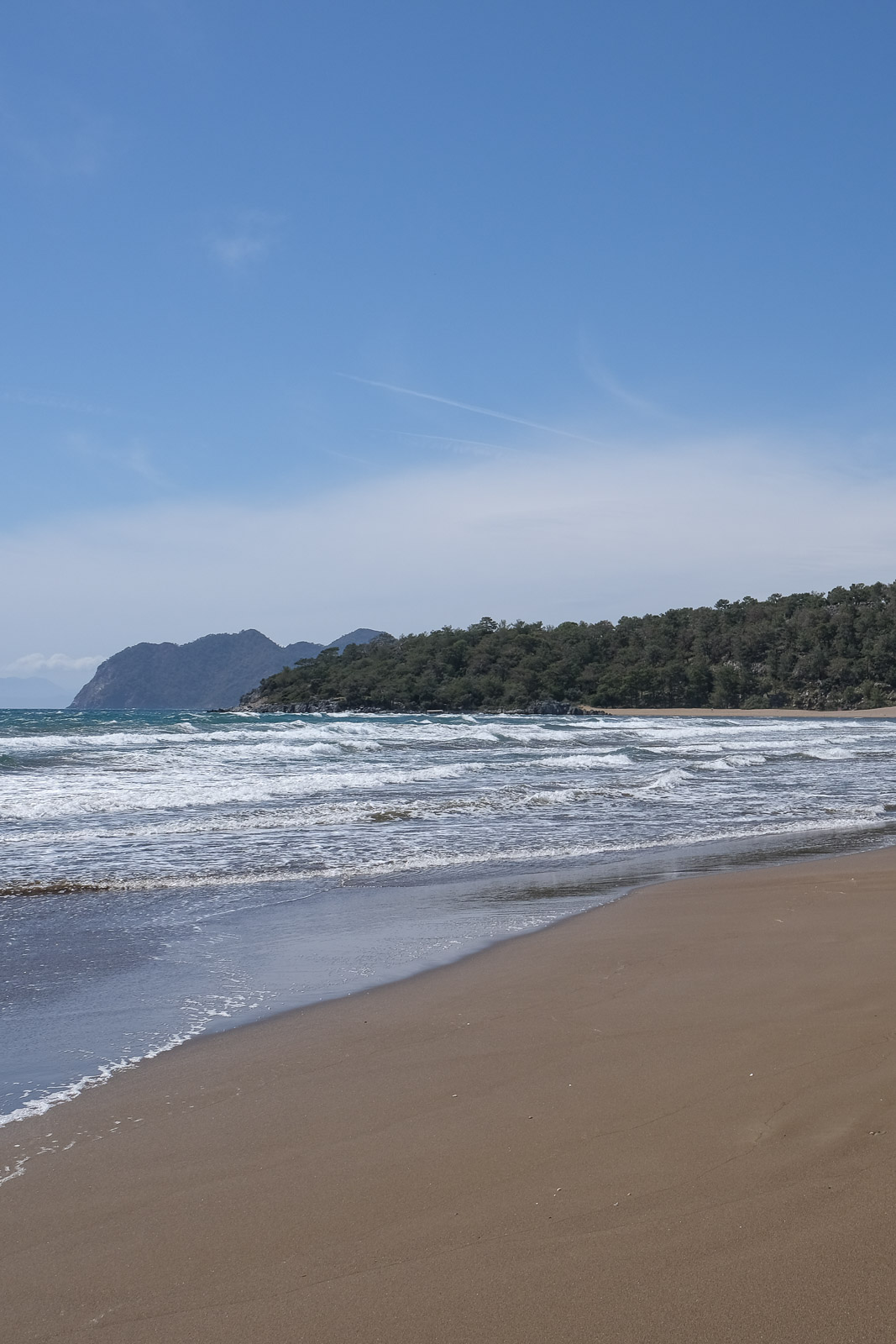
İztuzu Beach, often called Turtle Beach, stretches for several kilometers as a narrow strip of golden sand separating the river from the open sea. It’s actually a protected nesting site for loggerhead turtles – nesting season usually runs from May to early July, with hatching from late July through September. That said, when we arrived, it was incredibly windy – beautiful, but not exactly the calm beach moment we had imagined.
As little gem of an outdoor restaurant we found near our Airbnb (serving almost exclusively gözleme): Çandır Teras Çay Bahçesi Gözleme Ve Kahvaltı Evi.
Datça-Bozburun Peninsulas
A part of the road trip I had been especially looking forward to was the Datça-Bozburun peninsulas.
Bozburun Peninsula
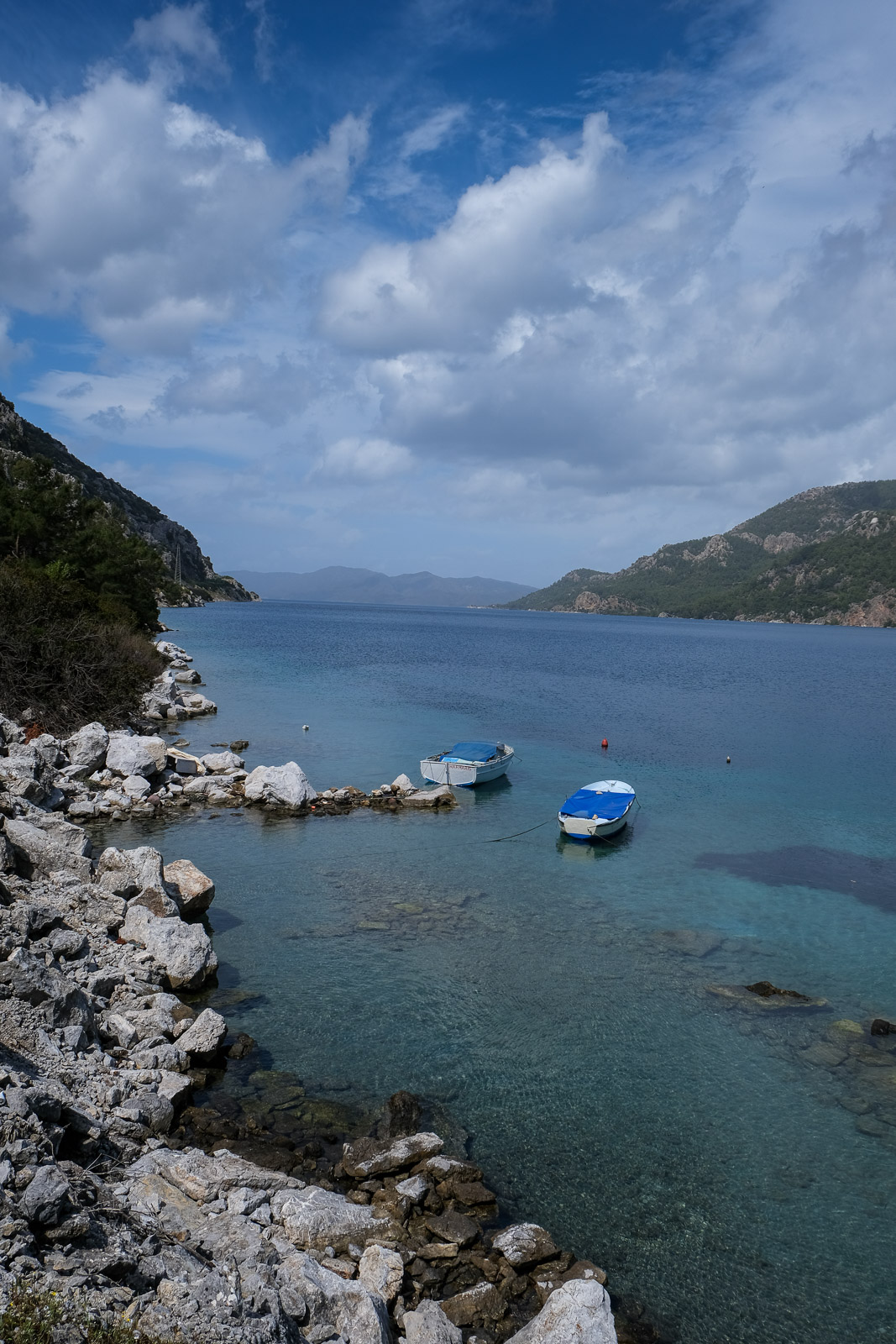
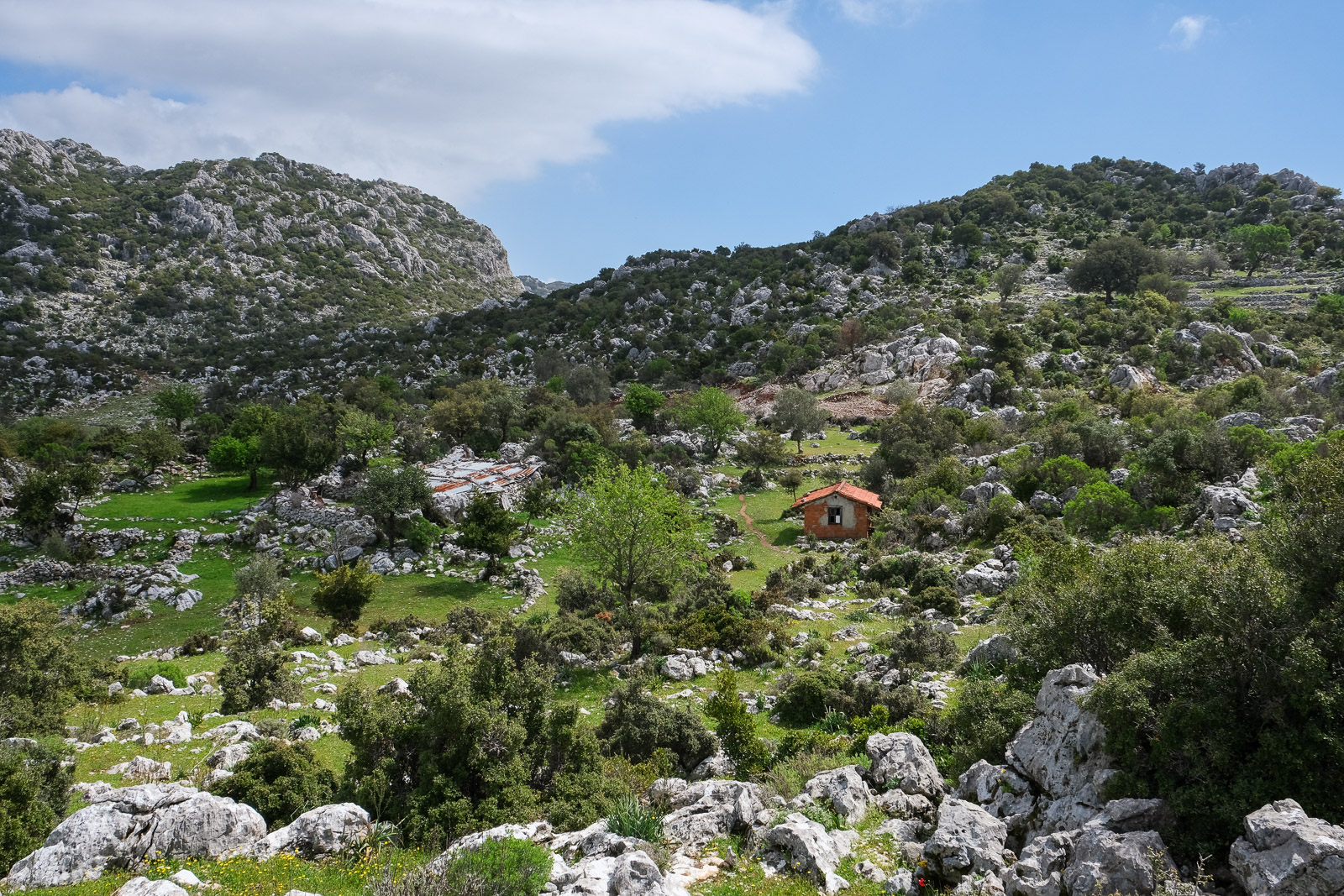
Although we were based in an Airbnb on the Datça side, we spent half a day driving around the Bozburun Peninsula - a quieter corner of southwestern Turkey, where rugged hills spill into turquoise waters, and winding roads link small, slow-paced fishing villages.
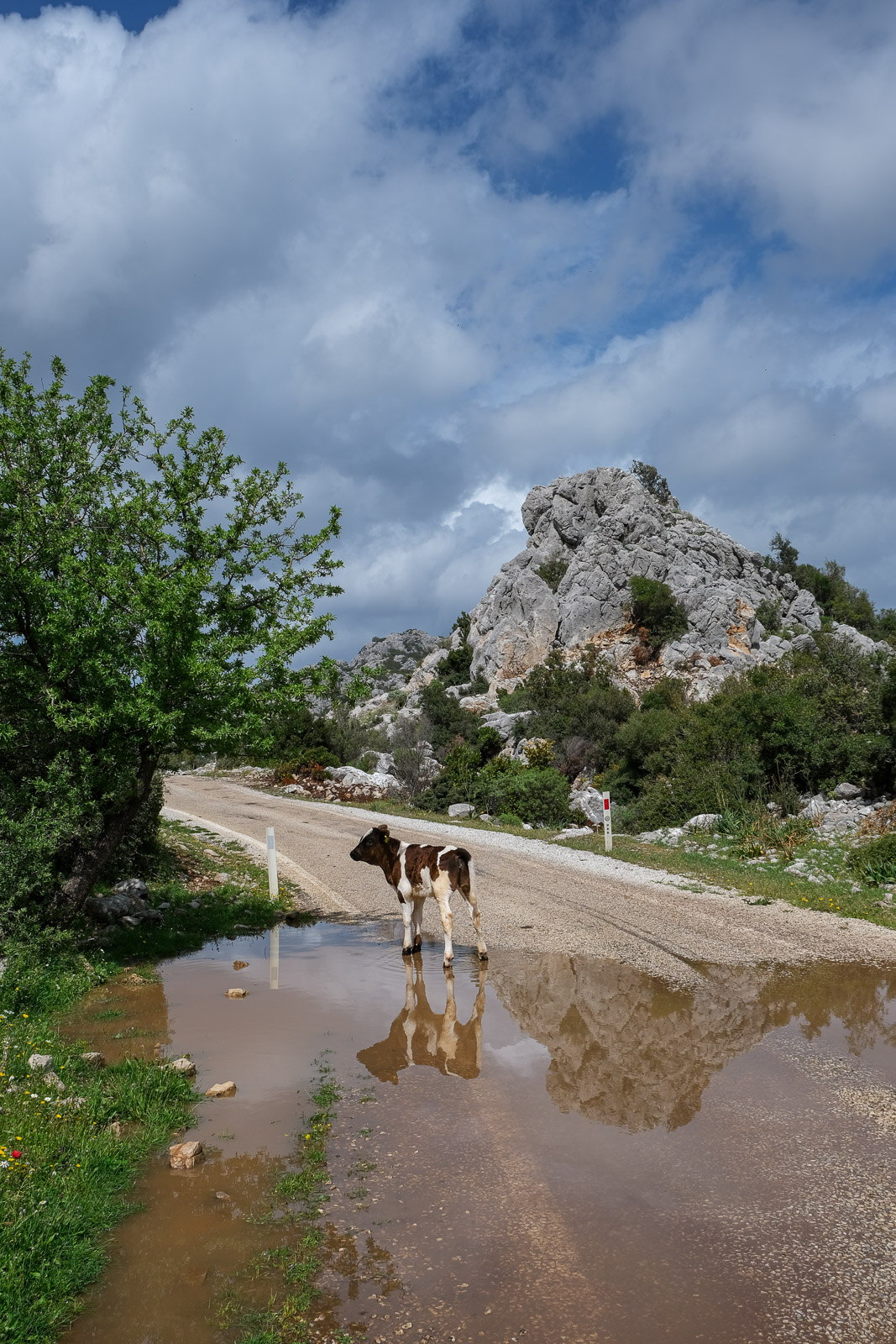
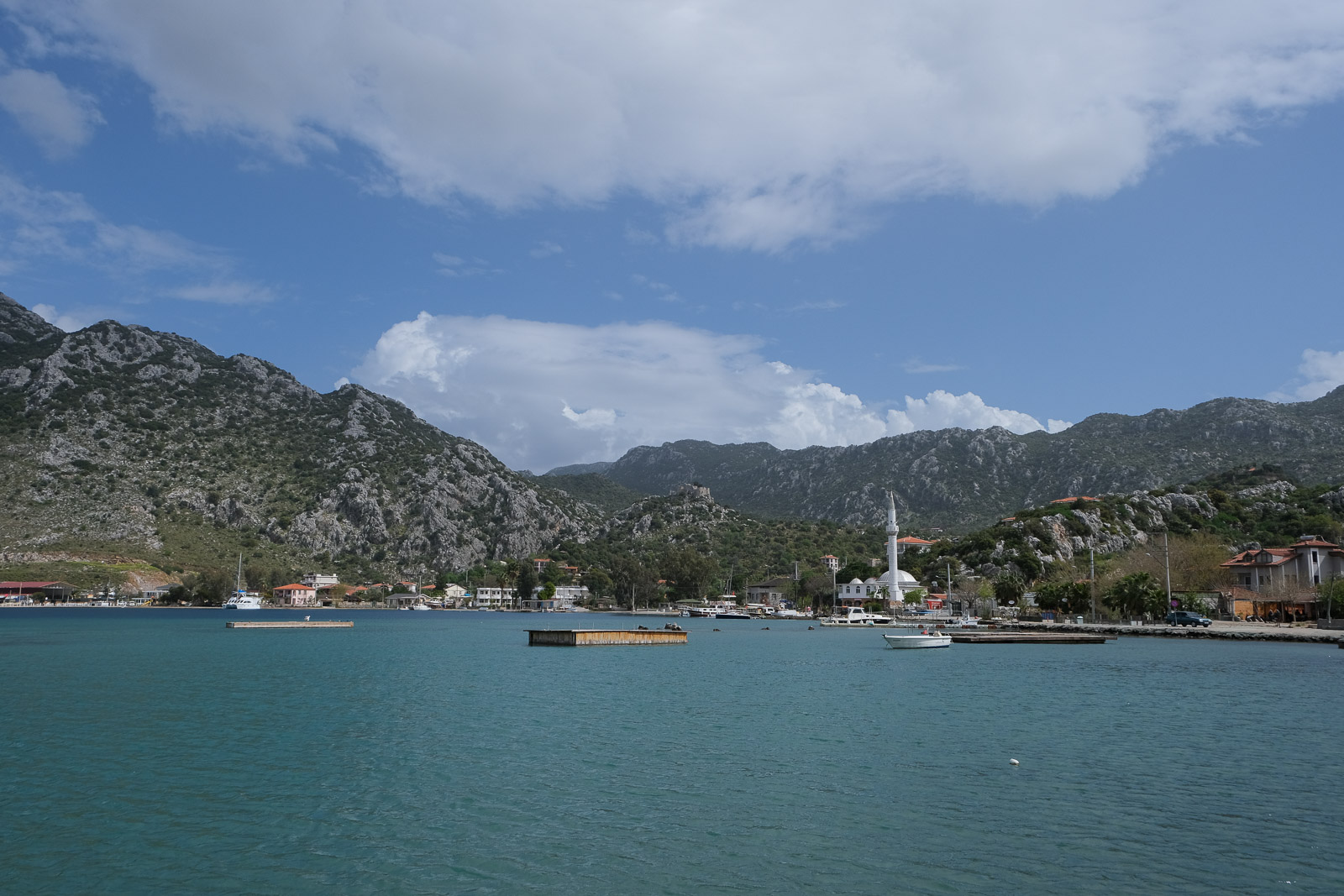
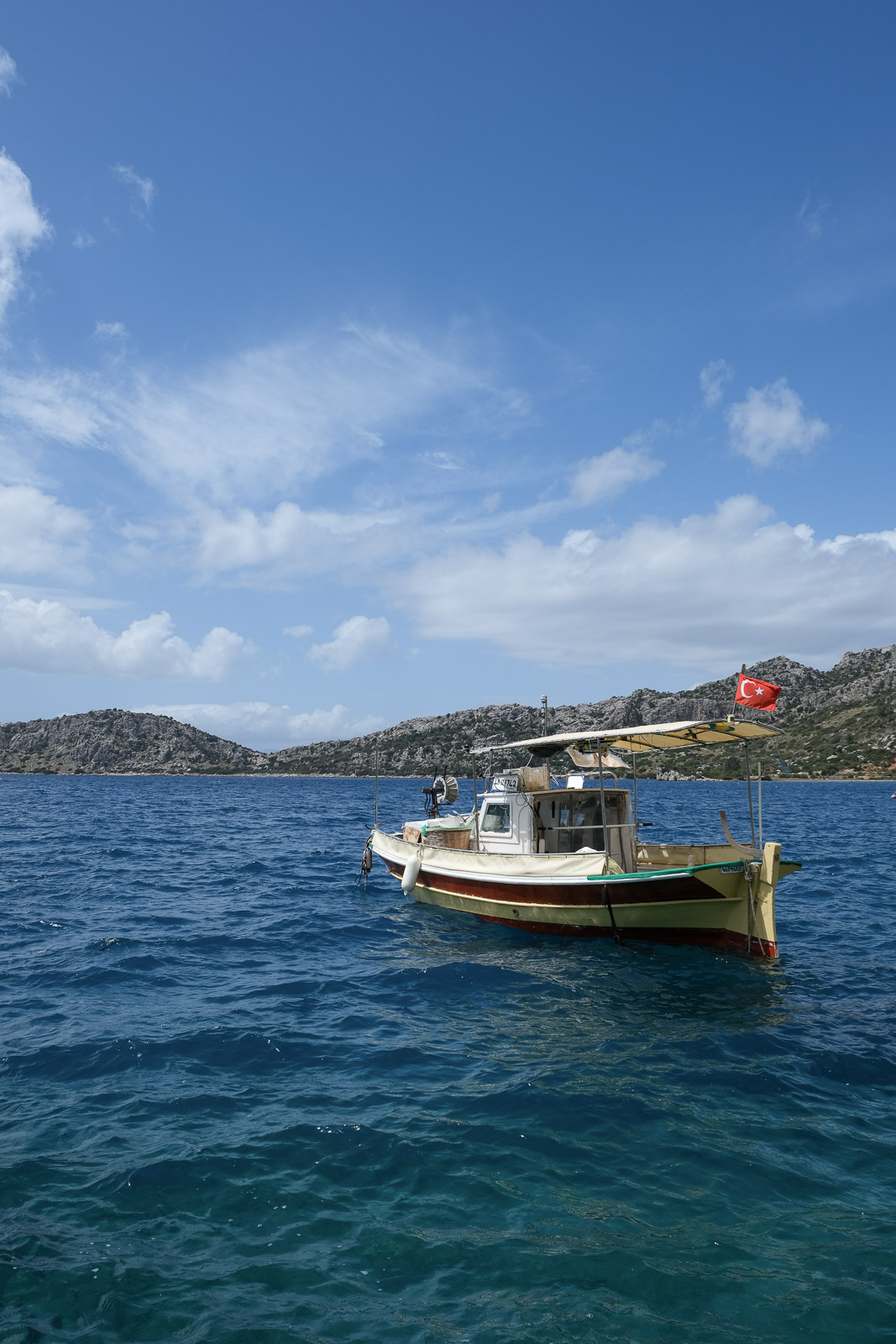
The drive itself was beautiful, especially along Taşlıca Road. We stopped for a coffee in Söğüt, along its narrow stretch of shoreline, where a handful of small traditional wooden gulets were anchored in the bay. The village felt mostly sleepy, but it was exactly what we needed after the drive from Dalaman: sun, coffee, and the sea breeze.
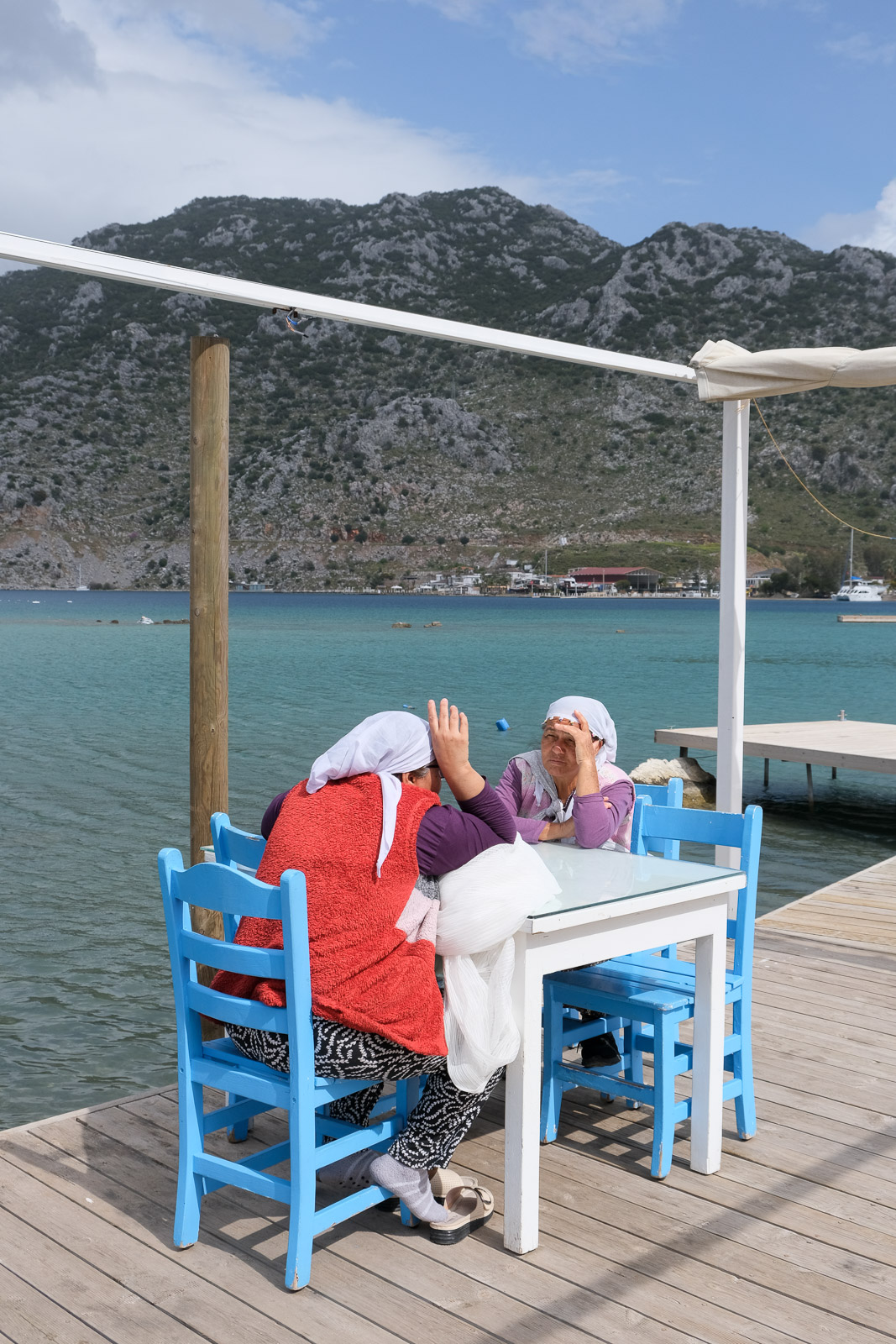
From there, were continued to Selimiye, another waterfront village, slightly larger with small boutique hotels and a wider range of restaurants. It felt a touch more polished, but still charming, and we enjoyed wandering along the water, admiring and comparing the wooden gulets.
Datça Peninsula
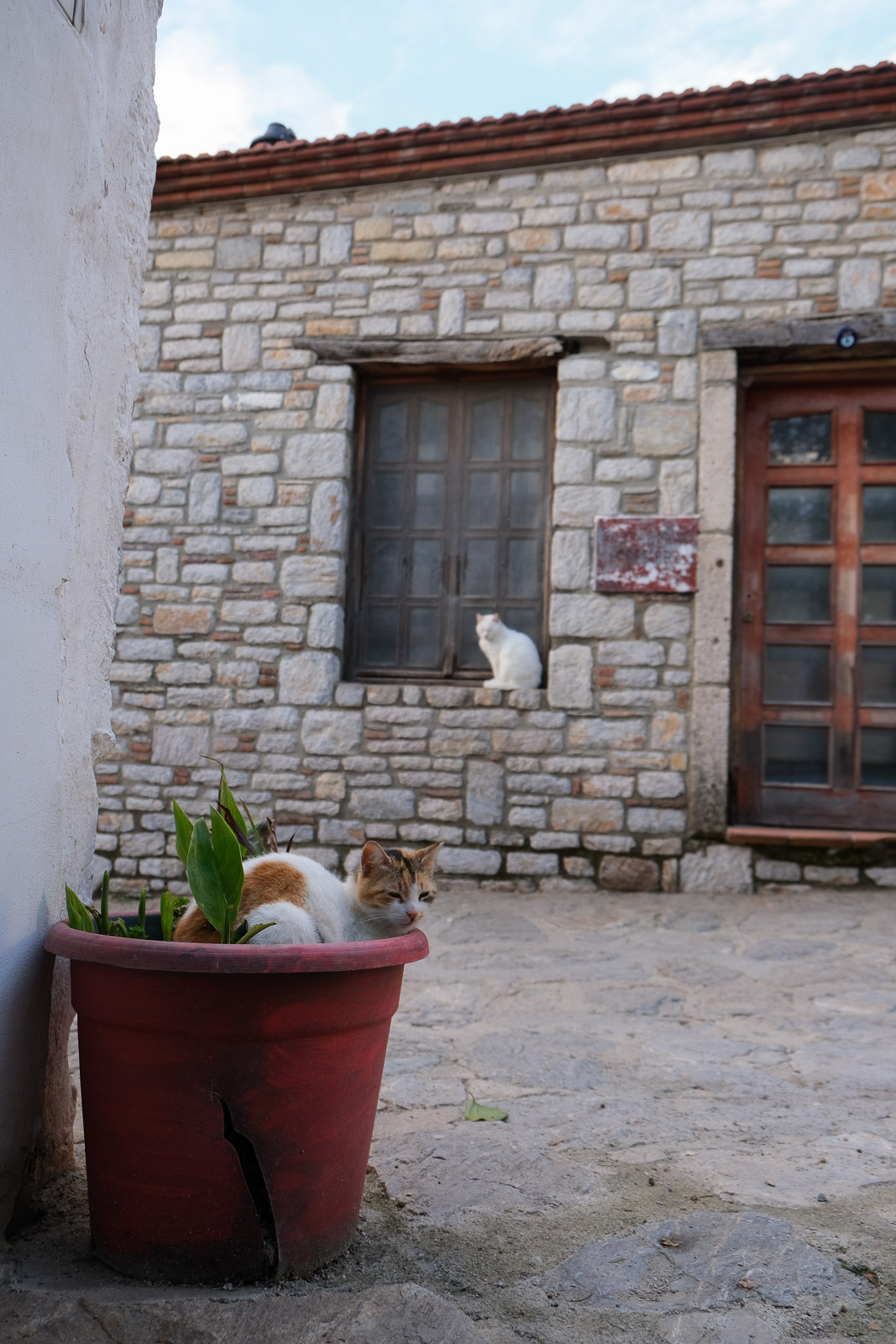
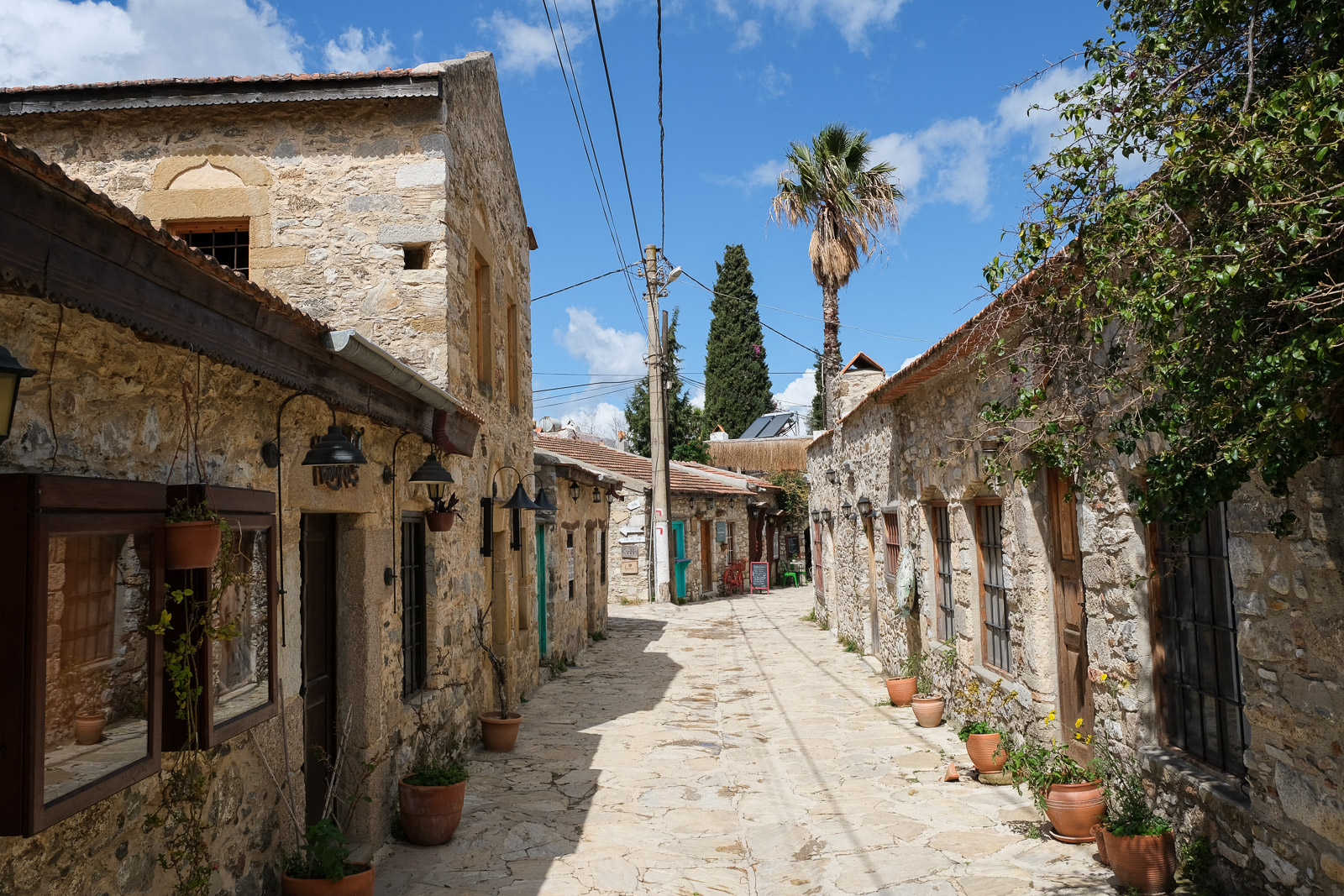
Of course, we couldn’t visit the Datça Peninsula without stopping in Eski Datça. Tucked slightly inland from the coast, the old village is all narrow cobbled lanes, stone houses framed by colourful flowers, and weathered wooden doors - very picturesque.
We ended up visiting twice: once in the late afternoon on our way to our Airbnb after exploring the Bozburun Peninsula, and again the next morning for breakfast. Both times, we somehow spent most of our visit photographing the many cats lounging in the cute alleyways.
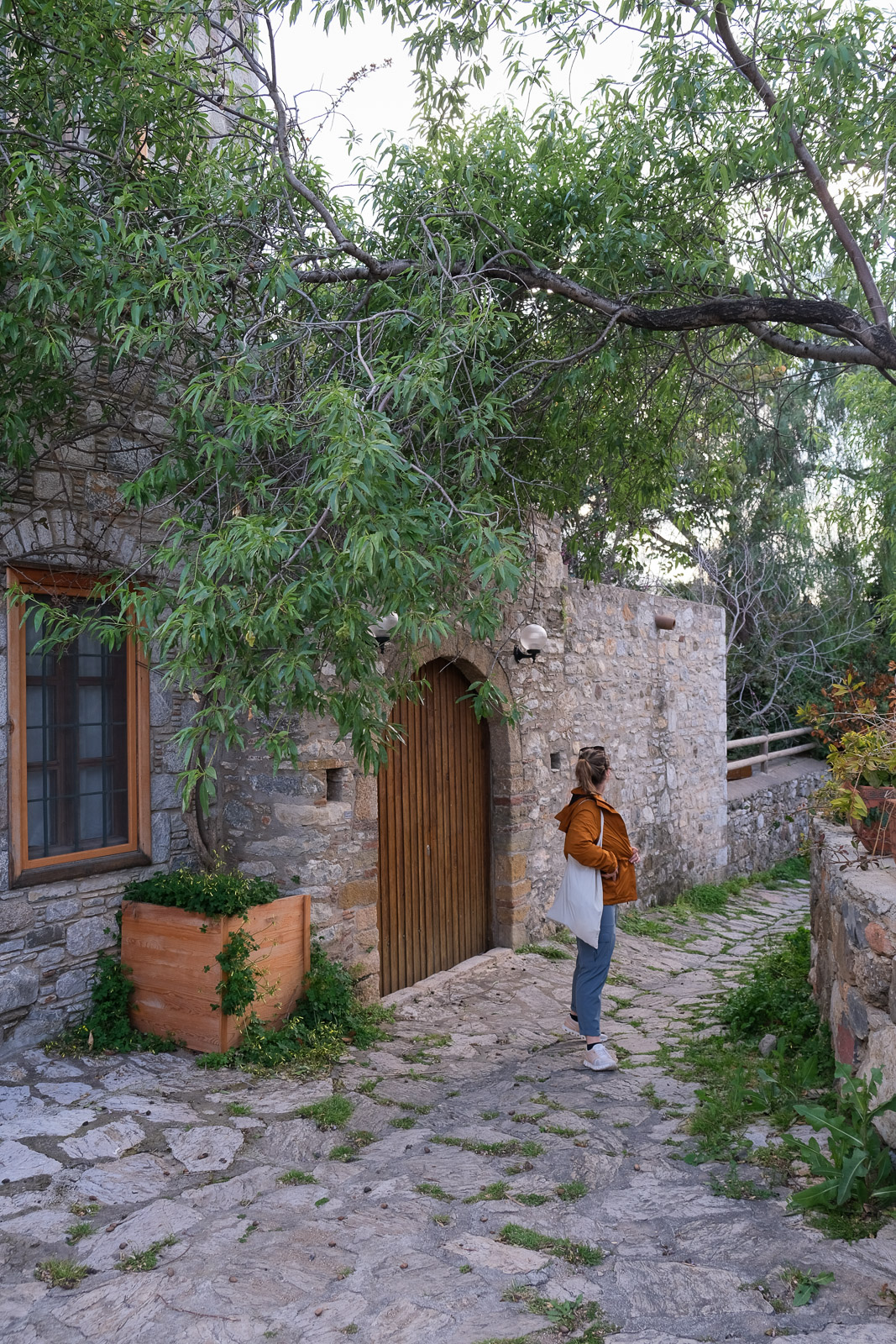
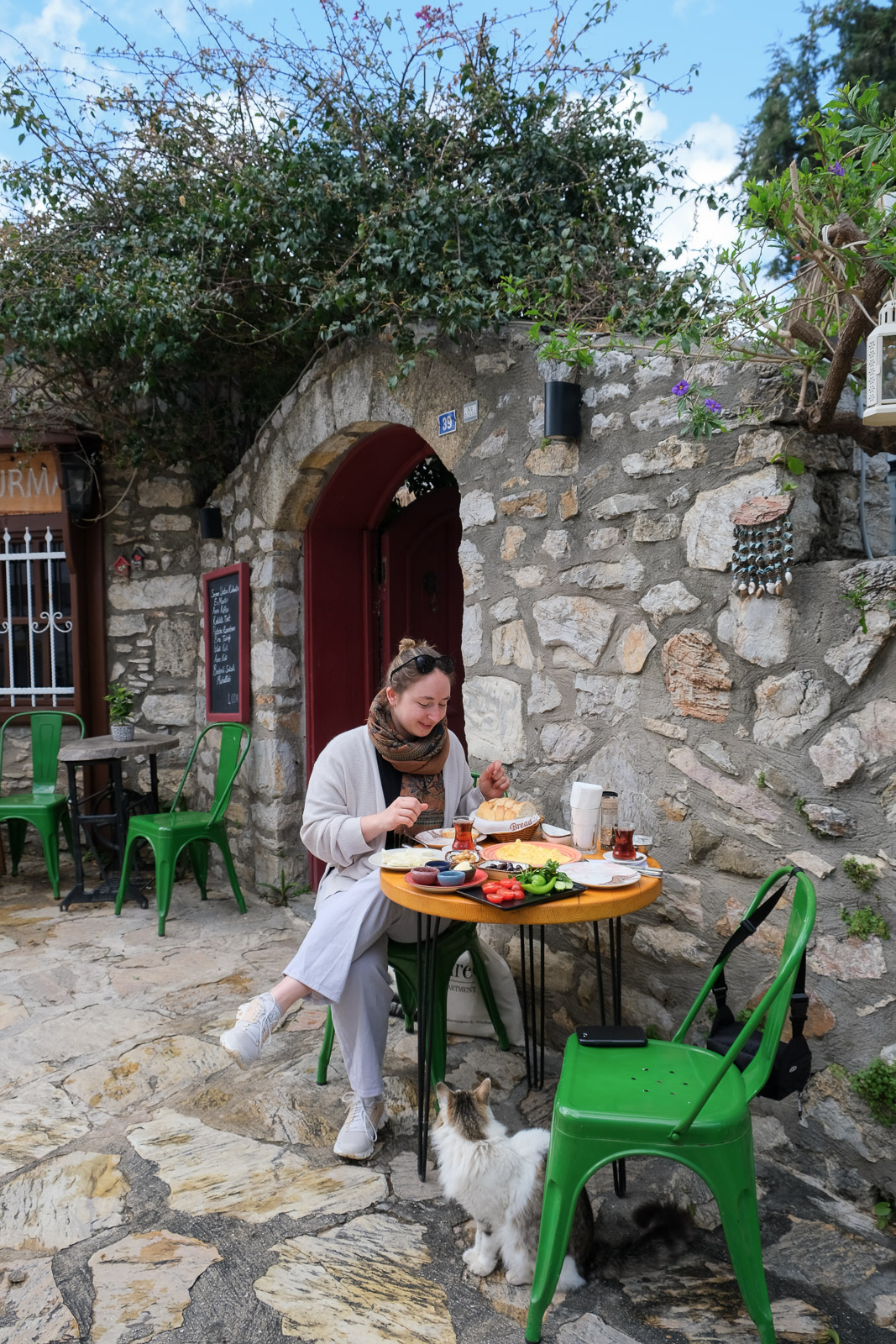
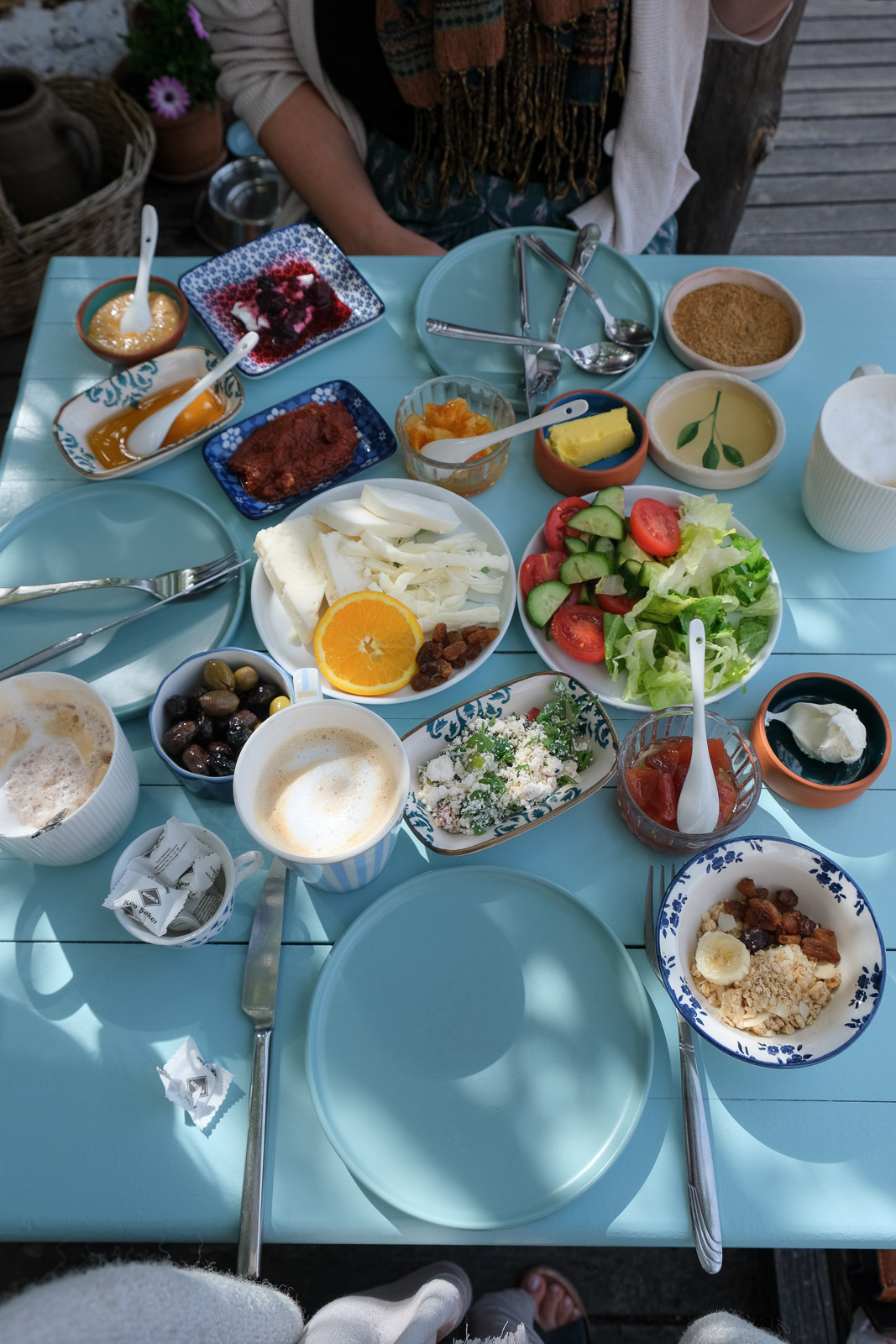
Our breakfast in Eski Datça turned out to be our first introduction to the traditional Turkish morning spread - despite already having spent four mornings in the country. We stepped inside a tiny restaurant (the only one open considering it was still the low season and Ramadan…) to ask the owner if breakfast was being served, and since she only spoke only Turkish, a mix of gestures and guesses followed. I still remember the moment she finally understood - her face lit up as she held up a fork and knife with an eager, questioning look. We nodded enthusiastically, and what followed was amazing: eggs, several types of cheeses, olives, homemade jam, and fresh bread still warm. It was incredible. And on top of all the food, the setting was adorable - a small table outside in the sun.
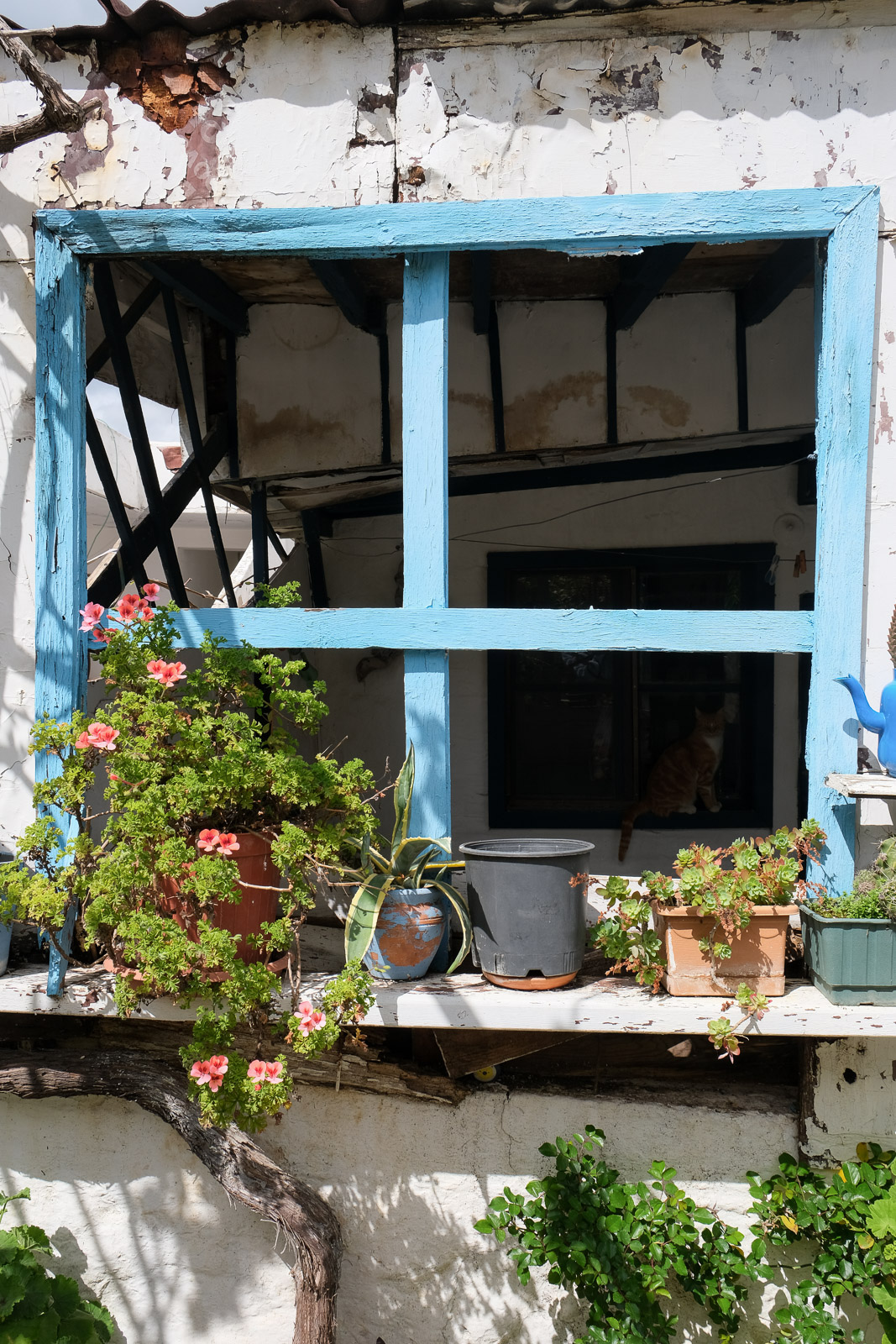
If time had allowed, the Carian Trail is something I would have loved to explore more in depth. The long-distance hiking route winds through the peninsulas of southwestern Turkey, linking remote villages, coastal paths, and scattered ancient ruins. It’s far less frequented than the Lycian way, and apparently feels noticeably wilder and off-the-beaten-path.
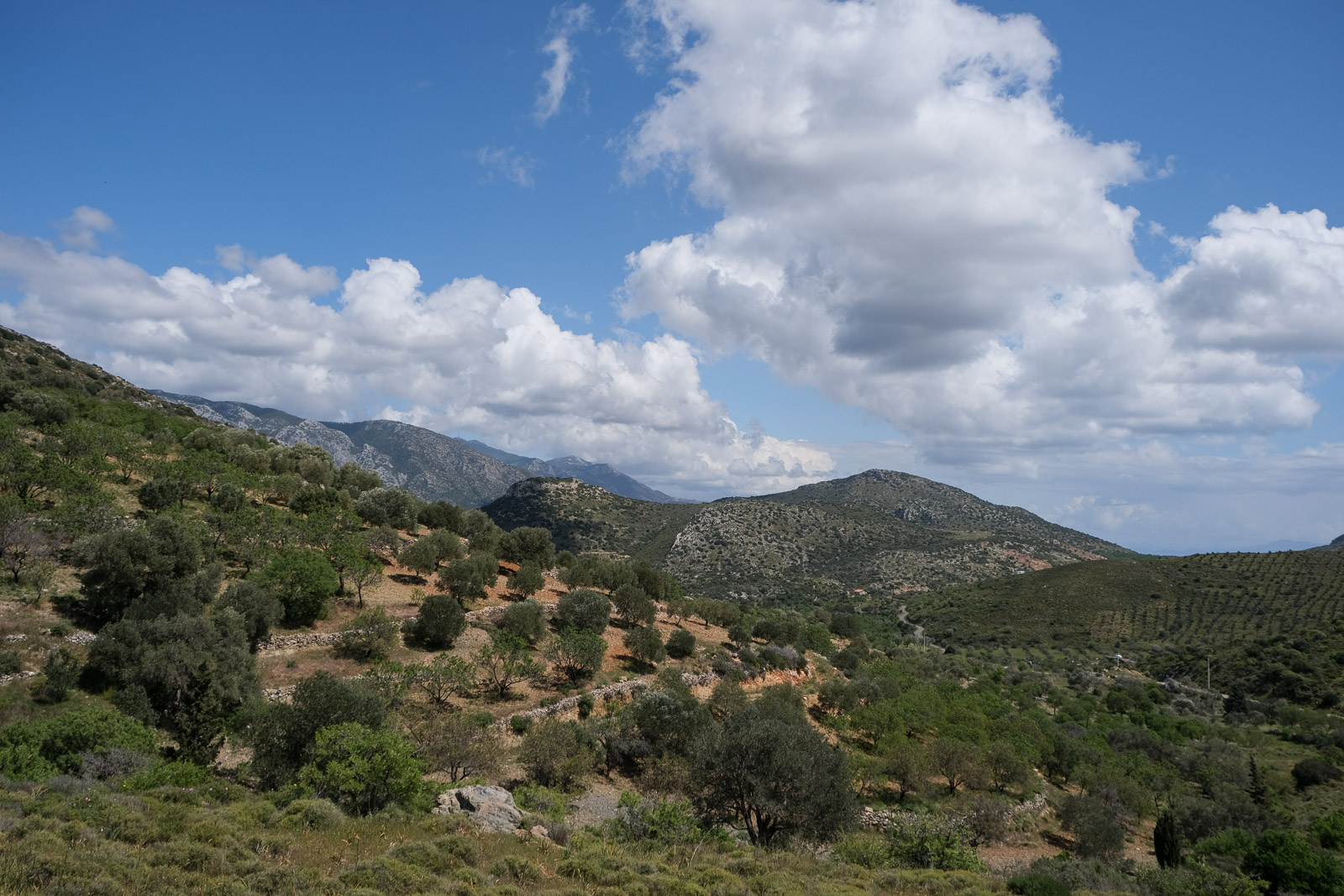
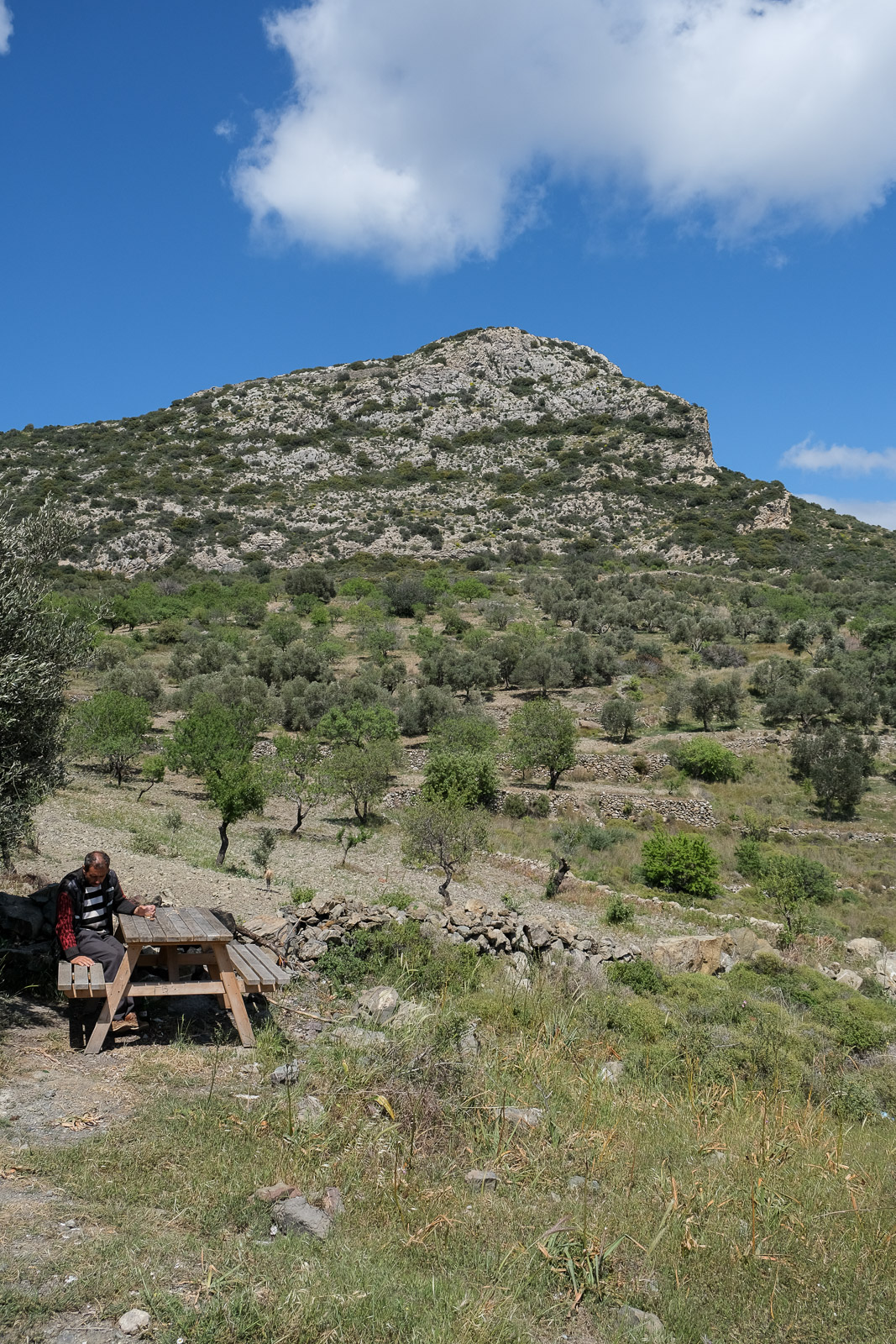
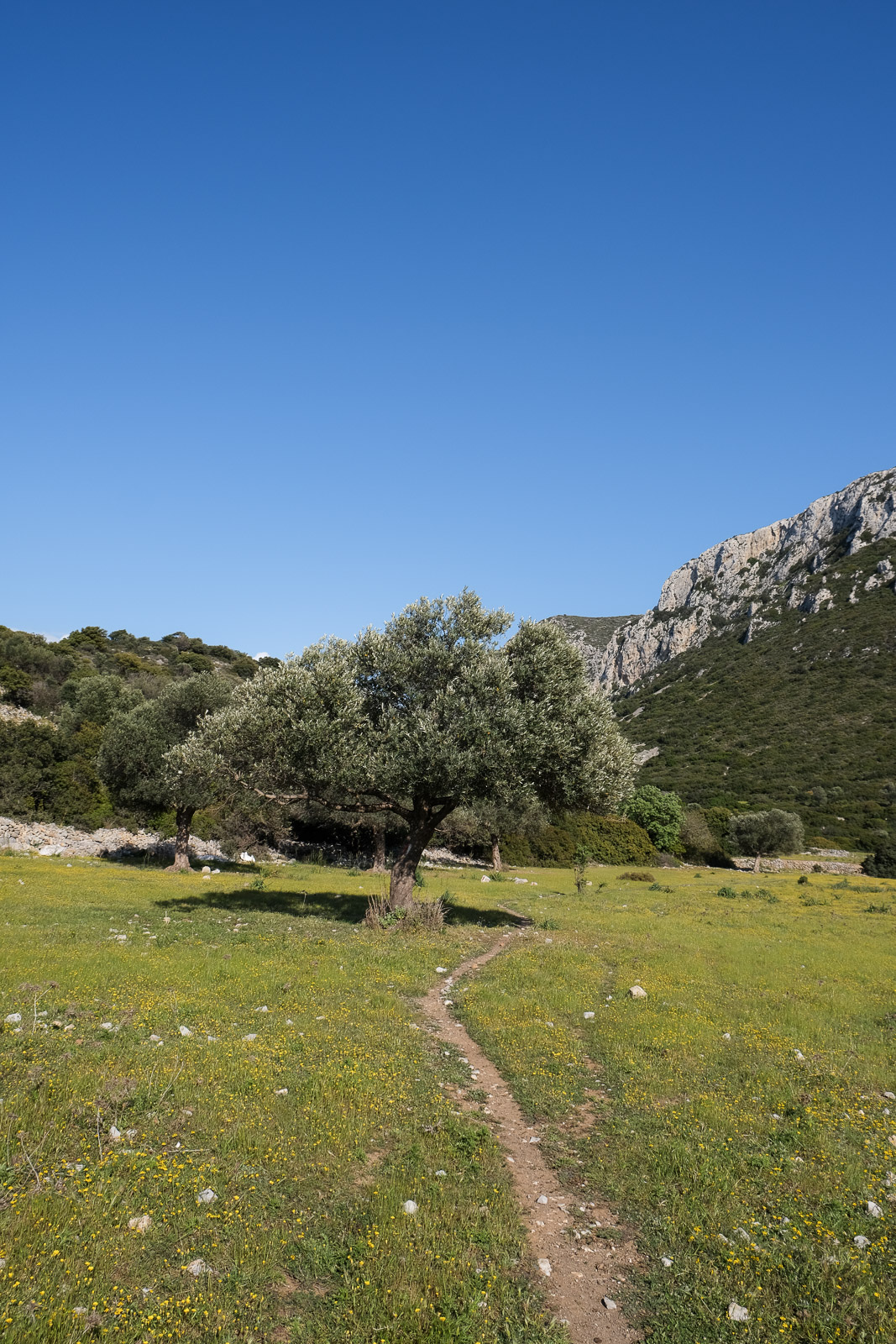
Since we weren’t spending months in the country, we opted for a short out-and-back section - roughly 10 km - starting at the Knidos ruins and continuing slightly passed Barkas Koyu. It turned out to be a great way to experience a part of the trail with coastal views, beaches, and a real sense of isolation without committing to a full multi-day trek. One especially memorable moment was crossing paths with a shepherd and his herd of goats.
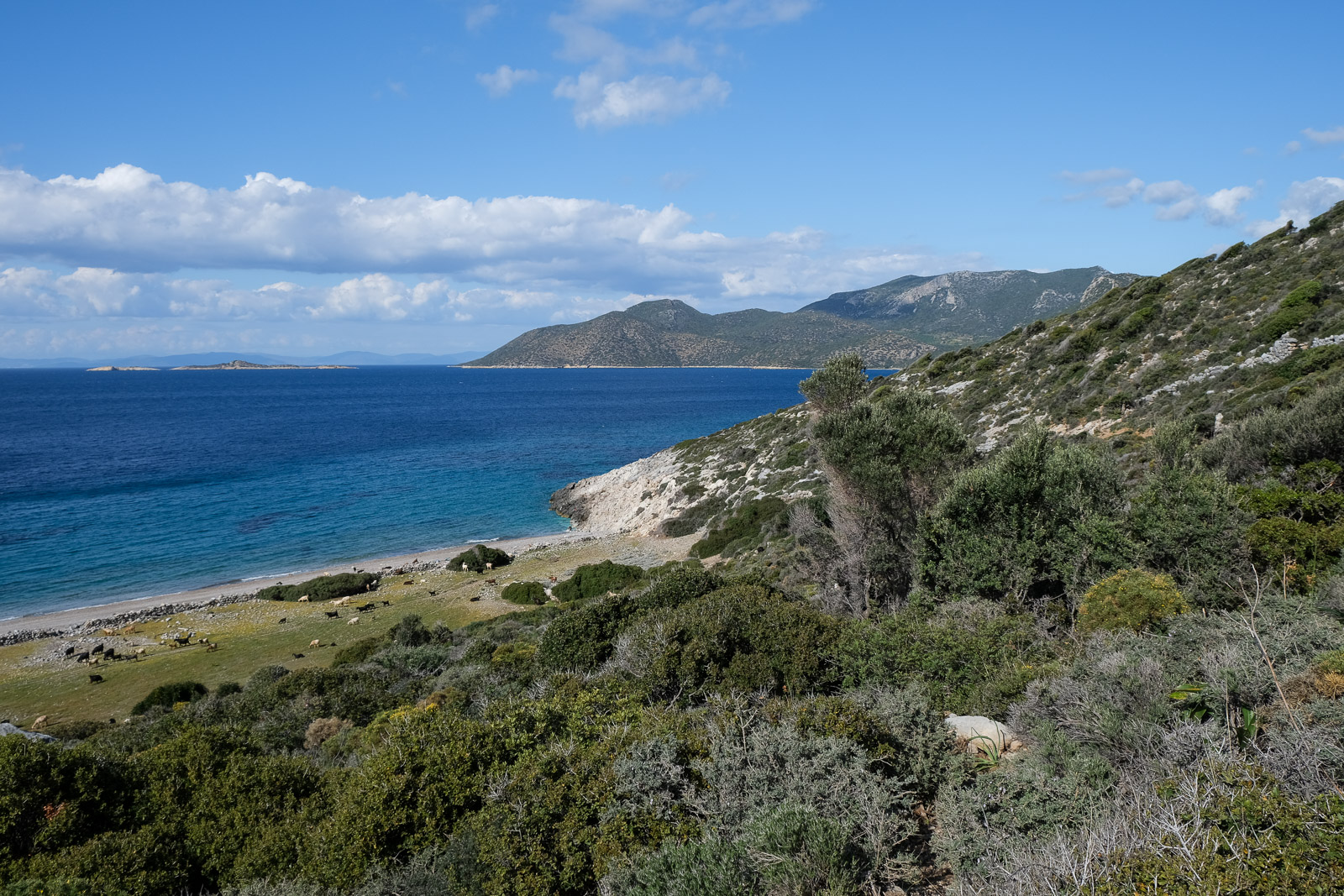
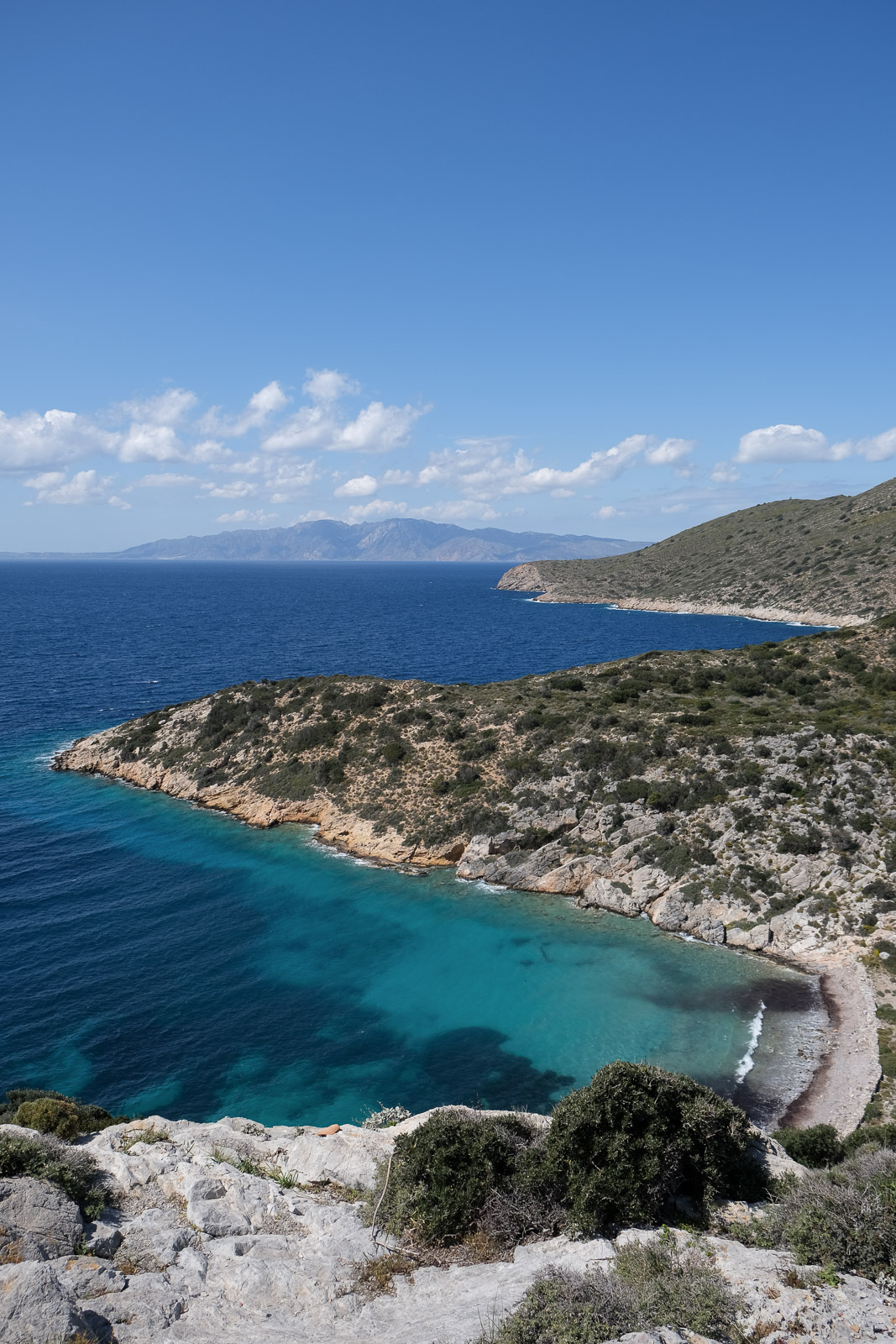
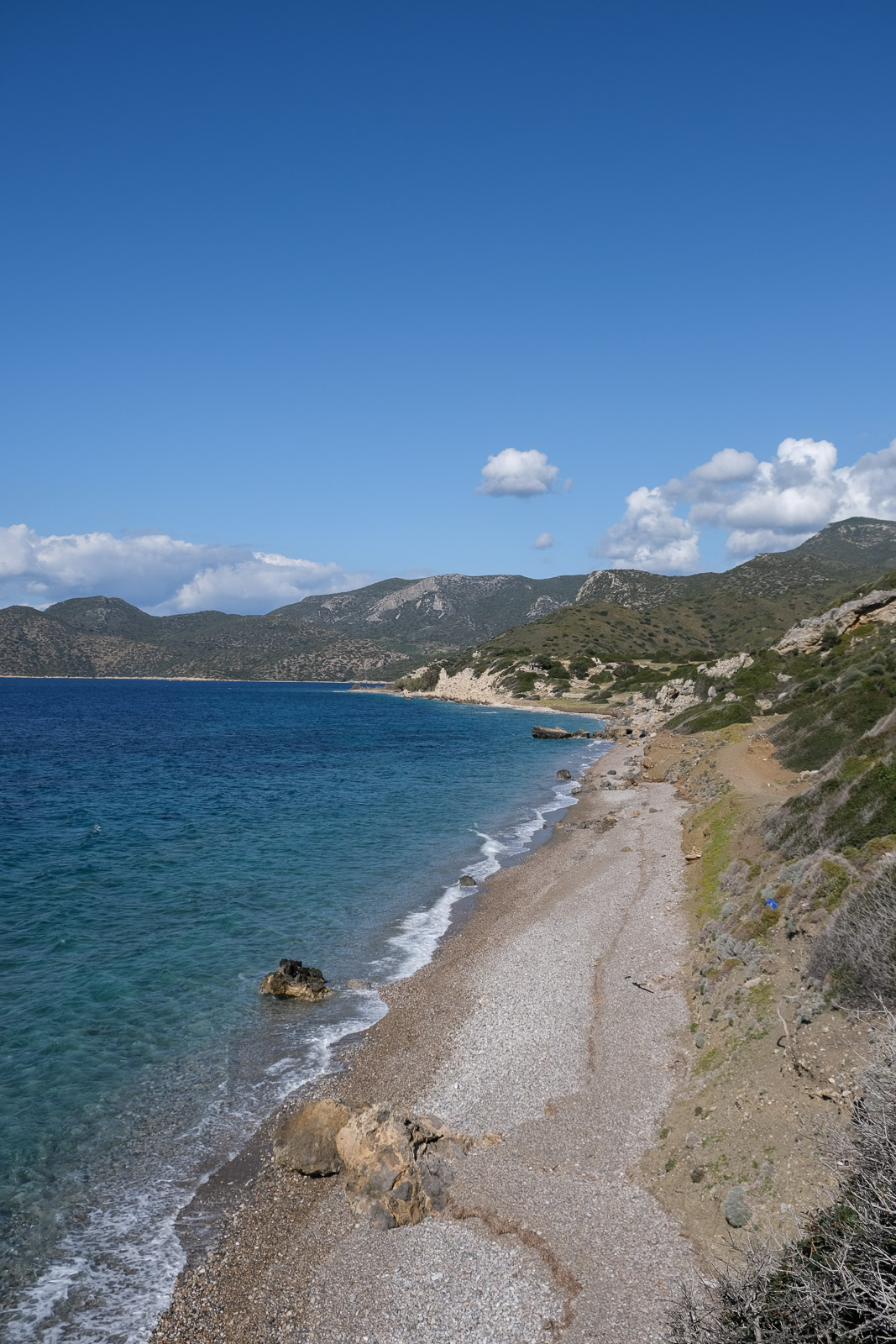
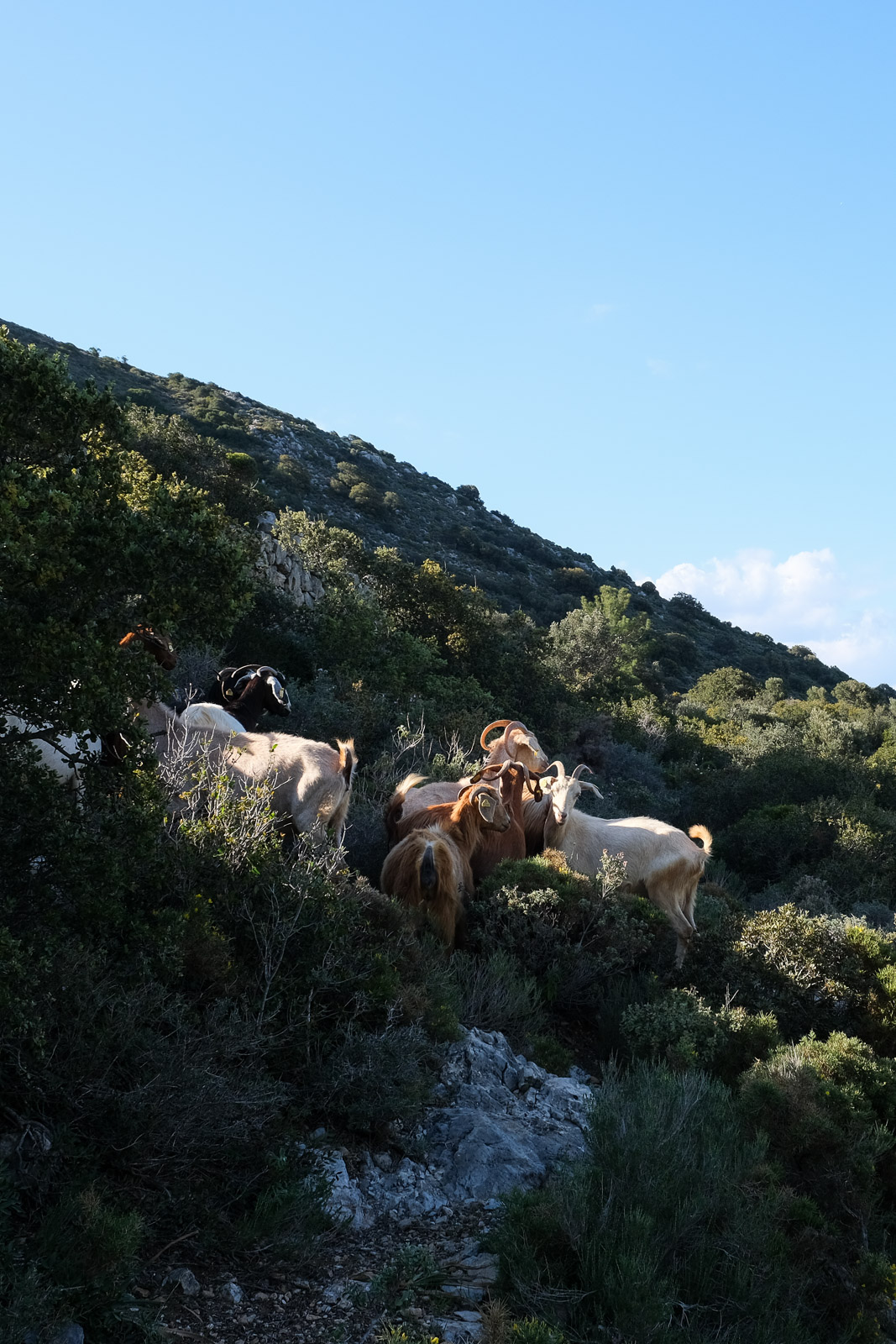
We made it back to the ruins just in time to walk out to the Knidos Lighthouse for sunset - easily one of the most beautiful we witnessed on the trip. Soft shades of pink and purple washed over the surrounding landscape, with a full moon already rising in the sky.
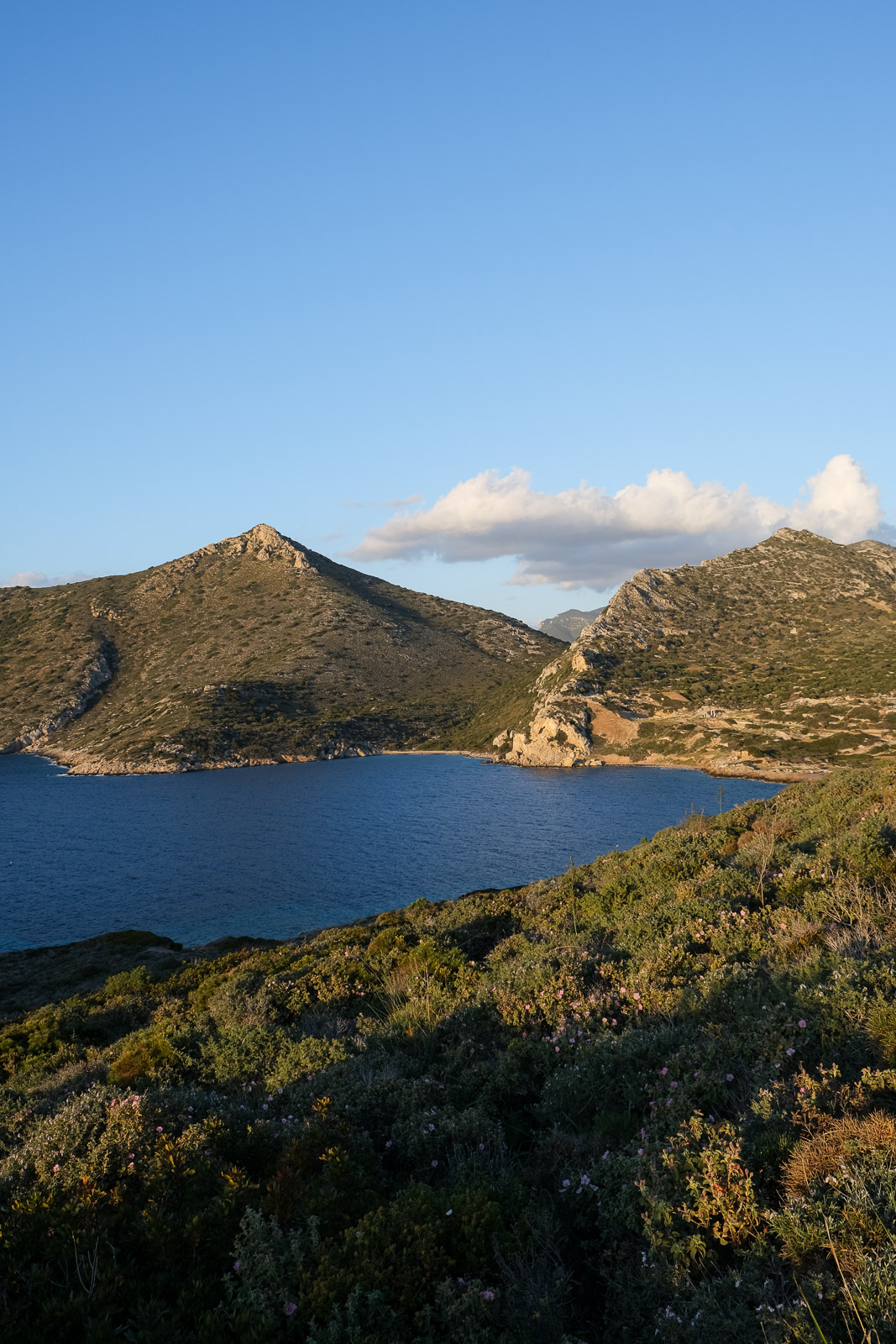
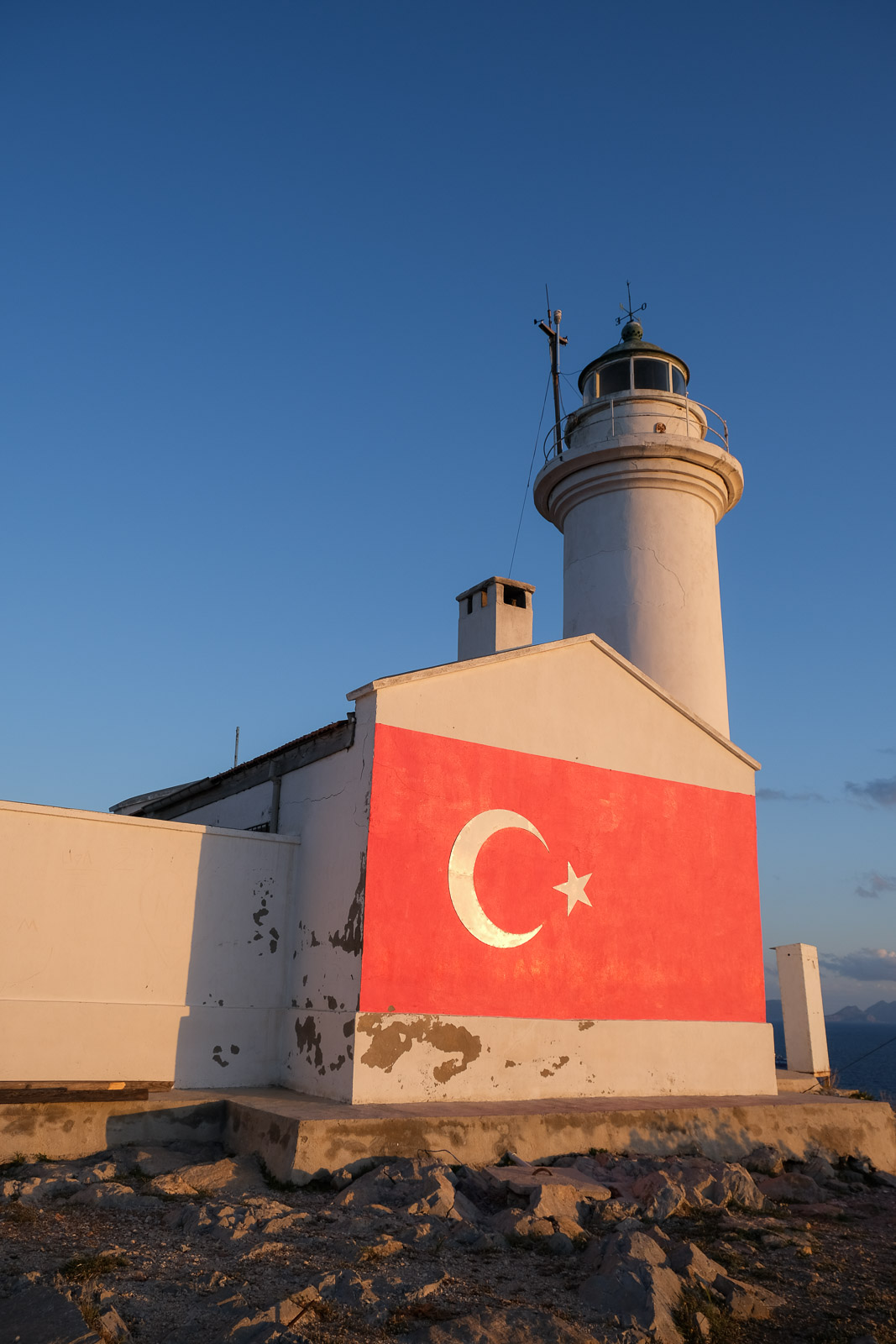
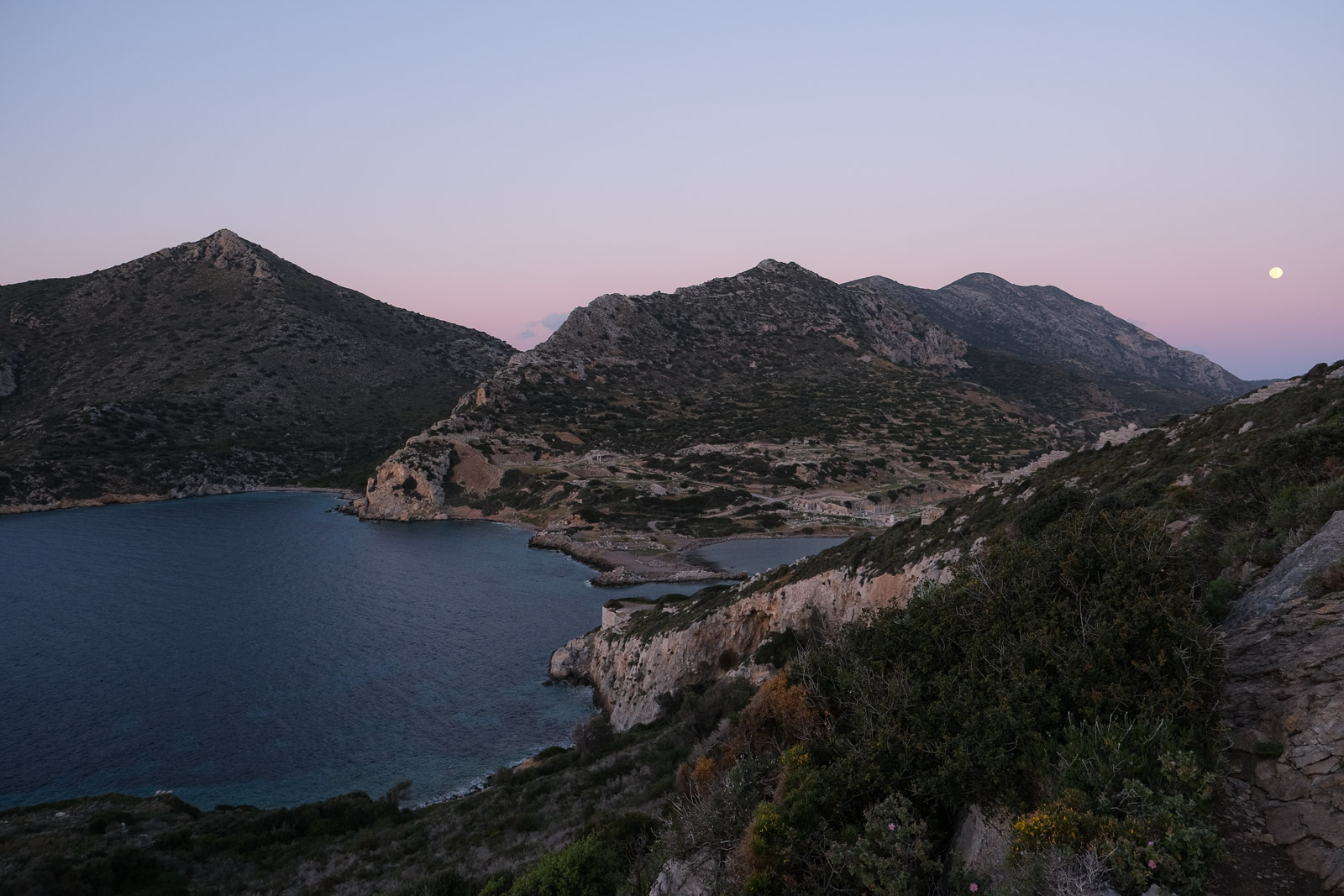
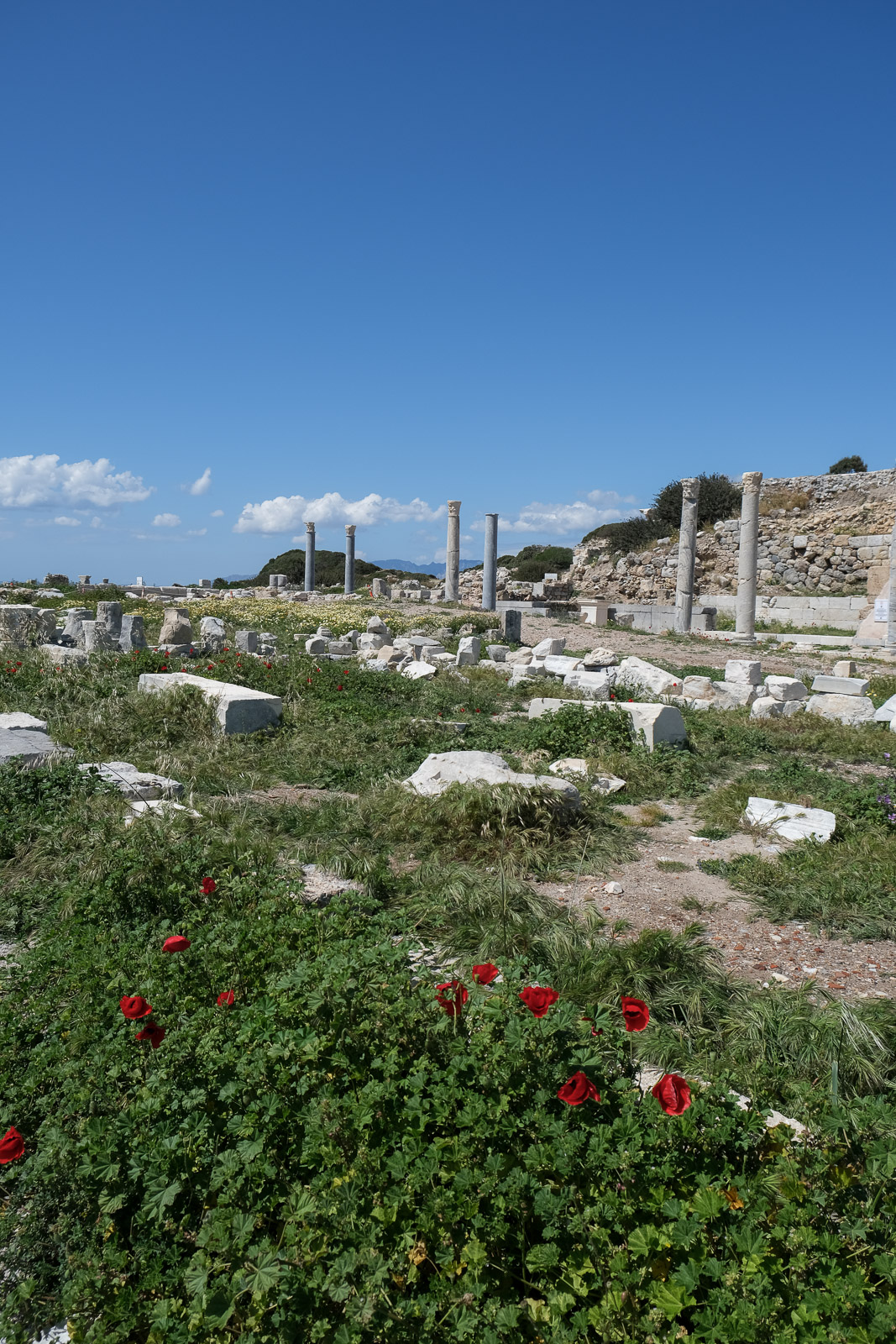
As for the Knidos Ruins themselves, they were certainly interesting with the well-preserved amphitheater facing the sea, along with the stone streets, columns, and foundations tracing the outline of the ancient city. But for me, what truly stood out was the setting, and the coast drive to get there from Datça (gorgeous coastal views). The photographer in me especially loved the poppies scattered throughout the site, adding vibrant bursts of red.
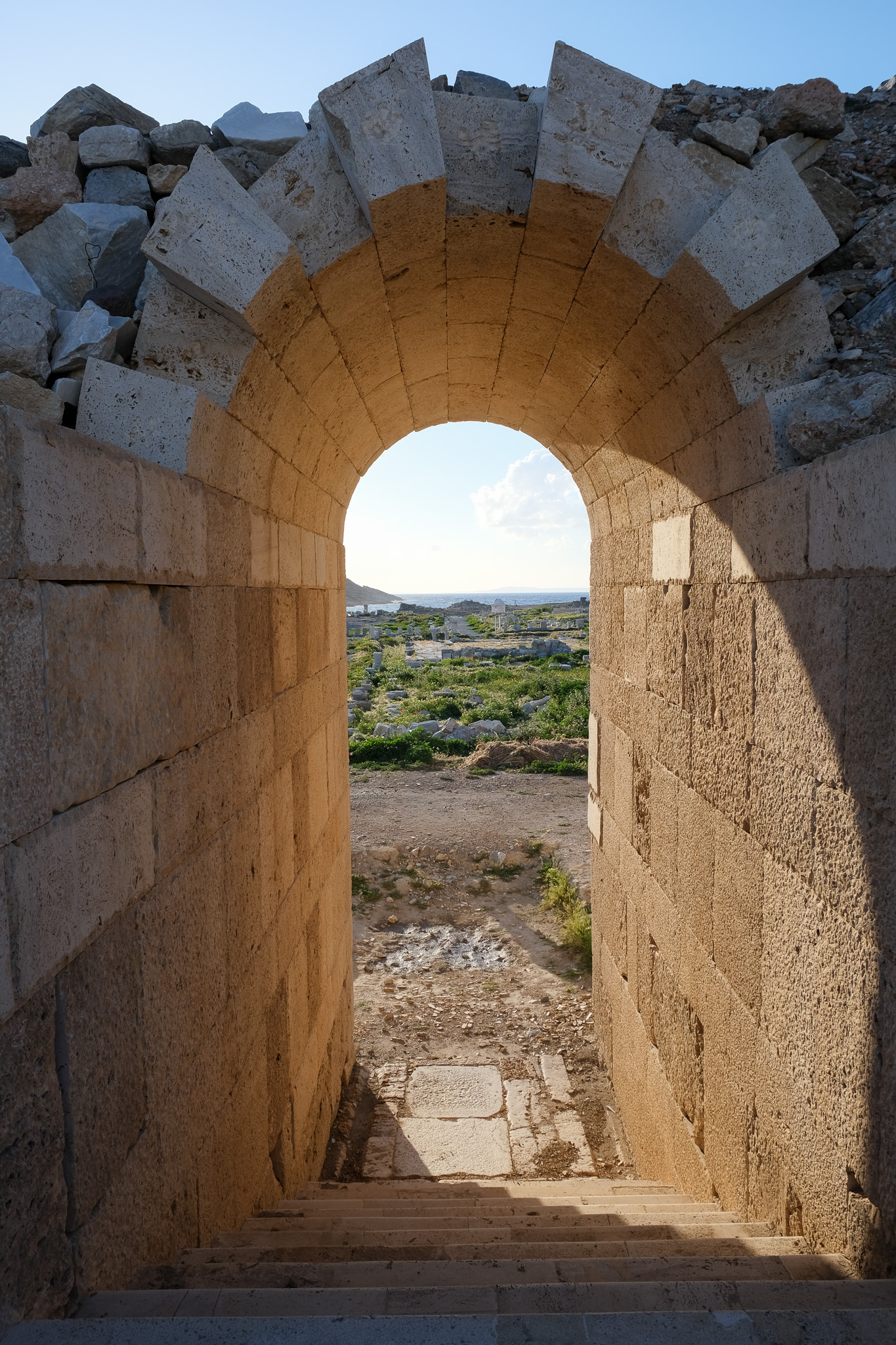
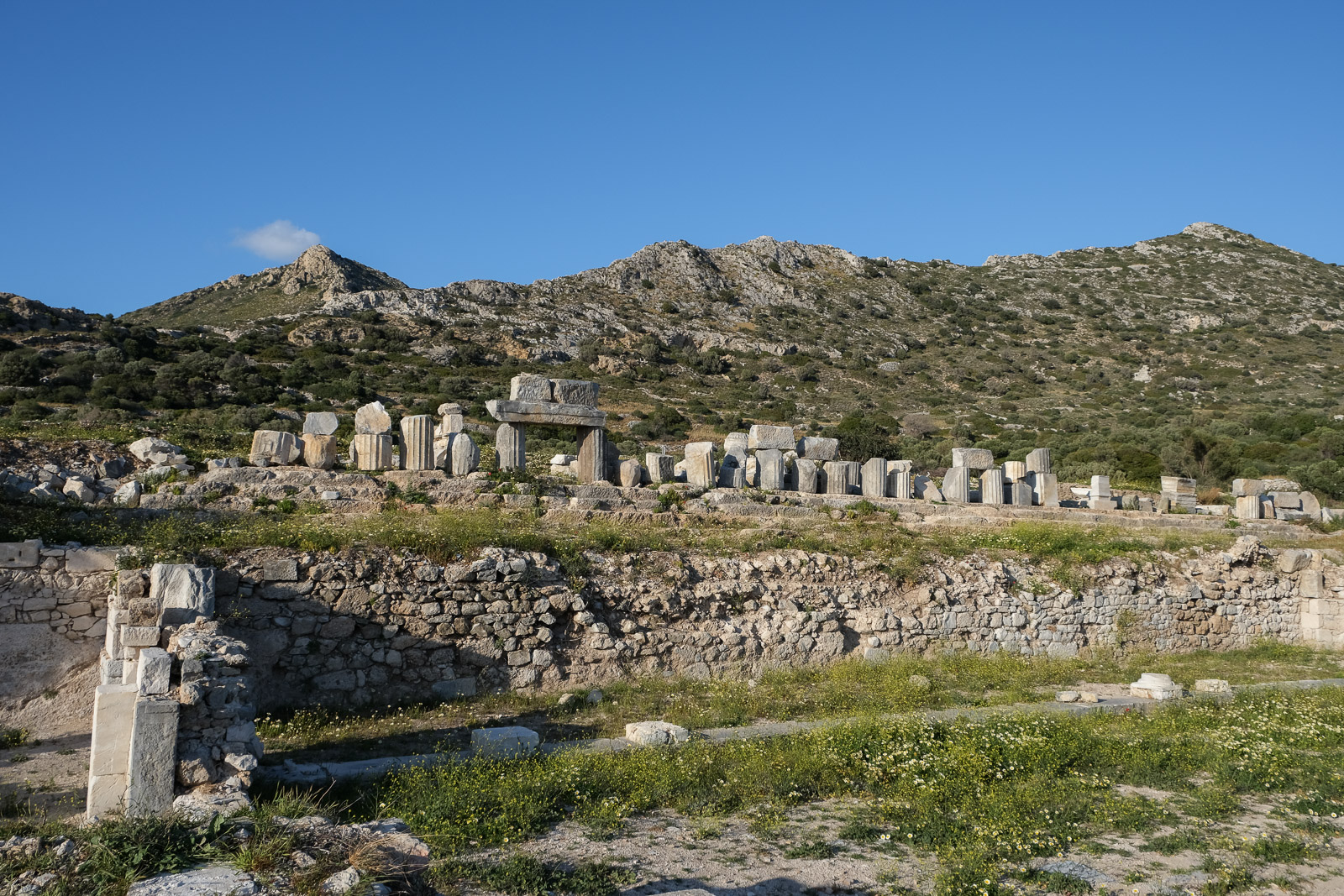
Our last morning on the peninsula was a slower one, starting with breakfast outside one of the small cafes lining Hayıtbükü Koyu (potentially Ogun's Place).
Had we visited between September and November, I would have loved the chance to help some of the locals with their olive harvest - a seasonal ritual that brings families and neighbours together.
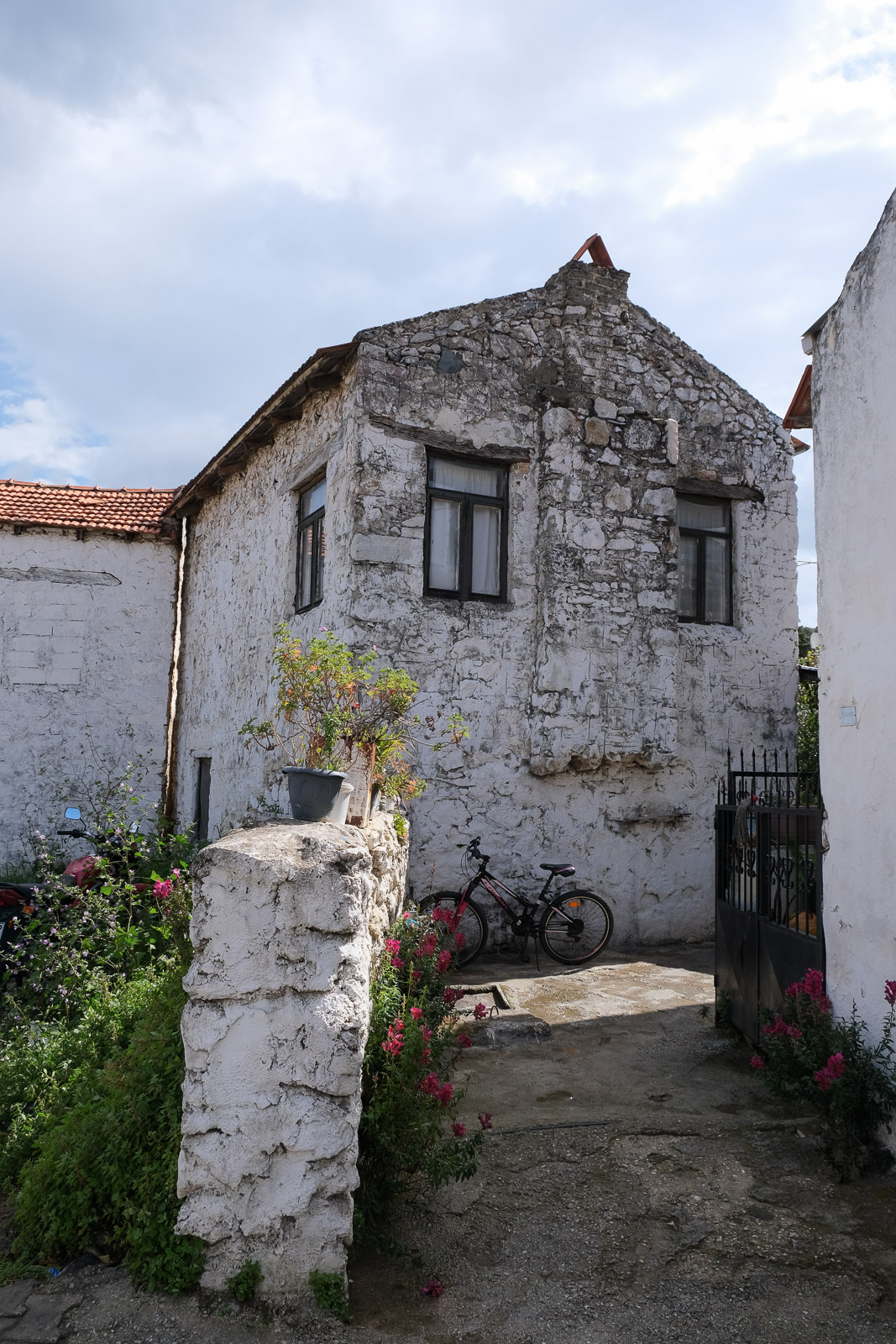
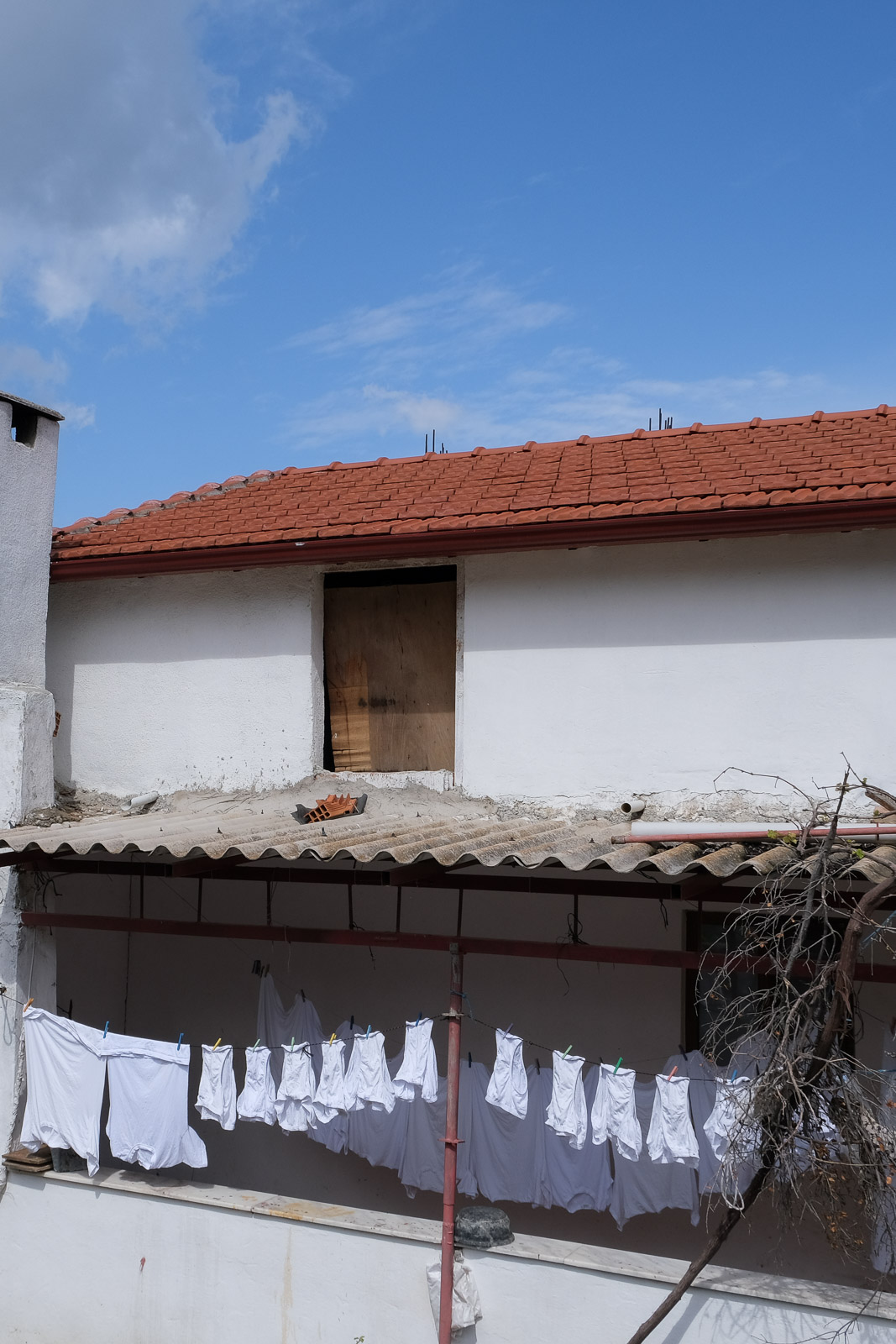
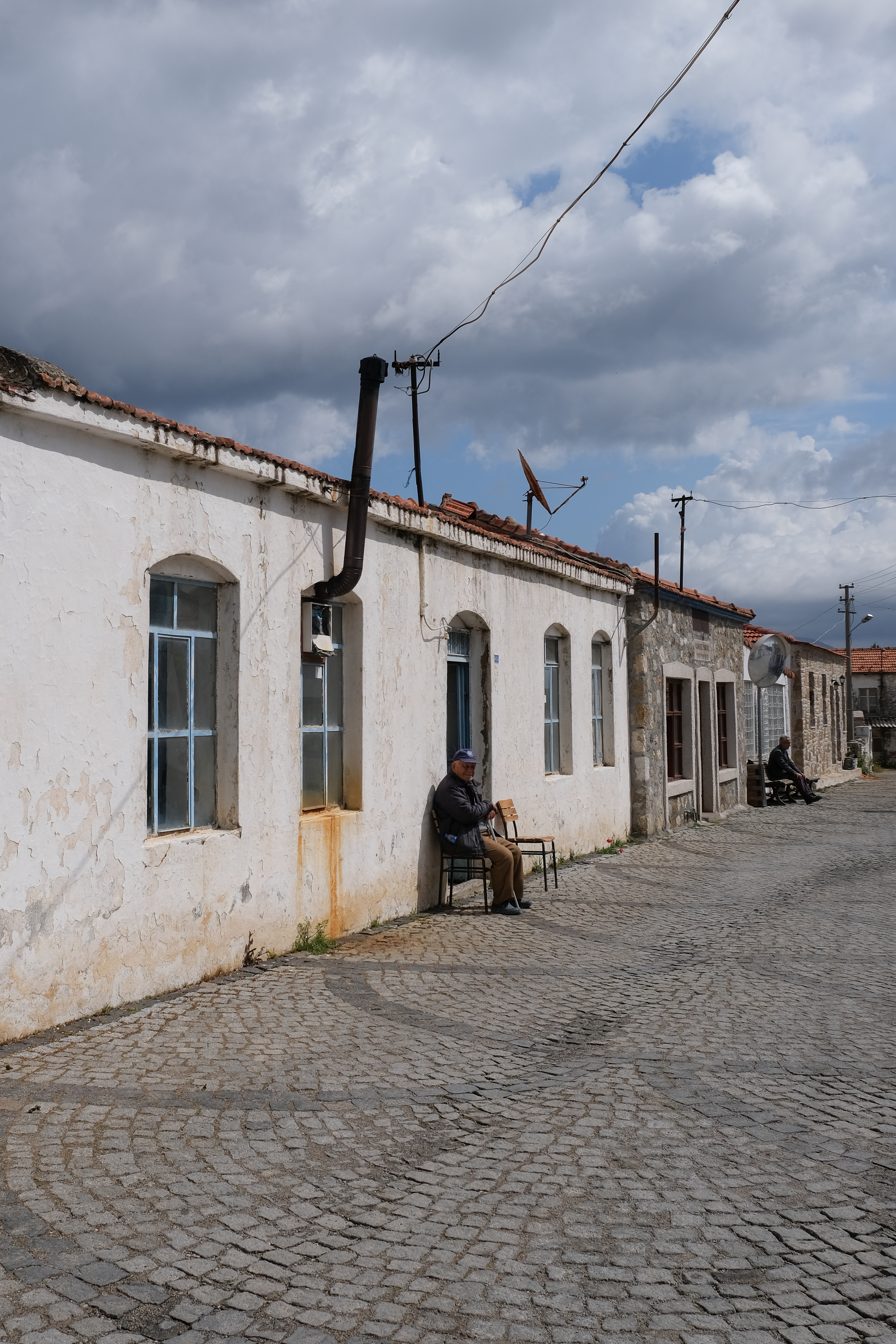
Instead, as we were in April , we spent our last few hours on the peninsula walking through the lesser-known villages of Hızırşah and Reşadiye, hoping to catch a glimpse of everyday life. In Hızırşah, we passed an open doorway where groups of men sat gathered around small tables, absorbed in lively card games. Their conversation drifted out in the street in bursts of laughter and animated gestures - a window into the rhythm of village life.
Izmir
Had we had more time, Palamutbükü, a fishing village by a long pebbled beach, would have been high on the list.
Instead, we were hoping to stop in Akyaka, another seaside town just off the peninsula, to enjoy lunch by the water before continuing on our way to Izmir. But the weather had other plans. The rain came down hard, drumming against the car so loudly that stepping outside felt a bit out of the question. We waited it out for about half an hour, before finally admitting defeat.
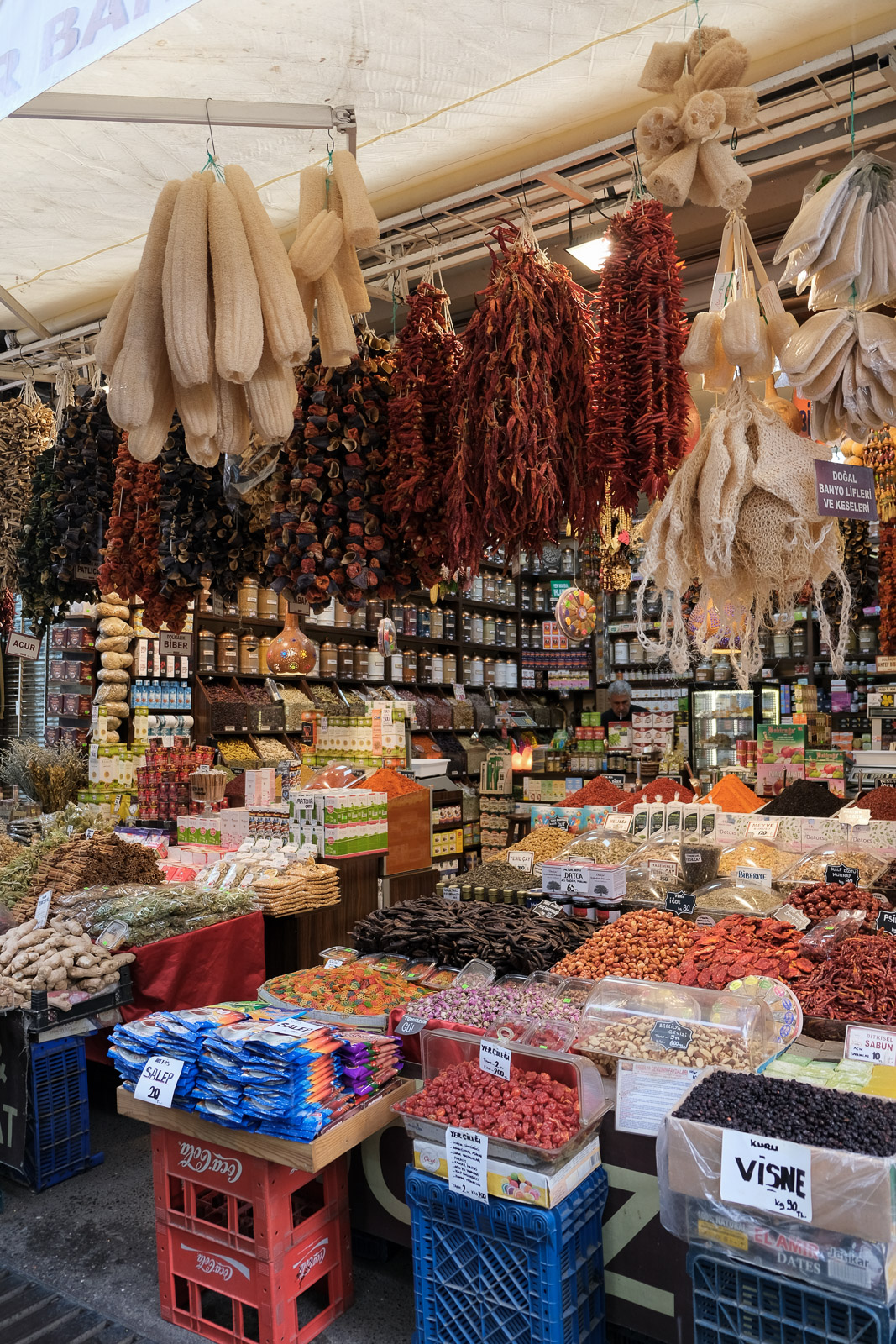
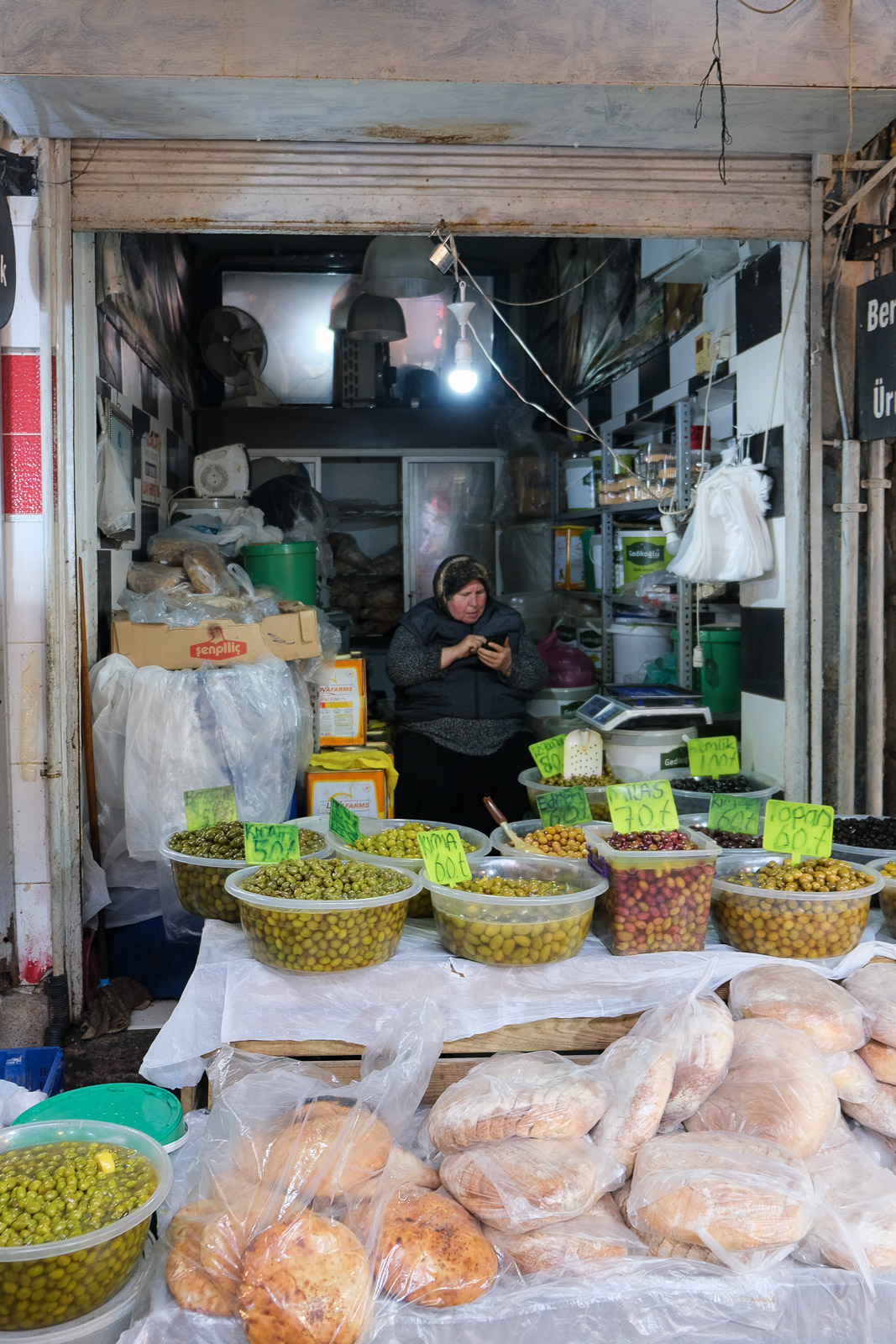
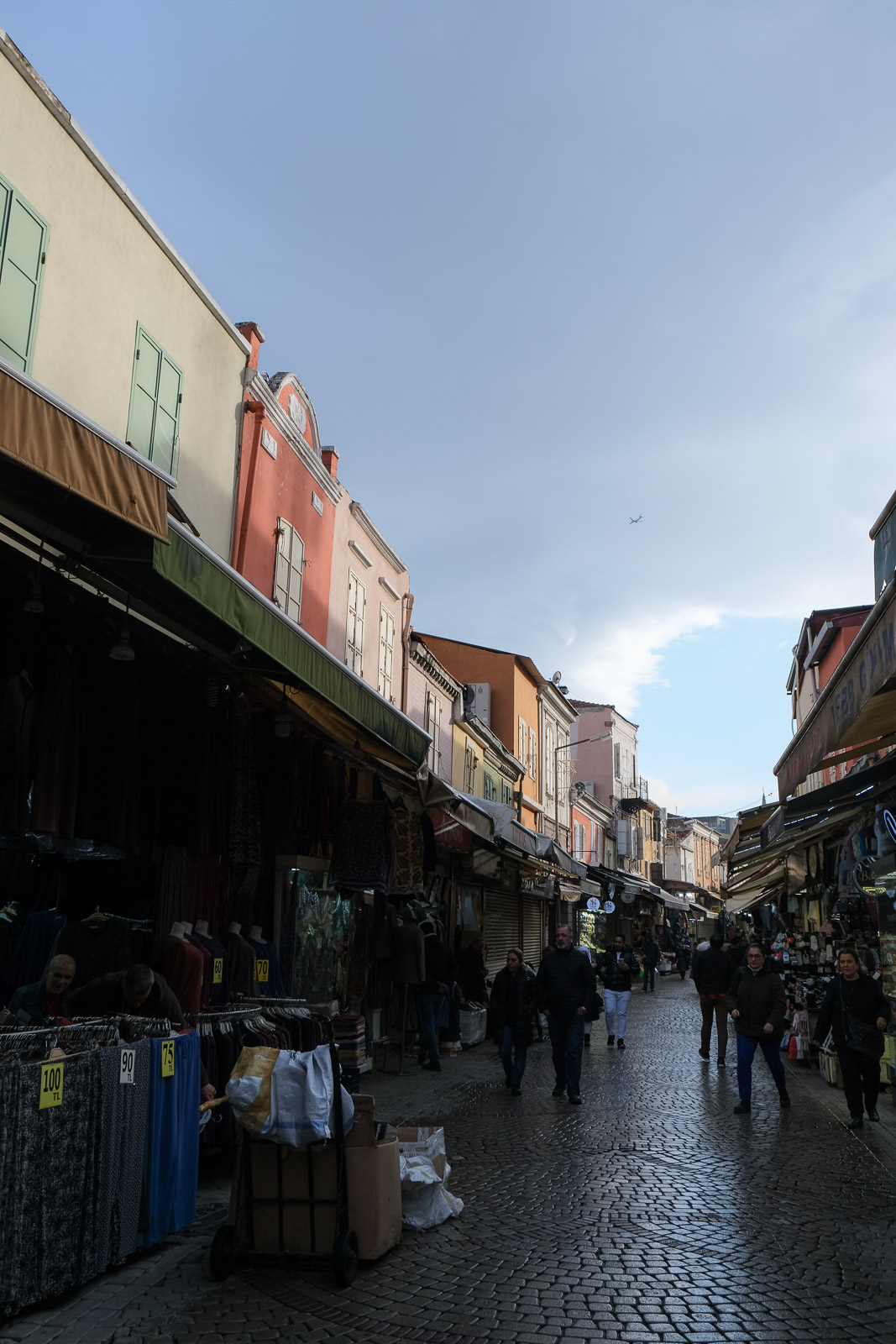
We continued on straight to Izmir, where we took refuge in one of the city’s bustling covered markets, wandering through the narrow aisles filled with the scent of spices, fresh produces, and street food - not a single other tourist in sight.
Alaçati
The overall trip itinerary came together for a number of reasons. First, the cost of picking up a rental car in one location and dropping it off in another was unreasonable - so a loop made the most sense. Second, we wanted the flexibility of having a car while exploring the Cappadocia region. Third, we were set on stopping in Pamukkale, which, in hindsight, we could have skipped in favour of spending more time elsewhere. Finally, we were meeting a friend halfway through the trip, which meant planning our route around reaching an international airport on a specific date - Izmir, in our case.
Other than a visit to the market and a brief stop at the airport, we didn’t spend much time in Izmir itself, heading instead to Alaçati for the night.
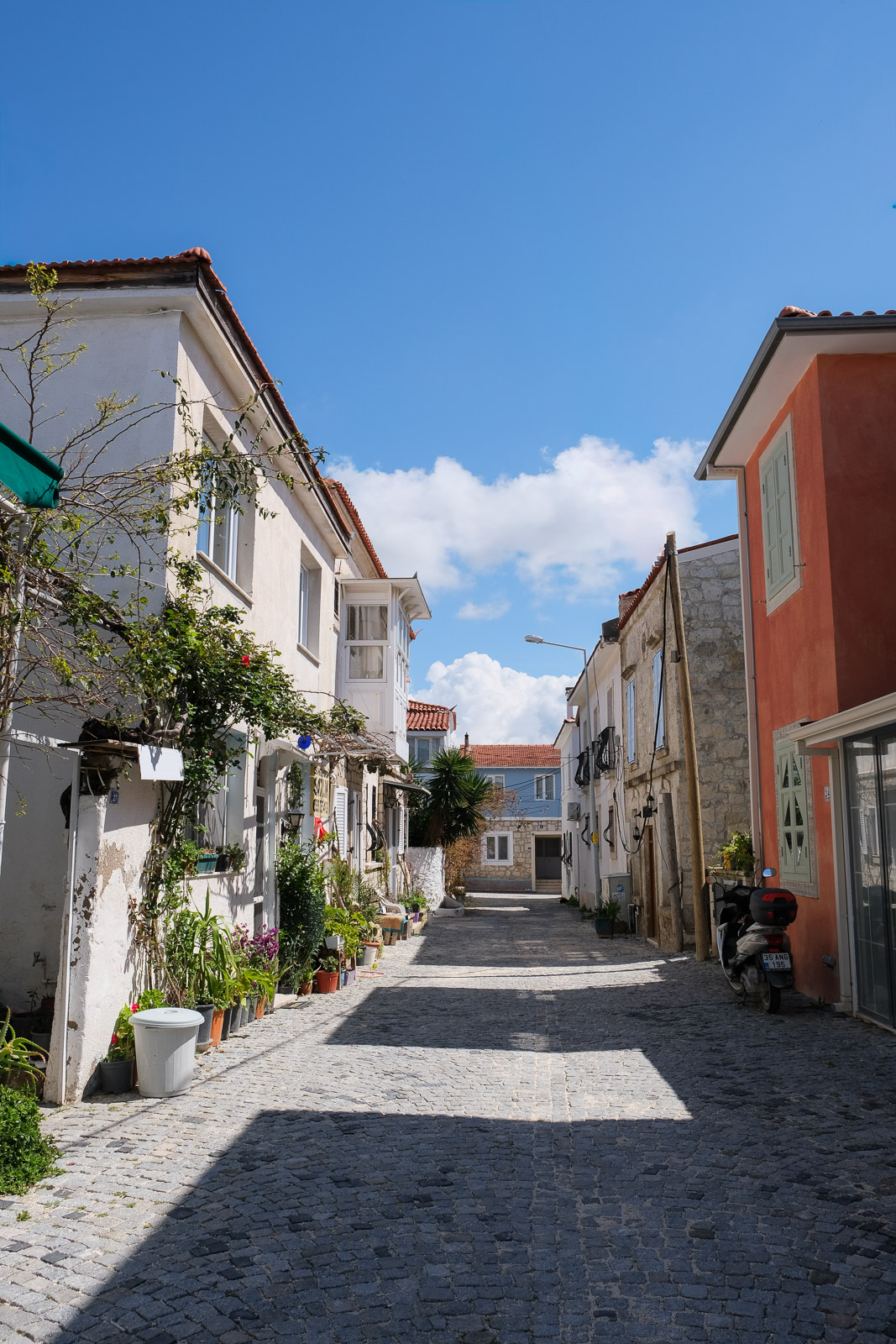
Alaçati is charming Aegean town, known for its stone houses, bougainvillea-lined streets, and small shops and restaurants. It undeniably picturesque, though I imagine it loses some of its charm with the crowds of the busier months.
We arrived pretty late, and headed straight to our accommodation - a lovely little boutique hotel, where we’d enjoy an excellent breakfast in the garden the next morning. When we arrived, the cutest elderly man who didn’t speak a word of English greeted us and handed over a hand-written paper with information any time we had a question.
We set out on a short walk from the hotel in search of an open restaurant. As mentioned, April is still low season, so many places weren’t open - and the fact that it was Ramadan likely didn’t help.
What followed is a scene I’ve recounted more times than I can count. As we walked, we across two young men stepping out off what seemed to be a restaurant, and so we asked, in English, whether it was open. One of them called inside, and a man - presumably the owner - came out. After a brief exchange, we were immediately and enthusiastically ushered in.
They had clearly been watching an important football (soccer) match, which was still playing, but the owner wasted no time in clearing a table and insisting we sit down even though it had the best view of the screen. To this day, I’m not entirely convinced the restaurant was actually open.
The two men stayed for a while, helping translate until we had ordered, before leaving us to take it all in. To my delight, the menu leaned heavily toward mezze - though not every dish was available.
The moment that truly defined the evening came next: the owner insisted on lighting a fire in the central fireplace for us, his guests. The only problem was that, not expecting anyone, he had very little wood. So he began stuffing decorative pillows from the benches into the fireplace. We protested, insisting we were warm enough - that no fire was needed - but he wouldn’t hear it. And so, a pillow-fuelled fire it was. I don’t think I will ever forget this scene.
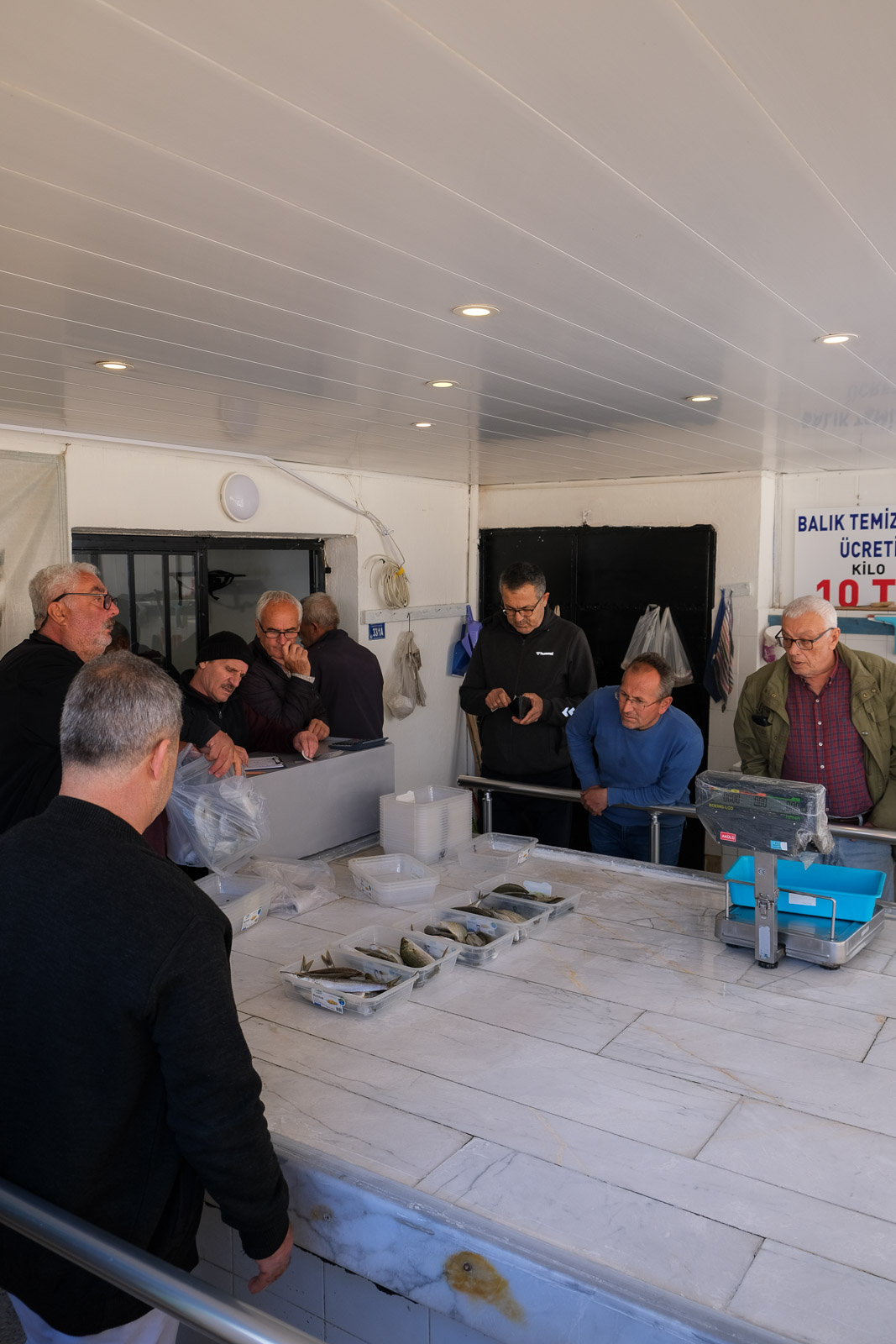
We spent the next morning discovering the town, walking through different cobblestone valleys, enjoying the gorgeous sunny weather after our day of pouring rain. We made sure to pass by the fish market to witness the morning fish auction, where we were highly encouraged by the locals to participate - we did not leave with any fresh fish.
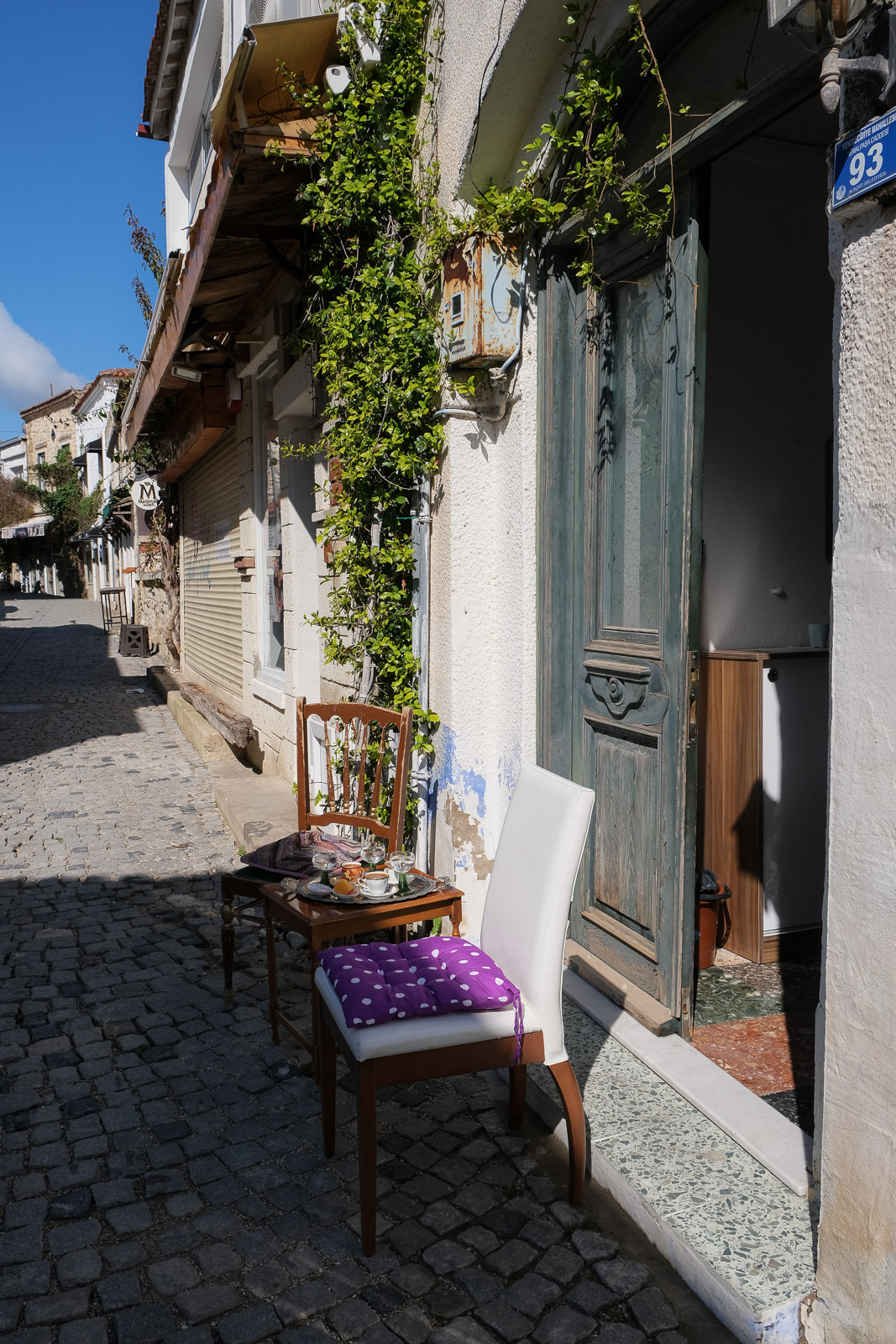
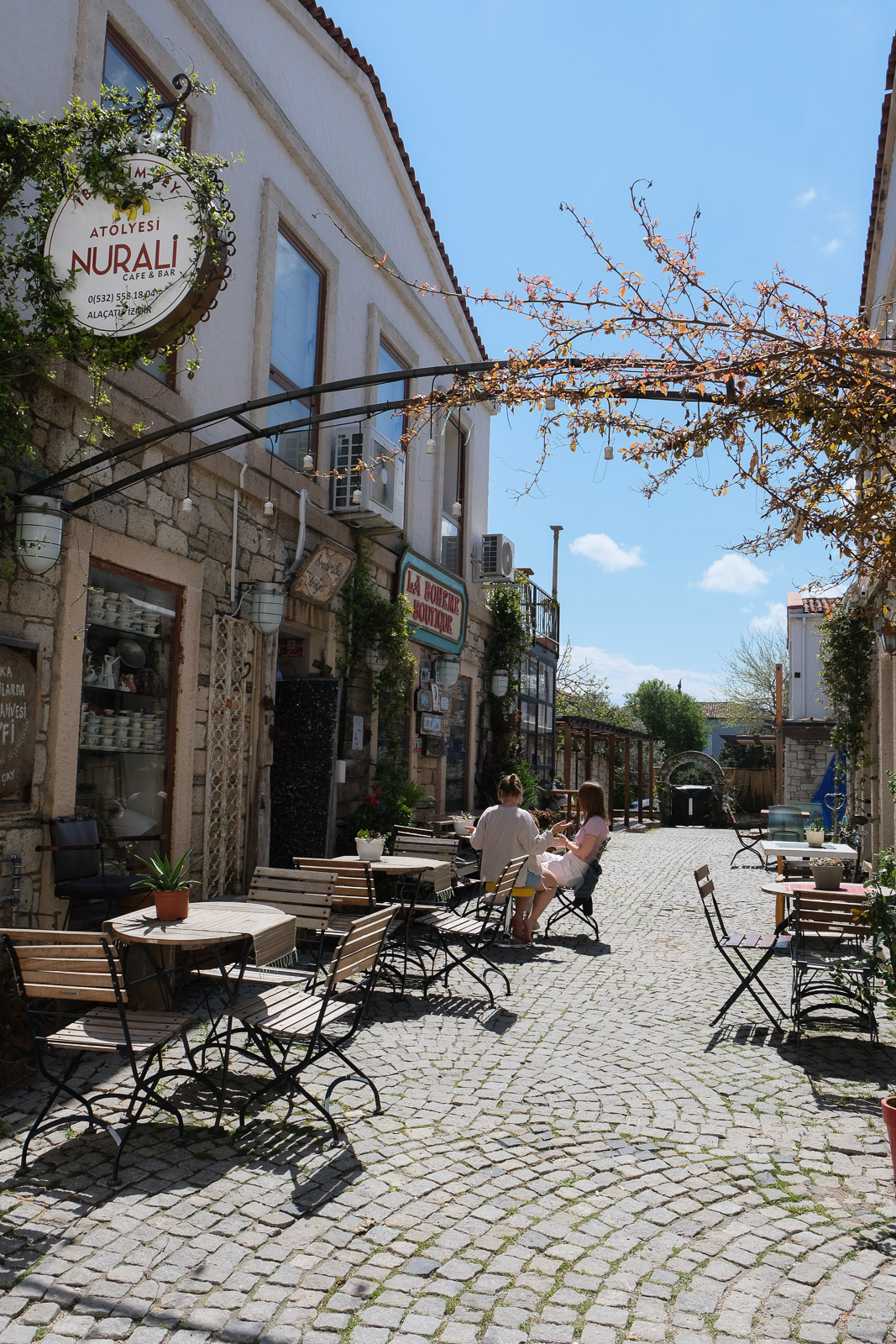
Slightly outside of the main square, we came across Atölyesi Nurali Cafe & Bar, which felt less like a typical café and more like a creative corner, complete with mismatches teacups (the highlight). It had such a relaxed, friendly energy - quietly local and a little offbeat - that we had a hard time leaving.
Şirince
Not far from Alaçati (about a two-hour drive) are the ruins of Ephesus Ancient City, most famously known for the Library of Celsus. We were planning to head there the next morning, bright and early, in hopes of avoiding the busloads of tour groups.
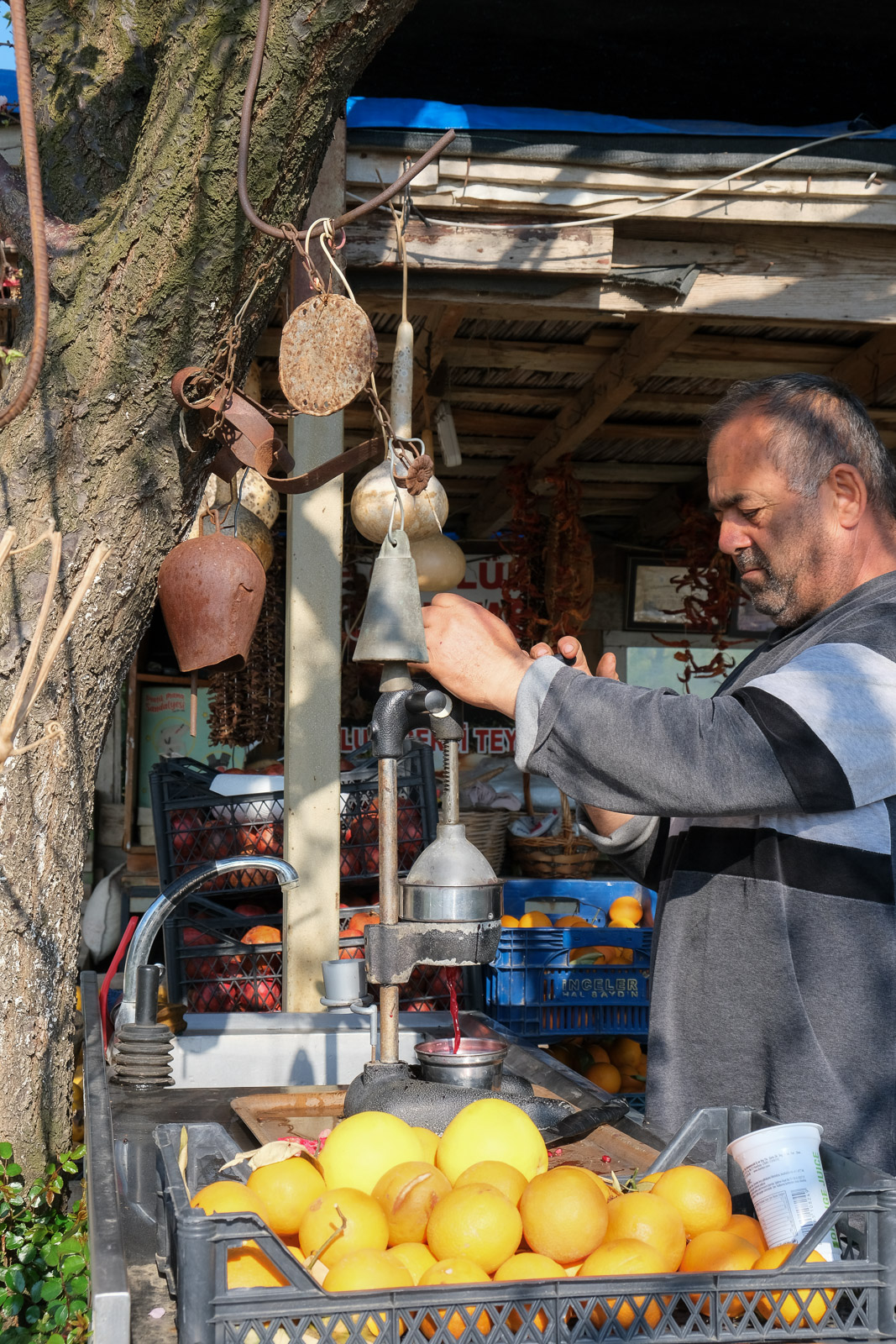
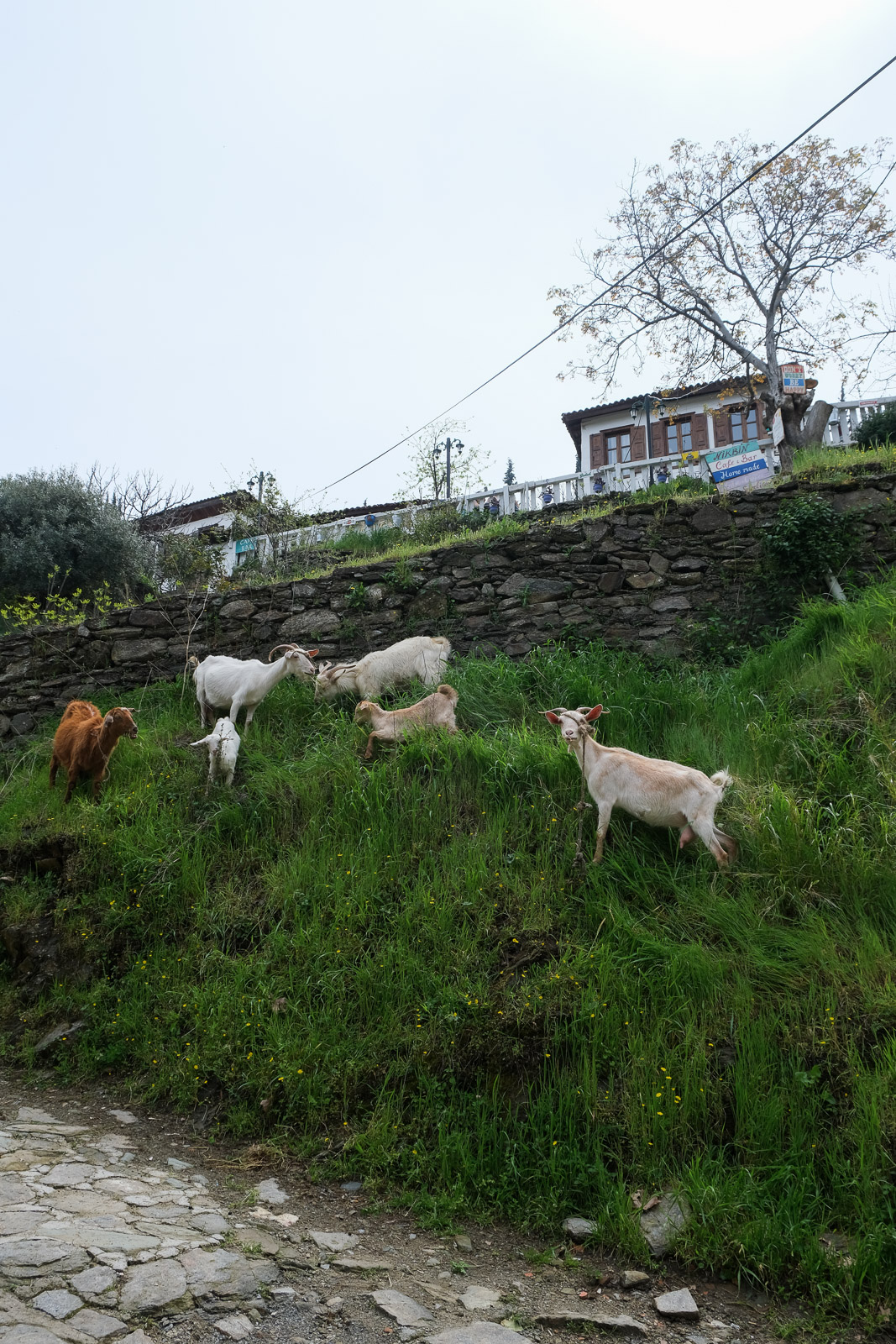
The idea of passing through Şirince - just a 20-minute drive from Ephesus - and staying the night, came mostly from a blog post mentioning the excellent breakfasts you can find there. It ended up being one of my favourite stops on the trip. Şirince itself is a small hillside village of white stone houses and winding cobblestone streets, surrounded by olive groves and vineyards. Just before starting the drive up the hill into the village, we stopped at a roadside stall for fresh pomegranate juice, where the owner let us try pressing our own fruit - it looks much easier than it actually is!
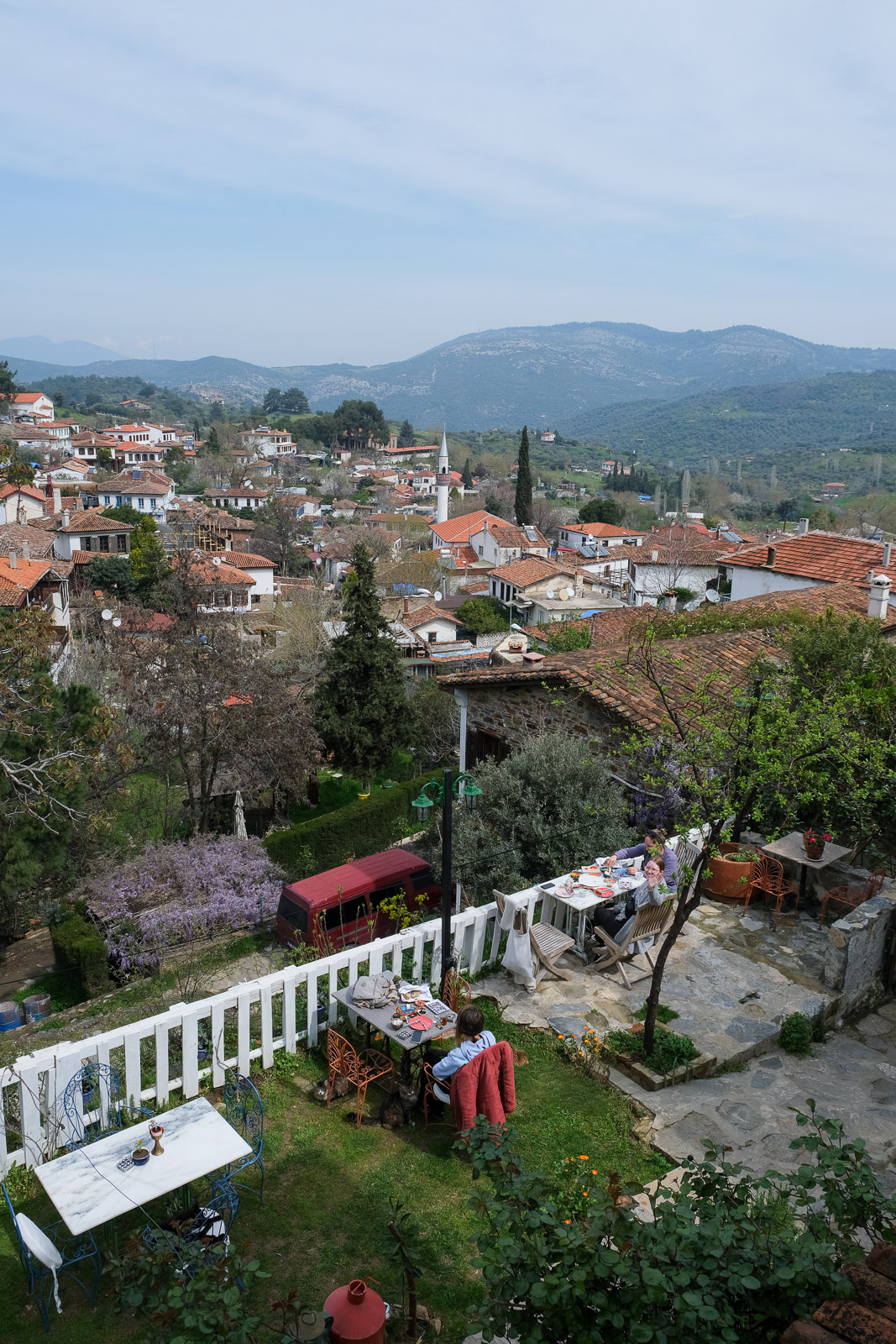
The stay itself at Nikbin Yamac Pansiyon Selcuk played a big part in what made it unforgettable. The apartment felt incredibly authentic, and the view over the village from the shared garden was worth the stressful drive through town.
Getting to the accommodation was an experience in itself. We hadn’t realized Şirince is a regular stop for large tour groups visiting Ephesus, which means that between midday and mid-afternoon, the market area turns into a lively rush of visitors. Navigating the narrow, crowded streets was not for the faint of heart. Luckily, the locals were super kind and quick to help us through it.
Once the car was safely parked, we set out on foot to enjoy golden hour, wine, and dinner. The owner of our accommodation recommended a wine shop, which was pleasant but not necessarily a must-visit, as well as a restaurant that we loved so much we came back the next day for a coffee to chat with the owners. Why did we love it so much? The owners who come out to greet you and take your order personally, the strong sense of local character, the fireplace, the incredible food (wow), and the bottle of family wine which tied it all together. It felt like a hidden gem - slightly tricky to find, which is probably what keeps it off most tourists’ radar.
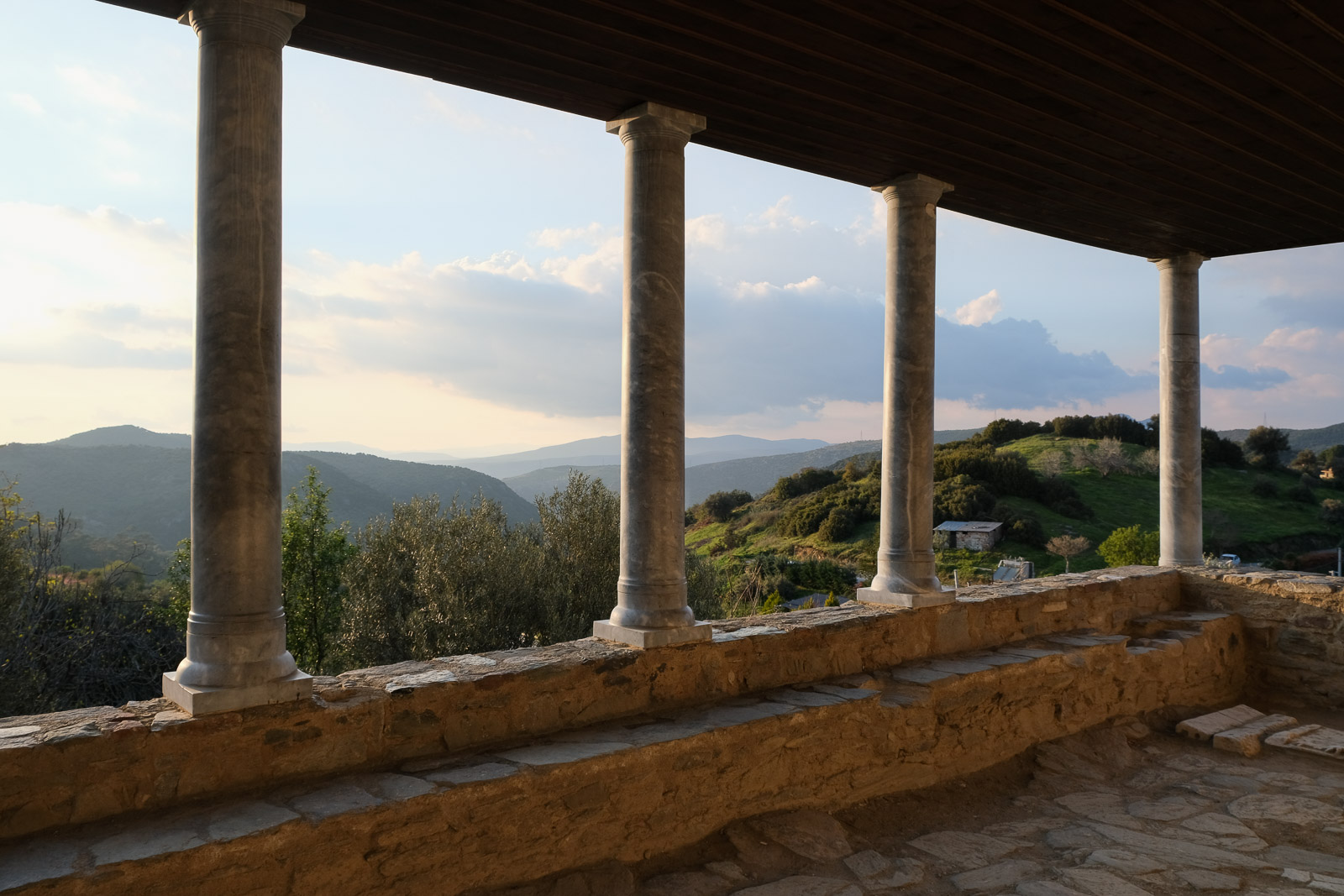
We also stumbled upon the absolute best place to witness golden hour: by the arches just outside of Church of St. Dimitrios.
Ephesus Ancient City
Ephesus was once one of the most important cities of the ancient world. Today, what remains is remarkably intact - not in complete structures per se, but in the city’s overall presence and layout.
We had one plan: arrive at opening to reach the Library of Celsus before the busloads of tourists.
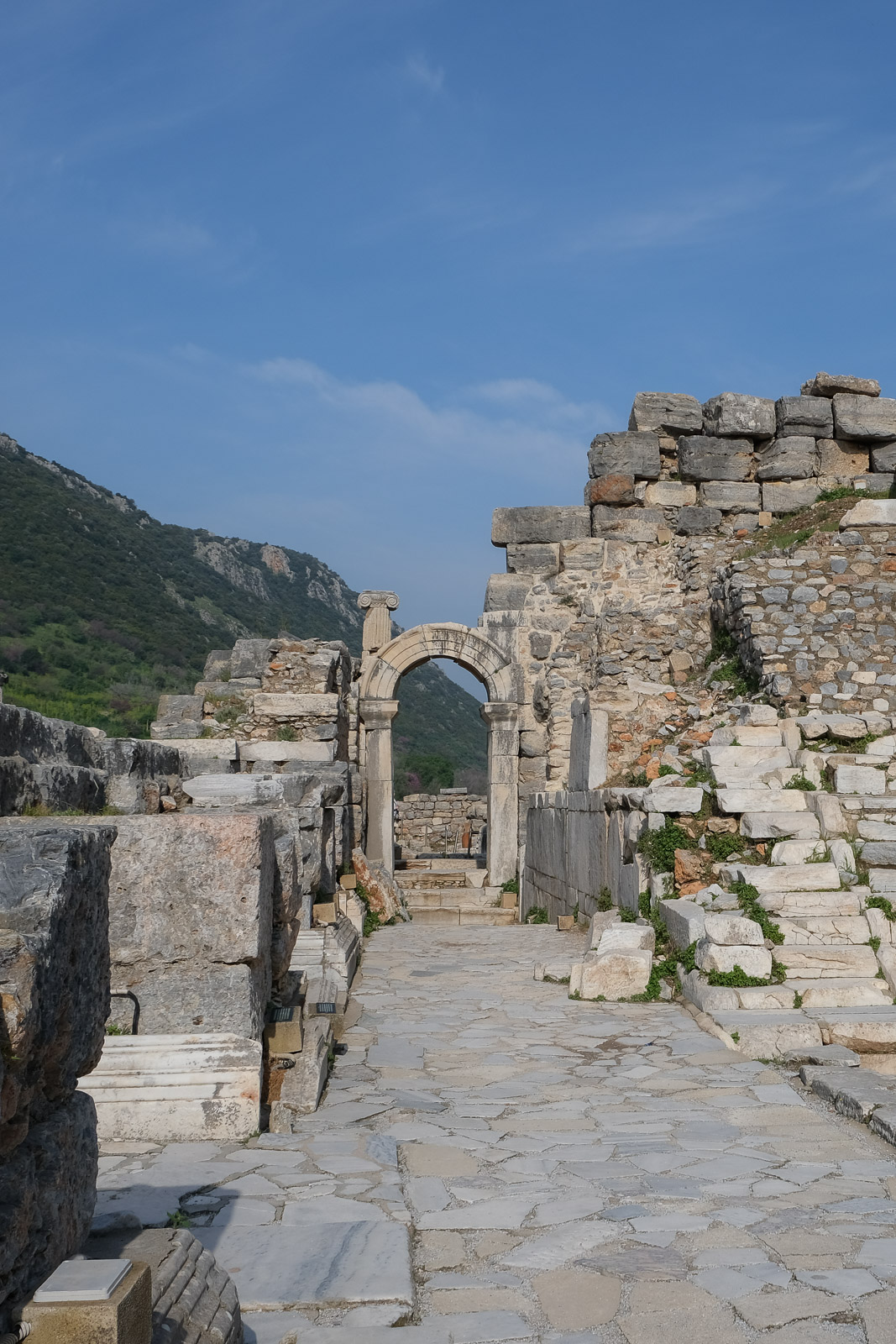
From the lower gate entrance, we followed a dirt path bordered by trees until reaching a corridor of stone (part of the Lower Agora) that lead to the archway (Mazeu-Mithridates Gate) from where we caught our first glimpse of the Library of Celsus. It’s rare that I get overly excited about ruins, but this façade was something else. We had nearly twenty minutes in silence as the rising sun slowly began to illuminate the façade, bringing out its detail.
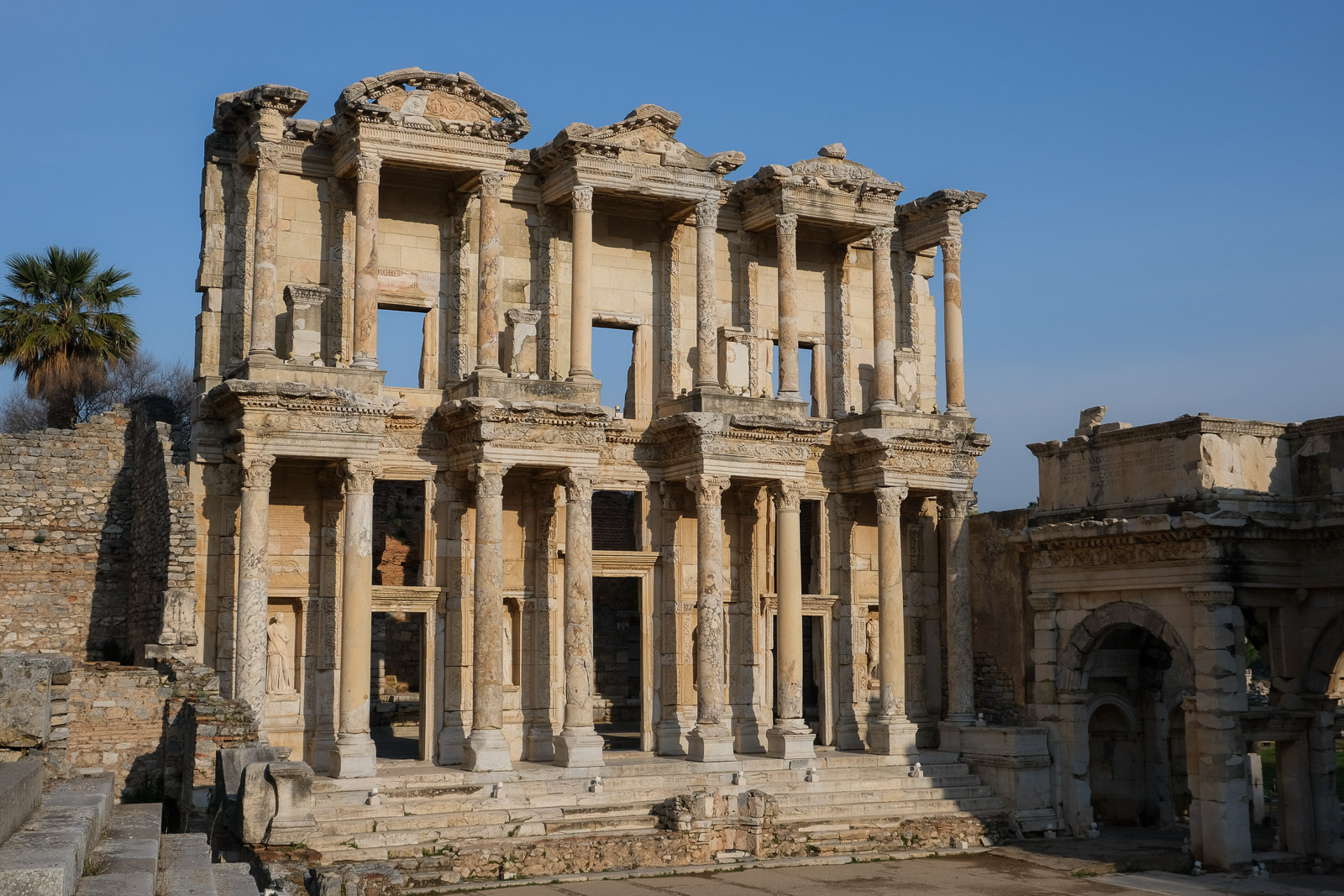
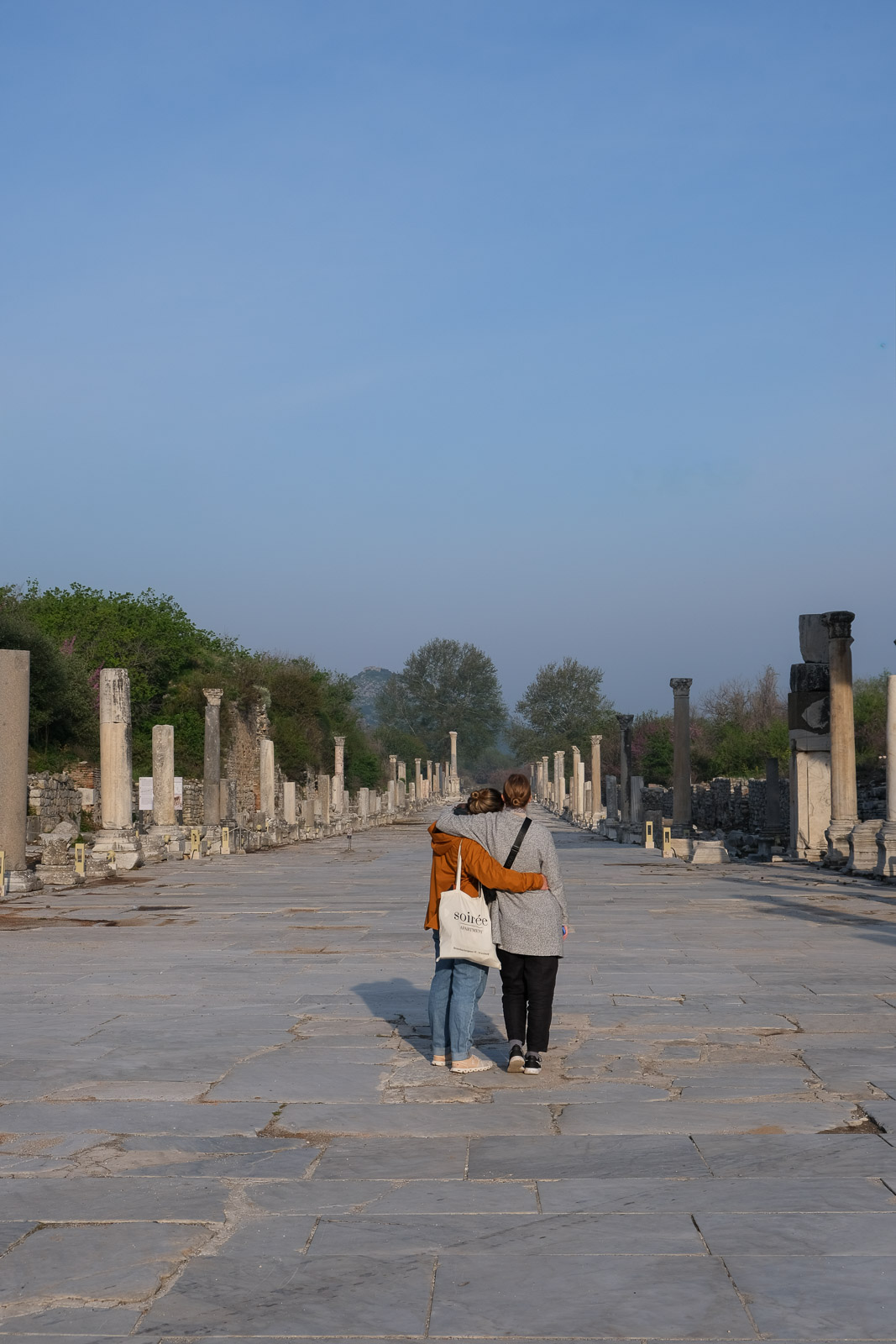
And then, earlier than expected, we saw them - the first groups of tourists arriving from the north entrance! It turns out the buses likely arrived right at opening as well, but their approach to the Library was thankfully slowed by the discovery of the ruins unfolding along the marble street - broken columns, partial walls, carved stones that hint at former buildings - leading them gradually toward the heart of the site.
We avoided the incoming groups by following a smaller marble road toward the Theatre, where we paused to appreciate the scale of it, and share a quiet moment with a cat. From there we started our exploration of the rest of the site.
Pamukkale
After breakfast back at Nikbin Yamac Pansiyon - incredible, everything was locally produced, down to the jams and bread - and a tea/coffee stop at the restaurant from the previous night, we set off for Pamukkale.
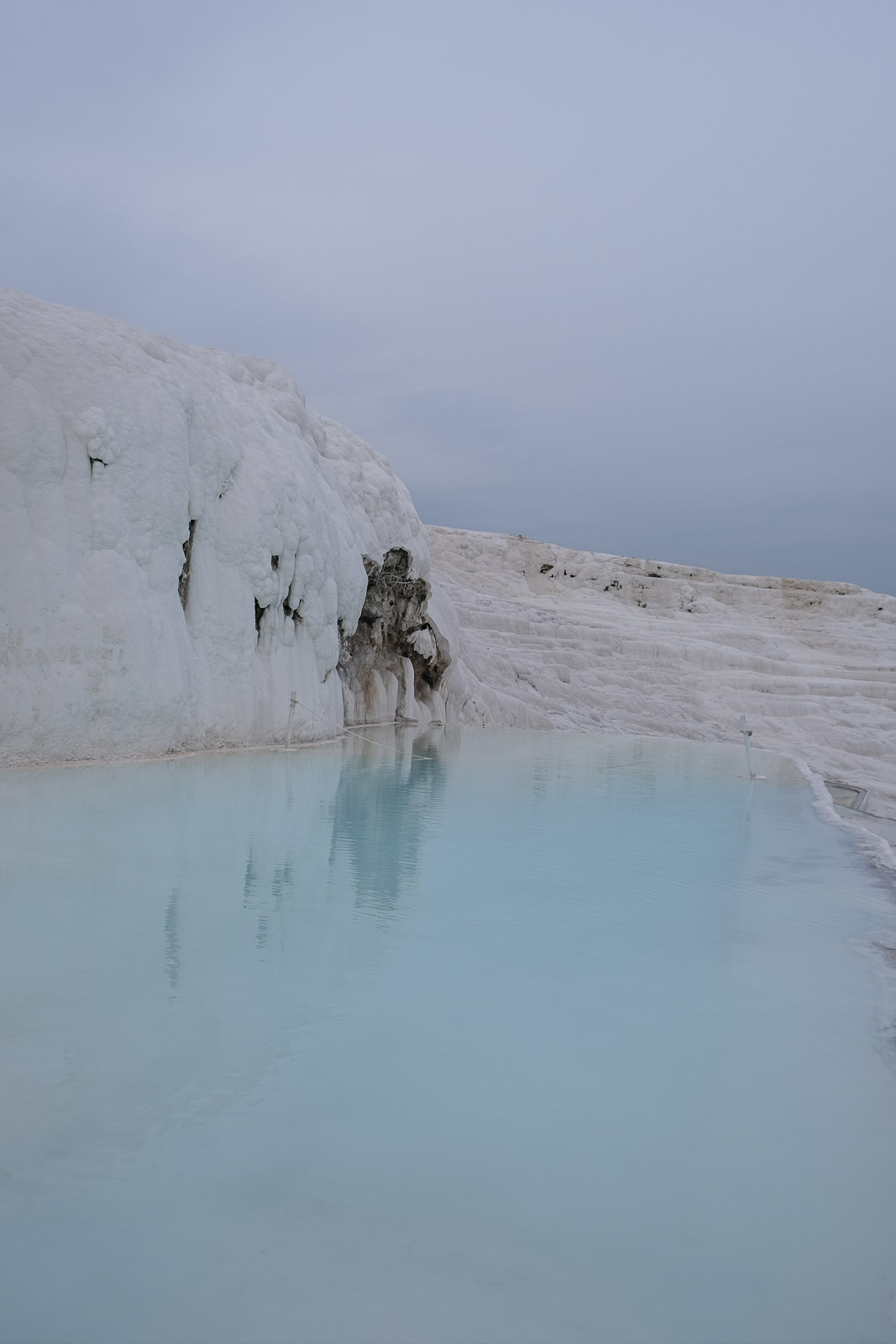
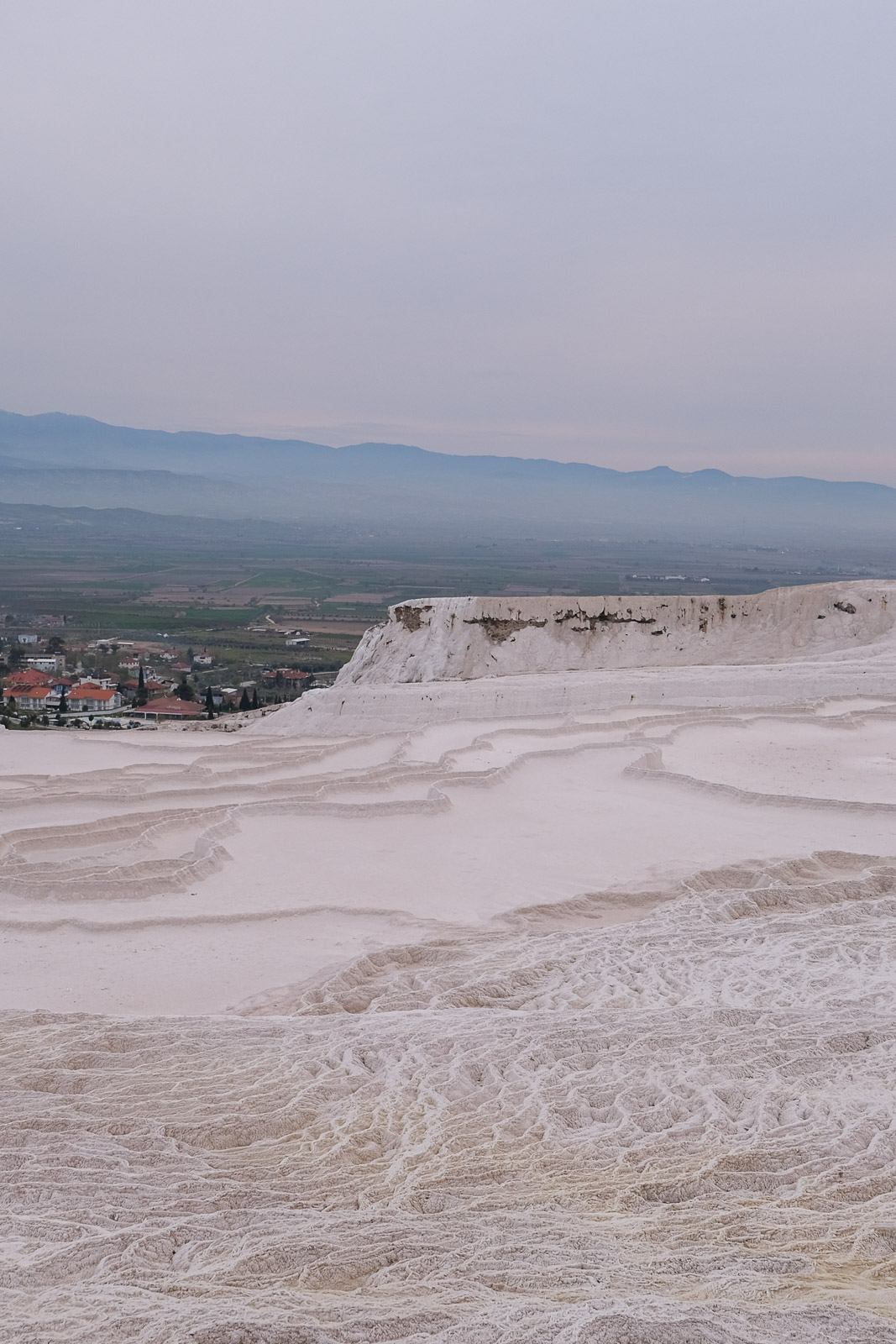
We had imagined a hillside of white terraces filled with bright blue, mineral-rich thermal pools. Even with the weather not being on our side, we still had expectations, however we were’t prepared for all of the natural pools to be completely dry.
It was still enjoyable to walk barefoot across the smooth calcium deposits, moving carefully to avoid slipping, and wade in a few of the larger artificially made pools that still contained water. From what we could see, the flow of water is controlled - diverted or restricted depending on the seasons - which likely explained the emptiness of all the natural pools. It was disappointing, especially given the detour it required in our itinerary and the hefty entrance fee we hadn’t expected. The least they could have done is give us all the information on the current conditions of the pools before having us pay at the entrance.
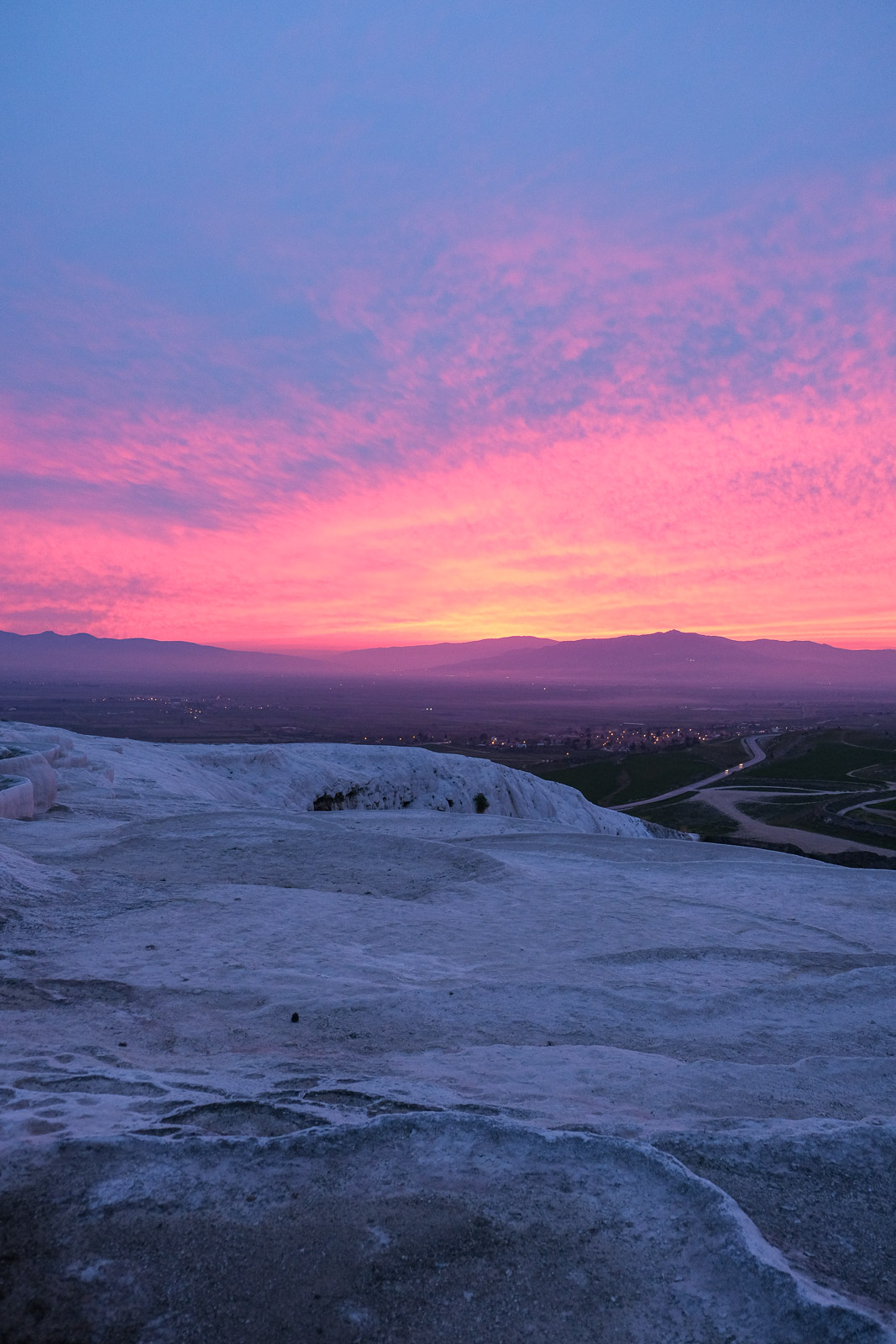
After a couple of hours exploring, we were about to head back down, convinced the overcast sky - and the absence of water to reflect it - had ruled out any chance of a sunset. Then, the call to prayer began to echo from a nearby mosque, and almost at once, the sky shifted. It opened into the most vivid reds and pinks - sudden and expansive.
It’s hard to describe the feeling at that moment with the call for prayer carrying across the landscape, almost initiating the change in light. It was unexpected, and enough to reframe our Pamukkale experience.
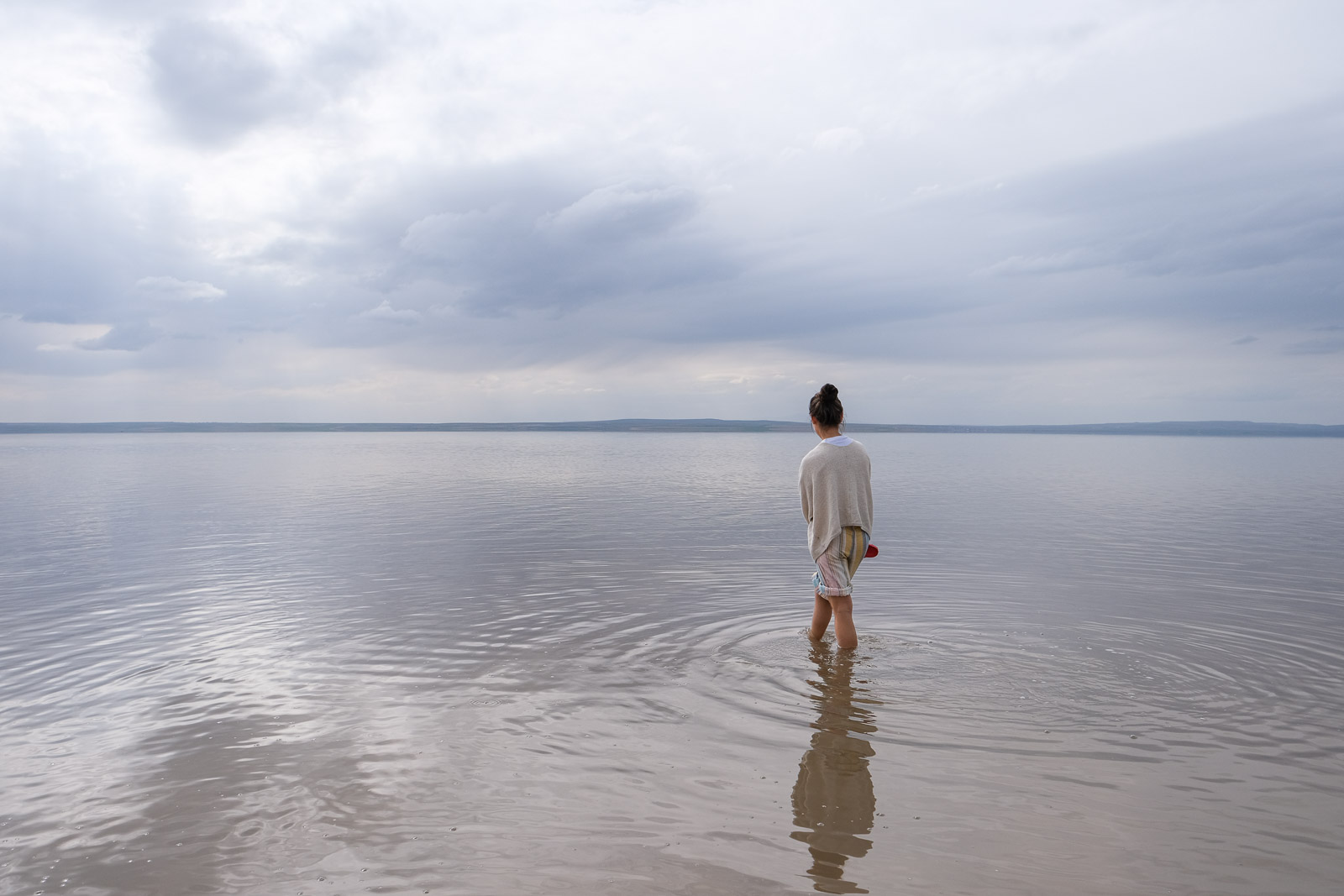
On our drive to Cappadocia, we detoured to Lake Tuz, one of the largest salt lakes in the world. At certain times of year, likely in the summer, the lake is said to take on a soft pink hue, coloured by algae and microorganisms in its highly saline waters. After nearly an hour of getting lost in the surrounding fields and villages, chasing sections where the colour, and perhaps flamingos, might be most likely, we gave up and headed to the main visitor area. The lake stretched out before us as a wide, motionless expanse of muddy brown water…
Cappadocia
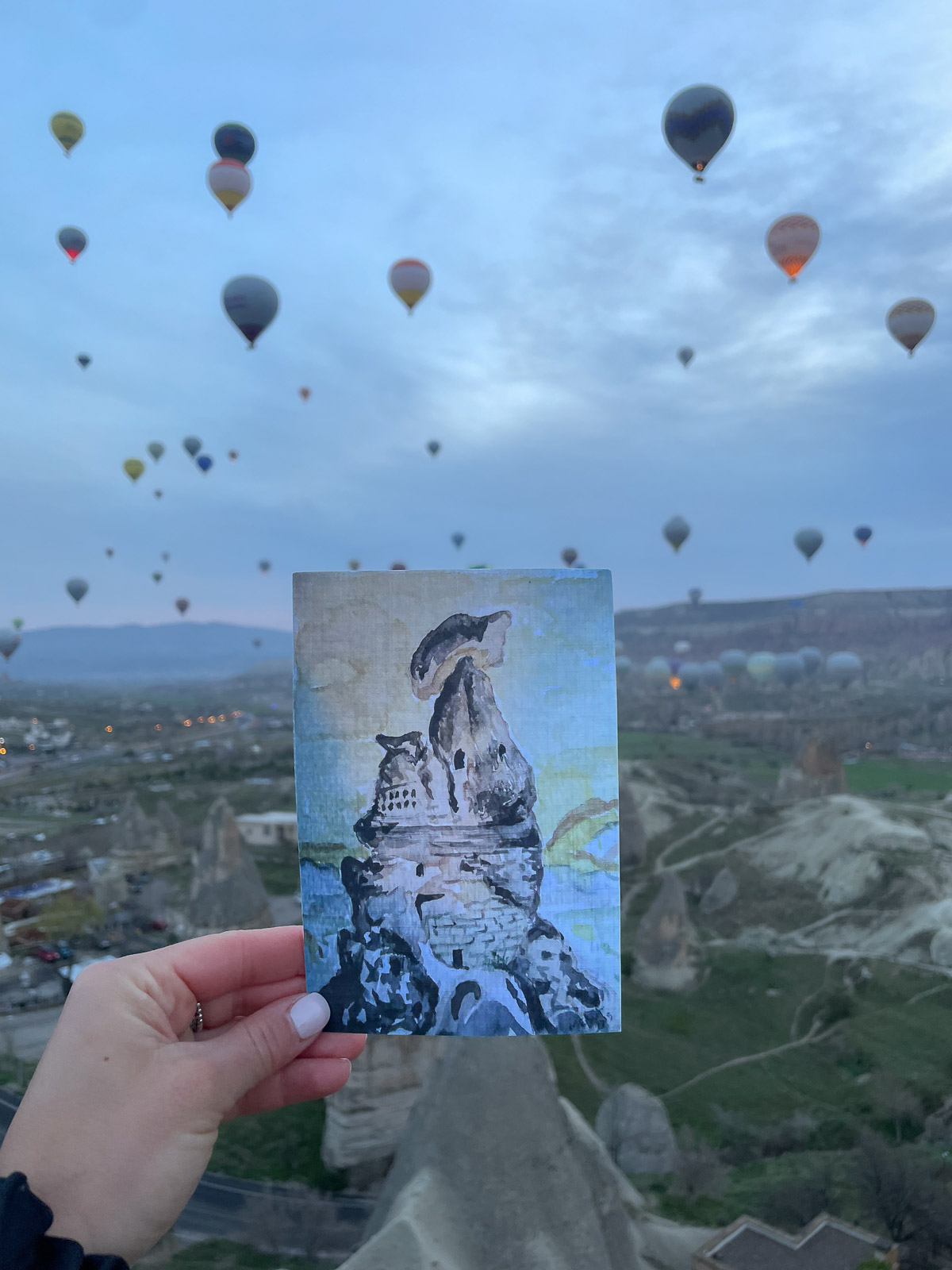
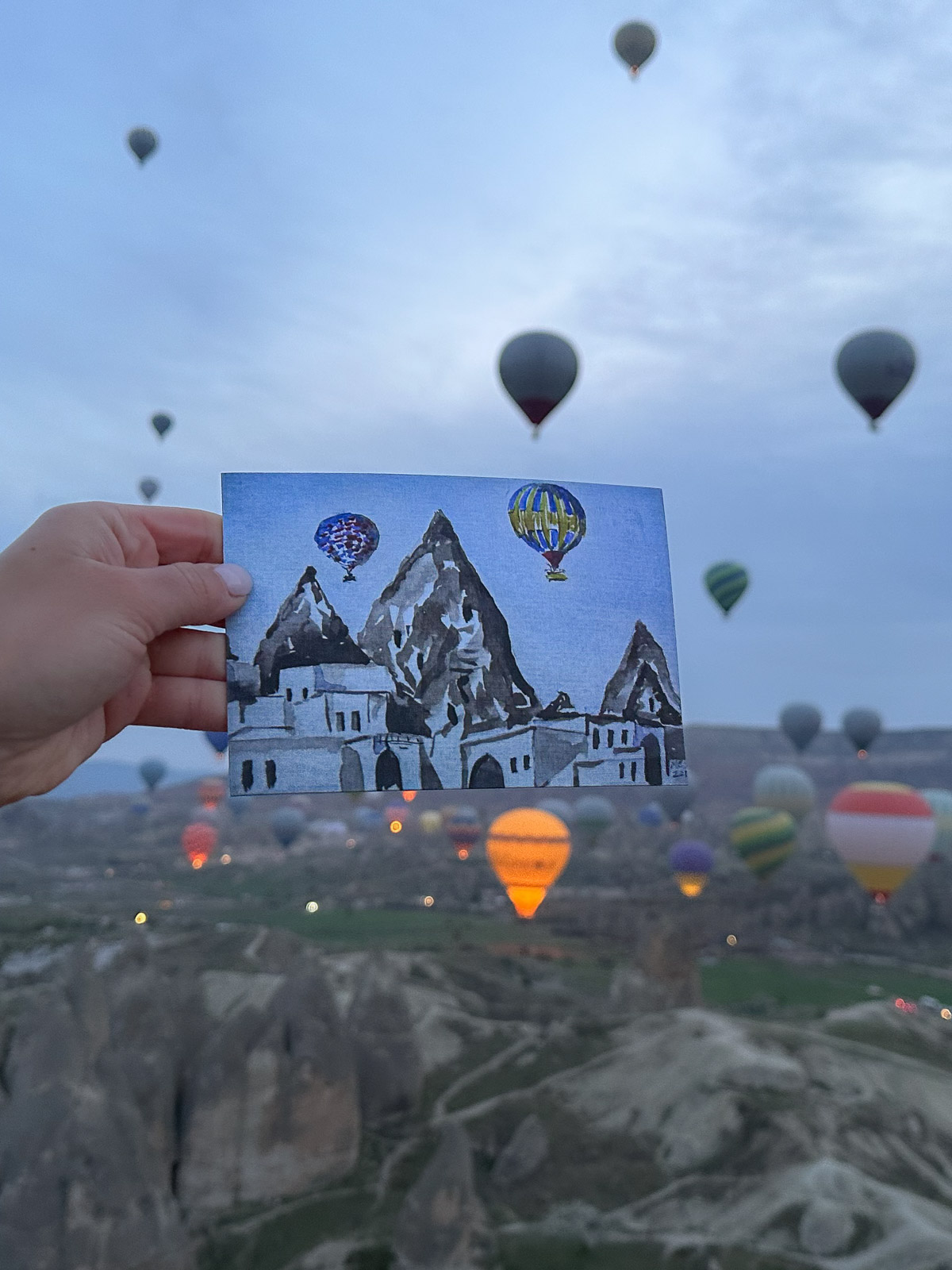
We spent three nights in Cappadocia, just enough time to fit in all the exploring we had in mind, while giving ourselves three chances to hopefully witness the hot air balloons rise at sunrise.
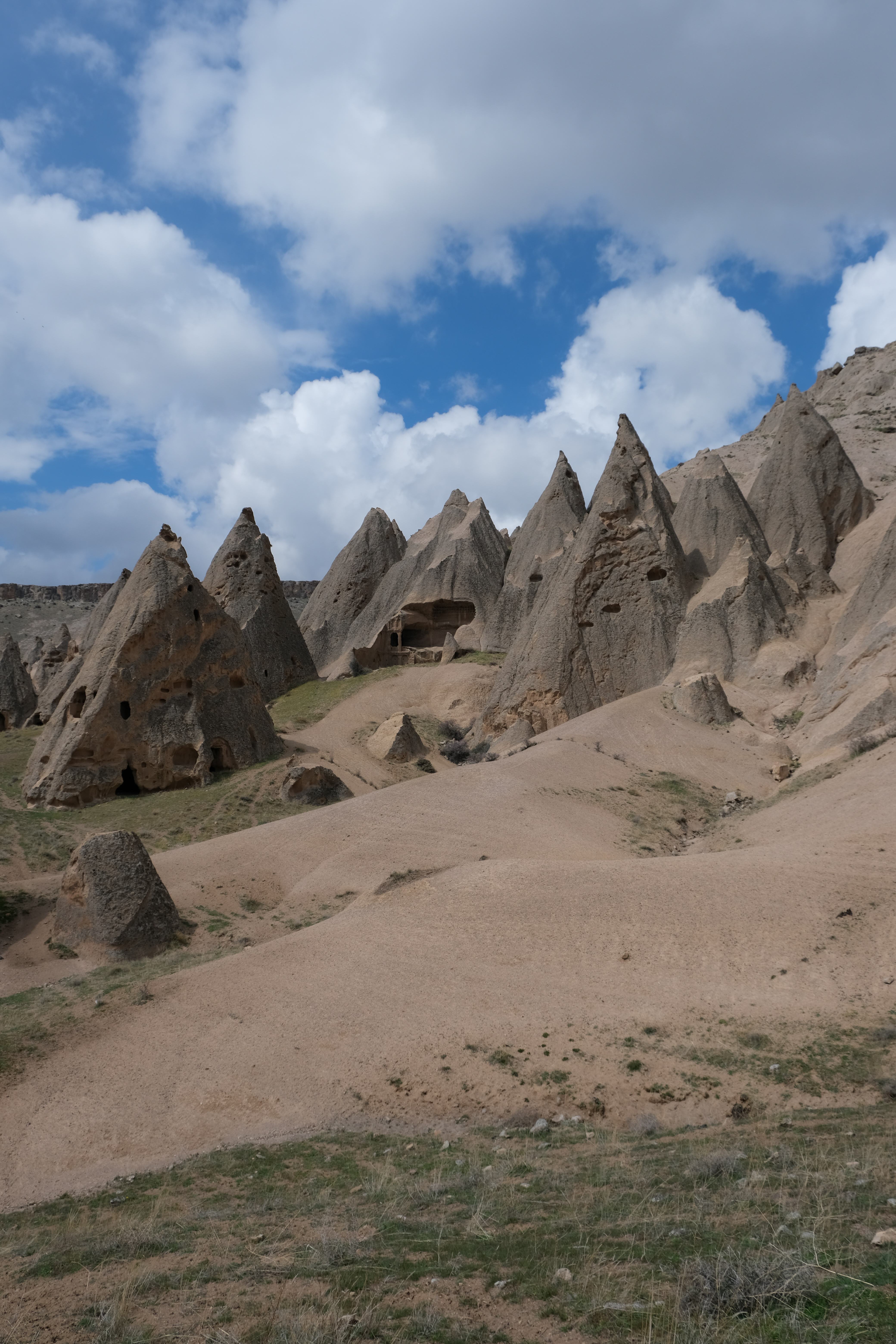
Cappadocia is a landscape of sculpted stone and soft contours. The region was shaped by ancient volcanic eruptions, which laid down thick layers of tuff, an easily eroded rock that , over time, was carved by wind, rain, and temperature shifts into the distinctive “fairy chimneys” the area is known for. These formations were later carved into and used as dwellings, monasteries, and churches. Today, the entire region is protected as a UNESCO World Heritage Site.
We stayed in both Uçhisar and Göreme, though I found myself drawn more to Uçhisar. It was quieter and felt more like a lived-in village than a tourist hub, and the view of Uçhisar Castle alone made it stand out. Göreme, on the other hand, was a great base for watching the hot air balloons at sunrise. That said, we found a nearby viewpoint to be even better - the experience changing completely depending on the direction of the wind, which determines where the balloons drift.
Pigeon, White & Love Valleys
Within walking distance of both towns are several accessible hikes. We combined Pigeon, White, and Love Valleys into a single 12 km route, which made for a varied experience, each valley offering its distinct mood and landscape. Pigeon Valley felt the most textured, defined by cliff faces dotted with small carved pigeon houses. It was the greenest of the three, with more trees and a slightly shaded feel.
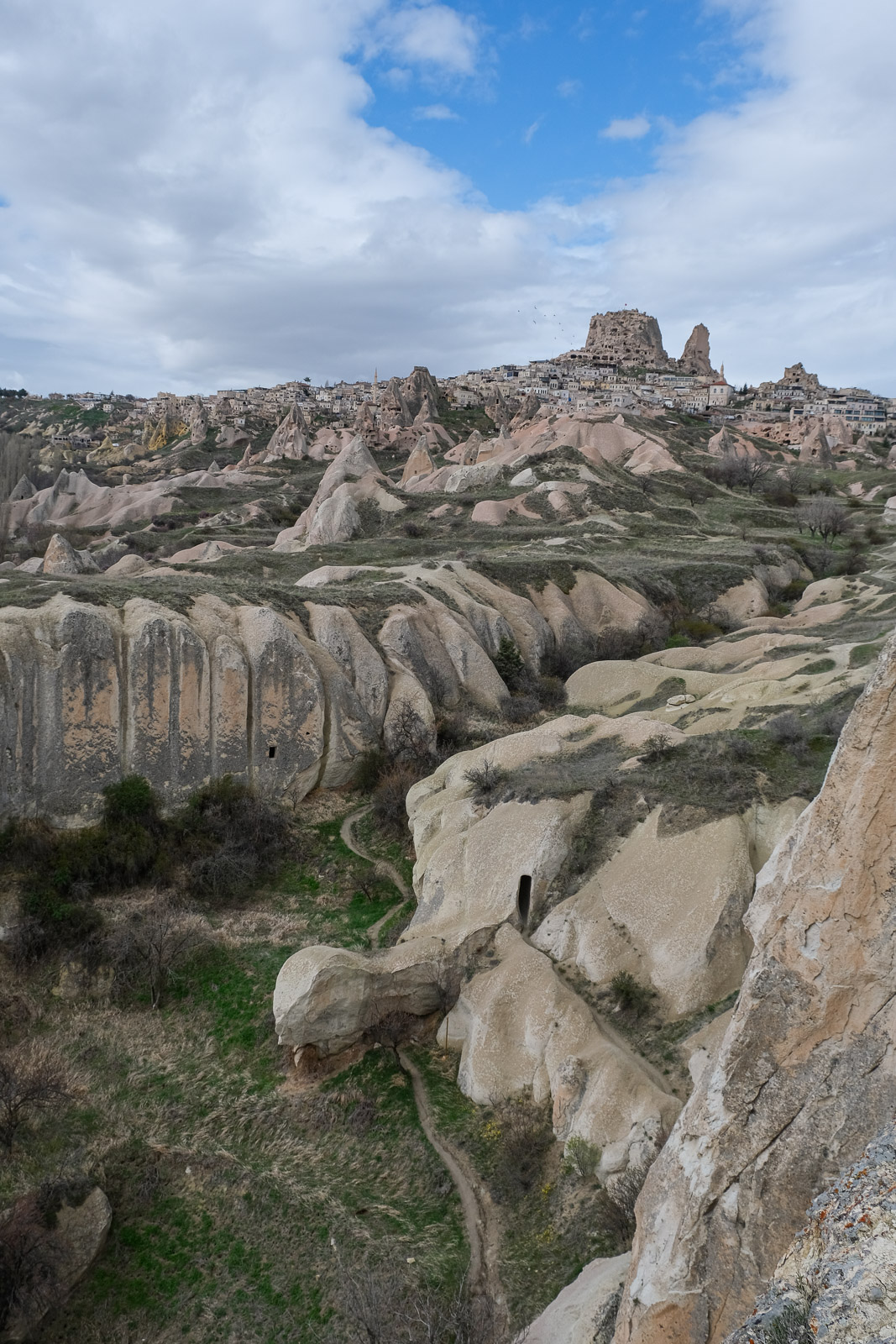
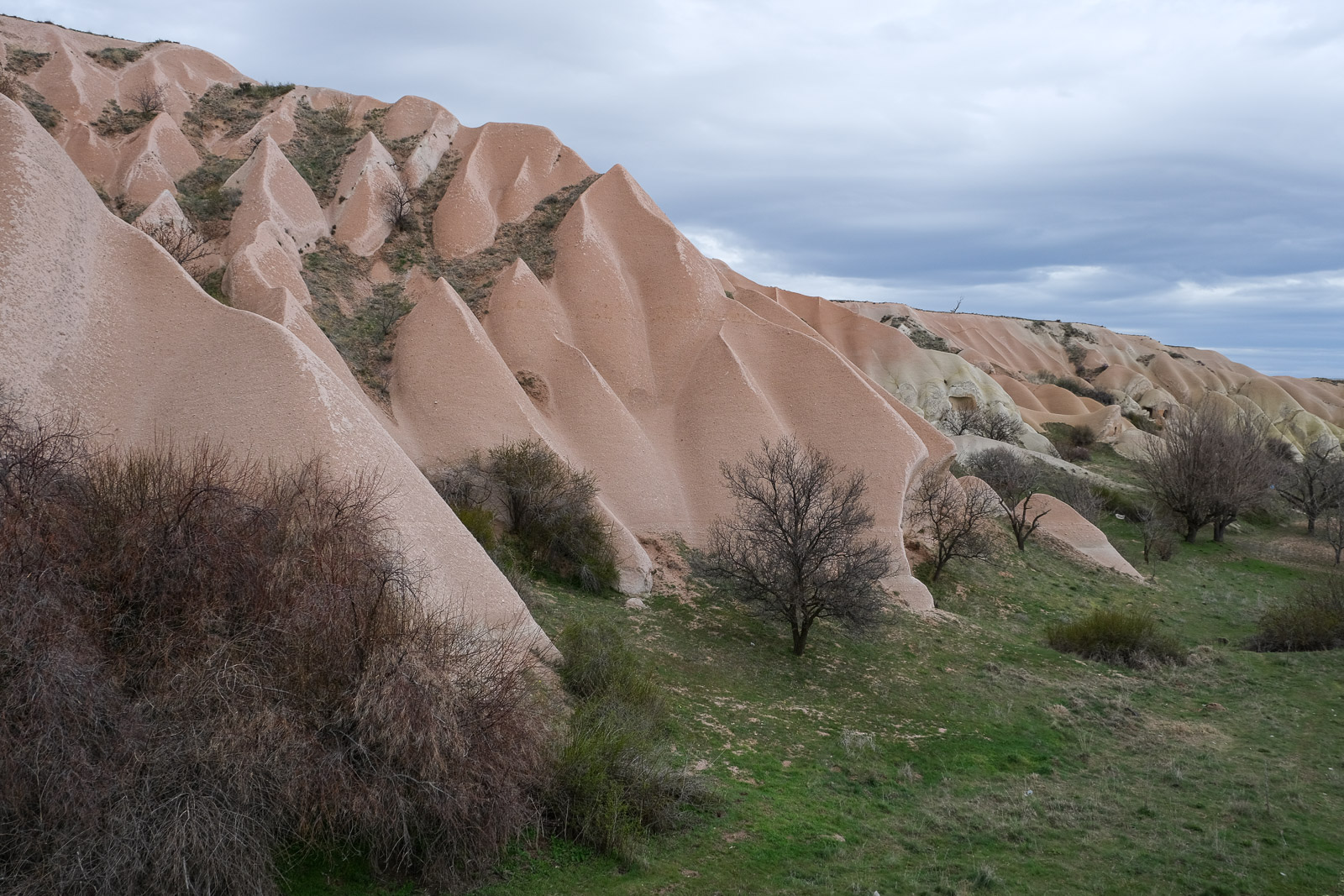
White Valley, by contrast, was softer and more minimal, with pale, almost chalky rock forming gentle ridges and smooth, undulating terrain. It felt more expansive.
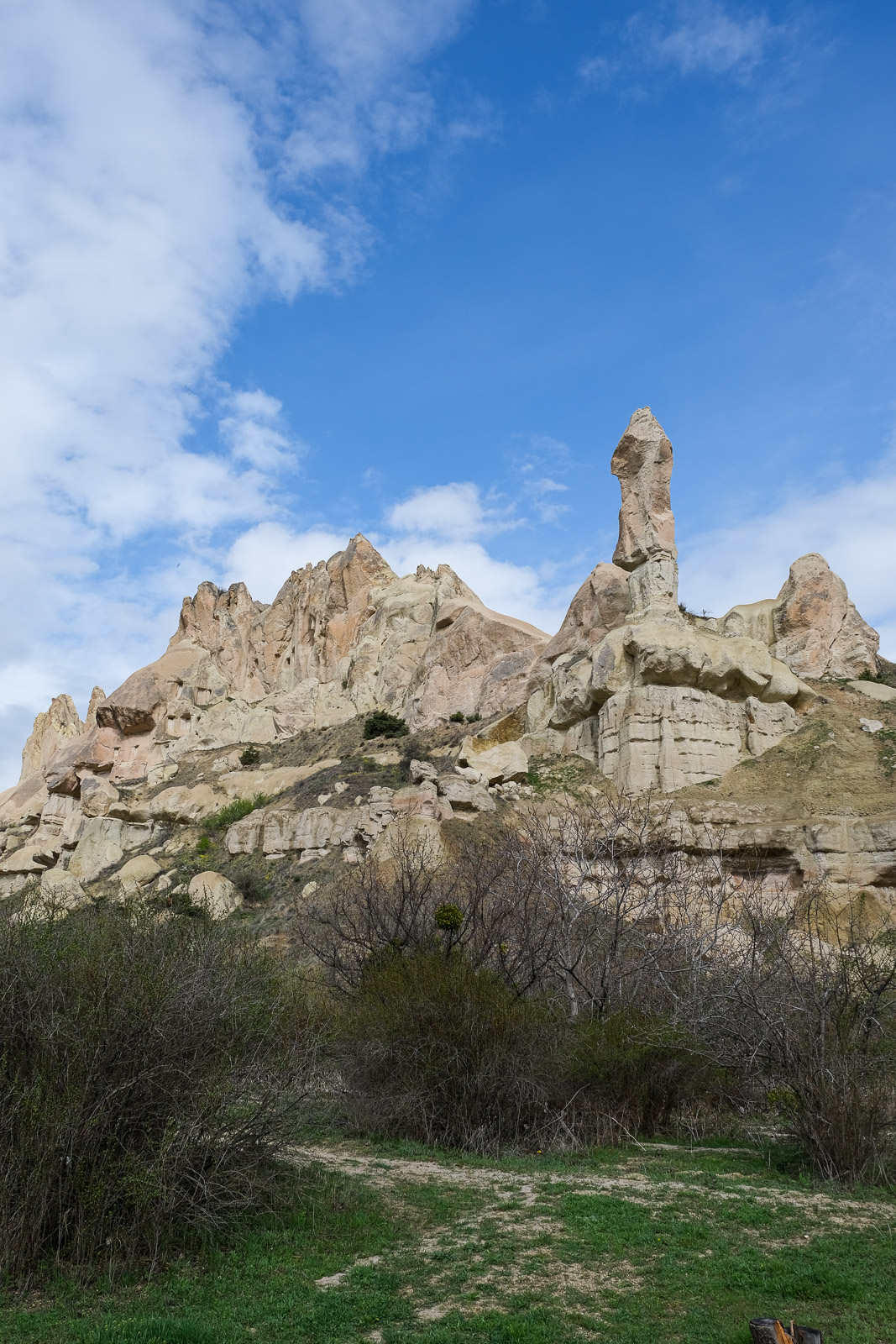
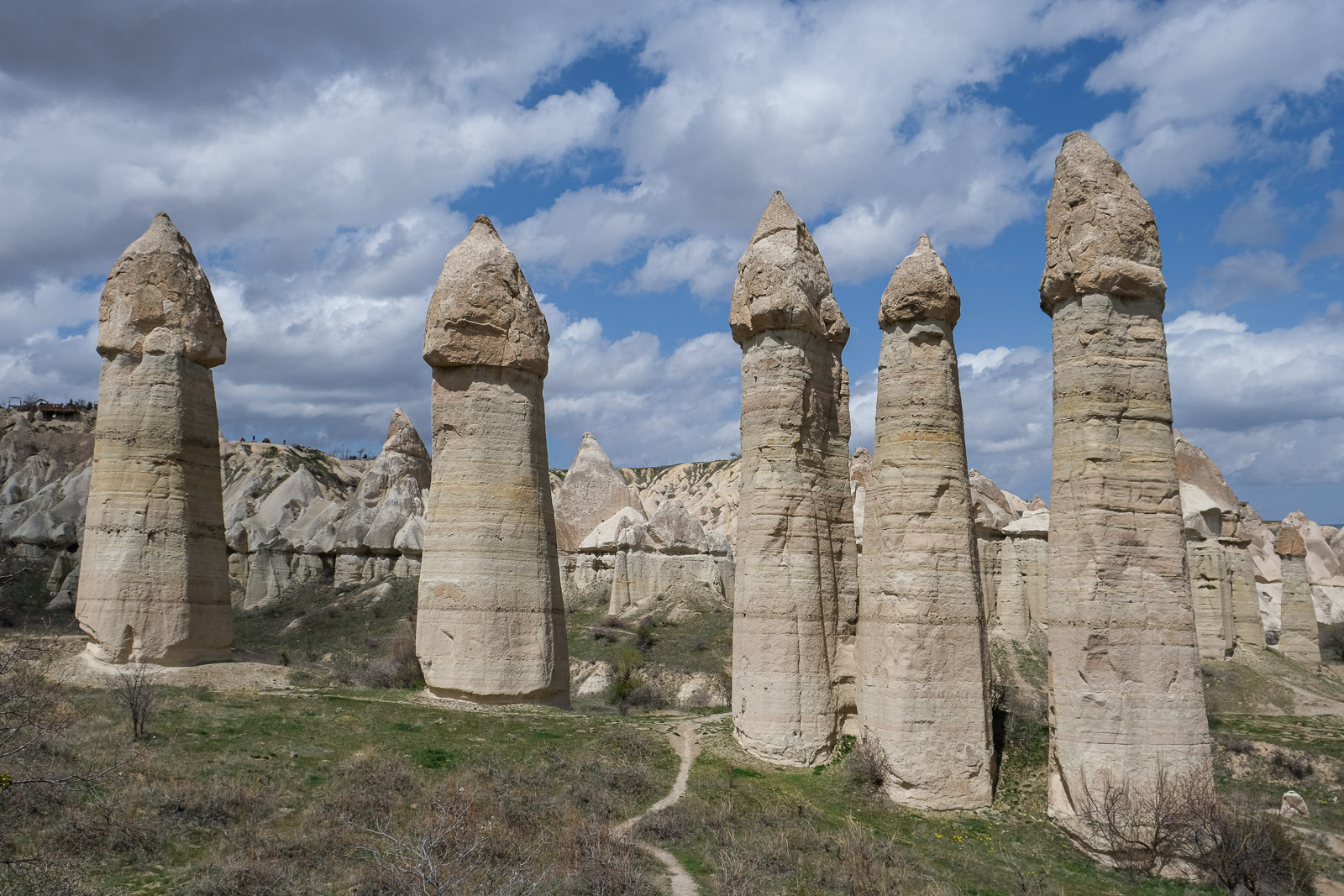
Love Valley had the most striking features, with pillar-like rock formations risking dramatically from the valley floor. Bold, unusual, and unmistakably unique.
Rose & Red Valleys
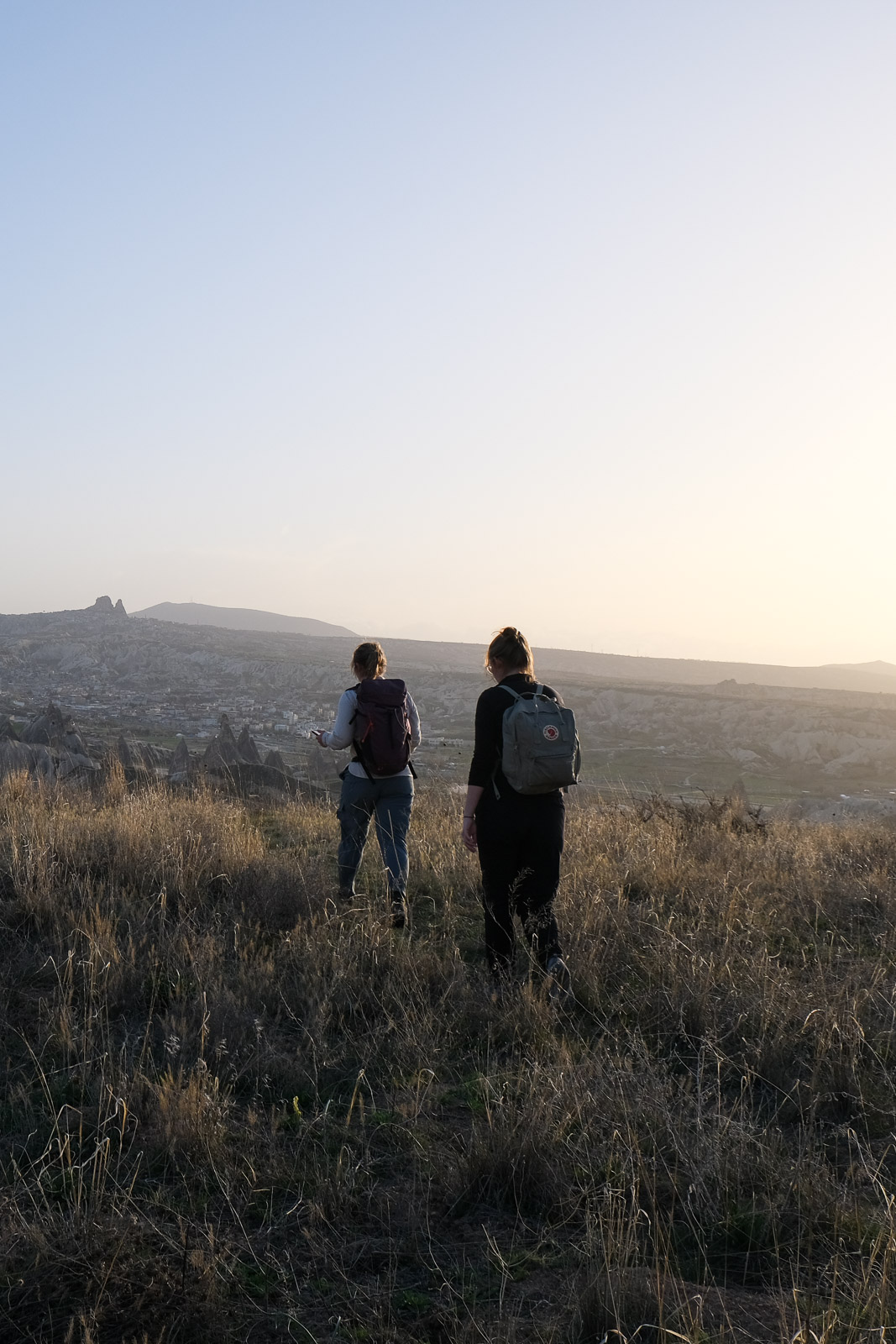
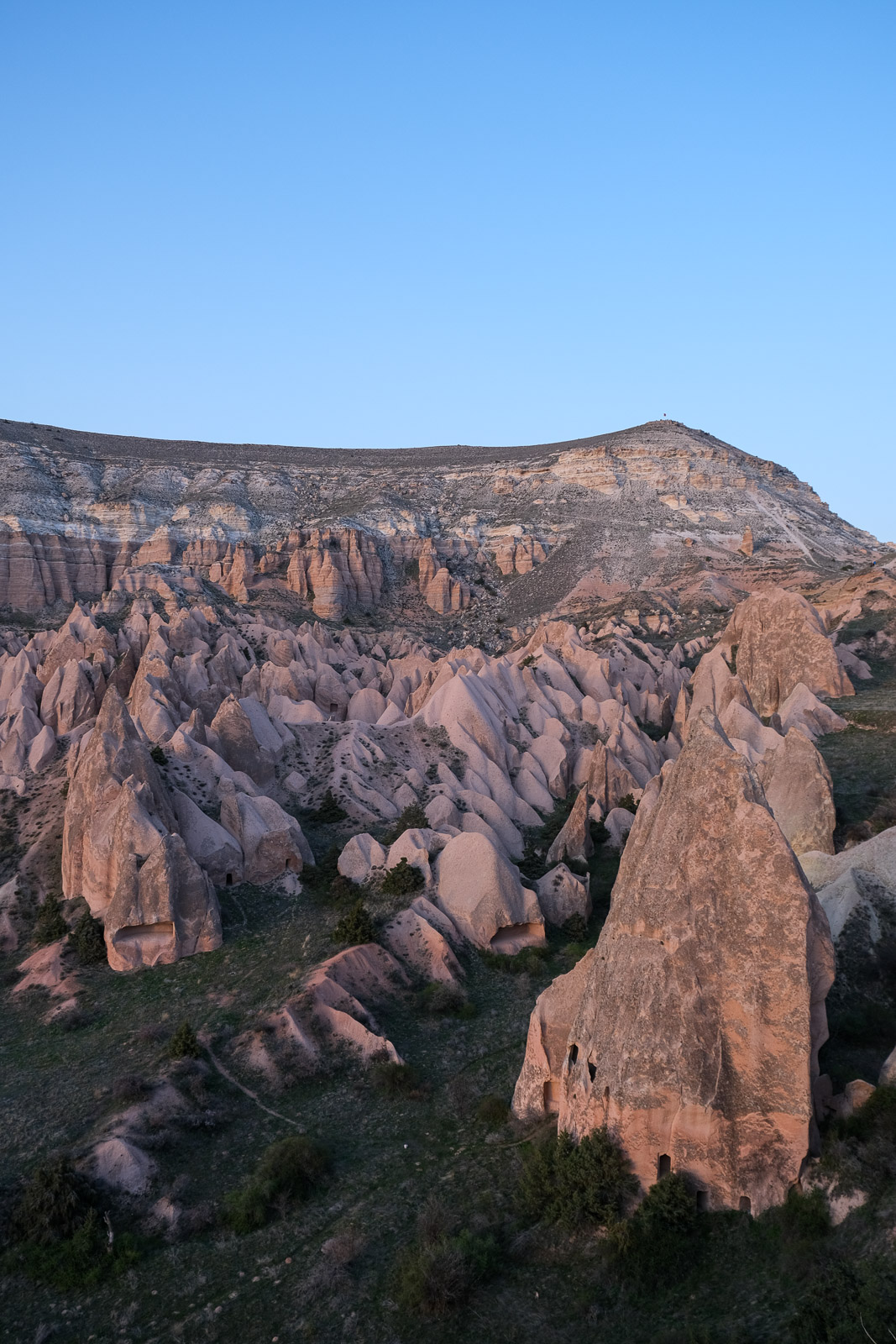
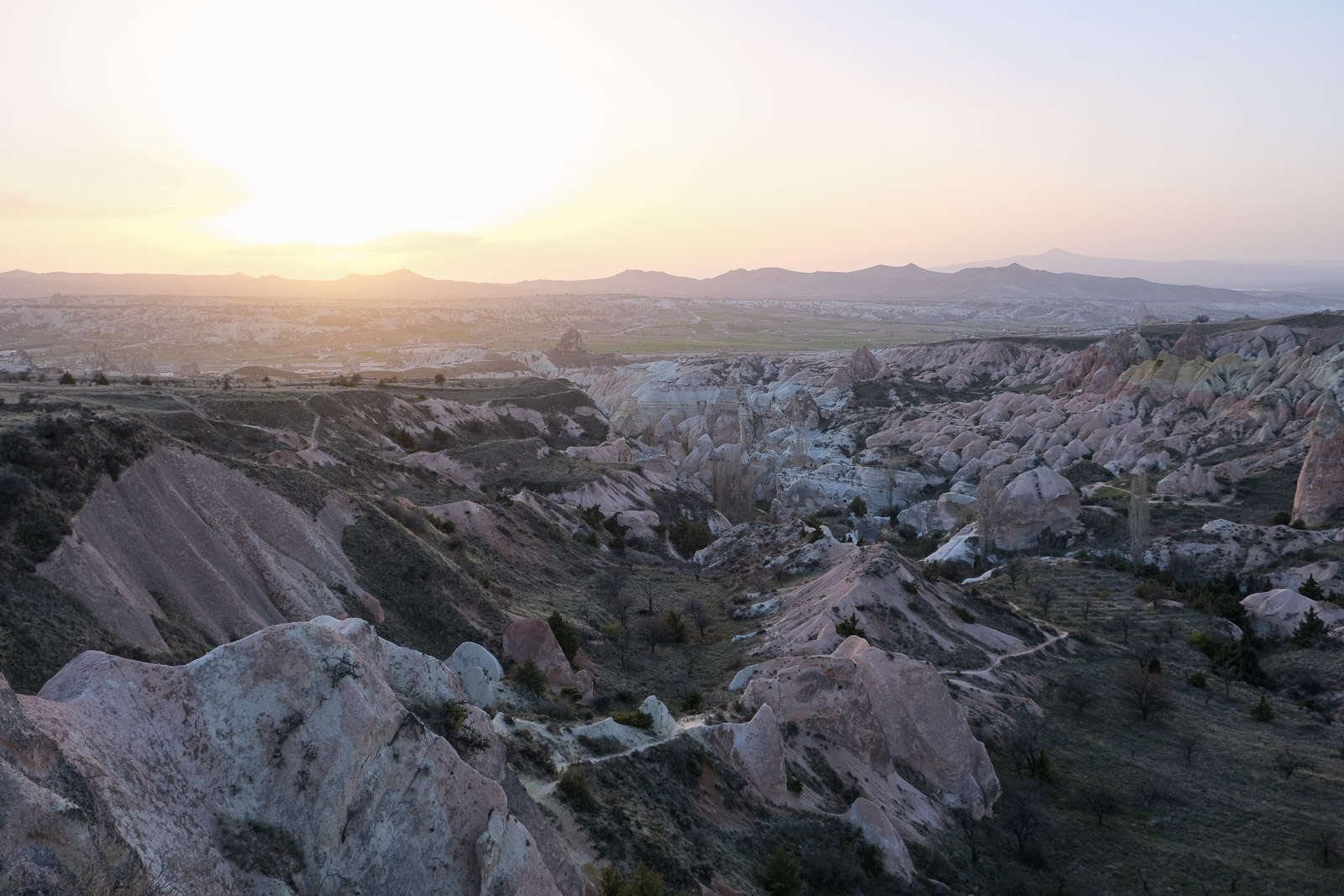
Another hike, and probably the most rewarding, was through the Rose and Red Valley, especially in the late afternoon. There were several trails we could follow, some longer and more challenging than other, but they all wind through the same shifting landscape of soft pink ridges and narrow passages. At one point our chosen path led us to a rock face we had to climb using a rope you really had to place your full trust in…
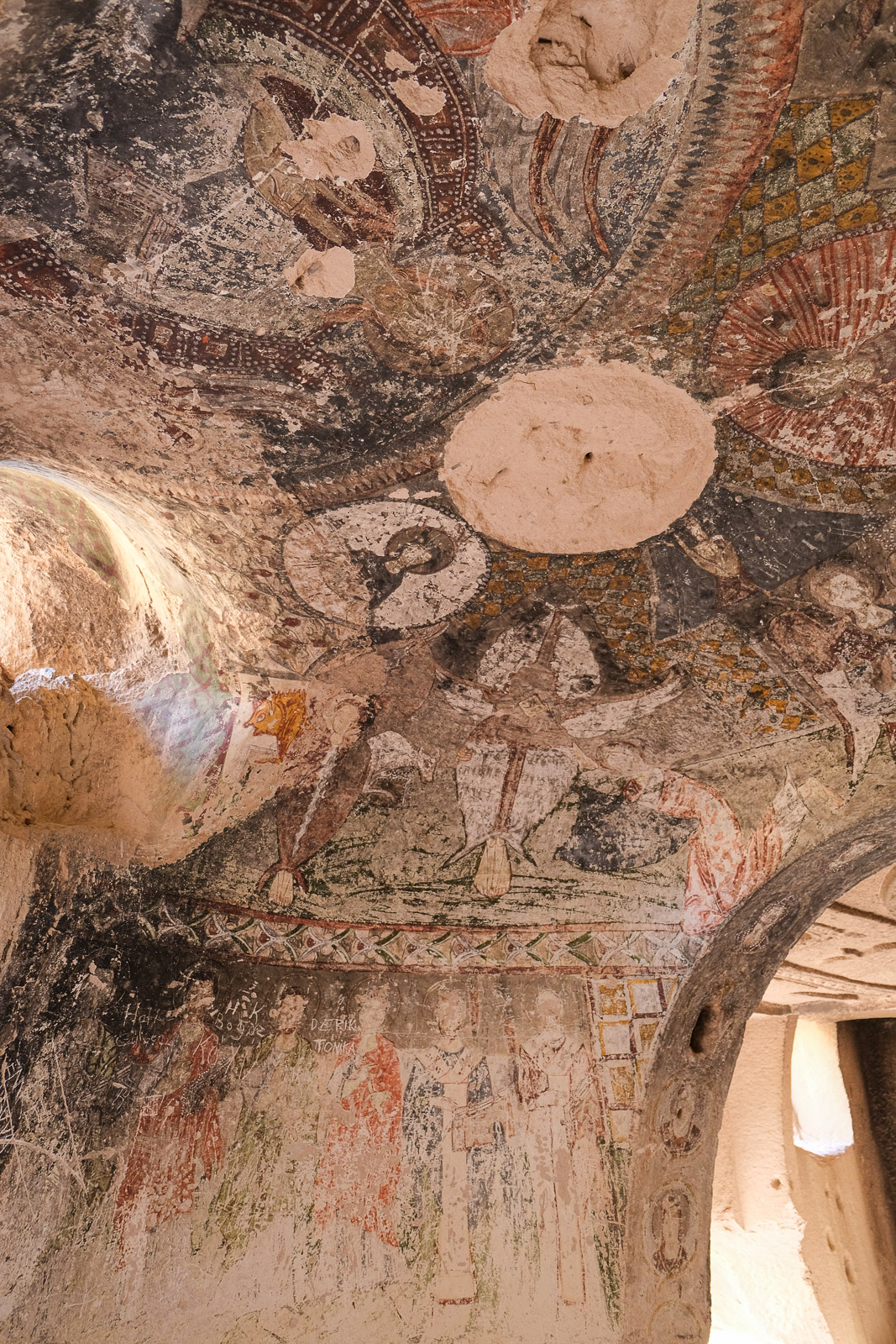
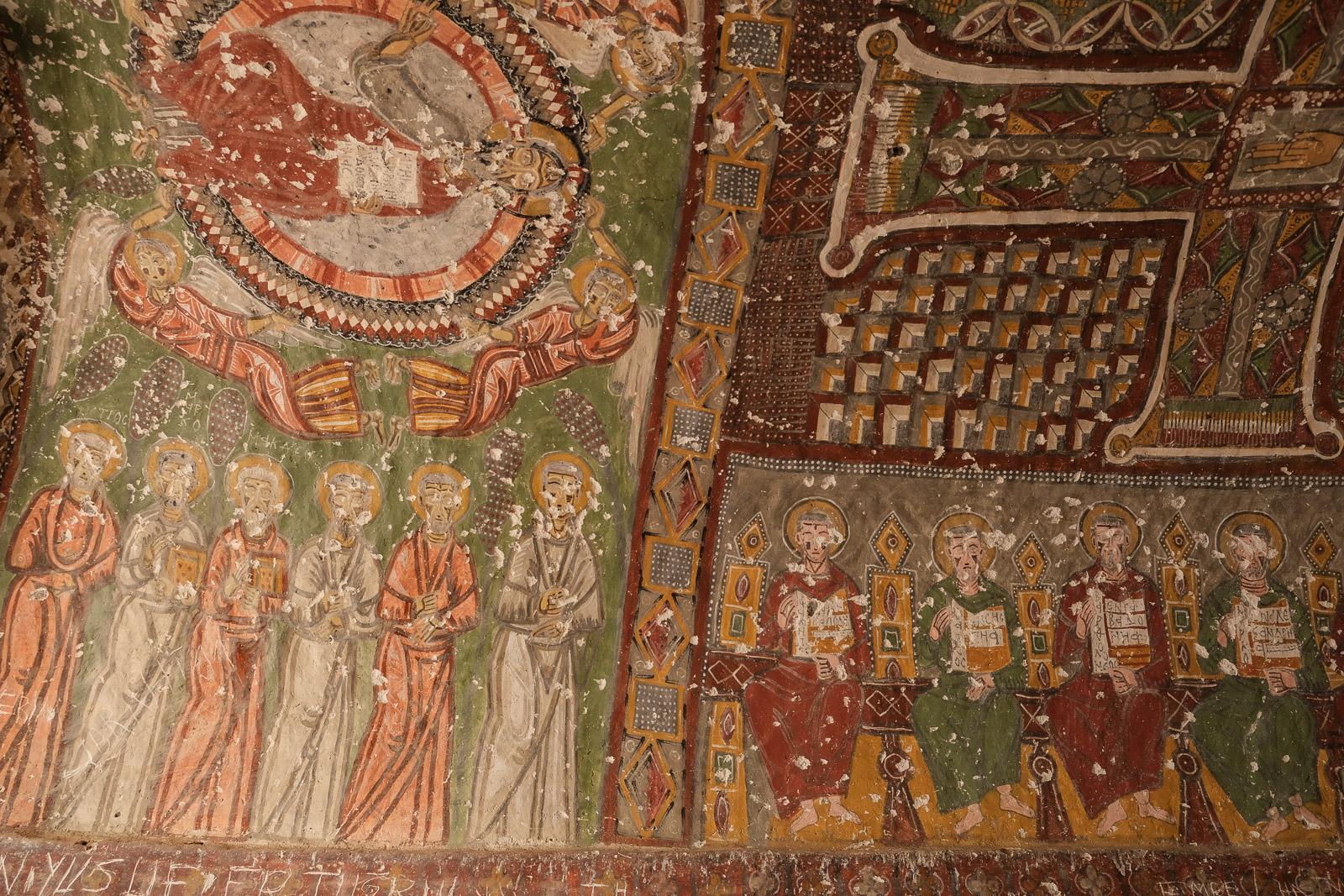
Along the way, we passed small cave churches carved into the rock; one in particular stood out. From the outside, it didn’t seem particularly special, but inside it was unexpectedly beautiful, with detailed, colourful frescoes still visible across the walls and ceilings.
As golden hour slowly set in, the pale rock deepened into richer shades of pink, coral, and rust. It turned out to be a bit of a race back to the trailhead (near Crazy Ali’s) to not miss sunset, but we made it just in time. The sun began to dip below the horizon, casting a soft, even glow across the valley. The whole moment felt incredibly calm and still.
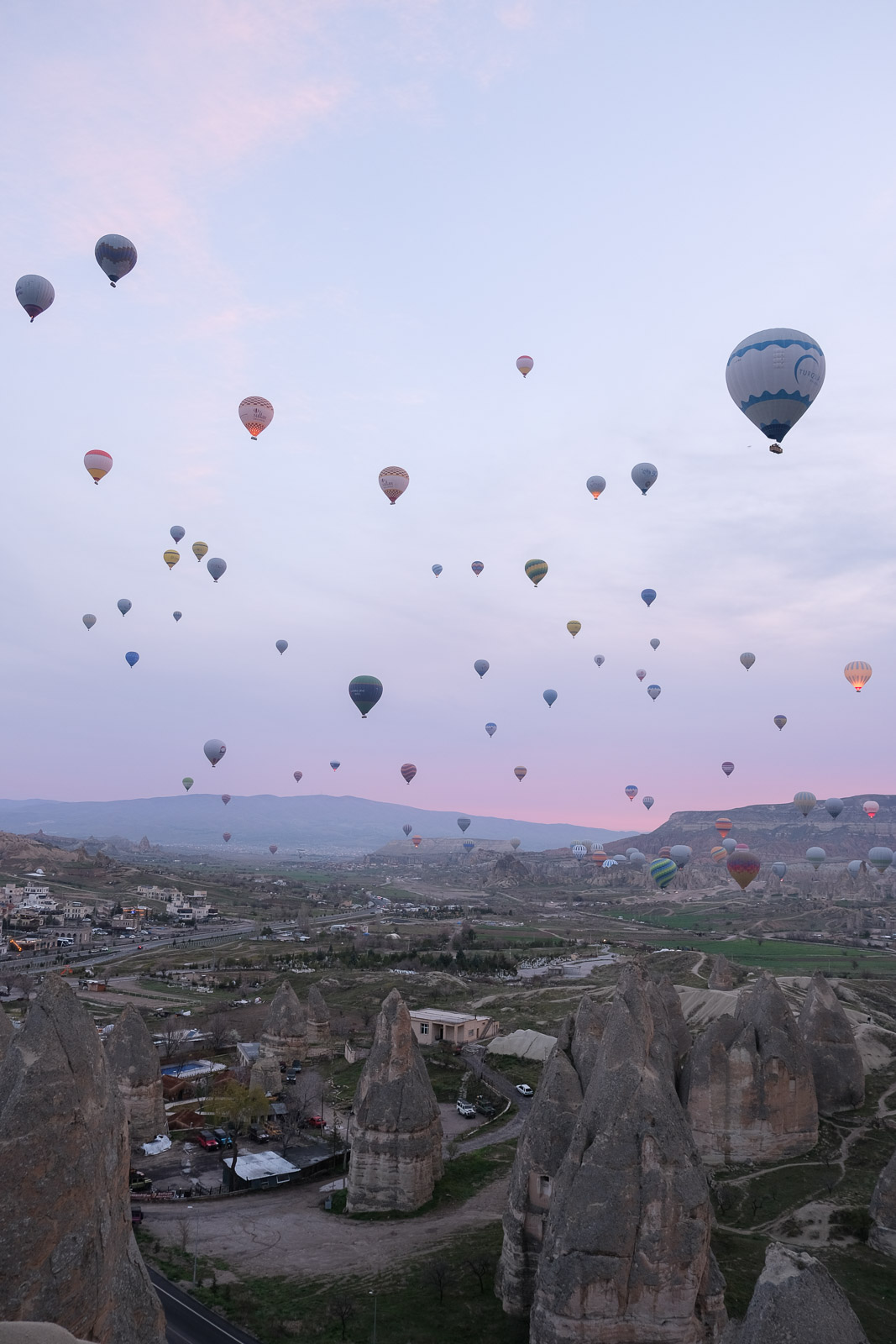
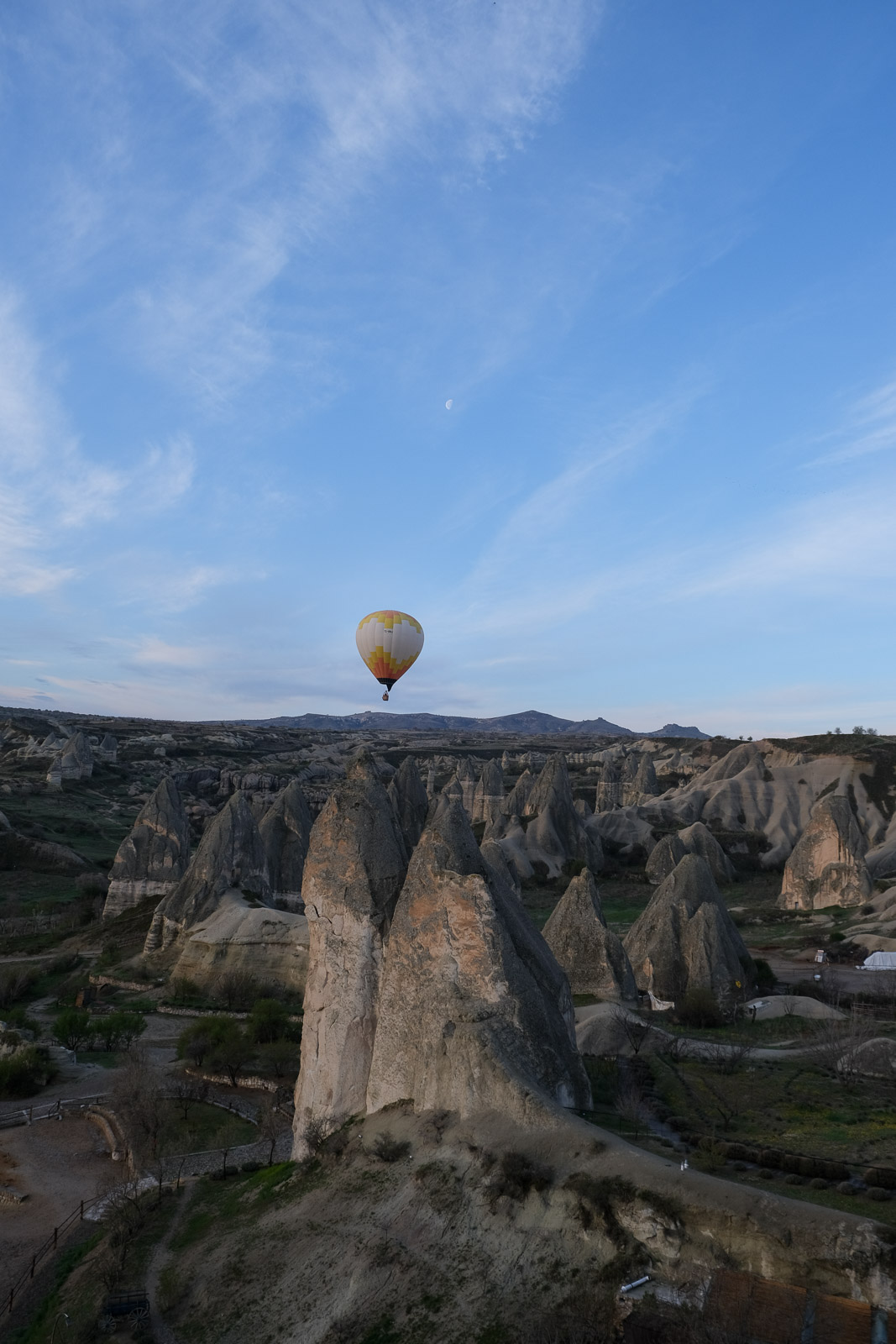
Watching the hot air balloons slowly lift off at sunrise is an absolute must while in Cappadocia. If you’re lucky, the sky takes on a soft pink glow that make the entire scene beautiful, but even without it, there’s something special about watching the balloons drift silently overhead, each one briefly illuminated by bursts of flame as they rise.
The experience is never guaranteed, though. Strong winds grounded the balloons on our first morning, but we were able to watch them from the rooftop of our accommodation in the heart of Göreme the next day, and again from an incredible viewpoint on our this morning - each perspective offering something slightly different.
There is actually an official flight status website you can check early in the morning see whether conditions are suitable for takeoff, which helps set expectations for the day.
Soganli Valley
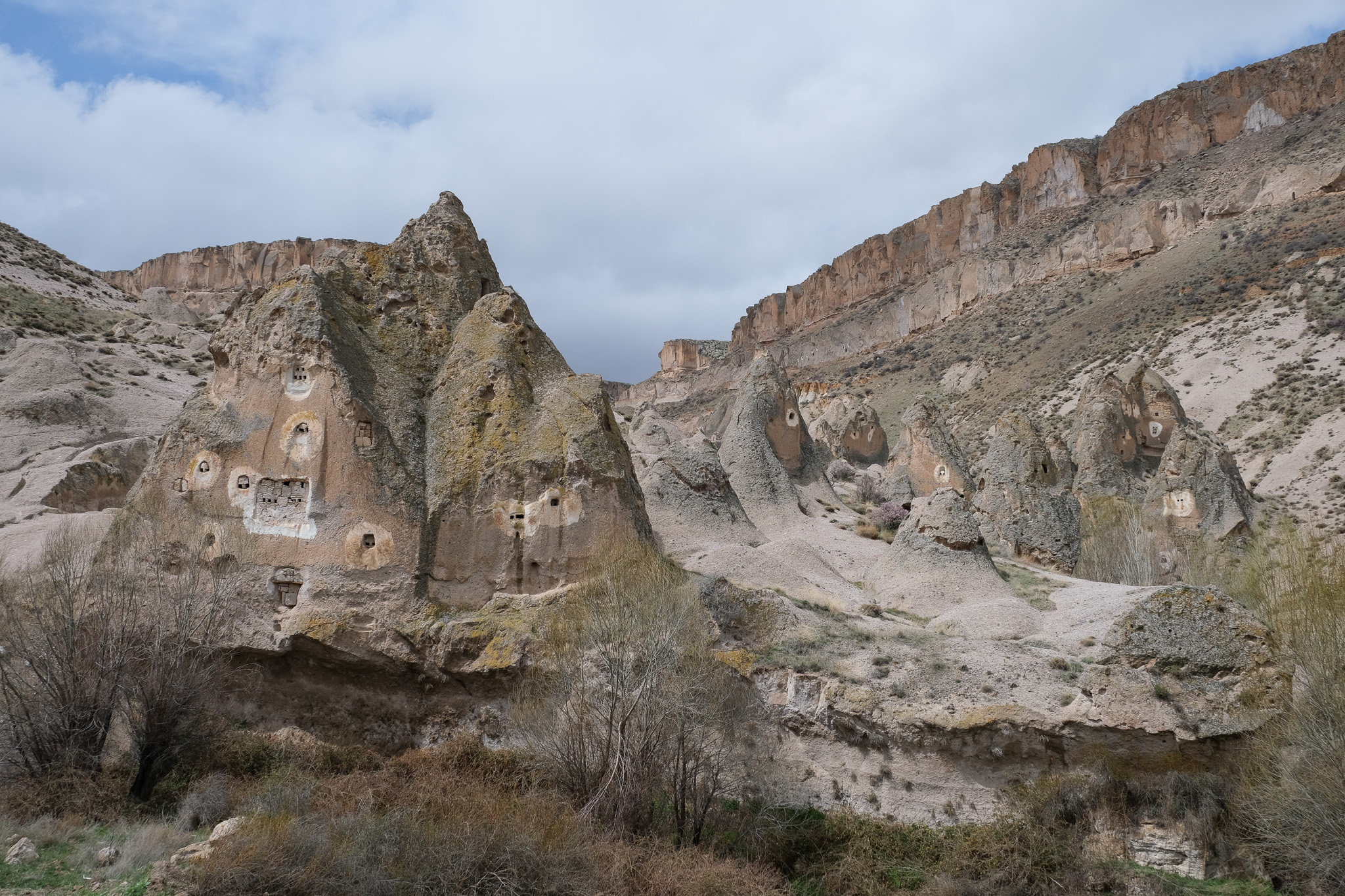
Having access to a car made it easy to explore beyond the main valleys, and Soganli Valley felt noticeably more remote. Set across a wide, open landscape, it lacked the defined paths of the other valleys, replaced instead by scattered rock formations and isolated cave churches, each holding traces of faded frescoes. Exploring the area felt less like a structured walk and more like quiet wandering, moving in and out of a multi-roomed caves.
When we arrived at the parking area, we paused in the car for a moment, trying to decide on a plan as the weather began to turn. As we debated umbrellas and rain jackets, the owner of the nearby café came out to chat, offering a bit of guidance on the walk to the first cave churches. He then disappeared briefly, only to return with a freshly baked potato, still dusted with ash from the fire. Placing it in my hands, he looked me in the eyes and said, “to keep you warm“.
It was odd moment, but remains one of the very first memories that comes to my mind when I think back to the trip. And the potato turned out to be exactly what we needed to brave the cold with a smile on our faces.
Ihlara Valley
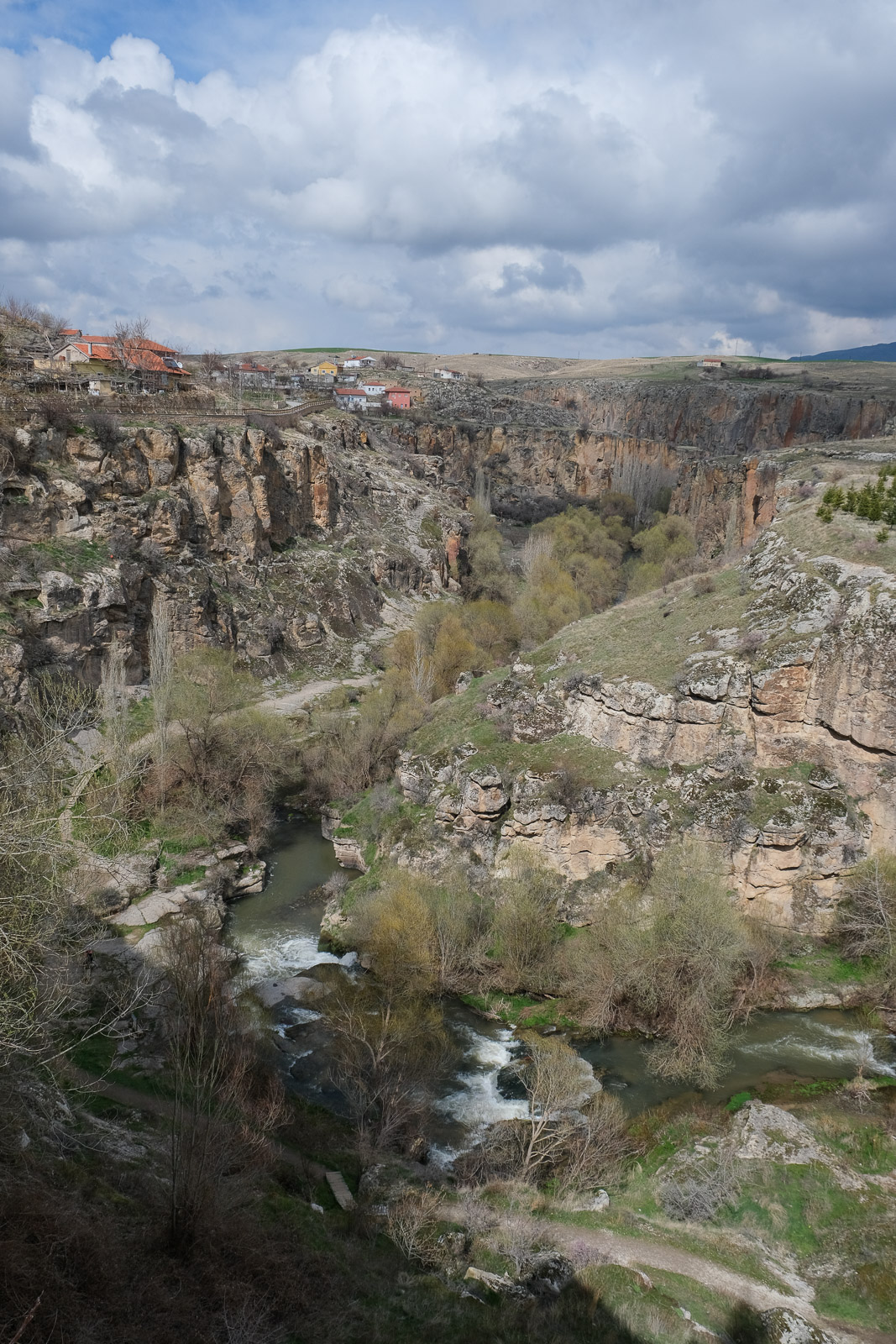
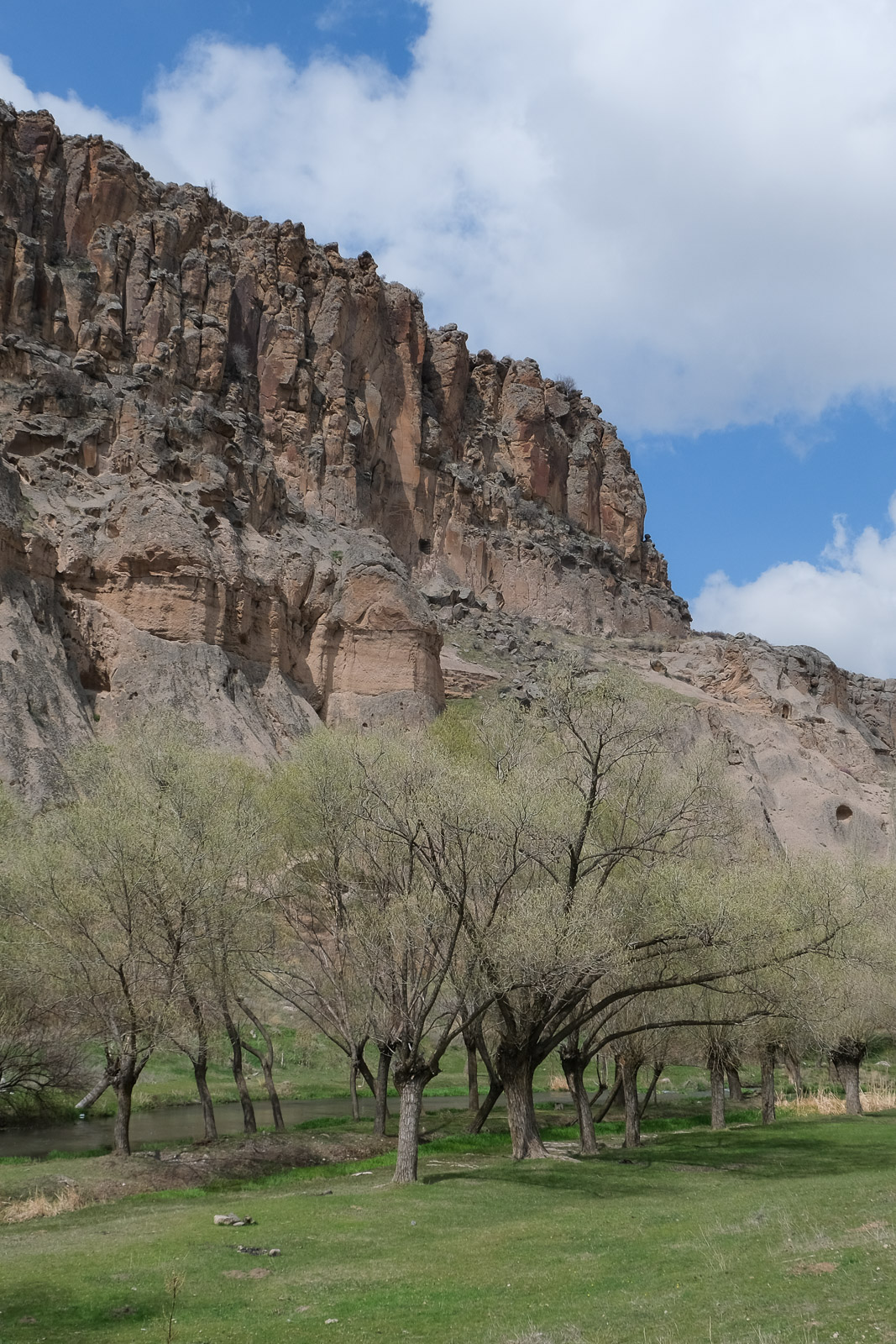
As for Ihlara Valley, it offered a completely different perspective of Cappadocia. Carved by the Melendiz River, the valley cuts deep between steep canyon walls, with a shaded path running along the valley floor.
We chose to walk most of the valley, starting near Ihlara Village, passing by Belisırma, and ending in Selime Beldesi, always following the river. The scenery shifted gradually as we went: beginning in a narrow canyon lined with dense greenery and steep rock walls, with small detours leading to tucked-away cave churches. Further along, the valley began to open up, the greenery thinning and the landscape taking on a more rugged, sculpted feel.
The tufa rock formations (triangular fairy chimneys) just before reaching Selime were already unique in shape and quantity, but nothing was comparable to the Selime Monastery. Carved high into the rock, it felt both imposing and unexpectedly expansive, with a maze of chambers and passageways that it easy to lose track of time while exploring.
Eğirdir
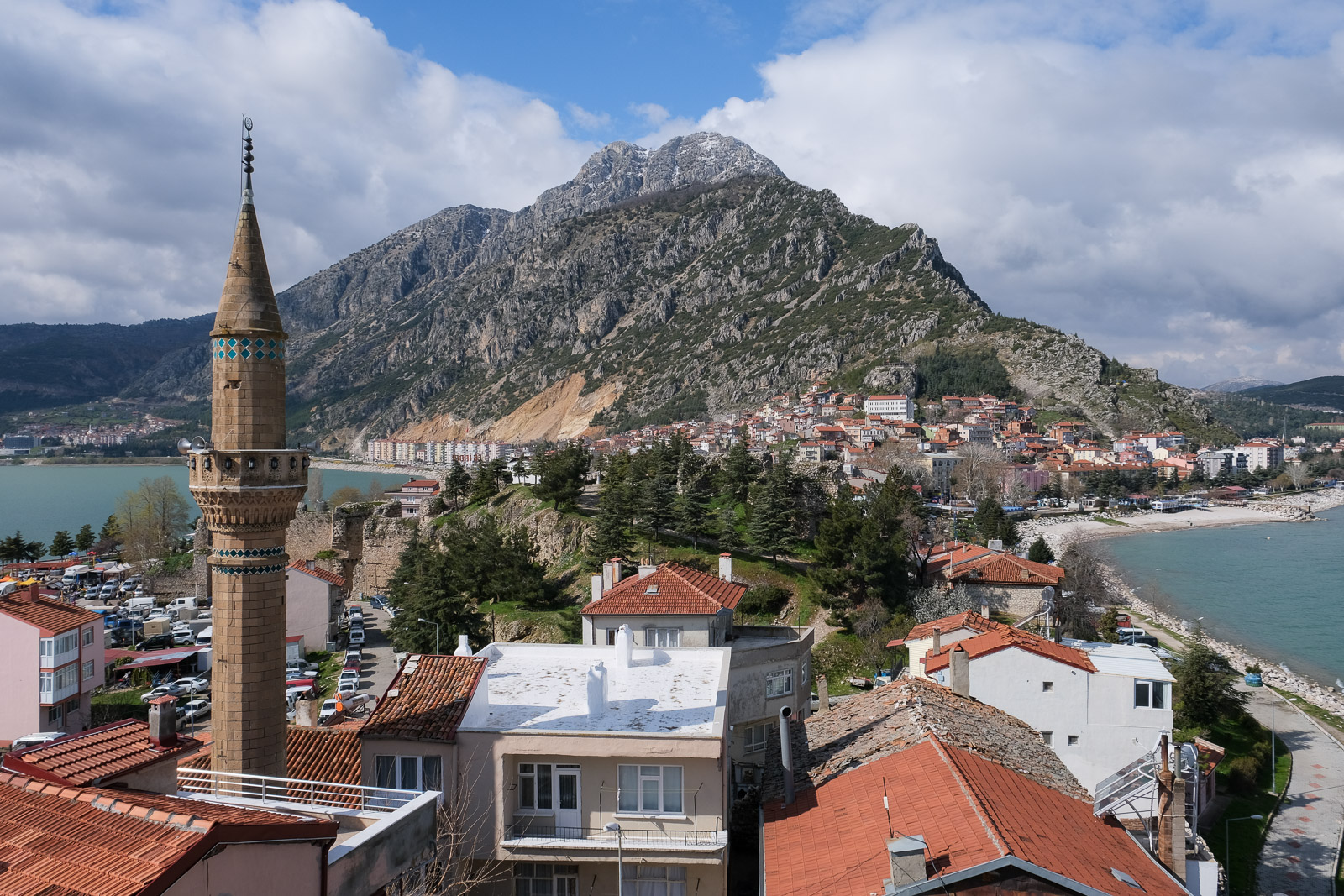
On our drive back to the southwest coast, we stopped for the night in Eğirdir, a quiet lakeside town with the Taurus Mountains as a backdrop. We stayed at the Fulya Pension, worth it from the rooftop terrace alone, where breakfast is served with sweeping views over the town and lake.
The evening we arrived, one of my friends had a video interview scheduled, and kindly asked us to step out of the room. With the rooftop closed for the night, we were hanging out by the small reception when someone - possibly one of the owners - ushered us next door into what seemed to be a small restaurant and insisted in serving us tea. The details blur a little, but I remember how endearing it all felt: a family gathered in the same room, chatting in Turkish over tea, likely winding down from the day. It was a moment of hospitality
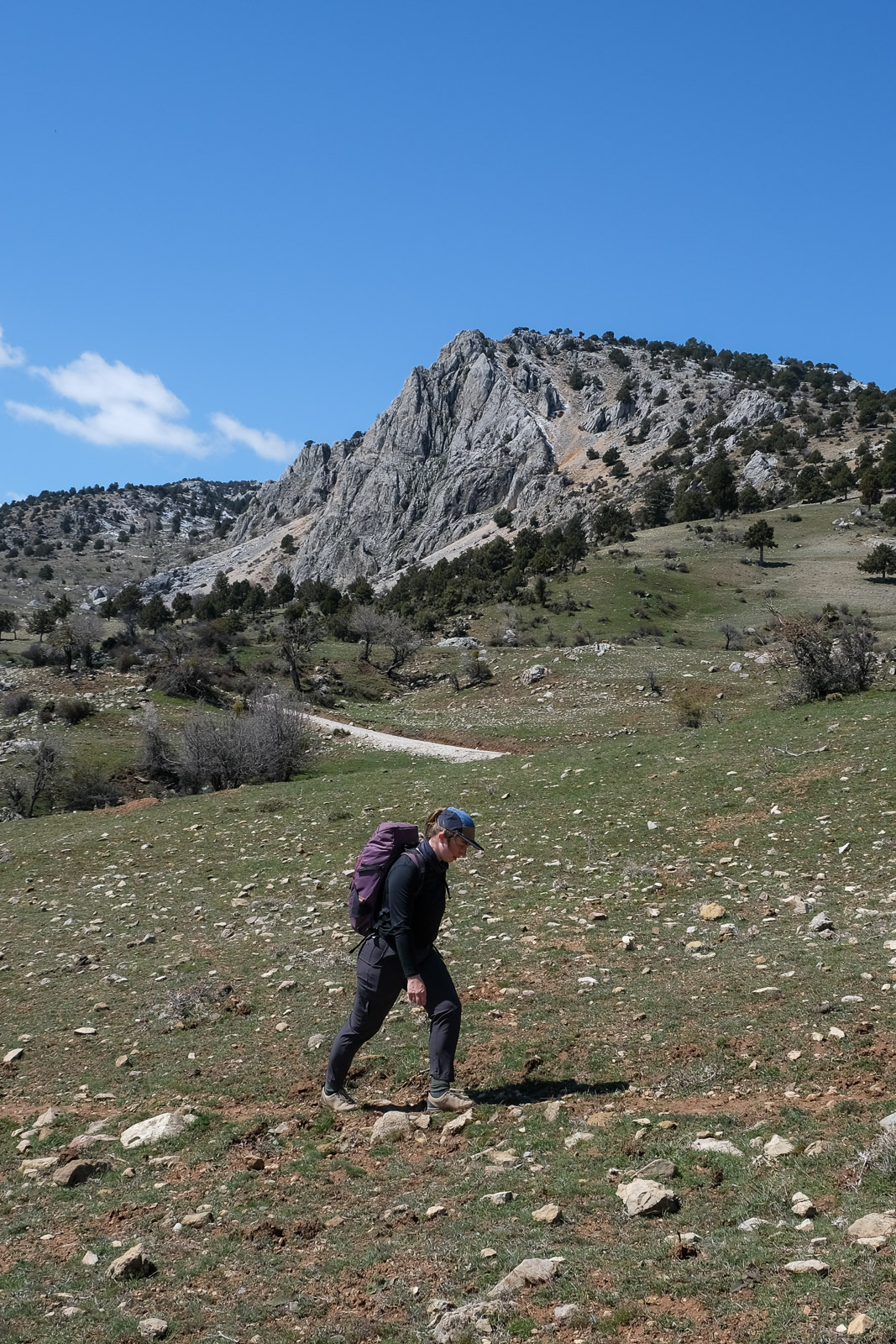
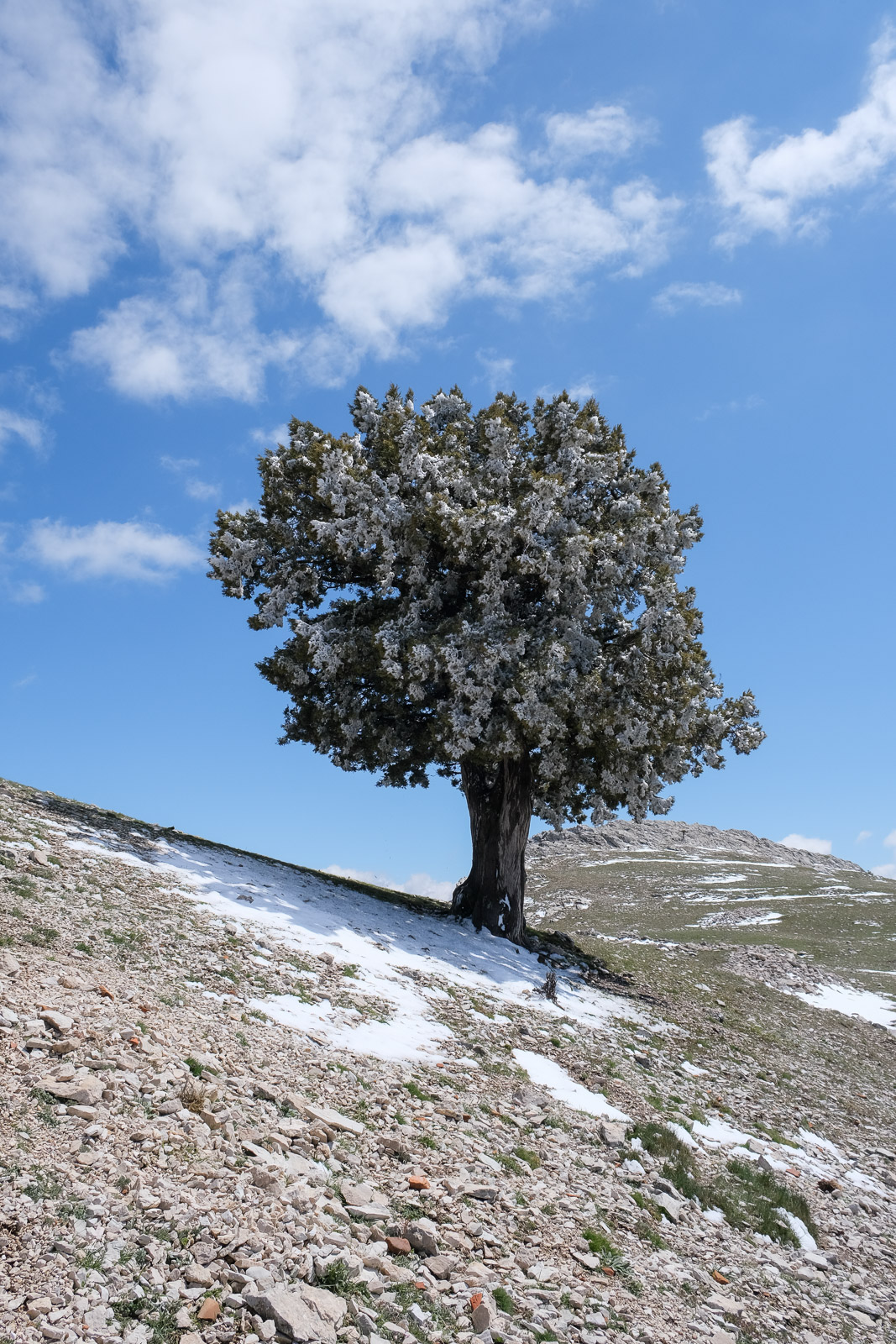
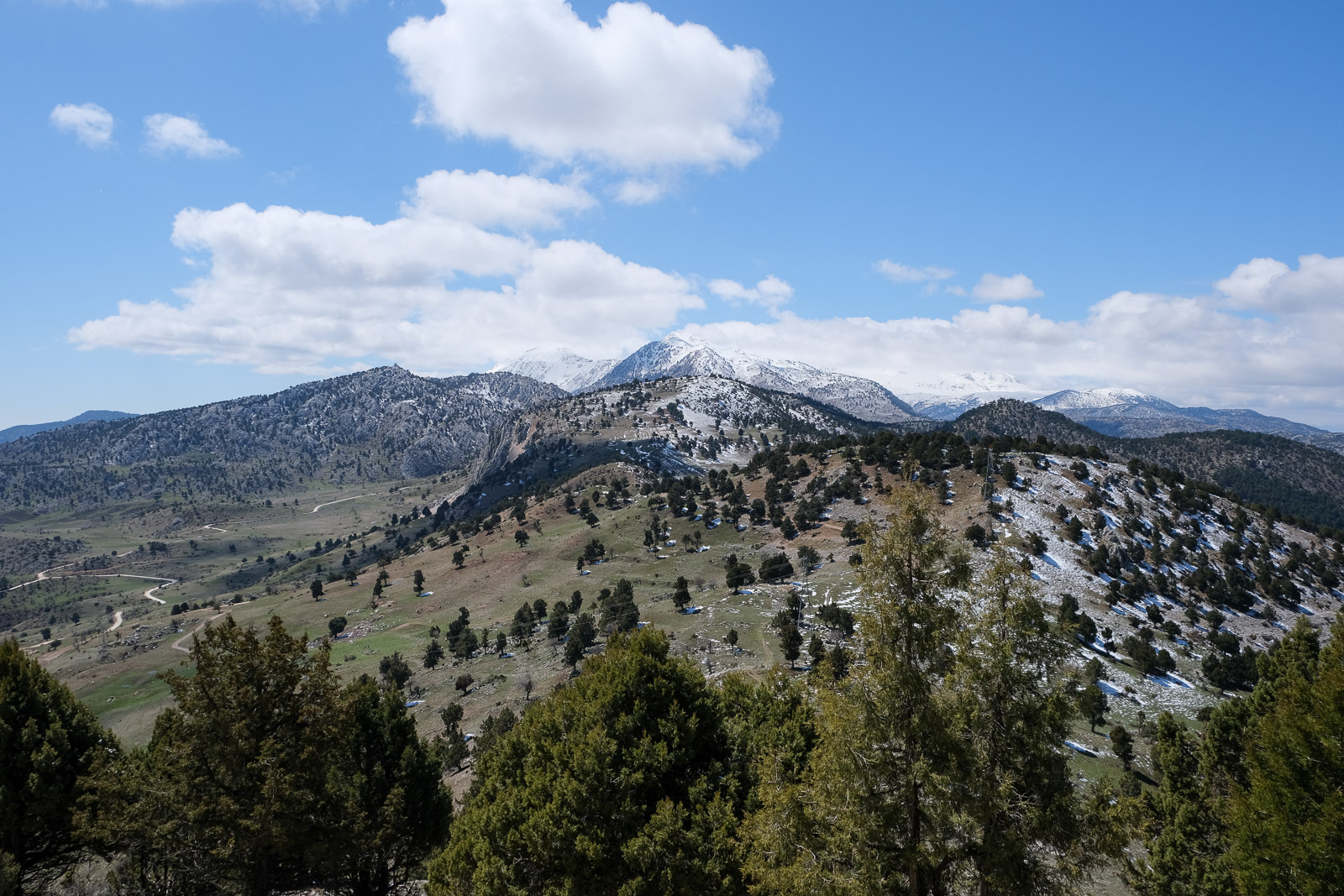
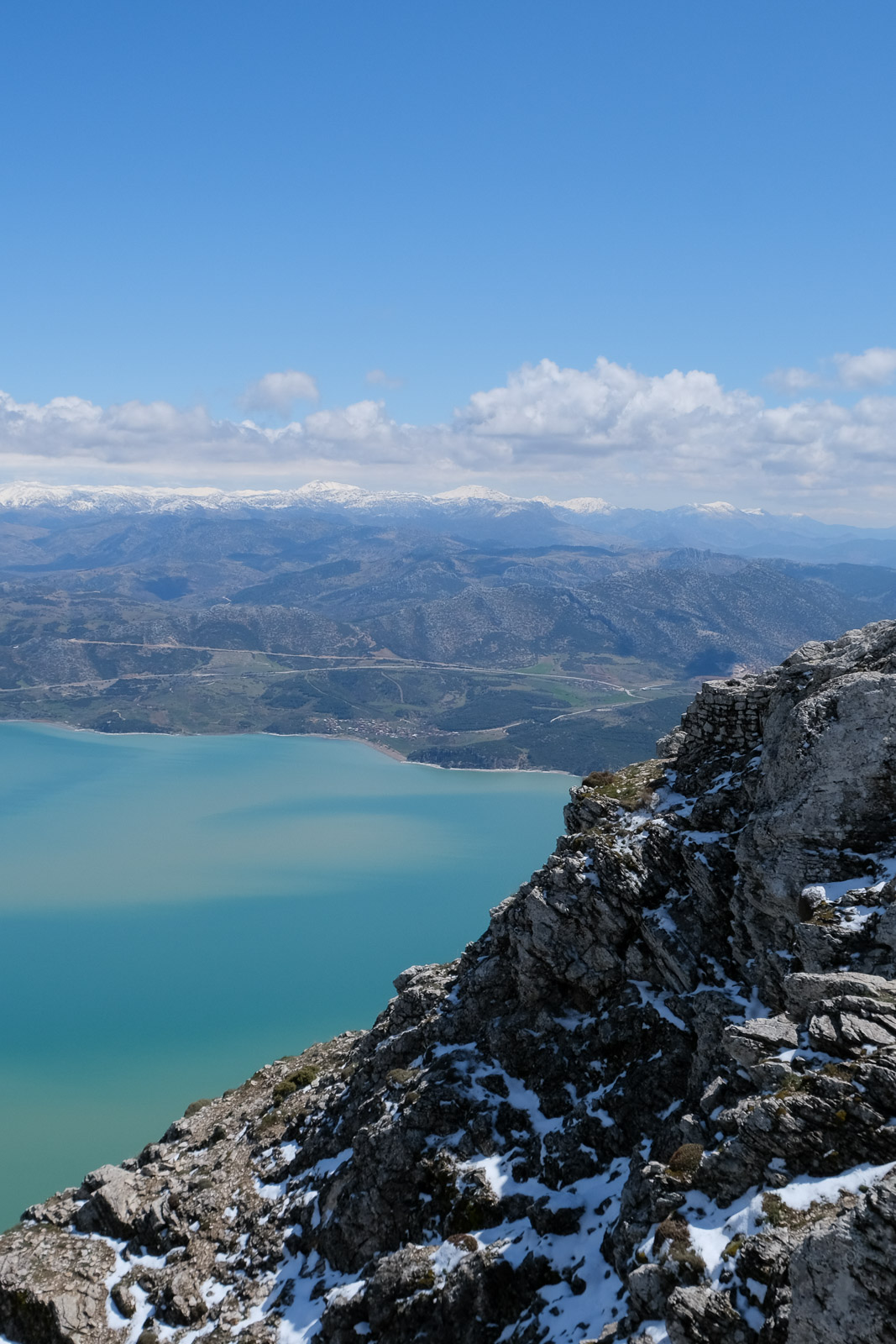
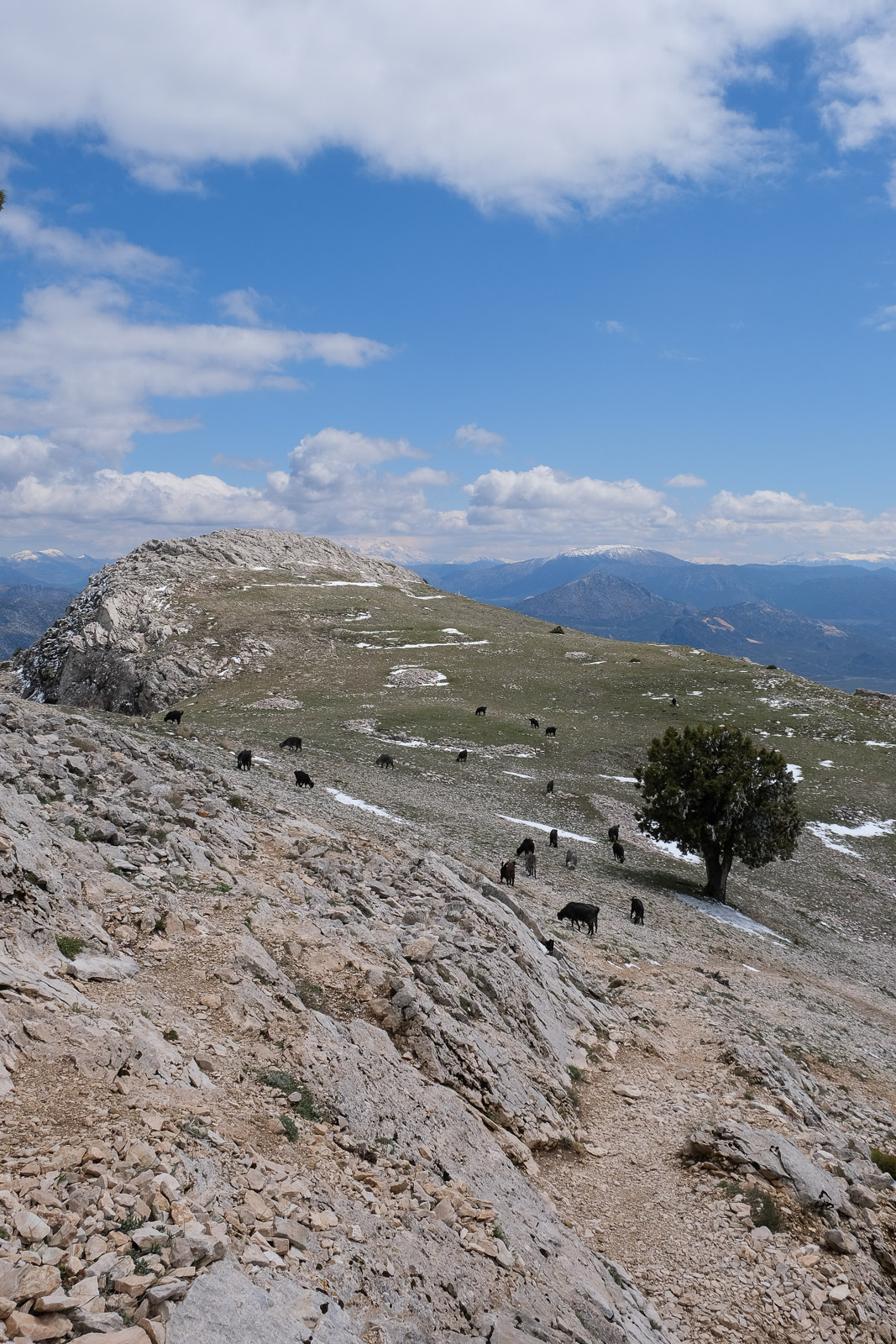
Our main reason for stopping in Eğirdir was to hike up Mount Sivri. The route, about 7.5 km, begins in the village of Akpınar, winding through a valley dotted with farms (and the occasional cow and herd of goats), before reaching the ruins of the ancient city of Prostanna. From there, the trail climbs steeply toward the summit. The views are already rewarding early on, but from the top, the full panorama of the lake and surrounding mountains makes the climb entirely worth it.
Çıralı
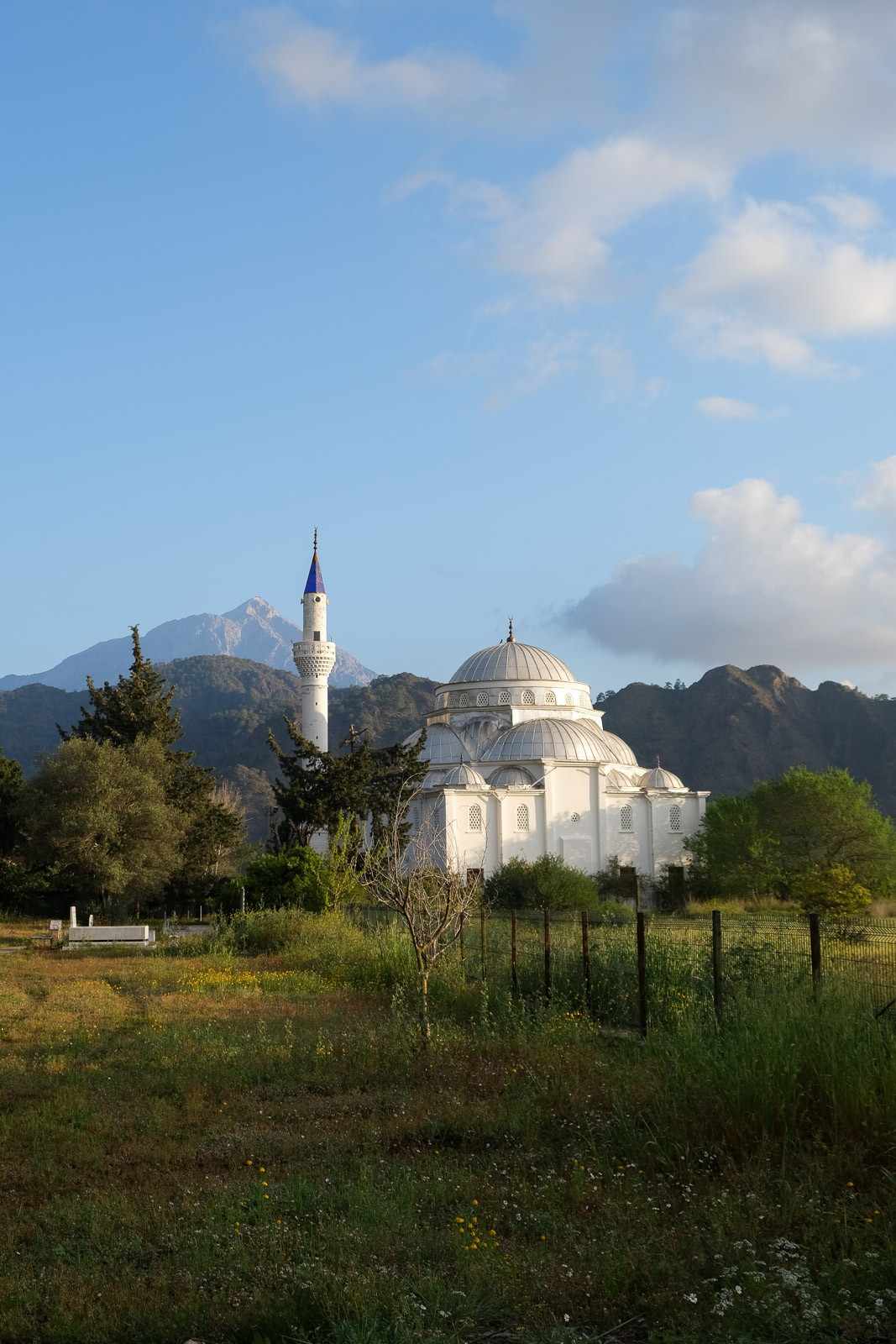
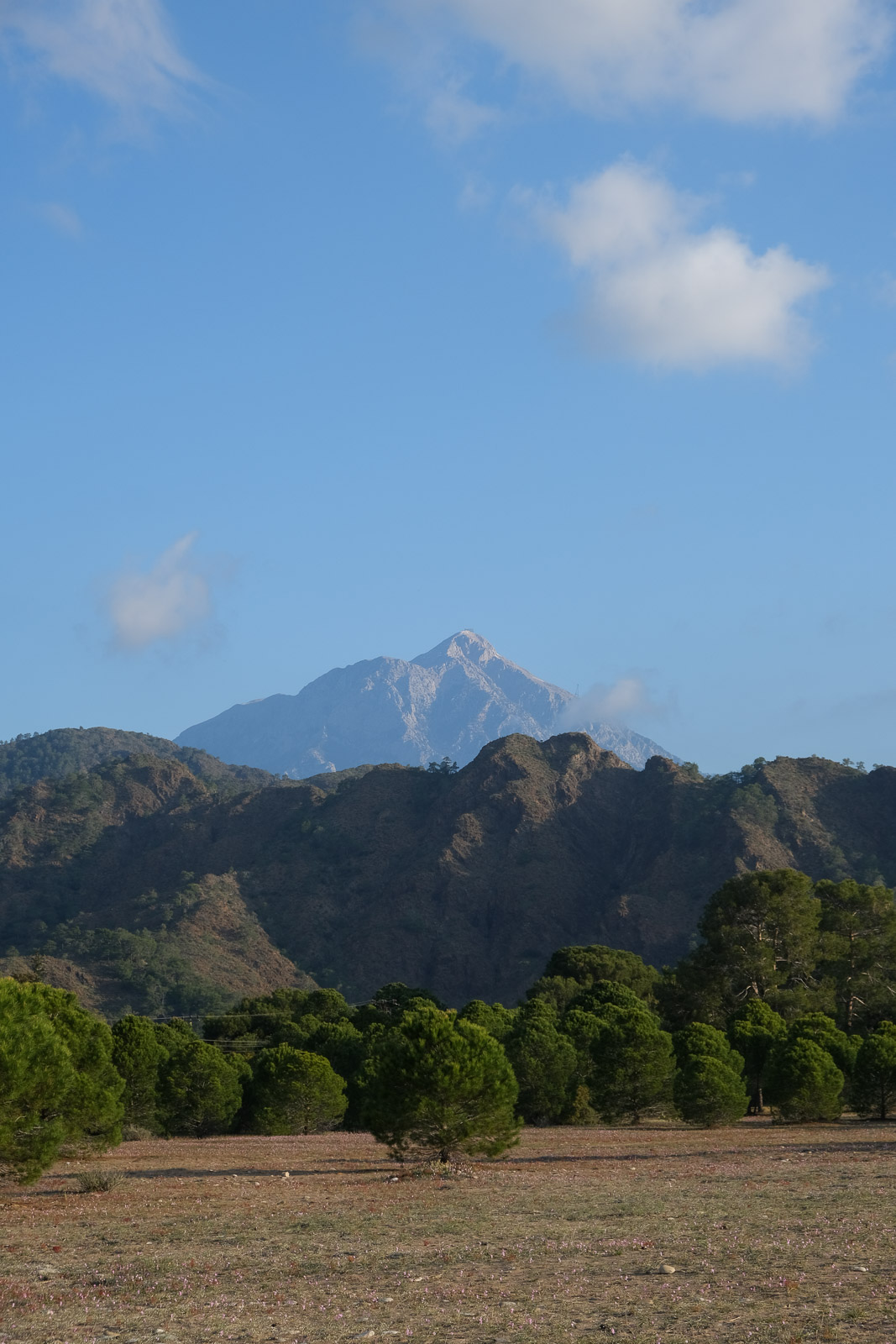
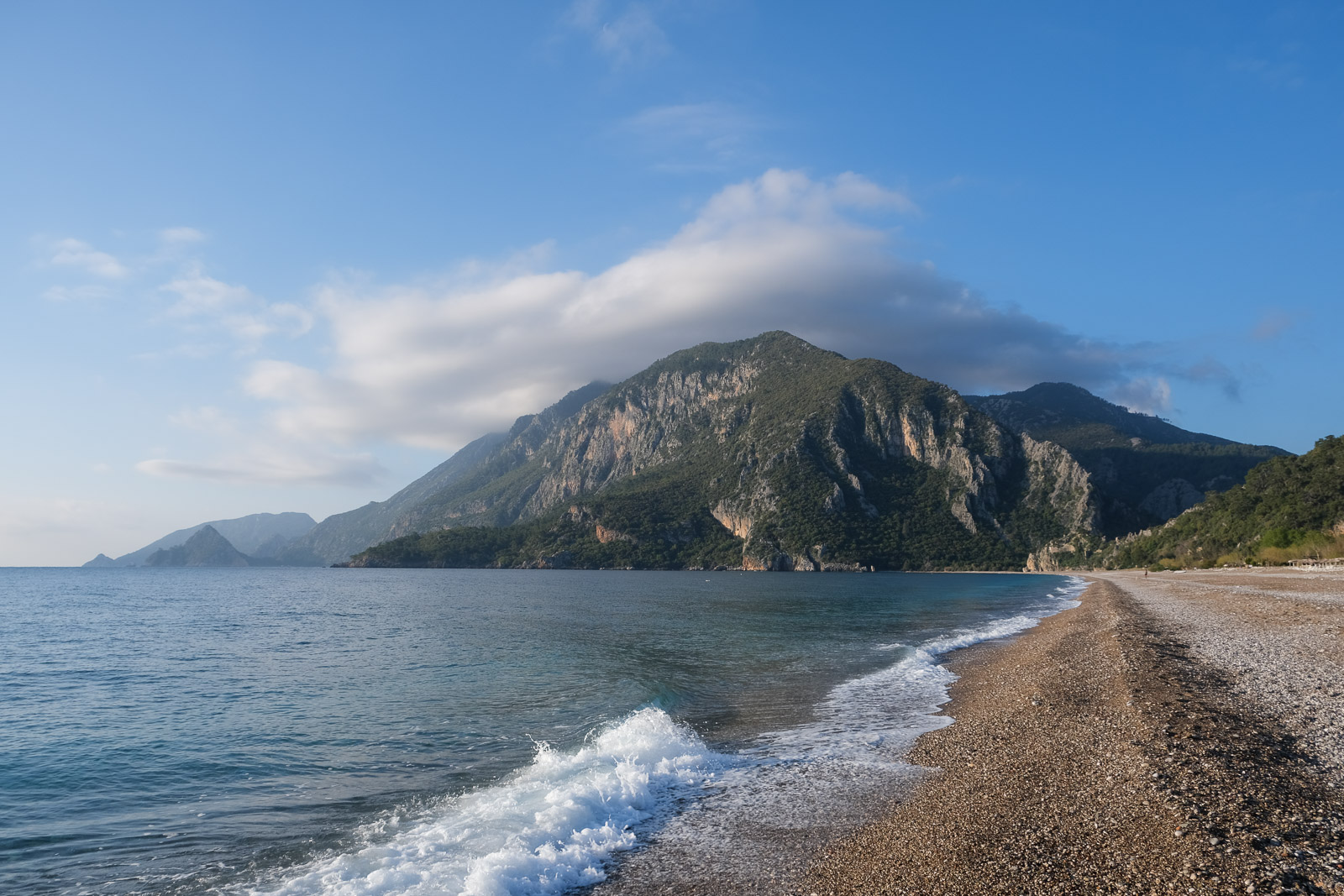
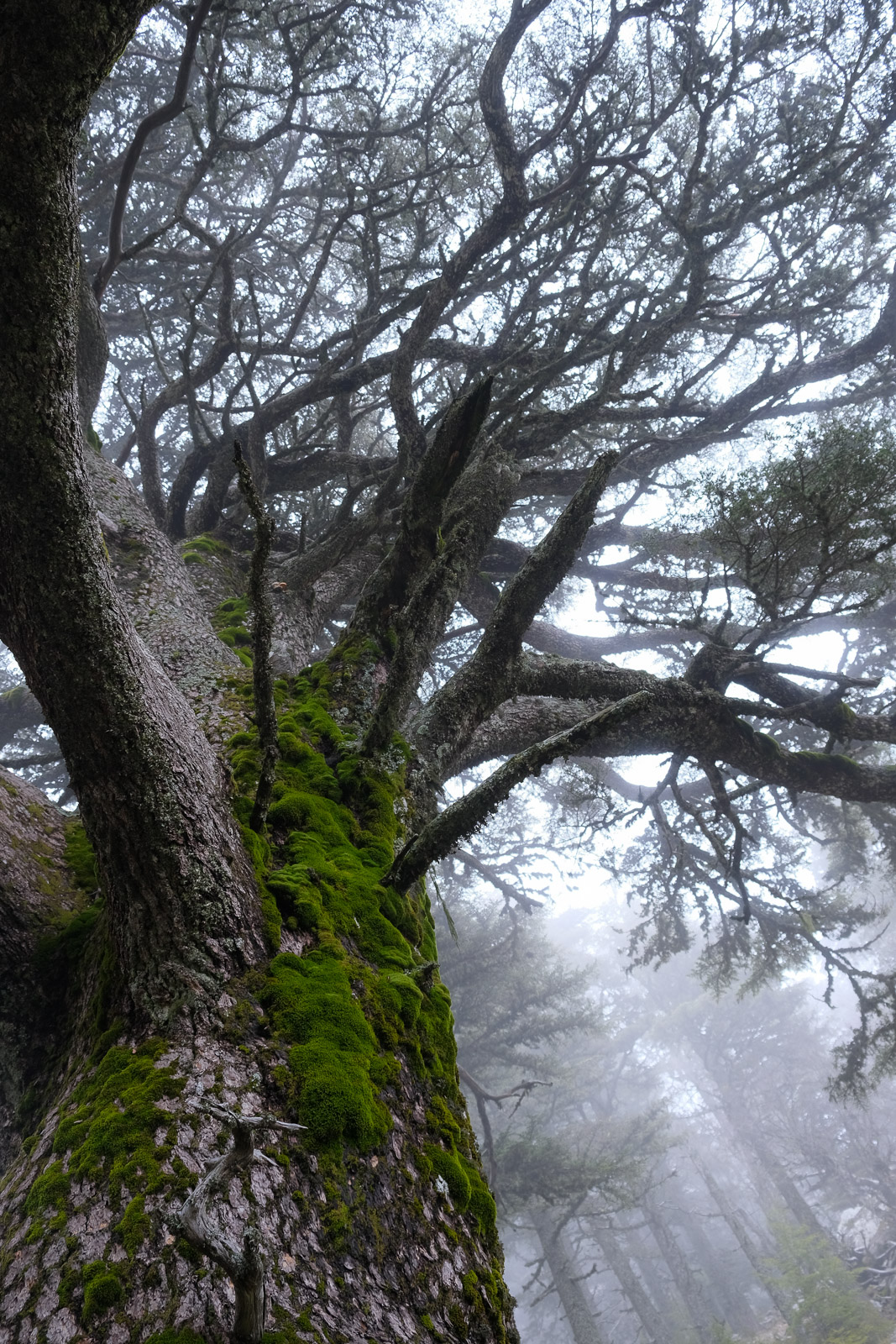
The Anatolian coast is dotted with beach towns, and we chose Çirali for its quieter, more natural setting. A mix of sand and pebble, the beach stretches between mountains (the famous Mount Olympos, or Tahtali Dagi) and pomegranate groves, with all the infrastructure tucked beneath dense tree cover - nothing towering enough to interrupt the view.
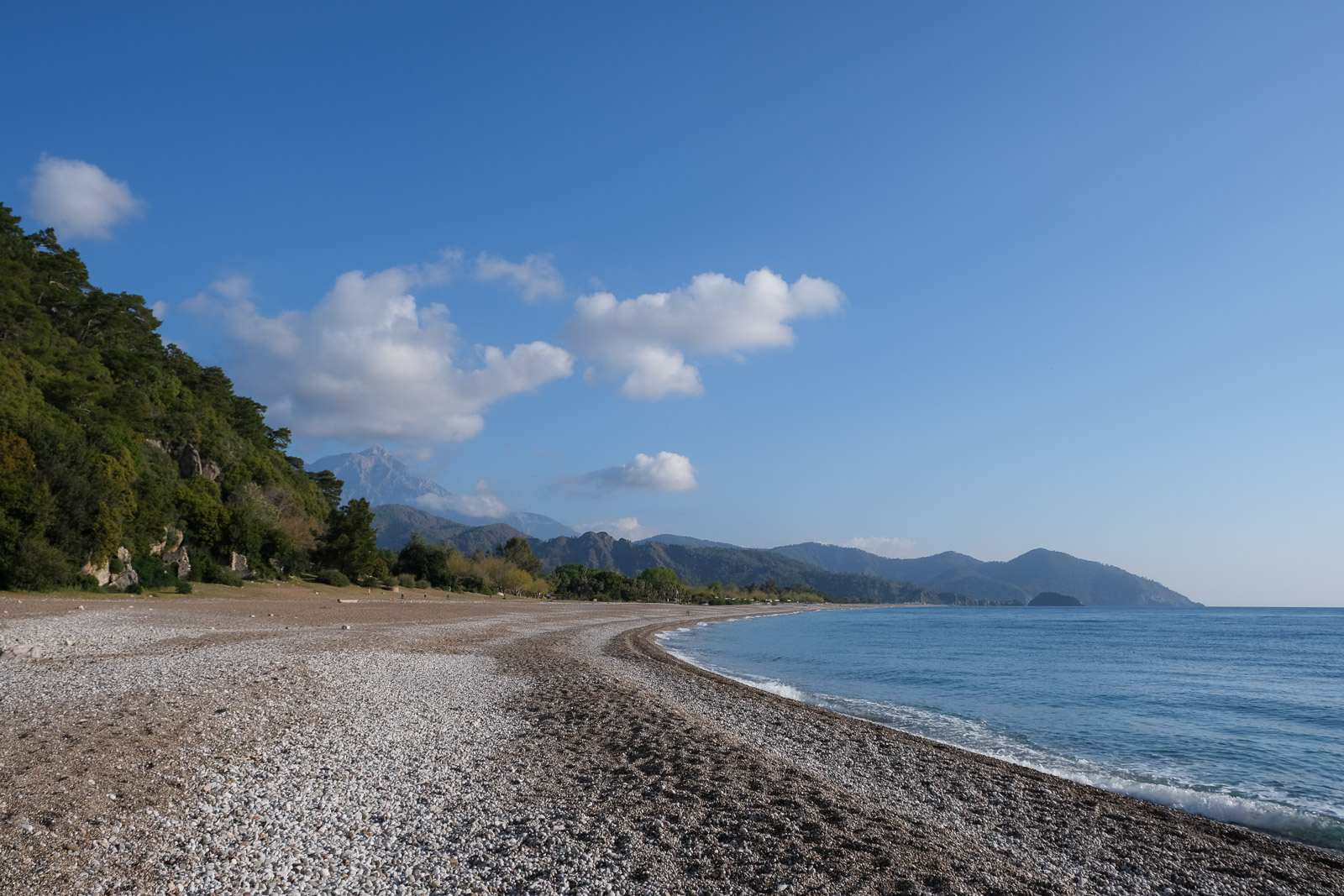
At the northern edge of the beach, the ruins of Olympus blend into the landscape, while a steady climb up the mountainside leads to Chimera, small, persistent flames emerging from the rock, best seen at dusk when the light fades and the fire takes over.
It felt good to slow down. After a sunset walk along the beach, we stopped by a small shop for a bottle of wine and a few ingredients for a simple meal back at our Airbnb. Waking up early the next morning was absolutely worth it - to watch the first light hit the landscape and bring out its colours. It is really a beautiful place.
Mount Olympos
Mount Olympus rises steeply above the coastline. From the summit, the contrast between the surrounding mountains and sea is said to be striking, rugged terrain dropping into an uninterrupted blue. Our plan was to hike down from the top towards the hills north of the village of Beycik, where the Rivera Restaurant, made up of tree house platforms, would be waiting with locally pond-sourced fish.
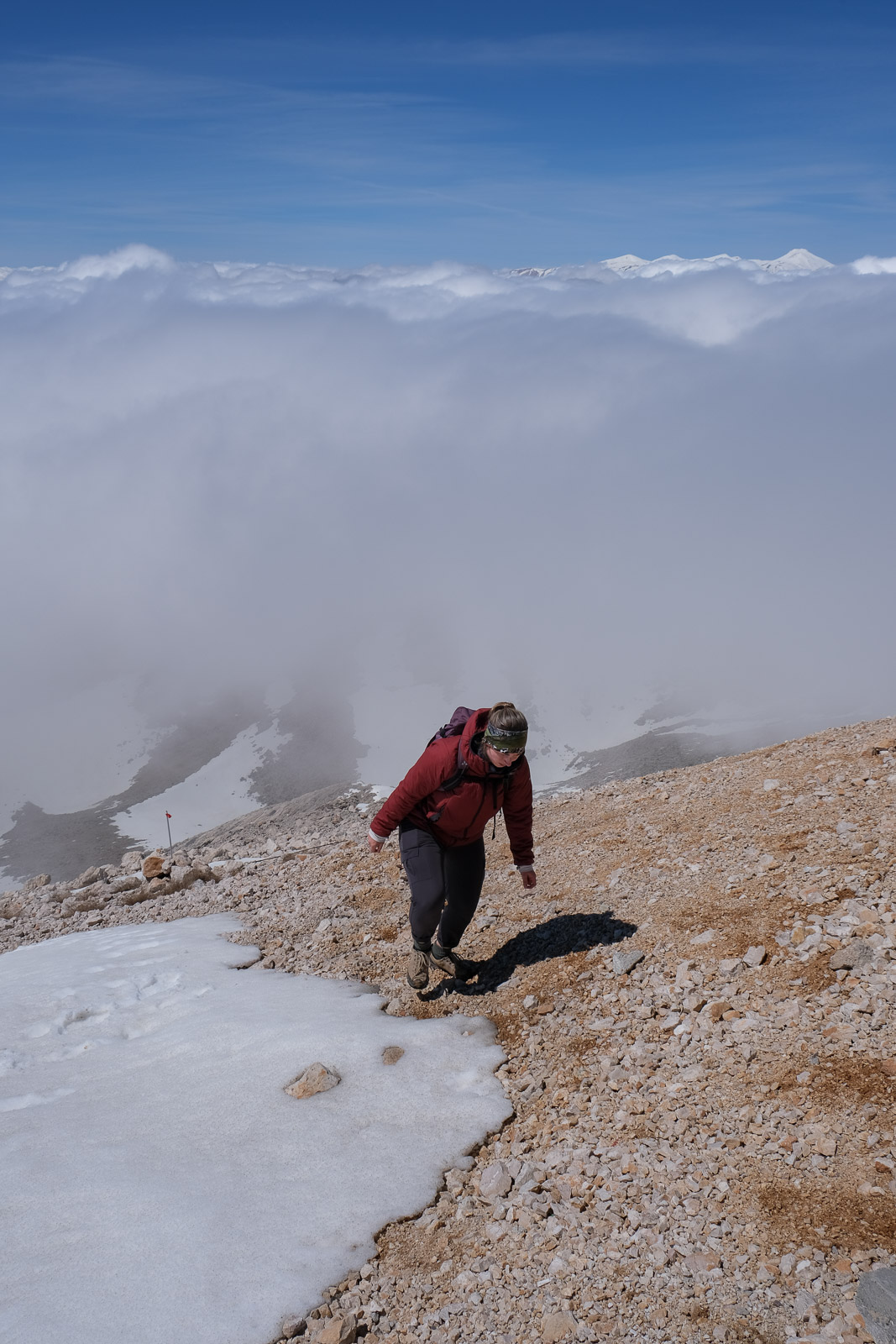
From Çirali beach that morning, the mountain stood perfectly clear. However by the time we reached the cable car that would take us to the summit, the clouds had rolled in, swallowing any chance of a view. When buying our tickets, we mentioned we’d be hiking down, and were asked to sign a waiver acknowledging we wouldn’t be returning by cable car (since we were only paying the price of the way up which came out to maybe 70% of the return-ticket price). What they conveniently didn’t mention was that the summit was still covered in snow, and that the trail would likely be almost impossible to follow and slippery.
When we reached the top, we found ourselves in a thick cloud, with at least a foot of snow obscuring any visible path. When we asked about taking the cable car back down, we were told we’d have to pay the full return fare, as the system didn’t allow for one-way adjustments once you were at the summit. It was, by far, the most expensive experience we had encountered in Turkey - and priced in euros, no less.
At that point, the situation felt slightly absurd. Not wanting to pay again and give them more of our money, as well as still set on experiencing the treehouse restaurant, we decided to continue with the plan. The hike down, through snow and cloud, turned out to be fun, if occasionally a little unnerving. The views, however, remained hidden the entire way.
By the time we reached the restaurant, slightly soaked and very ready for a meal, the whole ordeal felt like a true adventure. Thankfully, our restaurant host later offered us a ride back to our car, as we had underestimated how complicated the return trip would be by bus.
Kaş & Meis Island
Kaş
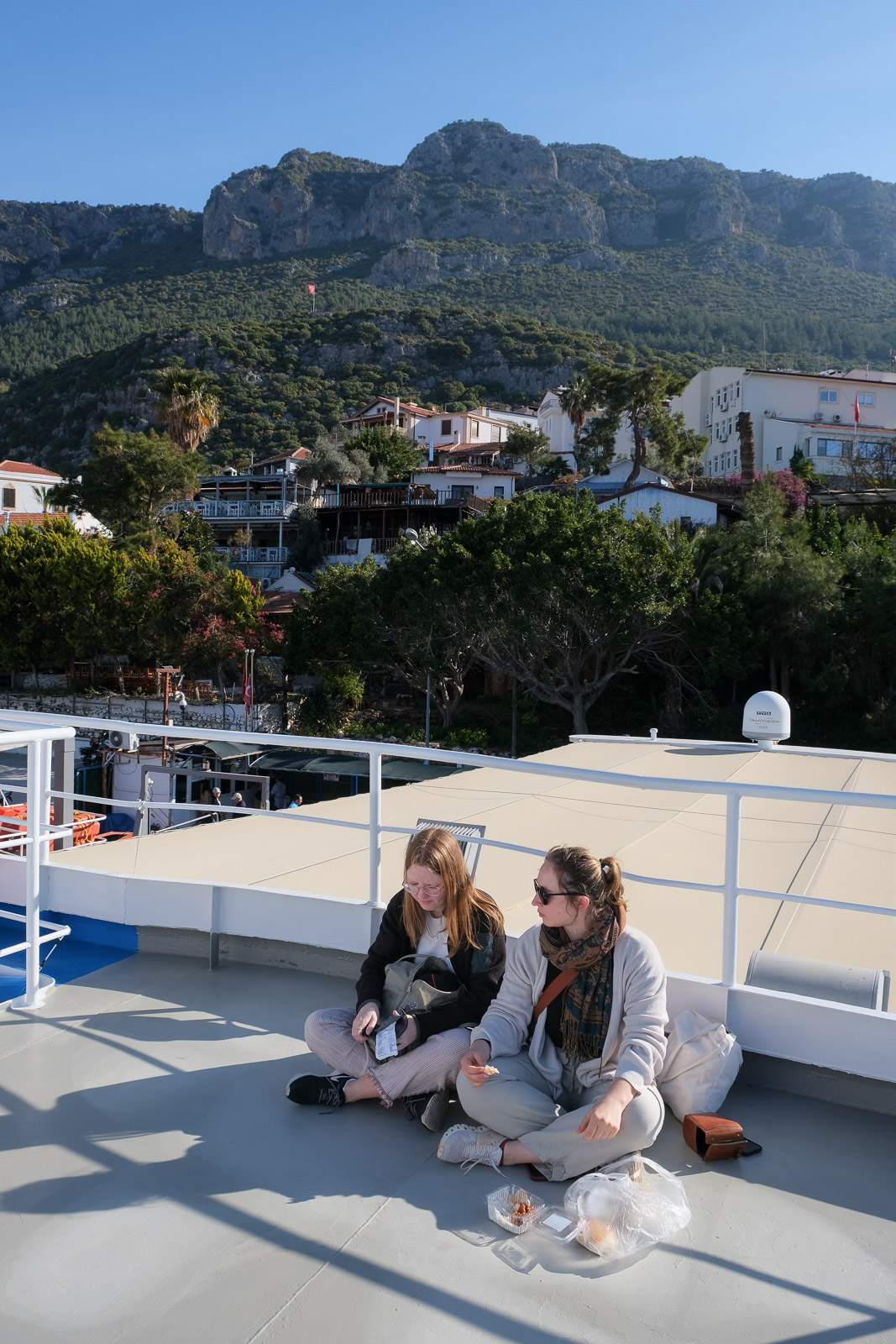
The main reason we stayed two nights in the coastal town of Kaş was to fit in a day trip to Meis Island. We would have loved to spend a night on the island itself, but at that time of year the ferries weren’t running daily, and staying longer felt like a bit of a stretch. Although slightly rushed, a day trip turned out to be just right.
Kaş itself ended up being a great little town, very scenic with narrow streets, whitewashed buildings, a cute little port, and bougainvillea spilling over balconies. We stayed in an Airbnb perched high on the hillside, with beautiful views from the balcony, though reaching it meant a steep climb back up, made slightly more challenging after a glass or two of wine. In the end, we didn’t spend much time there anyways, as Kaş is full of charming breakfast spots and laid-back places to linger.
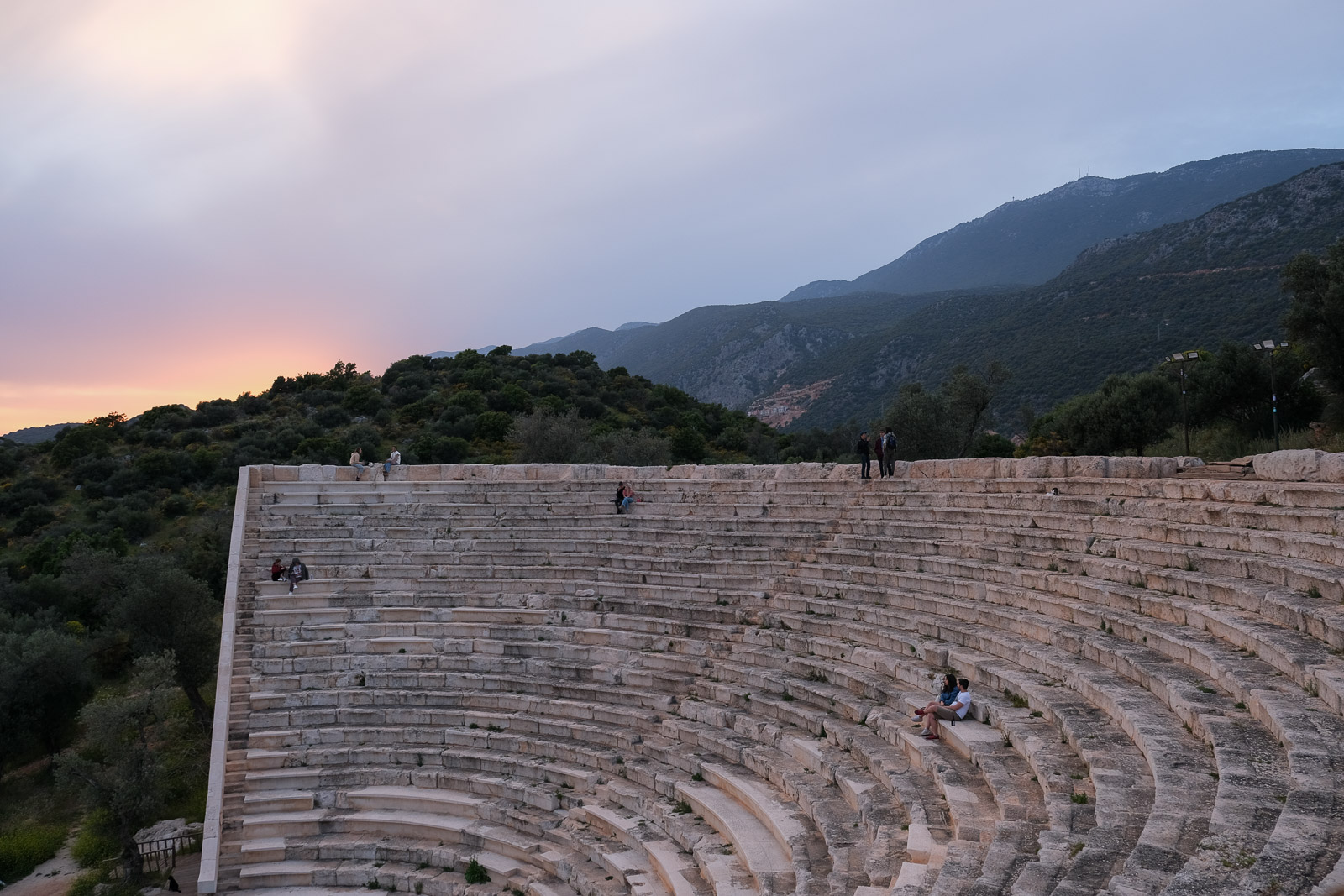
One of our favourite moments was watching sunset from the amphitheatre of the ancient city of Antiphellos (free to enter). Like many others gathered there, we came prepared with a bottle of wine to enjoy as the light faded over the sea. We also had a box of leftover fried fish from our day on Meis Island, which we had to actively defend from a few overly interested cats.
On our last proper morning in Turkey, we found our way to Dudu Mutfak, which became another breakfast highlight of the trip. Sitting on a small sunlit terrace, we were served a generous Turkish spread - fresh bread, cheeses, olives, eggs, and an array of homemade jams, which the place is especially known for (and with good reason). It was the perfect, unhurried way to say goodbye to Turkey’s incredible breakfast culture.
Meis Island
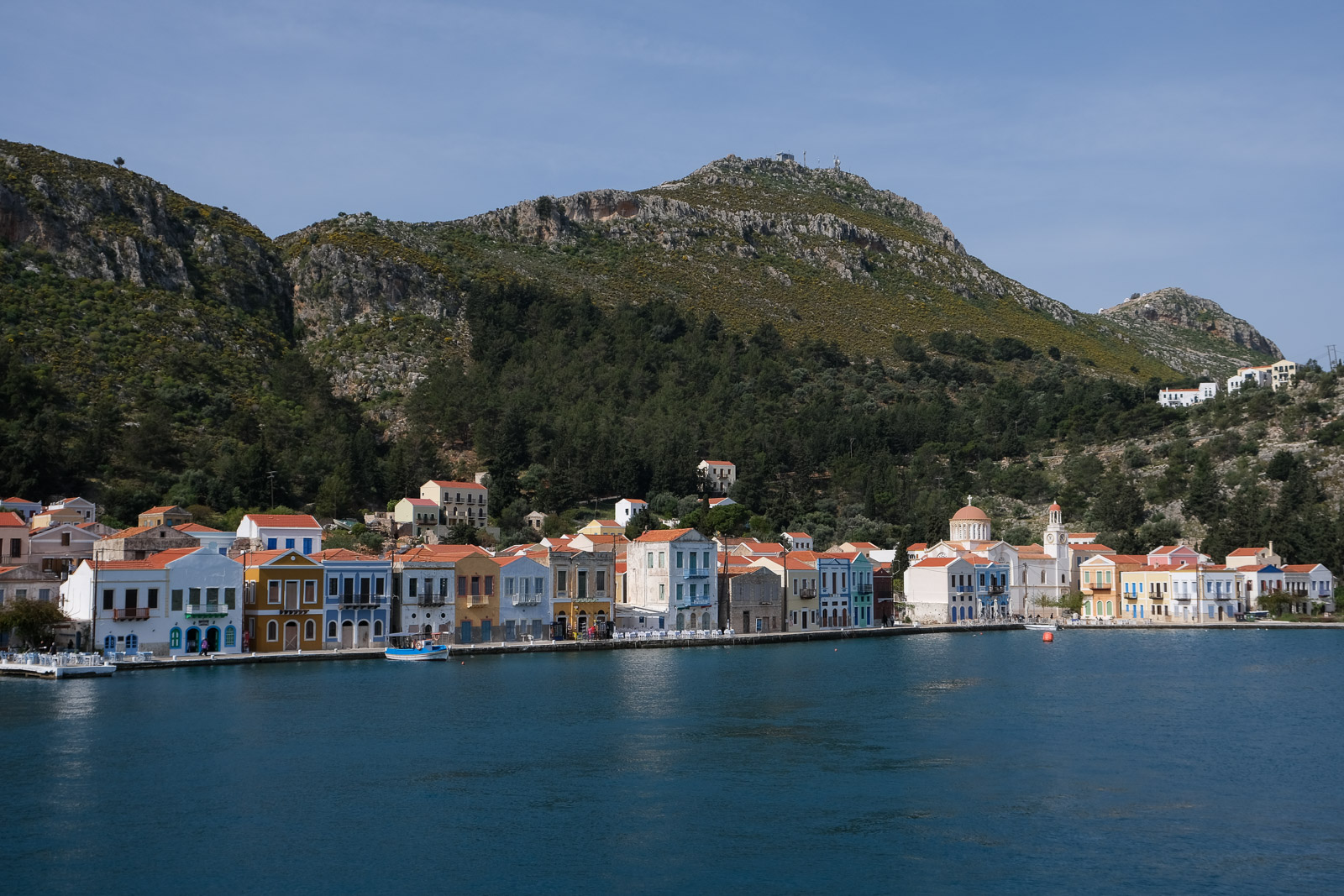
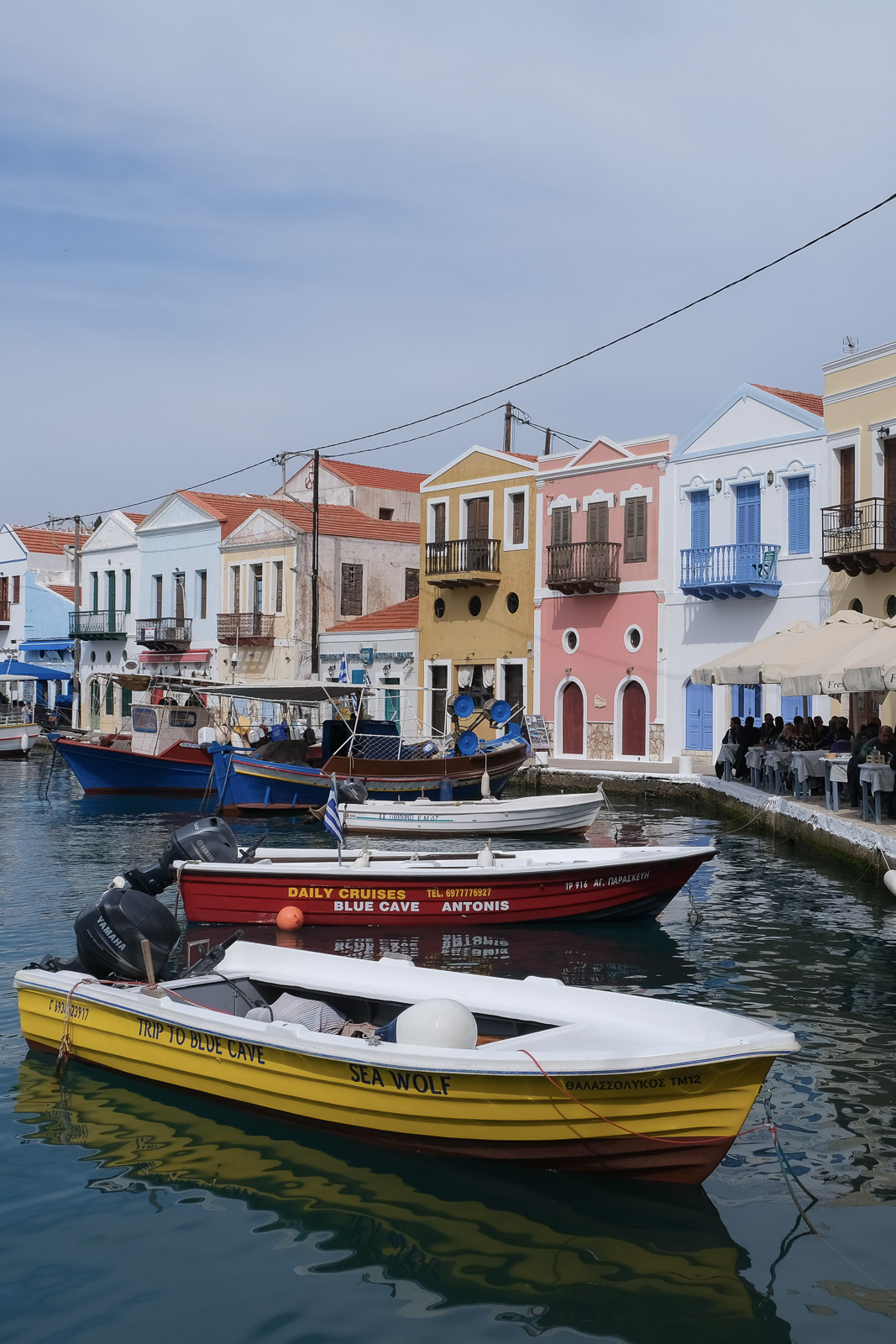
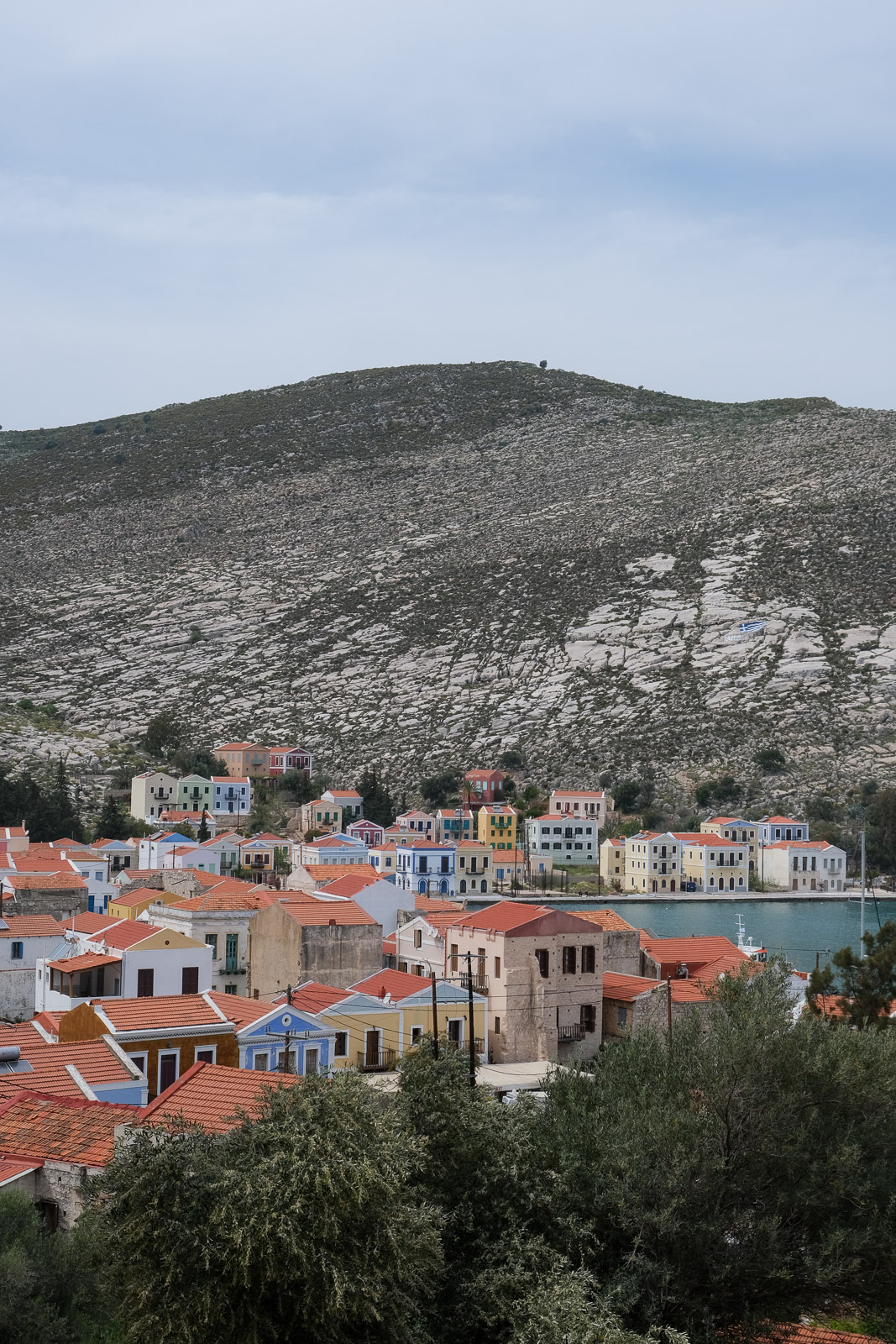
Arriving by ferry to Meis Island (or Kastellorizo), the first thing you notice in the harbour, lined with soft pastel houses in faded pinks, yellows, and blues. It’s undeniably gorgeous. Before leaving the harbour to explore, though, there’s a brief mandatory pause to clear customs, as the island belongs to Greece.
When my turn came, I handed over my European passport, only for the agent to look through it with visible confusion. After having reflipped through several of the pages, he passed it around to his colleagues - one of whom was casually eating sesame sticks - while they discussed it in Greek, leaving me completely in the dark. After what felt like a long fifteen minutes, and a fair amount of internal stress, he handed it back and waved me through.
Of course, I had to ask what the issue was. As it turns out, they were puzzled by the presence of stamp from Spain, Sweden, and France in an Italian passport, all part of the Schengen zone, and had therefore briefly suspected it might be fake. This was slightly ironic, considering those stamps were the result on my own determination to collect them during a university exchange in Dublin, often requiring a fair amount of persuasion at border controls. In hindsight, I now understand why some agents, especially the Germans, refused.
Once through, the pace of the island immediately set it. There’s no rush to explore, everything unfolds slowly along the water’s edge, where cafes and seafood restaurants spill out onto the promenade. Beyond the harbour, narrow streets climb gently upwards, revealing quiet corners, simple homes, and open views over the sea.
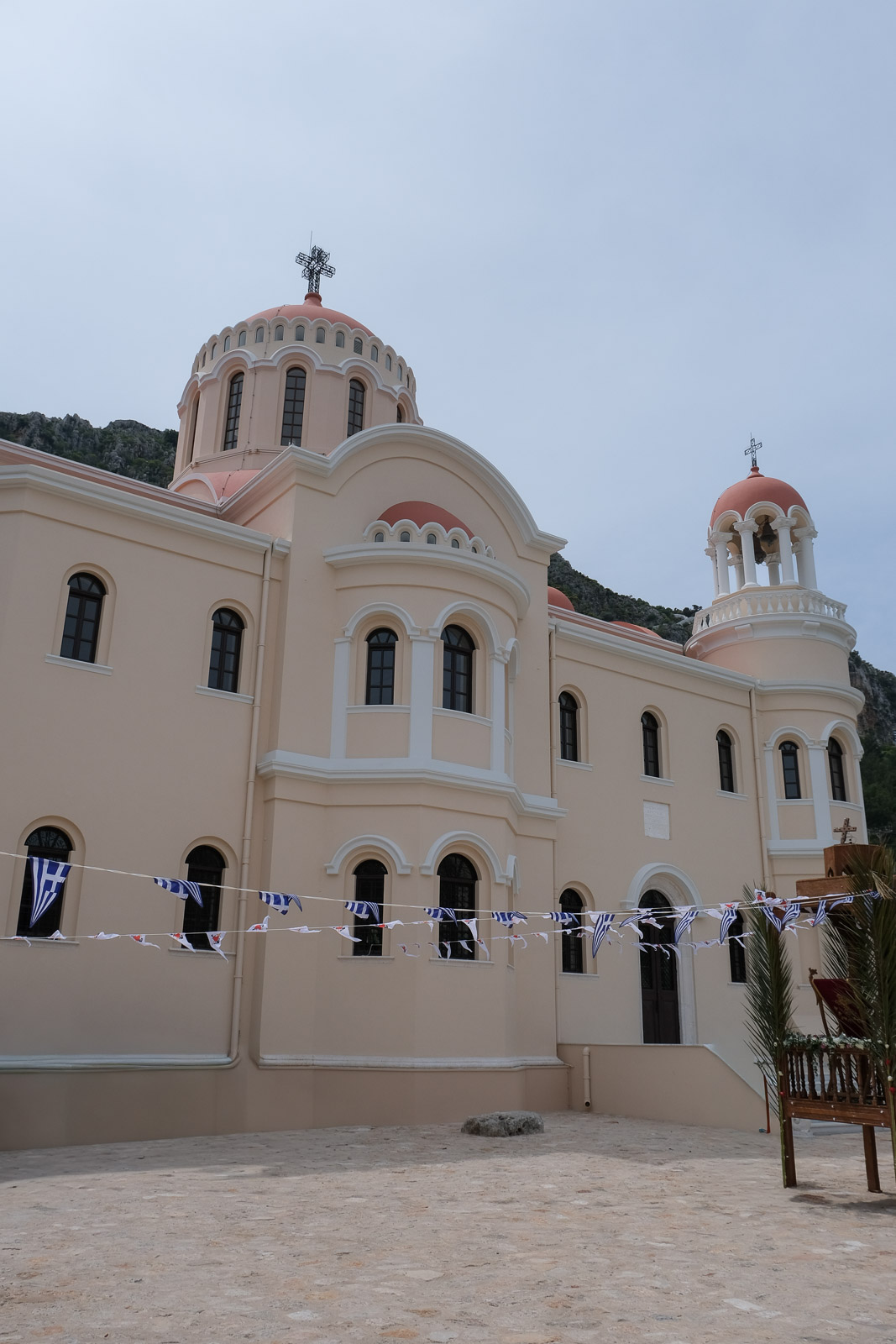
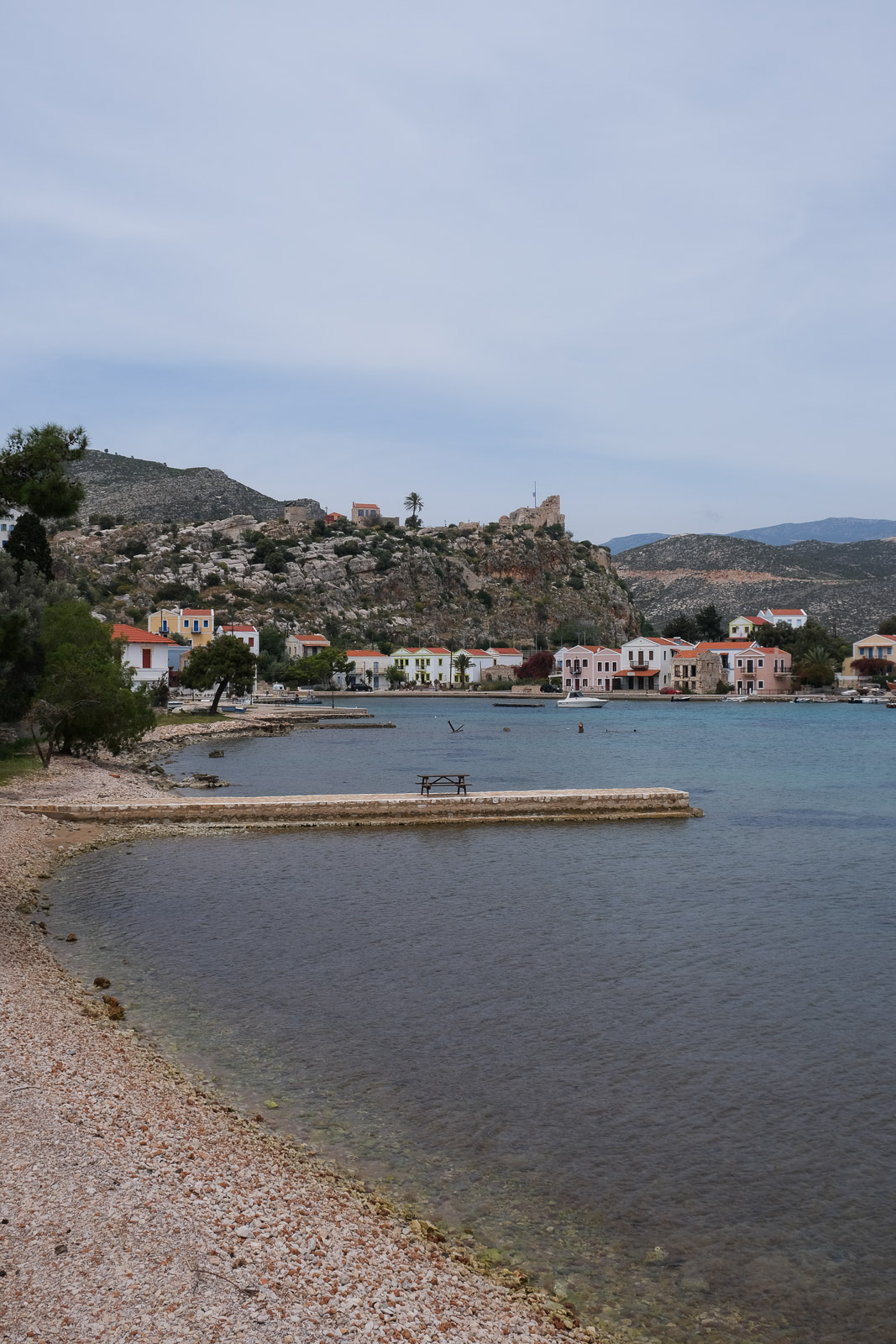
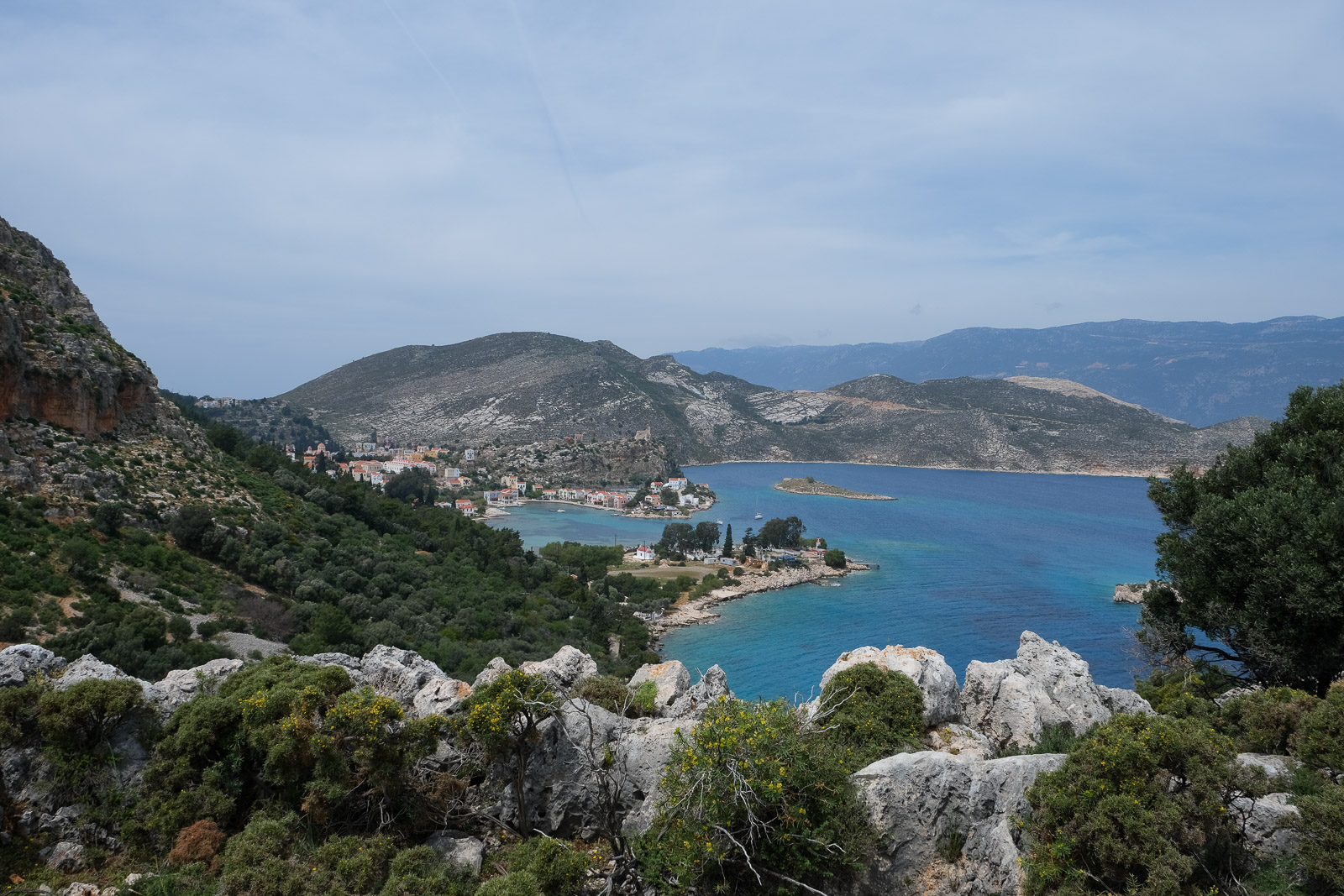
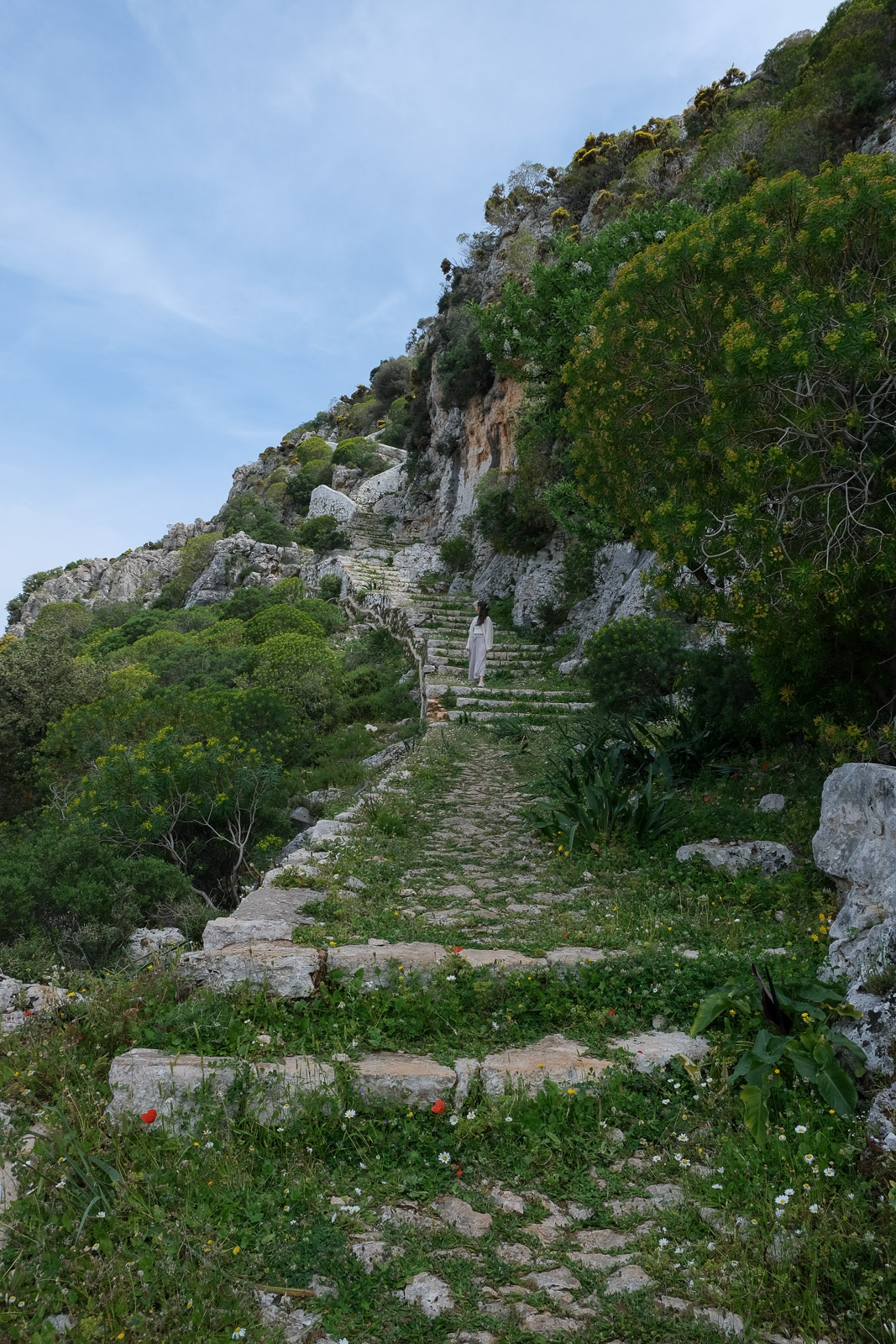
After a late morning coffee at one of the waterfront cafes, surrounded by a handful of locals, we set off on one of the trails leading into the hills. Feeling ambitious, we initially planned a 10km loop around the island, but with frequent stops to take in the views, we eventually opted for a shortcut back to the harbour via the The French Path, to make it back for a late lunch before the ferry’s departure to Kaş.
Another trail we would have loved to explore - but didn’t have time for - leads across the opposite peninsula toward Agios Stefanos Chapel. In the end, staying overnight would like have been the better way to experience the island, had the ferry schedule allowed it.
If time had allowed, we would have loved to spend some time in Patara, known for its long, largely undeveloped beach, protected in part due to nesting loggerhead sea turtle. The nearby village of Gelemis has a relaxed, local feel, with family-run pensions and only a handful of low-key establishments.
Just behind the beach lie the extensive ruins of the ancient city of Patara - temples, bathhouses, a colonnaded street, and a theatre.
Antalya
After our final breakfast in Kaş, we spent the remainder of our last day in Antalya, and it felt like just enough. After more than two weeks in the country, it was the first place that felt noticeably touristy (somehow even more than Göreme). It proved harder than expected to find a more local spot for an evening mezze!
Antalya is a vibrant coastal city. We spent most of our time in the old town, Kaleiçi, a maze of narrow streets, Ottoman-era houses, and harbour views. My favourite moment was simply walking along the waterfront along the harbour, watching locals prepare their nets for a trip out to sea while other were fishing directly from the rocks.
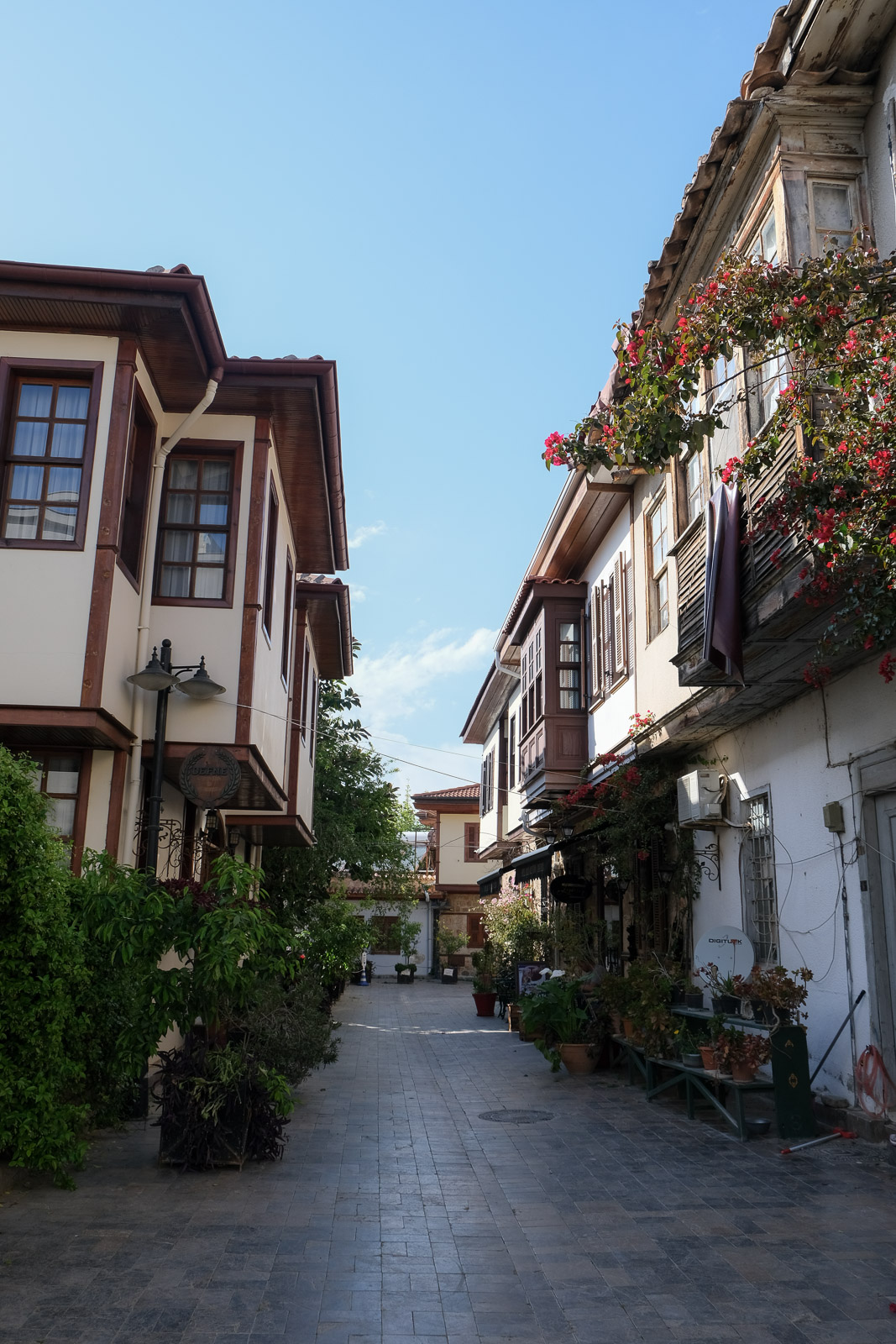
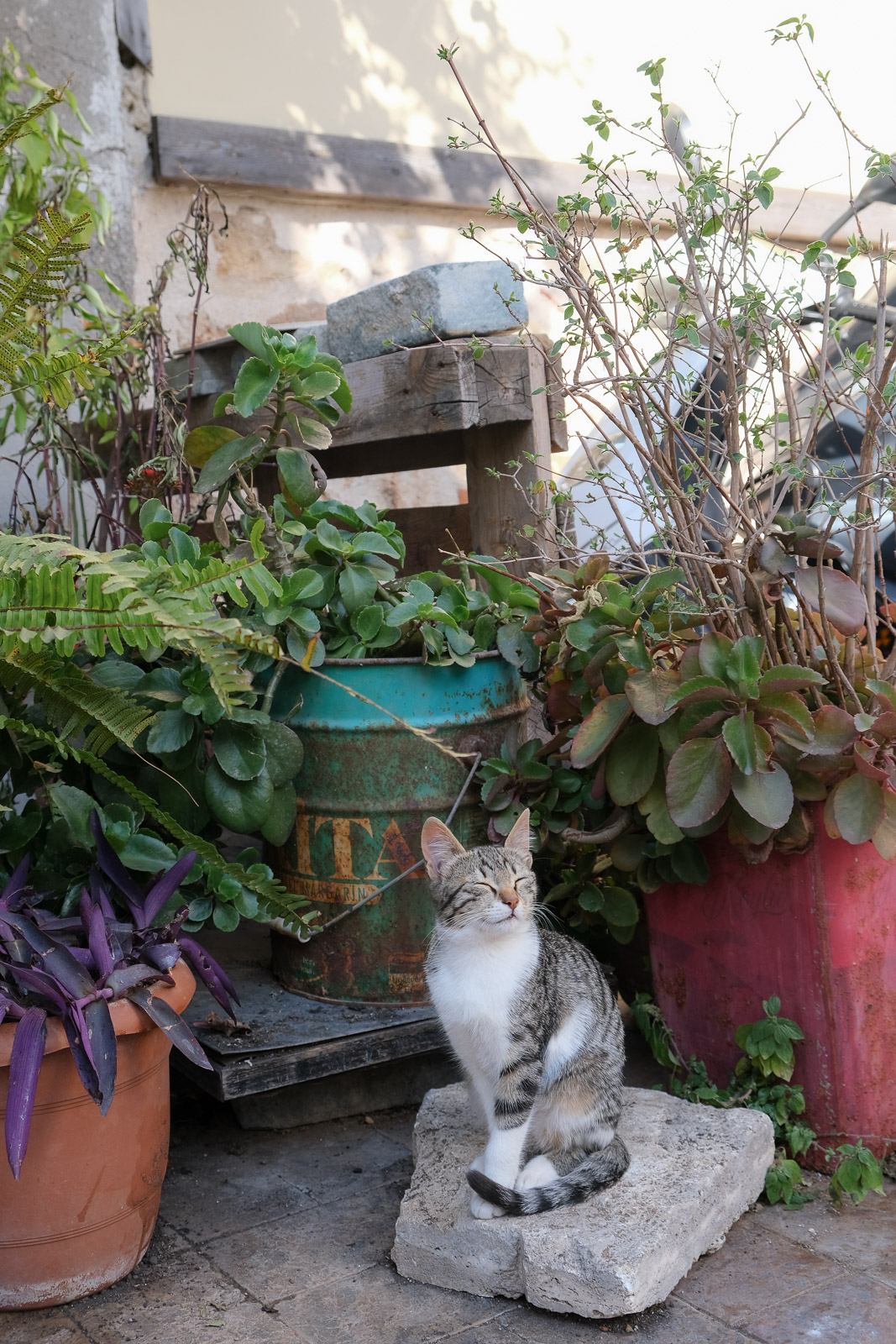
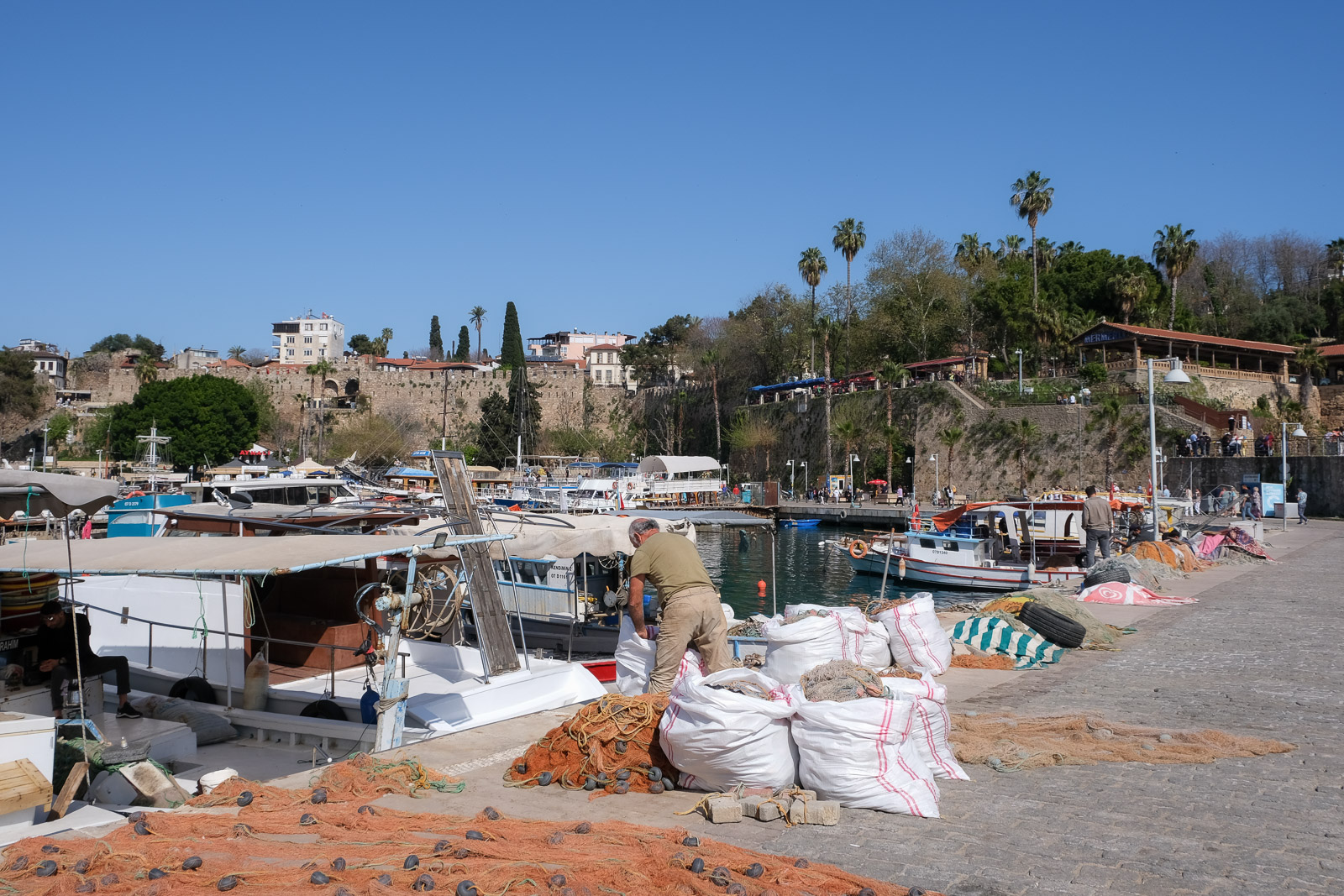
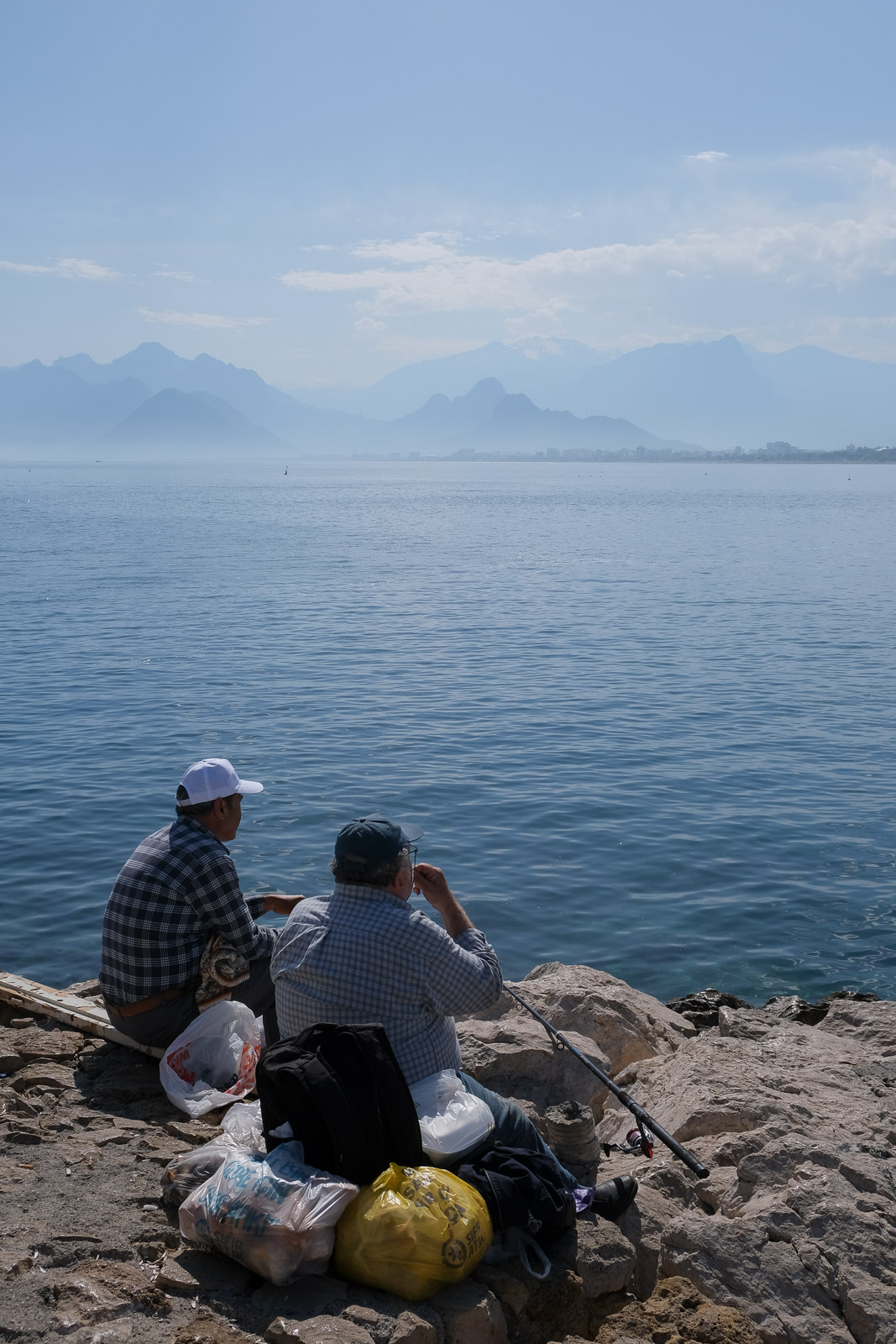
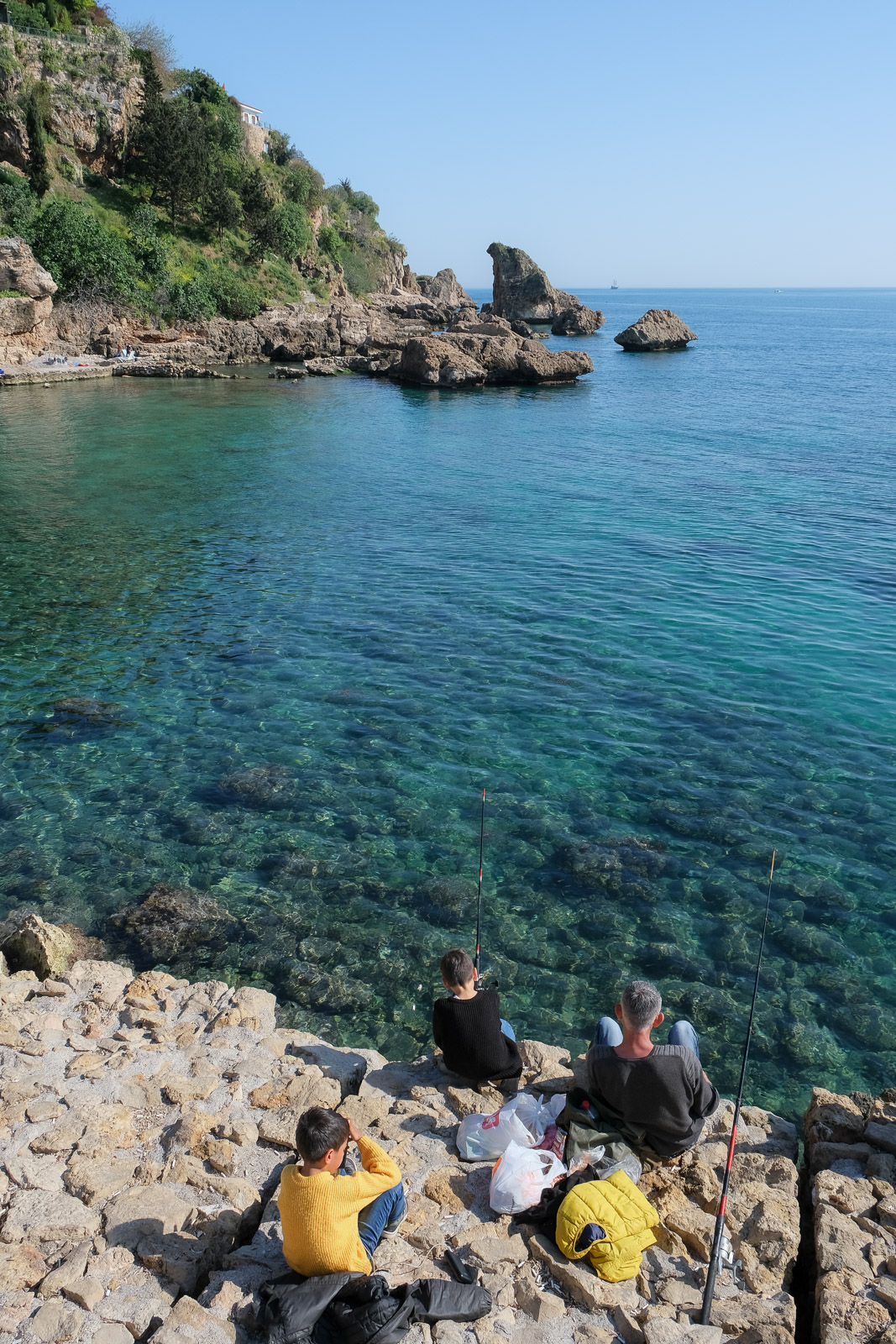
For sunset, Karaalioglu Park, particularly the cliffside edge near Hıdırlık Tower, was the place to be. Set high above the water, it offers unobstructed views over the Mediterranean and the mountains beyond. Along the edge, people gather casually along a low stone wall, drink and gözleme in hand (at least for us) to watch the light slowly fade.
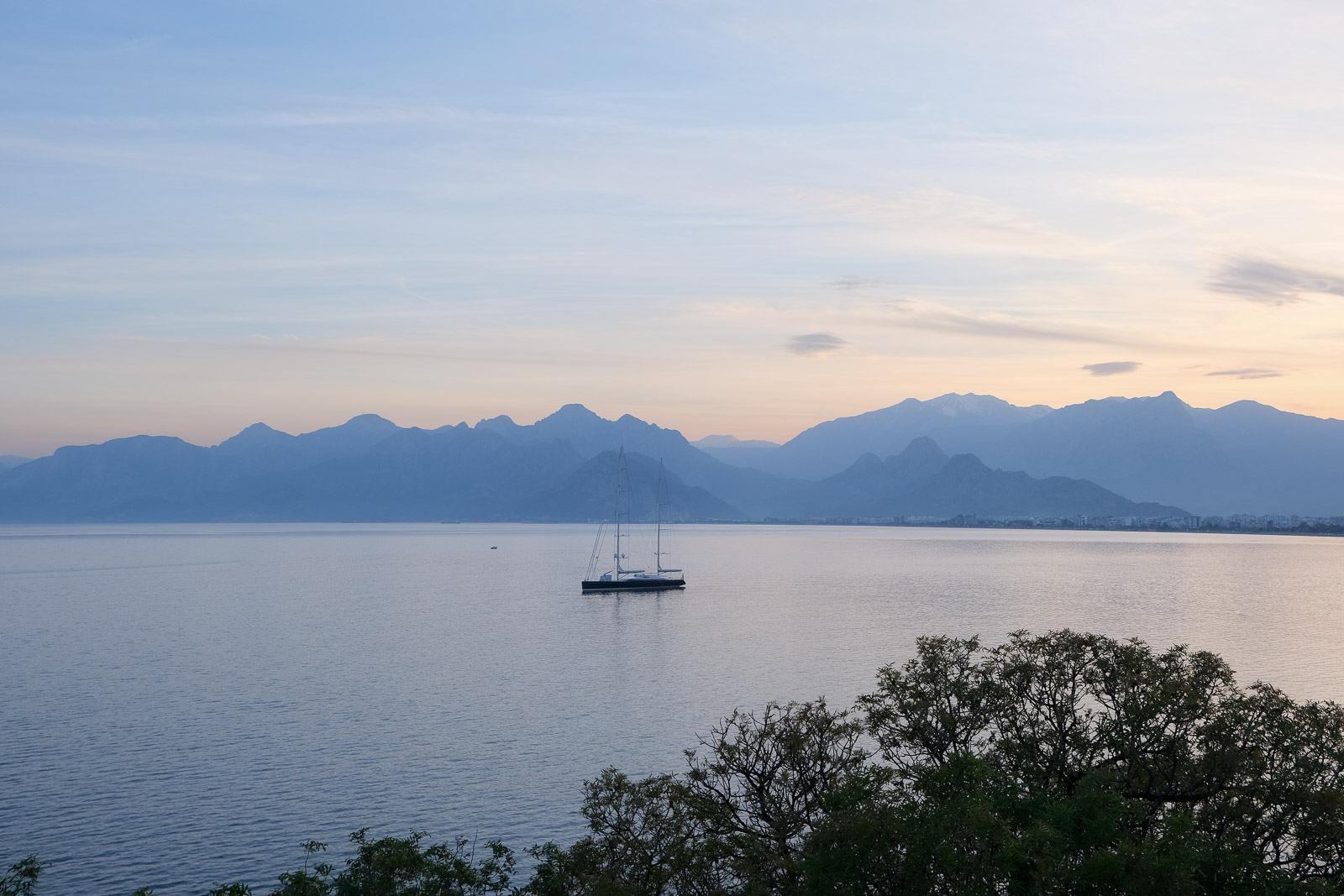
What made this trip to Turkey so memorable wasn’t just the sheer variety of landscapes we moved through - from rugged coastlines and quiet beaches to valleys and mountains trails scattered with history.- but the moments in between that gave those places meaning. It was the everyday interactions: unexpected conversations, small gestures of kindness, and a warmth that seemed to appear everywhere we went. Whether it was being welcomed in without hesitation, sharing tea with strangers, or simply being met with genuine curiosity, those moments added a layer that went beyond the scenery itself.